
In the vast and often complex world of finance, certain terms emerge as pillars, representing foundational concepts or groundbreaking innovations. “SPDR” is unequivocally one such term. For many investors, especially those new to the market, it might sound like an acronym from a tech startup or a government agency. However, for seasoned professionals and anyone engaged with capital markets, SPDR signifies a revolutionary class of investment vehicles that has fundamentally reshaped how individuals and institutions approach diversification, cost-efficiency, and market access.
SPDR stands for Standard & Poor’s Depositary Receipts, and it represents one of the oldest and most influential families of Exchange Traded Funds (ETFs). To truly grasp “what is the SPDR,” one must first understand its origins, its operational mechanics, and its profound impact on the modern investment landscape. Far from being just another financial product, SPDRs pioneered a new era of investing, democratizing access to broad market indices and sector-specific exposures in a way that was previously unimaginable for the average investor. This article will delve into the essence of SPDRs, exploring their history, how they work, their benefits, and their enduring legacy as a cornerstone of contemporary investment strategies.
Understanding SPDRs: An Introduction to a Pioneering ETF Family
To fully appreciate the significance of SPDRs, it’s essential to contextualize them within the evolution of financial products and the broader investment ecosystem. SPDRs are not merely an acronym; they represent a brand and a family of products managed by State Street Global Advisors (SSGA), one of the world’s largest asset managers.
The Genesis of SPDRs: A Brief History
The story of SPDRs begins in 1993 with the launch of the SPDR S&P 500 ETF (ticker symbol: SPY). This groundbreaking product was revolutionary for several reasons. Prior to SPY, gaining exposure to a broad market index like the S&P 500 typically involved investing in a mutual fund, which often came with higher fees, less transparency regarding holdings, and trading restrictions (mutual funds only trade once a day at their net asset value). Alternatively, an investor could attempt to replicate the index by buying all 500 individual stocks, a prohibitively expensive and logistically challenging endeavor for most.
SPY changed everything. It offered a simple, cost-effective, and highly liquid way to invest in the S&P 500 index. It traded like a stock on an exchange throughout the day, providing price discovery and flexibility previously unseen for diversified portfolios. Its immediate success paved the way for an explosion in the ETF market, making SPDR a household name among financial professionals and a formidable force in asset management. The innovation wasn’t just in the product itself, but in the structure that allowed for continuous trading and efficient creation/redemption mechanisms, keeping the fund’s market price closely aligned with its underlying net asset value.
The Core Concept: What is an ETF?
At its heart, a SPDR is an Exchange Traded Fund (ETF). Understanding ETFs is crucial to understanding SPDRs. An ETF is a type of investment fund that holds assets such as stocks, commodities, or bonds and typically trades close to its net asset value over the course of the trading day on national stock exchanges. While they share similarities with mutual funds—both are pooled investment vehicles—ETFs possess distinct characteristics that have driven their immense popularity:
-
Diversification: Like mutual funds, ETFs offer instant diversification by holding a basket of securities.
-
Intraday Trading: Unlike traditional mutual funds, ETFs can be bought and sold throughout the trading day at market prices, just like individual stocks.
-
Transparency: Most ETFs disclose their holdings daily, providing investors with a clear understanding of what they own.
-
Lower Costs: ETFs generally have lower expense ratios than actively managed mutual funds, partly because many are passively managed, simply tracking an index.
-
Tax Efficiency: The unique “creation/redemption” mechanism of ETFs can make them more tax-efficient than mutual funds, particularly for capital gains distributions.
SPDRs, as a specific family of ETFs, embody all these characteristics, making them a powerful tool for investors seeking efficient market exposure.
SPDR as a Brand: More Than Just an Acronym
While “SPDR” is an acronym, it has evolved into a prominent brand within the financial services industry. State Street Global Advisors leveraged the initial success of SPY to launch an entire suite of SPDR ETFs, expanding beyond the S&P 500 to cover various sectors, industries, international markets, and asset classes. The SPDR brand now represents a commitment to providing investors with innovative, transparent, and cost-effective access to a wide array of investment opportunities. When an investor refers to “a SPDR,” they are typically referring to an ETF managed by State Street Global Advisors, often carrying the “SPDR” prefix or suffix in its name and ticker symbol. This brand recognition is built on a legacy of pioneering products and consistent performance, solidifying its status as a trusted name in the investment community.
The Mechanics and Benefits of Investing in SPDRs
Investing in SPDRs offers a blend of simplicity and sophistication. Their operational structure is designed for efficiency and transparency, while their benefits cater to a wide spectrum of investment objectives, from long-term growth to tactical allocation.
How SPDRs Work: Tracking Indices and Diversification
The fundamental mechanism behind most SPDRs is passive index tracking. A SPDR ETF aims to mirror the performance of a specific underlying index. For instance, the SPDR S&P 500 ETF (SPY) holds the stocks that constitute the S&P 500 index, in the same proportions. If the S&P 500 goes up by 1%, SPY aims to go up by approximately 1% (before fees).
This index-tracking approach provides instant diversification. Instead of researching and buying individual companies, an investor in a SPDR ETF gains exposure to dozens, hundreds, or even thousands of companies within a single trade. This significantly reduces idiosyncratic risk – the risk associated with a single company performing poorly – as the impact of any one stock is diluted across the entire basket. The portfolio managers of these funds are not actively trying to “beat the market” but rather to replicate its performance as closely as possible, leading to lower management fees compared to actively managed funds.
Key Advantages: Liquidity, Diversification, and Cost-Effectiveness
The appeal of SPDRs, and ETFs in general, stems from a powerful combination of advantages:
-
High Liquidity: Because SPDRs trade on stock exchanges, they are highly liquid. Investors can buy and sell shares throughout the trading day, providing flexibility for quick entry and exit strategies. This contrasts sharply with mutual funds, which are priced only once a day after market close. The active trading of SPDRs also ensures that their market prices generally stay very close to their underlying net asset value (NAV) due to the arbitrage activities of authorized participants.
-
Instant Diversification: As discussed, a single share of a SPDR ETF can give you exposure to an entire index, sector, or asset class, spreading risk across multiple holdings. This is particularly valuable for retail investors who may not have the capital or expertise to build a diversified portfolio of individual securities.
-
Cost-Effectiveness: SPDRs typically have lower expense ratios compared to actively managed mutual funds. This is because their passive, index-tracking strategy requires less research and trading activity. Over long investment horizons, even small differences in expense ratios can translate into significant savings, allowing more of your returns to compound.
-
Transparency: Most SPDRs disclose their full holdings daily, allowing investors to know exactly what assets are held within the fund. This level of transparency is often not available with traditional mutual funds.
-
Tax Efficiency: The unique “in-kind” creation and redemption mechanism employed by ETFs can make them more tax-efficient than mutual funds. When investors redeem shares, ETFs can distribute appreciated securities rather than selling them, potentially deferring capital gains taxes for long-term holders.
Trading SPDRs: Like Stocks, But Different
Trading SPDRs is very similar to trading individual stocks. They are bought and sold through a brokerage account, using ticker symbols (e.g., SPY, XLF, GLD). Investors can place market orders, limit orders, stop-loss orders, and other types of orders commonly used for stocks. The price of a SPDR fluctuates throughout the trading day based on supply and demand, reflecting the real-time value of its underlying assets.
However, there are subtle differences to be aware of. While an individual stock represents ownership in a single company, a SPDR represents a fractional ownership in a portfolio of assets. Therefore, while stock analysis focuses on a company’s fundamentals, SPDR analysis involves understanding the underlying index or asset class it tracks, its expense ratio, and its tracking error (how closely it mirrors its benchmark). Investors also need to consider the spread between the bid and ask price, which can impact transaction costs, especially for less liquid SPDRs.
Navigating the SPDR Universe: Popular SPDR ETFs
The SPDR family has grown significantly since the launch of SPY, offering investors a wide range of options to target specific market segments, investment themes, or asset classes. Understanding some of the most prominent SPDR products can provide a clearer picture of their utility.
SPY: The Original and Most Iconic SPDR
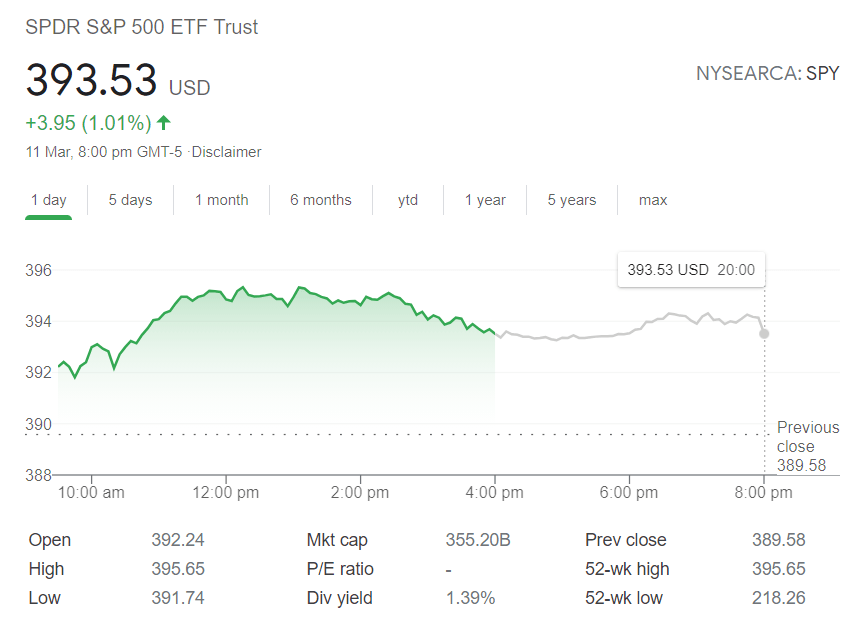
The SPDR S&P 500 ETF (SPY) remains the flagship product and one of the largest and most heavily traded ETFs in the world. Often referred to simply as “the SPDR” or “Spider,” SPY provides broad exposure to the 500 largest U.S. companies by market capitalization, making it a proxy for the overall health of the U.S. stock market. Its immense liquidity and tight bid-ask spreads make it a favorite for institutional traders, long-term investors, and even options traders. SPY is often used as a core holding in diversified portfolios, providing benchmark equity exposure.
Beyond SPY: Sector-Specific and International SPDRs
While SPY provides broad market exposure, the SPDR family also includes numerous specialized ETFs designed for more targeted investment strategies:
-
Sector SPDRs (e.g., XLF, XLE, XLK): These ETFs allow investors to gain exposure to specific sectors of the S&P 500. For example, the Financial Select Sector SPDR Fund (XLF) tracks the financial sector, the Energy Select Sector SPDR Fund (XLE) tracks the energy sector, and the Technology Select Sector SPDR Fund (XLK) tracks the technology sector. These are invaluable for investors who want to overweight or underweight certain sectors based on their economic outlook or investment thesis.
-
International SPDRs: SPDR offers ETFs that provide exposure to international markets, such as the SPDR Developed World ex-US ETF (GWL) or country-specific funds. These allow investors to diversify geographically and tap into growth opportunities outside their home country.
-
Commodity SPDRs (e.g., GLD, SLV): The SPDR Gold Shares (GLD) and SPDR Silver Trust (SLV) are among the most popular commodity ETFs, allowing investors to gain exposure to the price movements of gold and silver without directly owning the physical metal. This has made commodity investing more accessible and liquid.
-
Fixed Income SPDRs: While less prominent than their equity counterparts, SPDR also manages a range of bond ETFs, offering exposure to various segments of the fixed-income market, such as government bonds, corporate bonds, or municipal bonds.
Identifying the Right SPDR for Your Portfolio
Choosing the right SPDR ETF depends entirely on an investor’s goals, risk tolerance, and overall investment strategy. For core equity exposure, SPY is often an excellent choice. For tactical allocations, sector SPDRs can be used to capitalize on specific industry trends. International SPDRs are vital for global diversification, while commodity SPDRs can serve as hedges or speculative plays. Investors should carefully review the fund’s objective, underlying index, expense ratio, historical performance, and holdings before making an investment decision. Utilizing SPDRs strategically can help build a well-diversified and efficient portfolio aligned with individual financial aspirations.
Considerations and Strategies for SPDR Investors
While SPDRs offer numerous advantages, like any investment, they come with certain considerations. Understanding these nuances is crucial for effectively integrating SPDRs into an investment strategy.
Risk Factors and Volatility
SPDRs are subject to market risk. Because they track indices or asset classes, their value will fluctuate with the performance of those underlying assets. A SPDR tracking a volatile index will itself be volatile. For example, a technology sector SPDR (XLK) might experience greater swings than a broad market SPDR (SPY) during periods of market stress or sector-specific news. Investors must align their risk tolerance with the specific SPDR they choose. Furthermore, while SPDRs offer diversification, they do not eliminate market risk altogether. A broad market downturn will affect even the most diversified SPDRs. Specific risks related to liquidity and tracking error, while generally small for large SPDRs, can exist for less popular or niche funds.
Integrating SPDRs into a Diversified Portfolio
SPDRs are excellent tools for portfolio construction. They can serve as the core building blocks of a diversified portfolio, providing broad market exposure to equities, fixed income, or commodities. For example, a balanced portfolio might include SPY for U.S. large-cap exposure, an international equity SPDR for global diversification, and a bond SPDR for income and stability. Beyond core holdings, sector SPDRs allow for tactical adjustments. If an investor believes a particular sector is poised for growth, they can use a sector SPDR to overweight that area without having to select individual stocks. The modular nature of SPDRs makes them highly adaptable for various asset allocation strategies, from aggressive growth to conservative income generation.
Tax Implications of ETF Investing
While generally more tax-efficient than mutual funds due to their creation/redemption mechanism, SPDRs are still subject to taxation. Dividends distributed by equity SPDRs are typically taxed as ordinary income or qualified dividends, depending on holding periods and individual tax brackets. Capital gains realized from selling SPDR shares are taxed at short-term or long-term rates based on the holding period. It’s important for investors to understand these tax implications, especially when actively trading SPDRs or holding them in taxable accounts. Consulting with a financial advisor or tax professional is always recommended to understand how SPDR investments fit into a personal tax strategy.
The Enduring Impact of SPDRs on Modern Investing
The launch of the first SPDR ETF marked a pivotal moment in financial history, sparking a revolution that continues to shape the investment landscape. Its influence extends far beyond mere product innovation.
Lowering Barriers to Entry
Before SPDRs and the subsequent proliferation of ETFs, broad market diversification was often a luxury reserved for institutional investors or those with substantial capital to invest in mutual funds with higher minimums and fees. SPDRs democratized access to sophisticated investment strategies. With the ability to buy even a single share of SPY, retail investors could instantly own a diversified portfolio mirroring the S&P 500 for the price of a single stock. This dramatically lowered the barriers to entry, enabling more individuals to participate efficiently in capital markets and build diversified portfolios, regardless of their net worth. This accessibility has been a major driver of financial inclusion and investor empowerment.
Innovation in the Investment Landscape
The success of SPDRs ignited a wave of innovation across the asset management industry. It proved the viability and demand for transparent, liquid, and low-cost index-tracking products. This led to the creation of thousands of other ETFs by various providers, covering an ever-expanding array of asset classes, strategies, and niche markets. The ETF structure, pioneered by products like SPY, became a template for new ways to package and deliver investment exposure, from actively managed ETFs to thematic funds and inverse/leveraged products. SPDRs laid the groundwork for a more dynamic and competitive investment environment, pushing down fees and increasing choices for investors globally.

Future Outlook for ETFs and SPDRs
The future of ETFs, including the SPDR family, appears robust. The trend towards passive investing, cost-efficiency, and transparency continues to gain momentum. As technology advances and investor demands evolve, SPDRs and other ETFs are likely to further innovate, potentially incorporating more sophisticated data analytics, ESG (Environmental, Social, Governance) considerations, and bespoke portfolio solutions. The flexibility of the ETF wrapper makes it an ideal vehicle for future financial engineering. State Street Global Advisors continues to manage and expand its SPDR lineup, ensuring its place as a key player in the ongoing evolution of investment products. The legacy of SPDRs is not just in their past achievements but in their ongoing relevance and adaptability in meeting the future needs of investors worldwide.
In conclusion, “what is the SPDR?” is a question that unveils a cornerstone of modern finance. It is an Exchange Traded Fund, a brand, and a legacy of innovation that has fundamentally altered how investors access markets, manage risk, and pursue their financial goals with greater efficiency and transparency. From its pioneering launch of SPY to its diverse range of sector and commodity funds, SPDRs continue to empower investors to navigate the complexities of the financial world with greater ease and precision.
aViewFromTheCave is a participant in the Amazon Services LLC Associates Program, an affiliate advertising program designed to provide a means for sites to earn advertising fees by advertising and linking to Amazon.com. Amazon, the Amazon logo, AmazonSupply, and the AmazonSupply logo are trademarks of Amazon.com, Inc. or its affiliates. As an Amazon Associate we earn affiliate commissions from qualifying purchases.