
The United States stock market stands as a colossal monument to capitalism, innovation, and economic dynamism. Far from being a static figure, its value is a constantly fluctuating barometer of corporate performance, investor sentiment, and global economic forces. Understanding its worth is not merely an academic exercise; it offers profound insights into the health of the American economy, the global financial landscape, and the collective wealth of millions of investors. This monumental question, however, doesn’t have a single, definitive answer that remains true for more than a fleeting moment. Instead, we delve into the methodologies, the drivers, and the immense implications of this ever-changing valuation.
Understanding Market Capitalization: The Core Metric
At its heart, the value of the US stock market is measured by its total market capitalization. This crucial metric provides a comprehensive snapshot of the market’s scale, consolidating the individual valuations of thousands of publicly traded companies.
Defining Total Market Capitalization
Total market capitalization, often simply called “market cap,” is calculated by multiplying the current share price of every publicly traded company by its total number of outstanding shares, and then summing up these individual company values. For instance, if a company has 100 million shares outstanding and each share trades at $50, its market capitalization is $5 billion. Apply this calculation to every single company listed on US exchanges—such as the New York Stock Exchange (NYSE) and Nasdaq—and you arrive at the aggregate market value of the entire US stock market.
This method is the primary and most accurate way to quantify the market’s worth, as it directly reflects the collective assessment by investors of the future earnings potential and asset base of the nation’s corporations. It’s a real-time, consensus-driven valuation, making it far more informative than simply looking at indices or trading volumes.
The Dynamic Nature of Market Value
The total market capitalization of the US stock market is anything but static. It’s a living, breathing entity, with its value oscillating second by second during trading hours. This dynamism is driven by an intricate web of factors, ranging from micro-level company news to macro-level economic and geopolitical events.
Daily fluctuations are the norm, influenced by earnings reports, interest rate decisions by the Federal Reserve, changes in inflation data, consumer confidence surveys, and even international trade disputes or conflicts. A blockbuster earnings report from a tech giant can add billions to its market cap, while a downgrade in economic forecasts can shave trillions off the aggregate market value within days. Consider the market’s reaction to the dot-com bubble burst, the 2008 financial crisis, or the COVID-19 pandemic – each period saw dramatic shifts in overall market cap, reflecting fundamental changes in perceived economic stability and corporate prospects. This constant ebb and flow underscores the importance of a long-term perspective for investors and highlights the market’s role as a sophisticated discounting mechanism for future events.
Key Components and Drivers of US Market Value
To appreciate the “worth” of the US stock market, it’s essential to dissect its constituent parts and understand the forces that propel its growth and contraction.
Major Indices as Proxies
While total market capitalization provides the absolute figure, major stock market indices offer a more accessible and frequently cited proxy for the market’s health and direction. The three most prominent are:
-
S&P 500: Comprising 500 of the largest US companies by market cap, it is widely considered the best gauge of large-cap US equities and a bellwether for the overall economy. Its market-cap weighting means that larger companies have a greater influence on its performance.
-
Dow Jones Industrial Average (DJIA): An index of 30 prominent companies, historically industrial, but now covering a broad range of sectors. While iconic, its price-weighted methodology means higher-priced stocks have more influence, making it less representative of the broader market than the S&P 500.
-
Nasdaq Composite: Heavily weighted towards technology and growth companies, this index tracks thousands of stocks listed on the Nasdaq exchange. It often reflects sentiment around innovation and future growth prospects.
These indices, while not directly representing the total market cap, provide a digestible way to track trends and offer a glimpse into the segments that are driving or dragging market performance. Their movements are often reported as “the market’s performance,” reflecting their status as popular benchmarks.
Sectoral Contributions
The US stock market’s value is not evenly distributed across industries. Certain sectors, due to their size, growth potential, and the presence of globally dominant companies, contribute disproportionately to the total market cap.
Historically, sectors like technology, healthcare, financials, and consumer discretionary have housed some of the largest companies and thus exert significant influence. Technology, in particular, with giants like Apple, Microsoft, Amazon, and Google (Alphabet), has been a powerhouse, driving immense market cap growth over the past few decades. These companies not only contribute vast individual market caps but also often lead in innovation, setting trends that ripple across the economy. Understanding the relative weight and performance of these sectors is crucial for grasping where the market’s value is truly concentrated and what forces are shaping its trajectory. The rotation between growth and value stocks, or cyclical and defensive sectors, also plays a critical role in how the overall market cap evolves.
Economic Fundamentals and Corporate Performance
Underpinning all market valuations are the fundamental health of the economy and the performance of individual corporations.
Macroeconomic indicators such as Gross Domestic Product (GDP) growth, inflation rates, employment figures, and consumer spending directly impact corporate profitability and, consequently, their stock prices. A robust economy generally translates to higher corporate earnings, which in turn supports higher valuations. Similarly, monetary policy, particularly interest rates set by the Federal Reserve, has a profound effect. Lower rates can make stocks more attractive relative to bonds, encouraging investment and boosting valuations, while higher rates can have the opposite effect.
At the micro-level, corporate earnings, revenue growth, profit margins, product innovation, and effective management are paramount. Companies that consistently deliver strong financial results, expand their market share, or develop groundbreaking technologies see their valuations soar, adding significantly to the overall market cap. Conversely, companies facing declining profits, regulatory challenges, or competitive pressures will see their market cap shrink, pulling down the aggregate value. The market, in essence, is a forward-looking mechanism, constantly trying to predict and price in future corporate profitability and economic conditions.
The US Stock Market in a Global Context
The US stock market does not operate in a vacuum. Its immense value and influence are intrinsically linked to its position within the global financial ecosystem.
Global Dominance and Attractiveness
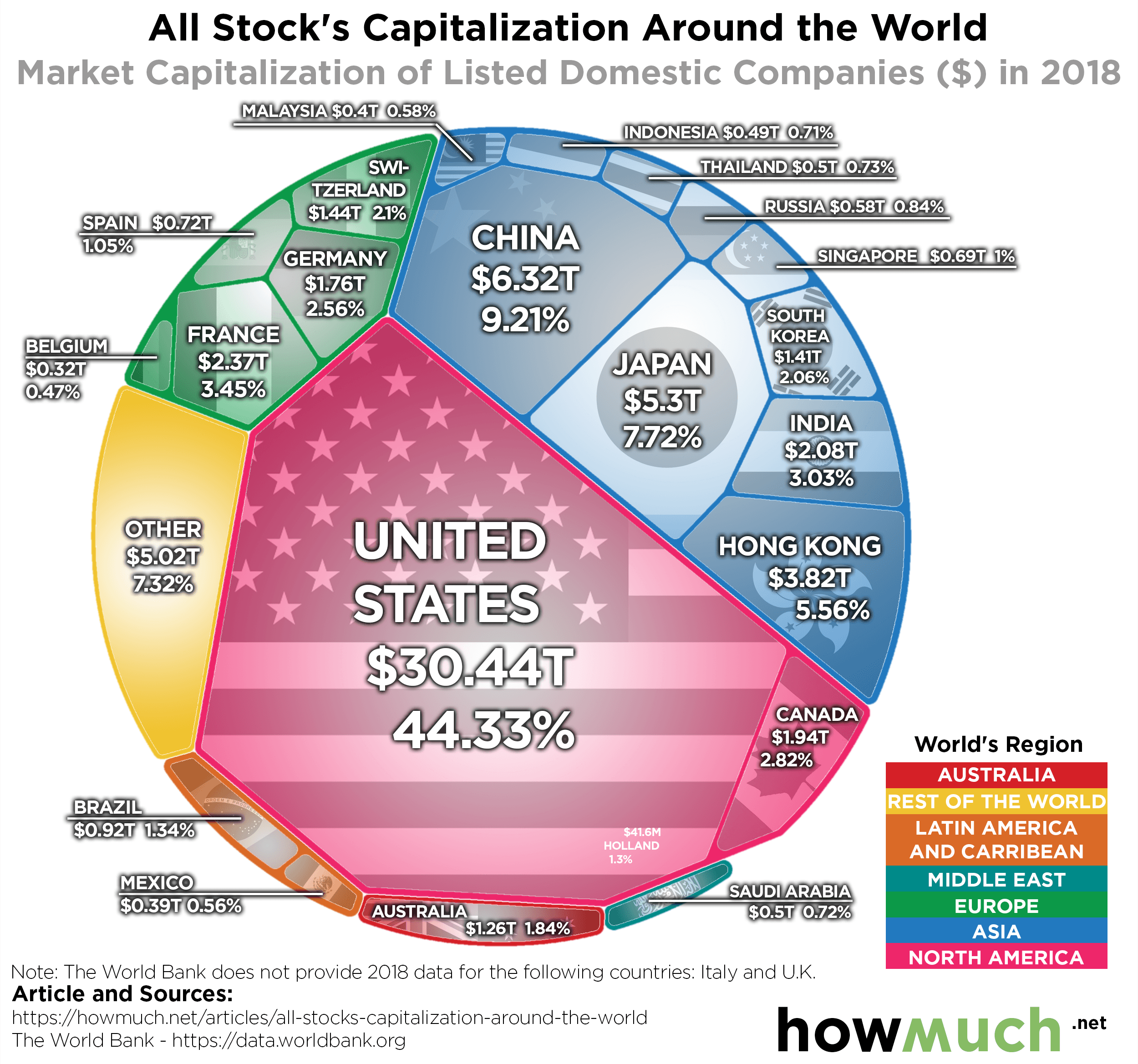
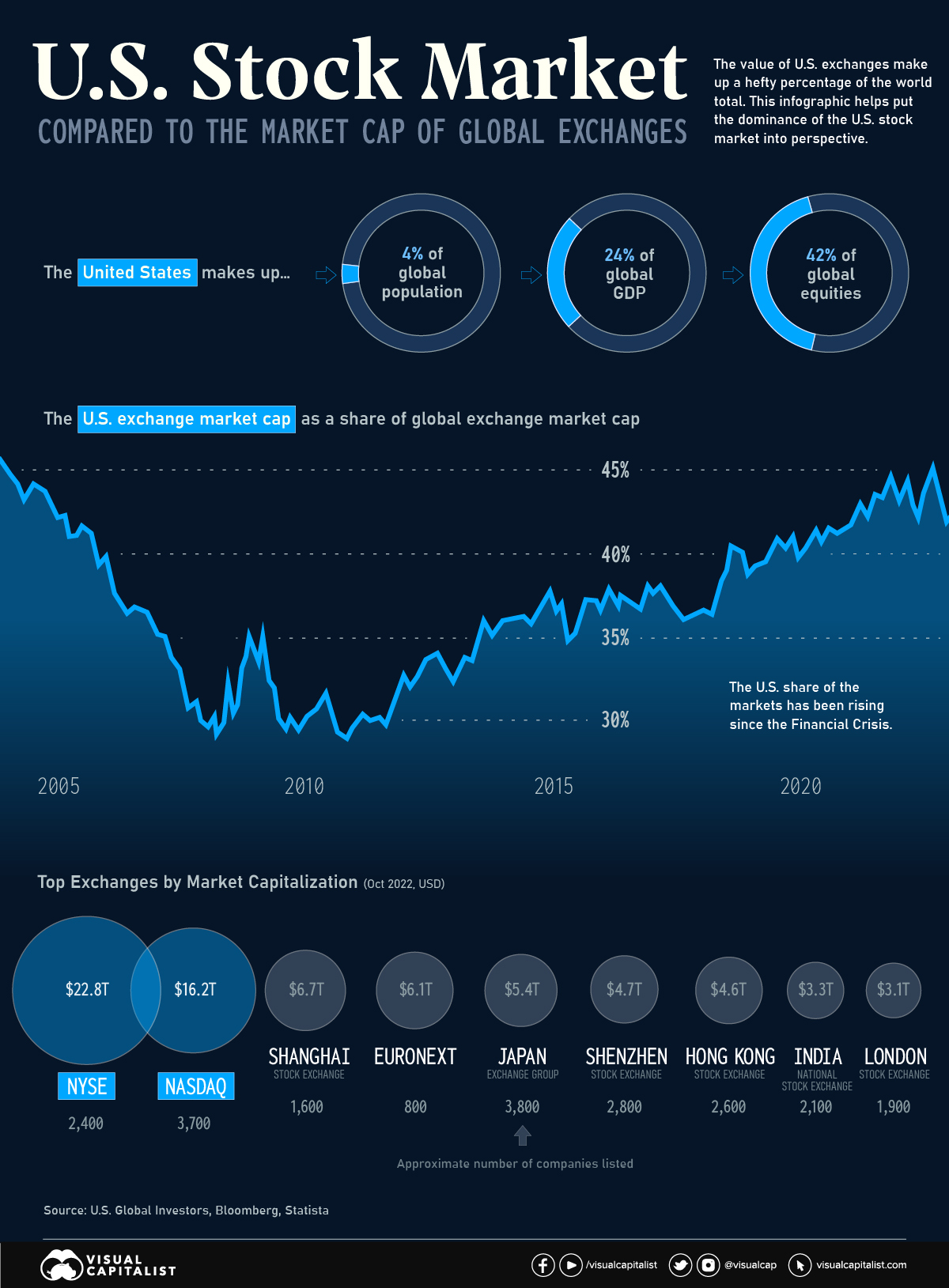
The US stock market is, by a significant margin, the largest and most liquid in the world. It routinely accounts for 40% to 50% of the total global stock market capitalization. This dominance stems from several factors: a stable political and regulatory environment, a culture of innovation, strong corporate governance, a deep pool of institutional and retail investors, and the sheer size and purchasing power of the American consumer market.
These attributes make US markets highly attractive to both domestic and international investors, who view them as a safe haven and a prime destination for capital appreciation. The flow of international capital into US equities plays a critical role in sustaining and growing the market’s value, reinforcing its global leadership. Foreign investment provides liquidity, supports demand for US-listed companies, and acts as a vote of confidence in the American economic model.
Impact of Global Events
Despite its relative strength, the US stock market is not immune to global events. International crises, trade wars, geopolitical tensions, and global pandemics can trigger significant volatility and impact valuations. The interconnectedness of global financial markets means that economic slowdowns in major trading partners, supply chain disruptions, or shifts in international investor sentiment can quickly translate into sell-offs or rallies in US equities.
For example, the 2008 global financial crisis, which originated in the US housing market, had a ripple effect across the world. Conversely, more recent events like the COVID-19 pandemic, while having global origins, saw the US market demonstrate remarkable resilience and recovery after initial sharp declines, showcasing its robustness and the adaptability of its corporations. Understanding these global interdependencies is crucial for appreciating the complex forces that continually shape the US market’s worth.
Implications for Investors and the Economy
The total worth of the US stock market has profound implications, extending far beyond the realm of finance to touch the lives of everyday citizens and the broader economy.
Wealth Creation and Economic Indicator
For millions of Americans, the stock market is a primary engine of wealth creation. Retirement accounts (like 401(k)s and IRAs), pension funds, and individual investment portfolios are heavily invested in US equities. A rising market value directly translates to increased wealth for these individuals and institutions, fostering a sense of financial security and enabling future consumption and investment. Conversely, market downturns can erode savings and create economic uncertainty.
Furthermore, the stock market is often considered a leading economic indicator, meaning it tends to anticipate future economic activity. While not always perfect, a robust market can signal investor confidence in future growth, potentially leading to increased business investment and job creation. Conversely, a prolonged decline can suggest impending economic challenges. The “wealth effect,” where individuals feel richer due to rising asset values and thus spend more, also links market performance to consumer confidence and overall economic activity.

Challenges and Opportunities
Investing in the US stock market, while offering significant opportunities for growth, is not without its challenges and risks. Market volatility, periods of inflation, the threat of recessions, and unforeseen geopolitical events can all impact investment returns. For investors, understanding these risks is paramount.
The opportunities, however, remain compelling. Long-term investing, diversification across different asset classes and sectors, and strategies like dollar-cost averaging can help mitigate risk and harness the market’s long-term upward trend. The market consistently rewards innovation and efficiency, allowing investors to participate in the growth of leading companies. Access to financial tools, educational resources, and professional financial advice can empower individuals to navigate the complexities of investing, build robust portfolios, and align their financial strategies with their goals. The US stock market, with its vast scale and diverse opportunities, remains a cornerstone of personal finance and a powerful engine for economic progress.
In conclusion, the question of “how much is the US stock market worth” leads to an ever-evolving answer, typically measured in the tens of trillions of dollars. This figure is not just a number; it represents the collective hopes, fears, and economic activity of a nation, reflecting corporate innovation, global economic currents, and the enduring quest for financial growth. Its dynamic nature underscores the complexity of modern finance and its pivotal role in both individual wealth and national prosperity.
aViewFromTheCave is a participant in the Amazon Services LLC Associates Program, an affiliate advertising program designed to provide a means for sites to earn advertising fees by advertising and linking to Amazon.com. Amazon, the Amazon logo, AmazonSupply, and the AmazonSupply logo are trademarks of Amazon.com, Inc. or its affiliates. As an Amazon Associate we earn affiliate commissions from qualifying purchases.