
For many investors, the Vanguard S&P 500 ETF (VOO) represents the gold standard of “set-it-and-forget-it” investing. By tracking the 500 largest publicly traded companies in the United States, it offers a blend of stability, growth, and diversification. However, while most investors associate VOO with capital appreciation, its dividend profile is a critical component of its total return. Understanding how much VOO pays in dividends—and how those payments are structured—is essential for anyone looking to build a sustainable portfolio for retirement or passive income.
The Mechanics of VOO Dividend Distributions
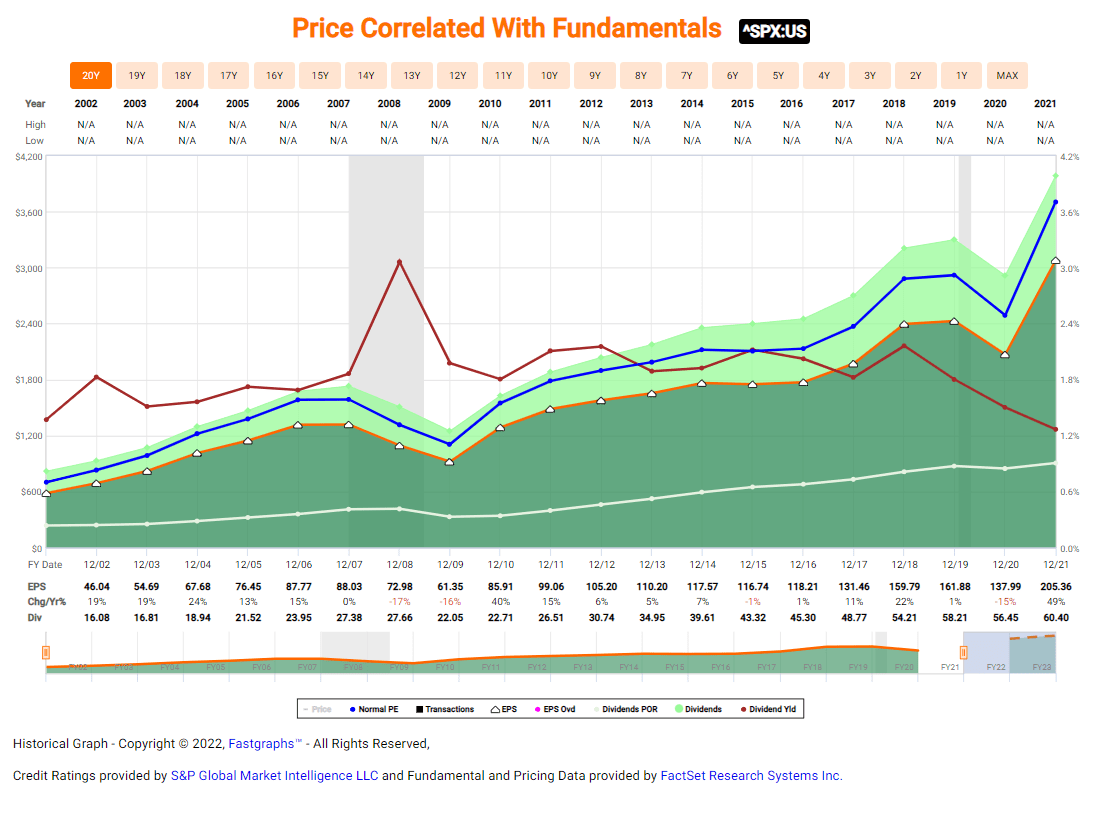
To understand how much VOO pays in dividends, one must first look at its underlying mechanism. VOO does not generate its own profit; instead, it collects the dividends paid by the 500 companies within the S&P 500 index. These include cash cows like Apple, Microsoft, Johnson & Johnson, and Exxon Mobil. Once these dividends are collected by Vanguard, they are pooled together and distributed to VOO shareholders on a pro-rata basis.
Understanding Current Yield and Recent Payouts
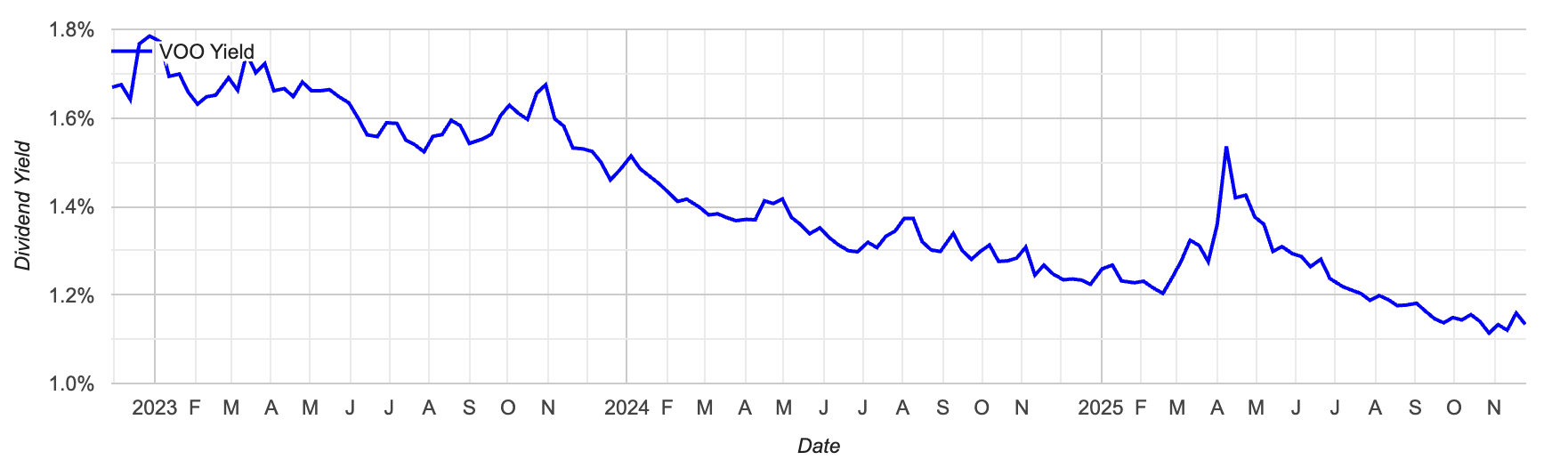
The “dividend yield” is the most common metric used to quantify VOO’s payouts. Historically, the dividend yield for the S&P 500, and by extension VOO, has fluctuated between 1.2% and 2.0%. In recent years, as stock prices have climbed significantly, the yield has often hovered at the lower end of that range, typically between 1.3% and 1.6%.
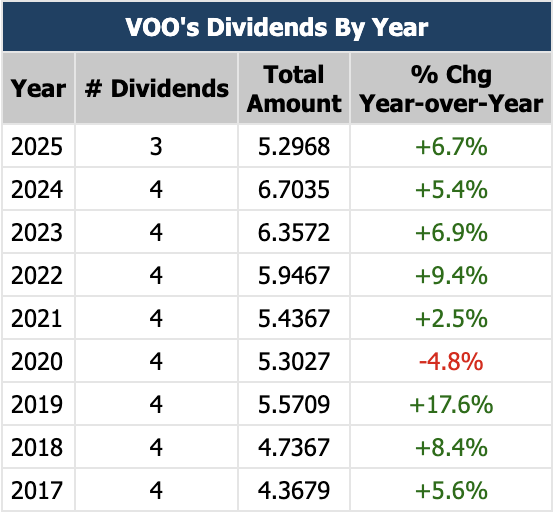
In terms of actual dollar amounts, the distribution varies each quarter based on the earnings of the underlying companies. For example, a single share of VOO might pay out between $1.50 and $1.90 per quarter. If you own 100 shares, you could expect roughly $150 to $190 in cash distributions every three months. It is important to note that dividends are paid per share, so as the stock price increases, your yield on cost—the yield based on the price you originally paid—becomes a more significant indicator of your personal investment success.
Payout Schedule: When to Expect Your Dividends
VOO operates on a quarterly distribution schedule. Vanguard typically declares and pays dividends in the months of March, June, September, and December. For income-focused investors, keeping track of the “ex-dividend date” is paramount. To receive a dividend for a specific quarter, you must own the shares before the ex-dividend date.
The payment date usually follows a few days after the record date. This consistent, predictable schedule makes VOO an excellent tool for investors who need to plan their cash flow. While the exact dates shift slightly each year based on the calendar, the quarterly rhythm remains one of the most reliable features of the fund.
Analyzing the Growth and Sustainability of VOO Dividends
One of the biggest mistakes novice investors make is focusing solely on the current yield. While a 1.5% yield may seem modest compared to high-yield bonds or specialized “income” ETFs, VOO offers something many high-yield assets do not: dividend growth.
Historical Performance and Dividend Appreciation
The companies within the S&P 500 are not static. They are the engines of the global economy, and as they grow their earnings, they often increase their dividend payouts. Over the last several decades, the dividends paid by S&P 500 companies have grown at an average annual rate of approximately 5% to 7%.
This growth is a powerful hedge against inflation. While a fixed-income bond might pay the same amount of interest for ten years, the dividends from VOO are likely to be significantly higher a decade from now than they are today. This “dividend appreciation” is a core reason why long-term investors favor VOO; they aren’t just buying today’s yield, they are buying a claim on the future earnings growth of the American corporate sector.
The Role of the S&P 500 Constituents
The diversity of the S&P 500 provides a safety net for VOO’s dividend. Even if one sector, such as Technology or Energy, faces a downturn and companies within that sector cut their dividends, the impact is often offset by other sectors like Consumer Staples or Healthcare.
Furthermore, the S&P 500 is market-cap weighted. This means that the largest, most successful companies have the greatest influence on the index. As tech giants like Meta or Alphabet—who historically did not pay dividends—begin to initiate dividend programs, the overall dividend pool for VOO expands. This evolution of the index ensures that VOO remains a relevant income vehicle even as the economy shifts toward more digital and service-oriented models.
Strategic Considerations for Dividend Investors
When evaluating VOO for dividends, it is important to place those dividends in the context of your broader financial strategy. Dividends are not “free money”; they are a distribution of the company’s value. However, they play a vital psychological and mathematical role in portfolio management.
Total Return vs. Income Focus
For many investors, the primary goal is “total return,” which is the combination of price appreciation and dividend income. VOO excels in this category. While a high-dividend ETF might offer a 4% yield, it often comes at the expense of capital growth. VOO balances the two, providing enough yield to satisfy income needs while maintaining exposure to the fast-growing companies that drive the market higher.
If you are in the “accumulation phase” of your life—meaning you are still working and adding to your accounts—the dividend yield is less important than the total growth of the fund. However, if you are in the “distribution phase” (retirement), the dividend acts as a natural withdrawal mechanism, allowing you to take cash out of your portfolio without necessarily selling shares and reducing your ownership stake.
The Impact of Low Expense Ratios on Net Yield
One cannot discuss VOO dividends without mentioning its expense ratio. VOO is famous for its ultra-low cost, currently sitting at 0.03%. In practical terms, this means Vanguard takes only $3 for every $10,000 you invest.
In the world of dividends, every basis point matters. If you invest in a fund with a 1.0% expense ratio and it has a 1.5% dividend yield, the fund’s fees are eating up two-thirds of your income. Because VOO’s fees are almost negligible, nearly 100% of the dividends generated by the underlying companies flow directly into your pocket. This efficiency is one of the most compelling reasons to choose VOO over actively managed funds or more expensive ETFs.
Tax Efficiency and the Power of Reinvestment
The way you handle VOO dividends can have a massive impact on your final portfolio balance. Investors have two primary choices: take the cash or reinvest it.
Tax Treatment of VOO Distributions
In a taxable brokerage account, dividends are not all created equal. Most of the dividends paid by VOO are “qualified dividends.” This is a significant advantage because qualified dividends are taxed at the long-term capital gains rate (typically 0%, 15%, or 20% depending on your income level) rather than the higher ordinary income tax rates.
This tax efficiency makes VOO a preferred choice for investors with large taxable accounts. Compared to high-yield bond funds or REITs, which often pay distributions taxed as ordinary income, VOO allows you to keep a larger portion of your earnings after Uncle Sam takes his cut.
Utilizing DRIP to Accelerate Wealth Building
For those who do not need the income immediately, a Dividend Reinvestment Plan (DRIP) is one of the most effective ways to build wealth. By automatically using your dividends to buy more shares of VOO, you trigger a compounding effect.
When you reinvest, you own more shares. Those additional shares then produce their own dividends in the next quarter, which are then used to buy even more shares. Over 20 or 30 years, this cycle can account for a massive portion of an investor’s total wealth. In fact, historical data shows that over long periods, reinvested dividends account for nearly 40% of the total return of the S&P 500.
How VOO Compares to High-Yield Alternatives
Is VOO the “best” dividend fund? The answer depends on your specific goals. If you are strictly looking for the highest possible immediate income, VOO might not be your first choice.
VOO vs. Dividend Growth ETFs
Funds like the Vanguard Dividend Appreciation ETF (VIG) or the Schwab US Dividend Equity ETF (SCHD) focus specifically on companies with a history of increasing their dividends. These funds often have higher yields than VOO (around 2% to 3.5%) and different risk profiles.
While VOO includes the entire S&P 500, including many tech companies that pay zero dividends, SCHD and VIG filter for income. VOO generally offers more growth potential because it includes the high-flying tech sector, whereas dividend-focused ETFs may lag during bull markets driven by technology.
The Role of VOO in a Diversified Income Portfolio
For many, VOO serves as the “core” of a portfolio, while other assets are used to “tilt” the portfolio toward more income. For instance, an investor might put 70% of their money in VOO for broad market exposure and 30% in a high-yield ETF to boost the overall yield of the portfolio.
Ultimately, VOO pays a dividend that is a reflection of the American economy’s health. It is not the highest-yielding asset on the market, but it is perhaps the most reliable. Its combination of low costs, tax efficiency, and the historical growth of the S&P 500 makes it a cornerstone for anyone looking to understand and profit from the world of dividend investing. Whether you are seeking a quarterly check to cover living expenses or looking to harness the power of compounding through reinvestment, VOO’s dividend structure provides a robust foundation for long-term financial success.
aViewFromTheCave is a participant in the Amazon Services LLC Associates Program, an affiliate advertising program designed to provide a means for sites to earn advertising fees by advertising and linking to Amazon.com. Amazon, the Amazon logo, AmazonSupply, and the AmazonSupply logo are trademarks of Amazon.com, Inc. or its affiliates. As an Amazon Associate we earn affiliate commissions from qualifying purchases.