
The question of “how is the market today” is rarely answered with a simple percentage gain or loss. To the sophisticated investor, the state of the market is a complex tapestry woven from interest rate trajectories, geopolitical shifts, corporate earnings resilience, and the underlying pulse of consumer sentiment. In the current financial era, the market is characterized by a transition from the “easy money” regime of the last decade toward a more disciplined, high-rate environment where fundamental analysis has reclaimed its throne over speculative fervor.
Understanding the market today requires moving beyond the headlines and looking into the mechanics of capital flow, the health of the credit markets, and the sectors that are successfully pivoting in the face of structural economic changes.
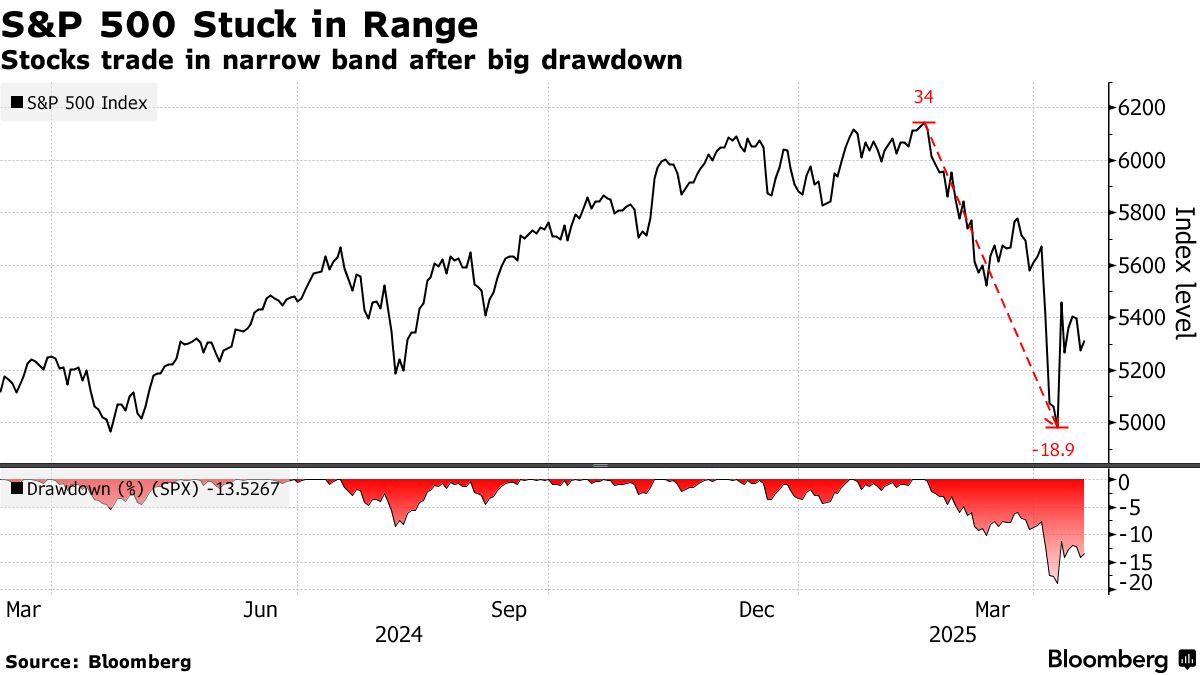
Deciphering the Current Macroeconomic Landscape
The primary driver of market behavior today remains the delicate dance between central bank policy and inflationary pressures. For years, investors enjoyed a low-yield environment that compressed risk premiums and inflated asset prices. Today, the landscape is fundamentally different, defined by a “higher-for-longer” interest rate philosophy that has recalibrated how every asset class is valued.
The Role of Interest Rates and Central Bank Policy
Central banks, led by the Federal Reserve, have shifted the gravity of the financial world. When interest rates rise, the present value of future cash flows diminishes, which directly impacts the valuation of growth stocks—particularly in the technology sector. Today’s market is hyper-sensitive to the “dot plot” and the rhetoric of central bank officials. Every economic data release, from non-farm payrolls to Consumer Price Index (CPI) reports, serves as a catalyst for immediate volatility.
Investors are no longer just looking at whether rates will go up or down; they are looking at the “neutral rate”—the rate at which the economy neither accelerates nor slows down. Determining where this level lies is the great challenge of today’s market, as it dictates the long-term viability of corporate debt structures and mortgage markets.
Inflationary Pressures and Consumer Spending
While headline inflation has cooled from its post-pandemic peaks, “sticky” inflation in services and housing continues to influence market sentiment. The market today is closely monitoring the resilience of the consumer. Consumer spending accounts for approximately two-thirds of the U.S. GDP, and as pandemic-era savings dwindle, the market is looking for signs of fatigue. Credit card delinquency rates and retail sales figures have become essential barometers for the broader health of the equity markets.
Sector-Specific Performance and Asset Allocation
The market is not a monolith; it is a collection of sectors often moving in divergent directions. Today’s market shows a stark contrast between the “Magnificent Seven” tech giants and the rest of the S&P 500. This concentration risk is one of the most discussed topics in modern finance, as it creates a veneer of market strength that may not be reflected in the average mid-cap or small-cap company.
The Resurgence of Value vs. Growth
For a decade, growth stocks—those expected to outperform the market due to their future potential—reigned supreme. However, in the current market, value stocks have seen a resurgence. Companies with strong balance sheets, consistent dividends, and reasonable price-to-earnings (P/E) ratios are becoming the preferred “safe havens.” This shift represents a return to “quality” as an investment factor. Investors are prioritizing “free cash flow” over “user growth,” a transition that has forced many Silicon Valley-style startups to rethink their path to profitability.
Fixed Income and the Bond Market Revival
Perhaps the most significant change in the market today is the return of “income” to fixed income. For the first time in nearly twenty years, bonds offer a legitimate alternative to equities. The traditional 60/40 portfolio, which many declared dead in 2022, is seeing a revival as yields on Treasury bills and investment-grade corporate bonds provide a compelling risk-adjusted return. This “competition for capital” means that equities must work harder to justify their valuations, leading to more discerning investment strategies.
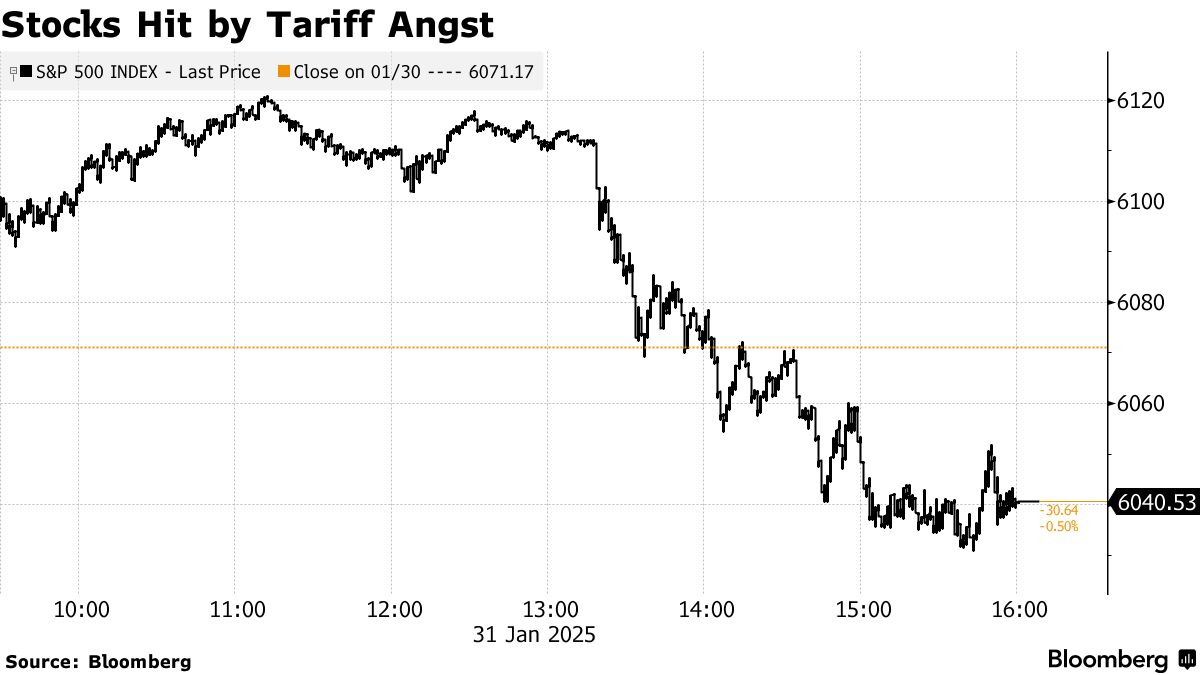
Understanding Market Sentiment and the VIX Index
The market is as much a psychological phenomenon as it is a mathematical one. Market sentiment today is often measured by the VIX, or the “Fear Gauge.” However, the modern market faces a new kind of volatility driven by high-frequency trading (HFT) and zero-days-to-expiration (0DTE) options. These tools have changed the intraday dynamics of the market, often leading to “gamma squeezes” and rapid price reversals that can baffle traditional investors.
Quantitative vs. Qualitative Analysis
To understand the market today, one must balance quantitative data with qualitative insights. While the numbers (earnings, GDP, unemployment) provide the skeleton, the “narrative” provides the skin. Currently, the narrative is dominated by Artificial Intelligence (AI). The market is pricing in a massive productivity boom, which has led to a speculative premium on any company with a credible AI strategy. Distinguishing between genuine technological disruption and hype-driven bubbles is the primary task for those looking to preserve capital in this environment.
The Impact of Institutional Trading and Algorithms
A significant portion of daily market volume is now executed by algorithms rather than human traders. These systems react instantaneously to keywords in news reports or technical breakouts. This “algorithmic overlay” means that the market can move further and faster than historical norms. For the individual investor, this necessitates a move away from trying to “time the market” and toward a strategy based on time in the market, utilizing dollar-cost averaging to smooth out the noise generated by automated trading.
Practical Strategies for Risk Management
In a market defined by uncertainty, risk management is the difference between long-term wealth accumulation and catastrophic loss. Today’s successful investors are not those who chase the highest returns, but those who best manage their downside.
Rebalancing in a Shifting Economy
With the rapid fluctuation in sector performance, portfolio rebalancing has become more critical than ever. An investor who did not rebalance after the tech surge of the early 2020s would find themselves heavily over-concentrated in a single sector. Today, the market rewards those who systematically trim their winners and reallocate to undervalued areas, such as emerging markets or commodities, which often serve as hedges against a weakening domestic currency or geopolitical instability.
Utilizing Financial Tools for Enhanced Visibility
The democratization of financial tools has given retail investors access to data that was once the exclusive province of Wall Street. From advanced charting software to real-time SEC filing alerts, the market today is more transparent yet more overwhelming. Effective use of these tools involves filtering out the “noise” and focusing on “leading indicators” rather than “lagging indicators.” For instance, watching the yield curve—the difference between short-term and long-term interest rates—remains one of the most reliable predictors of future economic shifts.

The Long-Term Outlook: Balancing Optimism with Realism
How is the market today? It is a market in transition. It is moving away from the artificial supports of the post-2008 era and toward a more “normalized” financial environment. While this transition is painful and characterized by periodic volatility, it is also healthy. It prunes away zombie companies that only survived on cheap debt and rewards businesses that create genuine value.
For the investor, the current market demands a higher level of financial literacy. It requires an understanding of how global supply chains affect local inflation, how geopolitical tensions in the Middle East or Eastern Europe impact energy prices, and how the rapid evolution of AI will redefine the labor market.
The market today is neither purely “bullish” nor “bearish”—it is “discerning.” It is a stock-picker’s market where the broad index may remain stagnant while specific industries thrive. By maintaining a diversified portfolio, staying informed on macroeconomic shifts, and keeping emotional discipline at the forefront of every decision, investors can navigate the complexities of today’s market with confidence. The goal is not to predict the next market move with 100% accuracy, but to build a financial structure that is resilient enough to withstand the storms and agile enough to capture the opportunities that inevitably arise from the chaos.
aViewFromTheCave is a participant in the Amazon Services LLC Associates Program, an affiliate advertising program designed to provide a means for sites to earn advertising fees by advertising and linking to Amazon.com. Amazon, the Amazon logo, AmazonSupply, and the AmazonSupply logo are trademarks of Amazon.com, Inc. or its affiliates. As an Amazon Associate we earn affiliate commissions from qualifying purchases.