
The S&P 500 is more than just a collection of letters and numbers; it is arguably the most widely recognized and respected benchmark for the performance of the U.S. stock market and, by extension, the health of the American economy. For investors, economists, and even casual observers, its daily fluctuations often dictate financial headlines and influence global market sentiment. But what exactly does this ubiquitous index measure, and why does its movement hold such profound significance?
At its heart, the S&P 500 provides a comprehensive snapshot of the largest publicly traded companies in the United States, offering an insightful look into corporate profitability, investor confidence, and the broader economic landscape. Understanding its composition, methodology, and implications is fundamental for anyone looking to navigate the complexities of modern finance.

The Core Purpose: A Barometer of the U.S. Economy
The primary function of the S&P 500 is to serve as a bellwether for the overall U.S. equity market, specifically focusing on its largest and most influential constituents. It’s designed to be a broad, diverse, and representative indicator of how corporate America is performing.
Representing Large-Cap U.S. Companies
The “500” in S&P 500 refers to the approximate number of individual stocks that compose the index. However, it’s not just any 500 companies. Standard & Poor’s, the company behind the index, employs a committee to select companies based on specific criteria to ensure they accurately reflect the large-cap segment of the U.S. market. Key considerations for inclusion include:
-
Market Capitalization: Companies must meet a minimum market capitalization threshold, which currently stands in the billions of dollars, firmly placing them in the “large-cap” category. This ensures the index focuses on established, substantial businesses.
-
Liquidity: The stock must be highly liquid, meaning it can be easily bought and sold without significantly impacting its price. This ensures the index is tradable and accurately reflects market pricing.
-
Public Float: A sufficient percentage of shares must be available for public trading, rather than being held by insiders.
-
Profitability: The company must have a history of positive earnings, specifically cumulative positive earnings over the most recent four quarters and positive earnings in the most recent quarter. This ensures the index includes financially sound companies.
-
U.S. Domicile: While many S&P 500 companies operate globally, they must be primarily U.S.-based.
By adhering to these stringent criteria, the S&P 500 ensures that it includes companies that are not only large but also stable, financially healthy, and truly representative of the American corporate sector.
Market-Cap Weighted Methodology
One of the most crucial aspects defining what the S&P 500 measures is its weighting methodology. Unlike a simple average where each company contributes equally, the S&P 500 is a market-capitalization weighted index. This means that companies with larger market capitalizations (stock price multiplied by the number of outstanding shares) have a greater influence on the index’s overall movement.
For instance, if Apple, with its trillion-dollar-plus market cap, moves up or down by a certain percentage, it will have a much more significant impact on the S&P 500’s value than a smaller constituent company, even if both experience the same percentage change. This methodology ensures that the index accurately reflects the aggregate wealth of shareholders in the largest U.S. companies. It implicitly acknowledges that a $1 billion move in a $2 trillion company is less impactful to the overall market than a $1 billion move in a $100 billion company, relative to their respective sizes. This approach often leads to a heavy concentration in the largest companies, which can sometimes raise questions about diversification but undeniably captures the momentum of the market’s giants.
Capturing Broad Market Sentiment
Beyond just statistics, the S&P 500 is a powerful psychological gauge. Its daily performance reflects the collective mood of investors regarding the future prospects of corporate America and the wider economy. When the S&P 500 rises, it often signals optimism about corporate earnings, economic growth, and stable financial conditions. Conversely, a decline can indicate investor apprehension about recessions, inflation, interest rate hikes, geopolitical events, or other macroeconomic headwinds. As such, economists frequently analyze S&P 500 trends as a leading indicator of economic health, as stock market movements often anticipate broader economic shifts by several months.
Beyond a Simple Number: Deconstructing the Index’s Components
While the S&P 500 provides a single, overarching number, its true power lies in the intricate web of industries and companies it encompasses, offering a multifaceted view of the U.S. economic engine.
Diverse Sector Representation
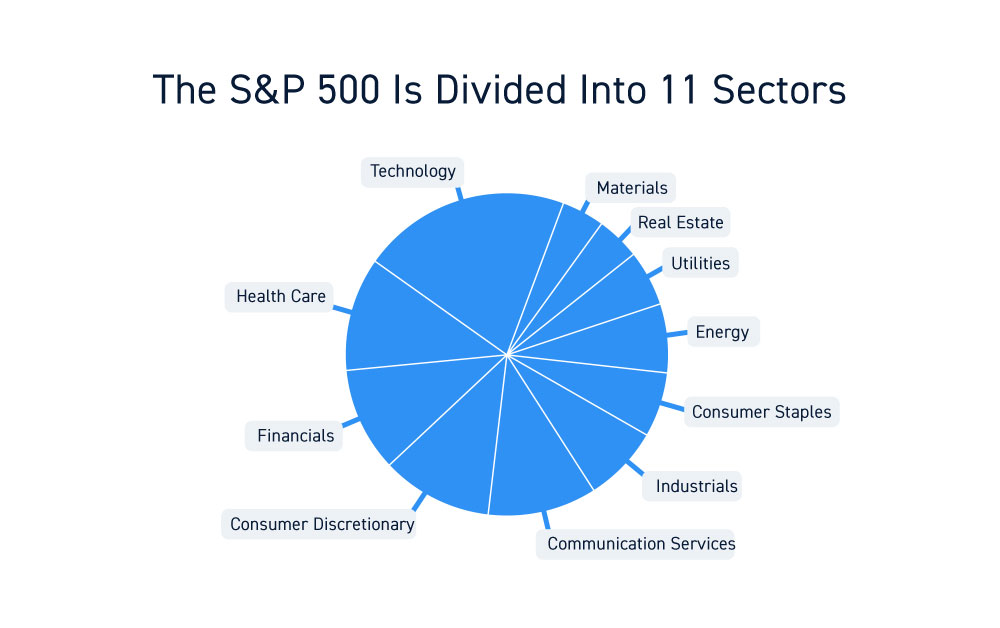
The 500 companies within the index are not concentrated in a single industry; rather, they span all major economic sectors. These typically include:
-
Information Technology: (e.g., Apple, Microsoft, NVIDIA)
-
Healthcare: (e.g., Johnson & Johnson, UnitedHealth Group, Pfizer)
-
Financials: (e.g., JPMorgan Chase, Bank of America, Visa)
-
Consumer Discretionary: (e.g., Amazon, Tesla, Home Depot)
-
Communication Services: (e.g., Alphabet, Meta Platforms, Verizon)
-
Industrials: (e.g., Boeing, General Electric, Caterpillar)
-
Consumer Staples: (e.g., Procter & Gamble, Coca-Cola, Walmart)
-
Energy: (e.g., ExxonMobil, Chevron)
-
Utilities: (e.g., NextEra Energy, Duke Energy)
-
Materials: (e.g., Linde, Sherwin-Williams)
-
Real Estate: (e.g., American Tower, Prologis)
This broad diversification ensures that the S&P 500 isn’t merely measuring the tech sector or the financial sector, but rather a comprehensive cross-section of the entire U.S. economy. Changes in sector weightings over time also reflect underlying shifts in the economy, such as the increasing dominance of technology companies over the past few decades. This dynamic rebalancing ensures the index remains relevant and representative.
Tracking Corporate Health and Profitability
Ultimately, the value of the S&P 500 is driven by the collective earnings, revenues, and future growth prospects of its constituent companies. When companies in the index are profitable, growing, and optimistic about their future, their stock prices tend to rise, pulling the index higher. Conversely, weaker earnings, declining sales, or a bleak outlook will likely depress stock prices and, consequently, the S&P 500.
Therefore, the index serves as a real-time proxy for the health and vitality of corporate America. It reflects consumer spending patterns, business investment, innovation cycles, and global economic trends that impact multinational corporations. By monitoring its performance, one effectively tracks the aggregated financial health of the nation’s most powerful economic players.
A Reflection of Innovation and Economic Shifts
The S&P 500 is not static. The S&P Dow Jones Indices committee regularly reviews its constituents, adding new companies that meet the criteria and removing those that no longer qualify (due to declining market cap, mergers, acquisitions, or financial distress). This dynamic nature means the S&P 500 is constantly evolving, reflecting the rise and fall of industries and the ongoing shifts in the American economy. For example, companies like Blockbuster once dominated, but today’s index is filled with tech giants like Apple and Google, showcasing how innovation and consumer preferences reshape economic landscapes. This constant curation ensures the index remains a relevant and forward-looking measure.
Why the S&P 500 Matters to Investors and Economists
The S&P 500’s significance extends far beyond being just a financial statistic; it serves as a critical tool for various stakeholders in the financial world.
The Benchmark for Performance
For portfolio managers, mutual fund companies, and individual investors, the S&P 500 is the gold standard for measuring investment performance. If a fund manager claims to “beat the market,” they are almost invariably comparing their portfolio’s returns against the S&P 500’s performance over the same period. This makes it an essential yardstick for evaluating the skill and effectiveness of active investment strategies. Similarly, individual investors often benchmark their personal portfolios against the S&P 500 to understand how their investments are performing relative to a broad market average.
A Tool for Portfolio Diversification
For many investors, particularly those adopting a passive or long-term strategy, the S&P 500 is not just a benchmark but also an investment vehicle itself. Investing in an S&P 500 index fund or an Exchange Traded Fund (ETF) that tracks the S&P 500 allows investors to gain immediate, diversified exposure to 500 large U.S. companies with a single purchase. This strategy offers broad market coverage, reduces idiosyncratic risk associated with individual stocks, and typically comes with very low management fees, making it an incredibly popular and efficient way to participate in the growth of the U.S. economy.
Understanding Economic Cycles
Economists and policymakers closely monitor the S&P 500 as an indicator of economic health and future trends. A sustained rise in the index can suggest a period of economic expansion, consumer confidence, and corporate growth. Conversely, a prolonged decline often precedes or coincides with economic contractions, recessions, or periods of high uncertainty. Its movements are frequently correlated with other key economic indicators like GDP growth, inflation, and unemployment rates, making it an invaluable data point for macroeconomic analysis and forecasting.
Investing in the S&P 500: Practical Considerations
Given its importance, many individuals seek to invest in the S&P 500. It’s a cornerstone for long-term wealth building, but it’s important to understand how to approach it.
Index Funds and ETFs
The most common and efficient way for individual investors to gain exposure to the S&P 500 is through index funds or Exchange Traded Funds (ETFs). These are investment vehicles that hold all 500 stocks (or a representative sample) in the same proportions as the S&P 500 index itself. They are passively managed, meaning they don’t have a fund manager actively picking stocks, which results in significantly lower fees compared to actively managed mutual funds. Popular examples include funds offered by Vanguard, iShares, and SPDR. These instruments provide immediate diversification, broad market exposure, and a straightforward way to track the performance of the U.S. large-cap market.
Long-Term Perspective and Volatility
While the S&P 500 has demonstrated impressive long-term growth and resilience, averaging around 10-12% annual returns over several decades (including dividends), it is not without short-term volatility. The index can experience significant swings, both up and down, on a daily, weekly, or monthly basis in response to market news, economic data, or geopolitical events. Therefore, investing in the S&P 500 requires a long-term perspective. Investors should be prepared to weather market downturns and avoid making impulsive decisions based on short-term fluctuations. A strategy like dollar-cost averaging, where one invests a fixed amount regularly regardless of market movements, can help mitigate the impact of volatility over time.
Common Misconceptions and Nuances
Despite its widespread recognition, a few common misunderstandings about the S&P 500 persist.
Not the “Entire” U.S. Market
While highly representative, the S&P 500 does not measure the entirety of the U.S. stock market. It specifically focuses on large-cap companies. It excludes smaller public companies (small-cap) and medium-sized companies (mid-cap). Other indices, such as the Russell 2000 (for small-cap) or the S&P MidCap 400, exist to measure these other segments. For a truly “total market” view, an investor would typically combine exposure to the S&P 500 with these other indices.

Beyond Just U.S. Revenue
It’s also important to remember that many of the companies included in the S&P 500 are multinational corporations with significant portions of their revenue and operations derived from outside the United States. While they are U.S.-domiciled, their performance is often influenced by global economic conditions, international trade policies, and foreign currency fluctuations. Therefore, while it is a U.S. index, its performance is indirectly a reflection of global economic health through the lens of its globally integrated U.S. corporations.
In conclusion, the S&P 500 is a sophisticated and dynamic measure, far more than just a simple average. It serves as a vital barometer of U.S. corporate health and economic performance, driven by the collective strength and innovation of its 500 largest publicly traded companies. For investors, it is an indispensable benchmark and a highly efficient avenue for diversified long-term growth. For economists, it offers critical insights into market sentiment and economic cycles. Understanding “what the S&P 500 measures” is therefore central to comprehending the intricate world of finance and investing.
aViewFromTheCave is a participant in the Amazon Services LLC Associates Program, an affiliate advertising program designed to provide a means for sites to earn advertising fees by advertising and linking to Amazon.com. Amazon, the Amazon logo, AmazonSupply, and the AmazonSupply logo are trademarks of Amazon.com, Inc. or its affiliates. As an Amazon Associate we earn affiliate commissions from qualifying purchases.