
For anyone navigating the complex world of investing, understanding the symbols and benchmarks that define market performance is crucial. The S&P 500 is arguably the most referenced and significant stock market index globally, serving as a primary barometer for the health of the U.S. economy and the broader equity market. So, what exactly is its symbol, and why does this seemingly simple detail unlock a wealth of financial insight?
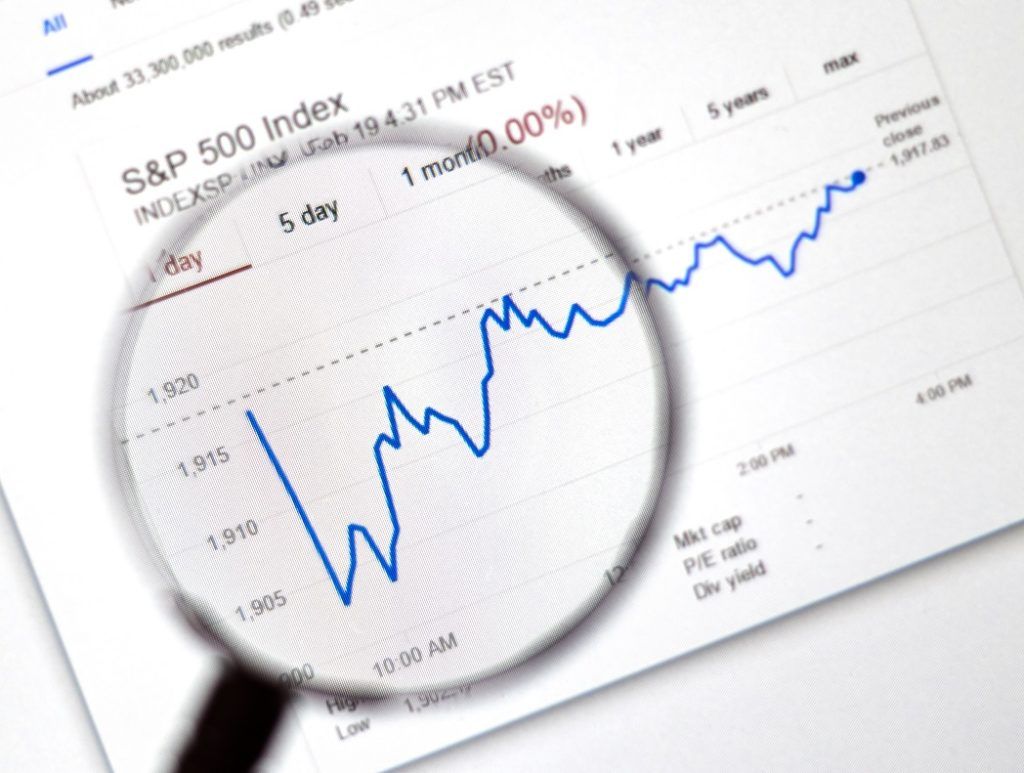
The symbol for the S&P 500 is not a single, universally applied ticker in the same way a specific company stock has one. Instead, its representation varies slightly depending on the financial platform or the specific financial product tracking it. The most common and widely recognized symbols associated with the S&P 500 are:
-
^GSPC: This is often used by data providers like Yahoo Finance to represent the S&P 500 index itself. It reflects the live, calculated value of the index.
-
SPX: This symbol is frequently used by professional traders, particularly in options and futures markets, and financial news services like Bloomberg. It represents the actual S&P 500 index value.
-
SPY: This is the ticker symbol for the SPDR S&P 500 ETF Trust, one of the largest and most liquid Exchange-Traded Funds (ETFs) designed to track the performance of the S&P 500 index. While not the index itself, it’s the most common way investors buy and sell exposure to the S&P 500. Other popular ETFs tracking the S&P 500 include IVV (iShares Core S&P 500) and VOO (Vanguard S&P 500 ETF).
Understanding these distinctions is the first step in leveraging the S&P 500 for informed financial decision-making, whether you’re tracking market trends or building an investment portfolio.
Decoding the S&P 500: More Than Just a Symbol
The S&P 500 is far more than just a collection of letters and numbers; it’s a meticulously constructed index that offers a window into the core of the American financial landscape. To truly appreciate its significance, one must delve into its composition and methodology.
The Official Symbol and Its Practicality
As established, the “symbol” for the S&P 500 can be contextual. For tracking the index’s actual value in real-time on financial news websites or through data APIs, you’ll most often encounter ^GSPC or SPX. These symbols represent the underlying benchmark itself, reflecting the collective performance of its 500 constituent companies. When discussing historical performance, market analysts will refer to the “S&P 500 index.”
However, for investing directly in the S&P 500, the most practical symbols are the tickers of ETFs and mutual funds designed to mirror its performance. SPY is the venerable veteran, having been launched in 1993 as the first U.S. ETF. Other popular choices like IVV and VOO offer similar exposure, often with slightly lower expense ratios, making them attractive to long-term investors. These ETF symbols are what you’d enter into your brokerage account to buy or sell a piece of the S&P 500.
What the S&P 500 Represents
The S&P 500 is a market-capitalization-weighted index, meaning companies with larger market values have a greater impact on the index’s movement. It comprises 500 of the largest publicly traded companies in the United States, selected by a committee at S&P Dow Jones Indices. The selection criteria are rigorous, focusing on factors such as:
-
Size: Companies generally must have a market capitalization of at least $14.6 billion.
-
Liquidity: Shares must be highly liquid, meaning they are frequently traded.
-
Public Float: A significant portion of shares must be available to the public for trading.
-
Profitability: Companies must have positive reported earnings in the most recent quarter and over the previous four consecutive quarters.
-
Sector Representation: The committee also considers balancing sector representation to ensure the index accurately reflects the broader U.S. economy.
Because of this careful curation, the S&P 500 is widely regarded as an excellent proxy for the overall U.S. stock market and, by extension, the health of the American economy. Its components span a diverse array of industries, from technology giants and financial institutions to healthcare providers and consumer staples companies, providing broad exposure to different economic sectors.
The S&P 500 as a Cornerstone of Investing
For both novice and seasoned investors, the S&P 500 is more than just a news headline; it’s a foundational element of sound investment strategy. Its consistent, long-term performance and broad market exposure make it an indispensable tool for financial growth.
Why Investors Track the S&P 500
Investors track the S&P 500 for several compelling reasons:
-
Performance Benchmark: It serves as the most common benchmark against which actively managed portfolios and individual stock picks are measured. If your portfolio consistently underperforms the S&P 500 over time, it suggests that a passive investment in an S&P 500 index fund might be a more efficient strategy.
-
Economic Indicator: The performance of the S&P 500 is often seen as a leading indicator of economic health. Rising markets tend to reflect investor confidence in future corporate earnings and economic growth, while downturns can signal impending challenges.
-
Diversification: By investing in a fund that tracks the S&P 500, investors instantly gain exposure to 500 large, established U.S. companies across various sectors. This inherent diversification significantly reduces the risk associated with investing in individual stocks, as the underperformance of one company is typically offset by the strong performance of others.
Understanding its Historical Performance
The S&P 500 has a remarkable track record of long-term growth. While past performance is no guarantee of future results, the index has historically delivered an average annual return of approximately 10-12% over extended periods (e.g., several decades). This powerful compounding effect is a cornerstone of wealth creation.
However, it’s crucial to acknowledge that this long-term average is punctuated by significant periods of volatility, including bear markets and crashes. The dot-com bubble, the 2008 financial crisis, and the COVID-19 pandemic all saw substantial drawdowns in the S&P 500. Yet, in each instance, the market eventually recovered and reached new highs, demonstrating its resilience and the importance of a long-term investment horizon. This historical pattern reinforces the concept of “time in the market” being more critical than “timing the market.”
How to Invest in the S&P 500
Directly investing in all 500 companies of the S&P 500 would be impractical for most individual investors. Fortunately, financial innovation has provided highly efficient and accessible ways to gain exposure to the index.
Exchange-Traded Funds (ETFs): The Most Common Approach

ETFs are by far the most popular and convenient method for individual investors to invest in the S&P 500. As mentioned, SPY, IVV, and VOO are the leading examples.
-
How they work: These funds hold a basket of stocks that mirrors the S&P 500 index. When you buy shares of an S&P 500 ETF, you are essentially buying a tiny piece of all 500 companies in the index.
-
Benefits:
-
Diversification: Instant access to 500 companies, reducing single-stock risk.
-
Low Expense Ratios: Because they passively track an index rather than requiring active management, S&P 500 ETFs typically have very low expense ratios (e.g., 0.03% to 0.09%), meaning more of your money stays invested.
-
Liquidity: ETFs trade like stocks on major exchanges throughout the day, offering flexibility for buying and selling.
-
Accessibility: Most brokerage accounts offer commission-free trading on many ETFs, making them highly accessible for investors of all sizes.
-
Index Mutual Funds
Before ETFs gained widespread popularity, index mutual funds were the primary way to invest passively. Funds like the Vanguard 500 Index Fund Admiral Shares (VFIAX) offer similar exposure to the S&P 500.
-
How they work: Similar to ETFs, they hold the underlying stocks of the S&P 500.
-
Key difference: Mutual funds are typically traded once per day at their Net Asset Value (NAV) after the market closes, unlike ETFs which trade continuously. They often require higher minimum initial investments compared to ETFs. However, they remain an excellent option, especially within employer-sponsored retirement plans like 401(k)s.
Futures Contracts and Options
For more sophisticated investors and traders, futures contracts and options based on the S&P 500 index provide leveraged ways to speculate on or hedge against market movements.
-
E-mini S&P 500 futures (ES): These are standardized, exchange-traded contracts that obligate the buyer to purchase, or the seller to sell, a specific quantity of the S&P 500 index at a predetermined price on a future date. They are highly leveraged and entail significant risk.
-
Options on SPX or SPY: Options contracts give the holder the right, but not the obligation, to buy or sell the S&P 500 index (via SPX options) or the SPY ETF (via SPY options) at a specific price within a specific timeframe. These are also complex instruments best suited for experienced investors who understand their inherent risks.
Strategic Considerations for S&P 500 Investing
Simply choosing an S&P 500 fund is a great start, but maximizing its potential requires strategic thinking aligned with personal financial goals and risk tolerance.
Dollar-Cost Averaging and Long-Term Horizon
One of the most effective strategies when investing in the S&P 500 is dollar-cost averaging. This involves investing a fixed amount of money at regular intervals (e.g., monthly), regardless of market fluctuations. When prices are high, you buy fewer shares; when prices are low, you buy more. This strategy helps mitigate the risk of investing a lump sum at an inopportune time and encourages a disciplined, long-term approach.
Coupled with dollar-cost averaging, maintaining a long-term investment horizon (10+ years) is critical. The S&P 500’s power lies in its historical ability to recover from downturns and deliver substantial returns over decades, allowing the magic of compounding to work its wonders.
The Role of Diversification Beyond the S&P 500
While the S&P 500 offers excellent diversification within large-cap U.S. stocks, it’s not the entire universe of investment opportunities. A truly diversified portfolio might also include:
-
International Stocks: Exposure to developed and emerging markets outside the U.S.
-
Small-Cap Stocks: Companies with smaller market capitalizations, which can offer different growth profiles.
-
Bonds: Fixed-income securities can provide stability and income, particularly during equity market downturns, and typically have a lower correlation with stocks.
-
Other Asset Classes: Real estate, commodities, or alternative investments, depending on individual circumstances and expertise.
The ideal level of diversification depends on your age, financial goals, and risk tolerance. For many investors, a core S&P 500 holding complemented by international stocks and bonds forms a robust foundation.
Expense Ratios and Tax Efficiency
When investing in S&P 500 index funds or ETFs, minimizing costs is paramount. Even a seemingly small difference in expense ratios (e.g., 0.03% vs. 0.50%) can translate into significant differences in returns over decades due to compounding. Always opt for funds with the lowest possible expense ratios.
Tax efficiency is another crucial consideration. Holding S&P 500 funds in tax-advantaged accounts like 401(k)s, IRAs (Traditional or Roth), or 529 plans can allow your investments to grow tax-deferred or tax-free, significantly enhancing long-term returns. Understanding capital gains taxes and how they apply to investments held in taxable brokerage accounts is also important.
Dispelling Common Myths and Misconceptions
Despite its popularity, the S&P 500 is often subject to misunderstandings that can lead to suboptimal investment decisions.
“The S&P 500 is the Entire Market”
This is a widespread misconception. While the S&P 500 represents about 80% of the total market capitalization of the U.S. equity market, it explicitly excludes small-cap and mid-cap companies. It also doesn’t include international stocks, bonds, real estate, or other asset classes. A portfolio consisting solely of an S&P 500 fund is well-diversified within large U.S. equities, but not across all asset classes or geographies.
“Investing in the S&P 500 is Risk-Free”
No investment in the stock market is truly risk-free, and the S&P 500 is no exception. While it has demonstrated remarkable resilience and long-term growth, it is subject to market volatility. Investors can and do experience significant drawdowns and even losses over shorter time frames (e.g., during bear markets). The “risk” is primarily tied to the timeframe—short-term capital preservation is not guaranteed, but long-term capital growth has historically been highly probable.

“You Need to Actively Manage S&P 500 Investments”
One of the greatest advantages of S&P 500 index investing is its passive nature. The goal is to track the market, not beat it. This means for most investors, the strategy involves a “buy and hold” approach, potentially coupled with dollar-cost averaging, and occasional rebalancing (if other asset classes are involved). Constantly checking prices, reacting to news, or attempting to time the market with S&P 500 funds is usually counterproductive and can lead to worse returns due to transaction costs and emotional decision-making.
In conclusion, knowing the symbol for the S&P 500 is merely the entry point into a deeper understanding of this powerful financial benchmark. Whether you refer to it as ^GSPC, SPX, or invest through SPY, IVV, or VOO, the S&P 500 represents an accessible, diversified, and historically robust avenue for long-term wealth creation. By understanding its structure, leveraging strategic investment practices, and debunking common myths, investors can harness the S&P 500’s potential to achieve their financial aspirations.
aViewFromTheCave is a participant in the Amazon Services LLC Associates Program, an affiliate advertising program designed to provide a means for sites to earn advertising fees by advertising and linking to Amazon.com. Amazon, the Amazon logo, AmazonSupply, and the AmazonSupply logo are trademarks of Amazon.com, Inc. or its affiliates. As an Amazon Associate we earn affiliate commissions from qualifying purchases.