
The S&P 500, short for the Standard & Poor’s 500, is far more than just a string of letters and numbers; it is arguably the most significant and widely followed stock market index in the world. Representing 500 of the largest publicly traded companies in the United States, it serves as a critical barometer for the health of the U.S. economy and the broader global financial market. For investors, economists, and policymakers alike, understanding the S&P 500 is fundamental to grasping the dynamics of wealth creation, market trends, and economic performance. This comprehensive guide will delve into the intricacies of this pivotal index, exploring its composition, significance, and how individuals can engage with it as part of their financial strategy.
Understanding the S&P 500: A Market Benchmark
At its core, the S&P 500 is a stock market index that tracks the performance of 500 large companies listed on U.S. stock exchanges. It is a capitalization-weighted index, meaning companies with larger market values have a greater impact on the index’s movement than smaller companies. This structure ensures that the index accurately reflects the overall market value of its constituents.
Definition and Origins
The S&P 500 was introduced by Standard & Poor’s (now S&P Dow Jones Indices) on March 4, 1957, though its origins trace back to an earlier index established in 1923. Its primary purpose was to provide a comprehensive and reliable measure of large-cap U.S. equities. Unlike the Dow Jones Industrial Average, which comprises only 30 stocks, the S&P 500’s broader representation offers a more encompassing view of the market, making it a superior indicator for professionals and individual investors seeking a benchmark for the broader economy.
The Role of S&P Dow Jones Indices
S&P Dow Jones Indices, a joint venture between S&P Global, CME Group, and News Corp, is responsible for maintaining the S&P 500. This entity employs a committee that regularly reviews and adjusts the index’s composition. Their decisions are based on a set of criteria designed to ensure the index remains relevant and representative of the U.S. large-cap market. This ongoing oversight is crucial for the index’s integrity and its utility as a market indicator.
Criteria for Inclusion
Companies are not arbitrarily selected for the S&P 500. There’s a rigorous selection process involving several key criteria:
-
Market Capitalization: A company must have an unadjusted market cap of at least USD 14.5 billion (this figure is subject to change based on market conditions).
-
Liquidity: There must be sufficient public float and trading volume to ensure the stock is highly liquid.
-
Domicile: The company must be a U.S. company.
-
Profitability: The sum of a company’s generally accepted accounting principles (GAAP) earnings for the trailing four consecutive quarters must be positive, and its most recent quarter must also be positive.
-
Sector Representation: While not strictly adhering to sector quotas, the committee aims to ensure that the index broadly reflects the sector composition of the large-cap U.S. equity market. These criteria ensure that the index includes mature, established, and financially sound companies.
Why the S&P 500 Matters to Investors and the Economy
The S&P 500’s influence extends far beyond mere market tracking; it is deeply embedded in financial discourse and investment strategy. Its importance stems from its comprehensive nature and its role as a proxy for the overall U.S. economic environment.
A Barometer of U.S. Economic Health
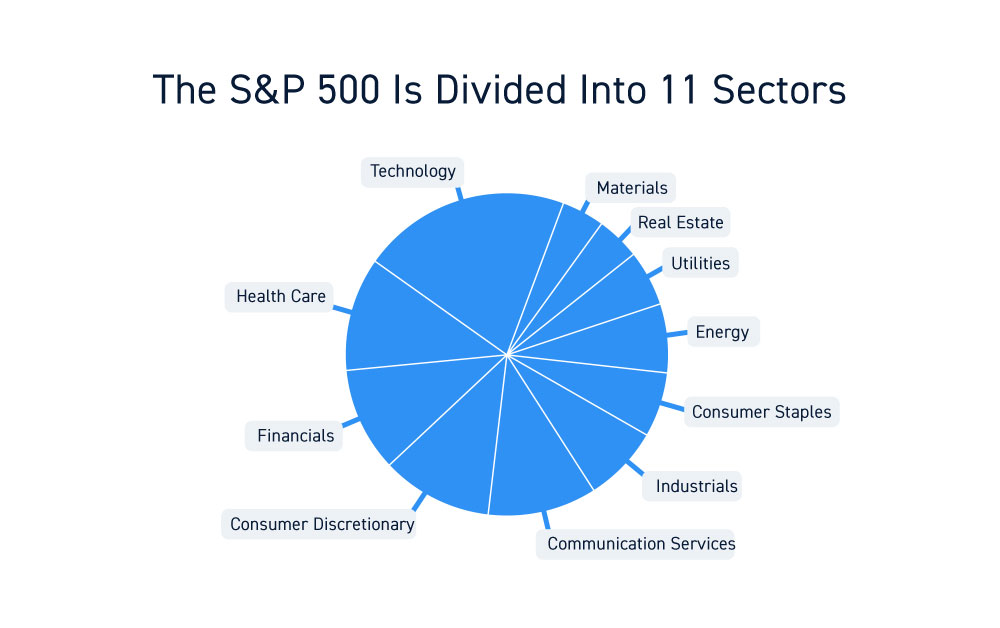
Because it comprises the largest and most influential companies across diverse sectors—including technology, finance, healthcare, consumer goods, and industrials—the S&P 500 is widely considered the best single gauge of large-cap U.S. equities and a leading indicator of the U.S. economy’s health. When the S&P 500 is performing well, it often signals investor confidence, corporate profitability, and robust economic growth. Conversely, a significant decline can indicate economic headwinds, recessionary fears, or a crisis of confidence. Its movements are closely watched by central banks, governments, and businesses to assess current conditions and forecast future trends.
Diversification and Large-Cap Representation
The index provides a built-in level of diversification for investors. By encompassing 500 companies from various industries, it inherently reduces the risk associated with investing in individual stocks or a concentrated portfolio. A downturn in one sector might be offset by growth in another, smoothing overall returns. Furthermore, these 500 companies represent the backbone of corporate America, offering exposure to established market leaders with proven business models and often global operations, making them generally less volatile than smaller, less established companies.
Performance Benchmark for Funds
For professional money managers and financial advisors, the S&P 500 serves as a crucial benchmark against which to measure the performance of their actively managed funds. An equity fund manager might boast of “outperforming the S&P 500,” indicating that their strategy generated higher returns than simply investing in the index itself. This benchmarking allows investors to evaluate whether the fees they pay for active management are justified by superior returns or if a passive, index-tracking approach would have been more effective. The prevalence of S&P 500-indexed mutual funds and ETFs further highlights its role as an investable benchmark.
How to Invest in the S&P 500
For many investors, the appeal of the S&P 500 lies not just in its information value, but in its accessibility as an investment vehicle. Investing in the S&P 500 does not mean buying 500 individual stocks; rather, it involves utilizing financial products designed to mirror the index’s performance.
Index Funds: Passive Investing Power

The most common way for individual investors to gain exposure to the S&P 500 is through an S&P 500 index fund. These are mutual funds that aim to replicate the performance of the index by investing in all (or a representative sample) of the 500 companies in the same proportions as the index itself. Index funds are a cornerstone of passive investing, offering broad diversification at very low costs due to minimal management intervention. They are ideal for long-term investors seeking market-average returns without the need for active stock picking.
Exchange-Traded Funds (ETFs): Flexibility and Access
Similar to index funds, Exchange-Traded Funds (ETFs) that track the S&P 500 offer another highly popular and accessible investment avenue. ETFs are like mutual funds but trade on stock exchanges throughout the day, just like individual stocks. This provides greater flexibility for investors who might want to buy or sell shares at specific prices during market hours. S&P 500 ETFs also typically have very low expense ratios, making them a cost-effective choice for long-term growth and portfolio diversification. Popular examples include SPY, IVV, and VOO.
Individual Stocks: Not Direct S&P 500 Investment, but Related Strategy
While you cannot directly “invest in the S&P 500” by buying a single security, understanding its composition can inform individual stock selection. Investors can choose to invest in individual companies that are part of the S&P 500. This approach allows for greater customization and potentially higher returns (or losses) if those specific companies outperform the broader index. However, it foregoes the inherent diversification of an index fund or ETF and requires more research and active management. For most retail investors seeking broad market exposure, index funds or ETFs tracking the S&P 500 are a more practical and prudent choice.
Analyzing S&P 500 Performance and Risk
Understanding the S&P 500 also requires an appreciation of its historical performance, the inherent risks of equity investing, and how its structure mitigates some of these.
Historical Returns and Long-Term Growth
Historically, the S&P 500 has demonstrated impressive long-term growth. Over many decades, its average annual return has been in the range of 10-12%, factoring in reinvested dividends. This makes it a compelling option for long-term wealth accumulation, benefiting from the power of compound interest. However, it’s crucial to remember that past performance is not indicative of future results, and returns can vary significantly year-to-year. The long-term perspective is key here; short-term fluctuations are common, but the overall trend has been upward over extended periods.
Volatility and Market Fluctuations
Despite its long-term upward trend, the S&P 500 is not immune to volatility. Market corrections (declines of 10% or more) and bear markets (declines of 20% or more) are a normal part of the economic cycle. Geopolitical events, economic recessions, interest rate changes, and company-specific news can all cause the index to swing significantly. Investors in S&P 500 products must be prepared for these fluctuations and ideally have a long-term investment horizon to ride out downturns and benefit from subsequent recoveries. Emotional reactions to short-term market movements are often detrimental to long-term financial goals.
Diversification Within the Index
While investing in the S&P 500 provides diversification across 500 companies, it’s important to recognize that the index itself has specific characteristics. It is entirely focused on U.S. large-cap equities, meaning it doesn’t provide direct exposure to small-cap companies, international markets, or other asset classes like bonds or real estate. For true portfolio diversification, investors often combine S&P 500 exposure with other investments to create a well-rounded portfolio that aligns with their risk tolerance and financial objectives. This strategy helps mitigate risks specific to large-cap U.S. stocks.
The Future and Impact of the S&P 500
The S&P 500 is not a static entity; it continuously evolves, reflecting shifts in the U.S. economy and global markets. Its ongoing relevance is tied to its adaptive nature and its deep influence on investor sentiment and financial decision-making worldwide.
Adapting to Economic Shifts
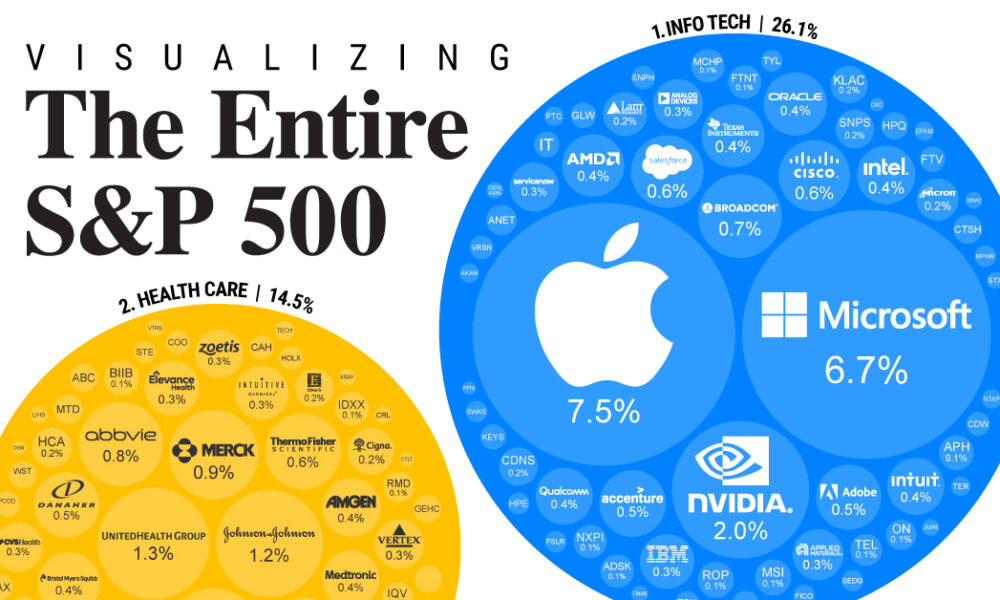
The S&P 500 committee regularly rebalances the index, adding companies that have grown into large-cap giants and removing those that have shrunk, been acquired, or no longer meet the inclusion criteria. This dynamic adjustment ensures that the index remains a current and accurate reflection of the leading companies in the U.S. economy. As industries rise and fall, so too does their representation within the index, mirroring the broader economic landscape and technological advancements that shape corporate America. For instance, the growing dominance of technology companies in recent decades is clearly reflected in their significant weighting within the S&P 500.
Global Influence and Investor Sentiment
While a U.S.-centric index, the S&P 500’s influence extends globally. Given the U.S. economy’s size and global interconnectedness, the performance of the S&P 500 is closely watched by investors, businesses, and governments around the world. It often acts as a leading indicator for global market sentiment, with significant movements in the S&P 500 frequently spilling over into other international markets. Its robust performance can instill confidence in global markets, while downturns can trigger widespread concerns about economic stability beyond U.S. borders.
Continuous Evolution of the Index
The methodology behind the S&P 500 is periodically reviewed and updated to ensure its relevance in changing market environments. As financial markets become more complex and data-driven, the committee responsible for the index adapts its rules to maintain accuracy and reliability. This commitment to continuous improvement solidifies the S&P 500’s position as a cornerstone of financial analysis and a bellwether for investment strategies for generations to come. Its enduring presence underscores its foundational role in modern finance.
In conclusion, the S&P 500 is an indispensable tool for understanding the U.S. equity market and the broader economy. As a diversified index of 500 leading U.S. companies, it offers a robust benchmark for performance and an accessible avenue for investors to participate in the growth of corporate America. Whether you’re a seasoned investor, an aspiring financial enthusiast, or simply someone trying to make sense of economic news, a clear understanding of the S&P 500 is a powerful asset in navigating the complexities of the financial world. Investing in S&P 500-tracking products provides a straightforward and cost-effective way to achieve broad market exposure and long-term wealth accumulation, making it a cornerstone for many sound financial strategies.
aViewFromTheCave is a participant in the Amazon Services LLC Associates Program, an affiliate advertising program designed to provide a means for sites to earn advertising fees by advertising and linking to Amazon.com. Amazon, the Amazon logo, AmazonSupply, and the AmazonSupply logo are trademarks of Amazon.com, Inc. or its affiliates. As an Amazon Associate we earn affiliate commissions from qualifying purchases.