
When investors and the general public refer to “S&P stock,” they are almost invariably talking about the S&P 500 Index, or more accurately, an investment vehicle that tracks this iconic benchmark. There isn’t a single “S&P stock” in the conventional sense of a share traded on an exchange; rather, S&P refers to a suite of indices created and maintained by S&P Global, a leading provider of financial market intelligence. The S&P 500 is arguably the most recognized and influential among these, serving as a critical barometer for the health of the U.S. equity market and a proxy for the broader economy.

Understanding the S&P 500 is fundamental for anyone looking to comprehend market news, evaluate investment performance, or construct a diversified portfolio. It represents a collection of 500 of the largest publicly traded companies in the United States, meticulously selected to reflect the overall market and various sectors. Investing in “S&P stock” thus means gaining exposure to the collective performance of these economic titans, offering a unique blend of diversification, growth potential, and a snapshot of corporate America’s pulse. This article will delve into what the S&P 500 truly is, how it functions, how investors can gain exposure to it, and its overarching significance in the financial world.
Unpacking the S&P: More Than Just a “Stock”
To properly address “what is S&P stock,” we must first clarify the terminology. The S&P primarily refers to the S&P 500 Index, a financial benchmark, not an individual company’s equity. This distinction is crucial for understanding how one might “invest” in it.
The S&P 500 Index: A Benchmark of U.S. Economic Health
The S&P 500, short for the Standard & Poor’s 500, is a stock market index that tracks the performance of 500 of the largest publicly traded companies in the United States. Launched in 1957, it has become the most widely followed equity index in the world, often cited as the best single gauge of large-cap U.S. equities and a leading indicator of the U.S. economy’s overall health. The companies included in the S&P 500 are selected by a committee at S&P Global, based on criteria designed to ensure they are highly representative of the broader market. These criteria include market capitalization, liquidity, public float, sector representation, and financial viability, among others. The diversity of the companies, spanning all major sectors from technology and finance to healthcare and consumer goods, provides a comprehensive view of the American corporate landscape. Its performance is often contrasted with other major indices like the Dow Jones Industrial Average (DJIA), which tracks only 30 large companies, or the Nasdaq Composite, which is heavily weighted towards technology stocks. The S&P 500’s broader representation makes it a more reliable and complete indicator of market trends and economic sentiment.
Understanding S&P Global and its Role
While the S&P 500 is an index, it is managed and maintained by S&P Global, a publicly traded company (NYSE: SPGI). S&P Global is a leading provider of transparent and independent ratings, benchmarks, analytics, and data to the capital and commodity markets worldwide. Beyond the S&P 500, the company is known for its credit ratings through S&P Global Ratings, commodity and energy insights through S&P Global Platts, and market intelligence through S&P Global Market Intelligence. S&P Dow Jones Indices, a division of S&P Global, is responsible for calculating and managing a vast array of global indices, including the S&P 500, Dow Jones Industrial Average, and many others across various asset classes, geographies, and investment strategies. This crucial distinction highlights that while S&P Global is a company whose stock you can buy (SPGI), when people talk about “S&P stock” in an investment context, they are almost certainly referring to the performance of the S&P 500 index itself.
How the S&P 500 Index Works
The S&P 500 is not a static list of companies. It is a dynamic, rules-based index designed to accurately reflect the market. Its methodology ensures it remains relevant and representative of the evolving U.S. economy.
Market-Cap Weighting: A Dominant Influence
The S&P 500 is a market-capitalization-weighted index. This means that companies with larger market capitalizations (share price multiplied by the number of outstanding shares) have a greater impact on the index’s value than smaller companies. For example, if Apple’s stock price moves by 1%, it will have a much more significant effect on the S&P 500’s overall performance than a 1% move in a smaller constituent company like Carnival Cruise Lines. This weighting methodology naturally reflects the collective judgment of investors regarding the relative size and importance of each company. It also means that the performance of the top few largest companies can often heavily influence the index’s direction, a phenomenon that has become particularly pronounced in recent years with the rise of mega-cap technology firms. The benefit of market-cap weighting is that it accurately mirrors the real-world allocation of capital in the market, as investors naturally have more money invested in larger companies.
Selection Criteria: What Makes a Company S&P 500 Worthy
The S&P Dow Jones Indices committee applies a rigorous set of criteria to determine which companies are included in the S&P 500. Key factors include:
-
U.S. Company: The company must be headquartered in the U.S.
-
Market Cap: A minimum market capitalization threshold (which can change) is required. As of late 2023, this was approximately $14.5 billion.
-
Liquidity: The stock must be highly liquid, meaning it trades frequently and in high volumes, ensuring fair pricing and ease of transaction.
-
Public Float: A substantial portion of the company’s shares must be available for public trading (not held by insiders or restricted stock).
-
Financial Viability: The company must have a history of positive earnings (sum of the most recent four consecutive quarters’ GAAP earnings must be positive, as must the most recent quarter).
-
Sector Representation: While not a strict quota, the committee aims to maintain broad sector balance to ensure the index remains a true reflection of the U.S. economy.
These criteria ensure that the index comprises robust, influential companies that are genuinely representative of the investable universe of large-cap U.S. stocks.
The Index’s Dynamic Nature: Additions and Deletions
The S&P 500 is not a fixed list. The index committee regularly reviews its constituents, making adjustments to ensure it accurately reflects market dynamics. Companies can be added if they meet the criteria and grow sufficiently large or become strategically important. Conversely, companies can be removed due to mergers, acquisitions, bankruptcy, sustained decline in market capitalization, or if they no longer meet the index’s eligibility requirements. These changes are typically announced in advance, allowing institutional investors and index funds to adjust their portfolios. This dynamic nature is crucial; it ensures the S&P 500 remains a living, breathing representation of the current U.S. economic powerhouses, constantly evolving to stay relevant.
Investing in the S&P 500: Accessing a Broad Market
Since there is no single “S&P stock,” investors gain exposure to the S&P 500 by investing in funds that aim to replicate its performance. This passive investing strategy has become immensely popular due to its simplicity, diversification, and often lower costs.
Exchange-Traded Funds (ETFs) and Mutual Funds: Your Gateway
The most common and efficient ways for individual investors to “invest in the S&P 500” are through S&P 500 Exchange-Traded Funds (ETFs) and S&P 500 index mutual funds.
-
ETFs: These are investment funds that trade on stock exchanges, much like individual stocks. An S&P 500 ETF holds shares of all 500 companies in the index (or a statistically representative sample) in the same proportions as the index. Popular examples include SPDR S&P 500 ETF Trust (SPY), iShares Core S&P 500 ETF (IVV), and Vanguard S&P 500 ETF (VOO). ETFs offer liquidity, allowing investors to buy and sell shares throughout the trading day at market prices.
-
Mutual Funds: S&P 500 index mutual funds also aim to mirror the performance of the S&P 500. Unlike ETFs, mutual funds are typically bought and sold once per day at the closing net asset value (NAV). Many prominent fund families offer S&P 500 index mutual funds, providing another convenient way for investors to gain broad market exposure.

Both ETFs and mutual funds offer instant diversification across 500 companies with a single investment, significantly reducing the company-specific risk associated with holding individual stocks.
Individual Stocks vs. Index Investing: Diversification Benefits
Attempting to replicate the S&P 500 by buying all 500 individual stocks is impractical for most investors due to the capital required and the transactional complexity. Even if possible, managing such a portfolio to match the index’s precise weightings and dynamic changes would be a full-time job. This is where index investing shines. Instead of trying to pick winning individual stocks, which is notoriously difficult and carries high risk, S&P 500 index funds offer immediate diversification. This diversification averages out the performance of the constituent companies, mitigating the impact of any single company’s poor performance and providing exposure to the overall growth of the U.S. economy. For long-term investors, this broad market exposure has historically proven to be a robust strategy.
Performance and Historical Returns: A Long-Term Perspective
The S&P 500 has a strong track record of long-term growth. Over its history, the index has delivered an average annual return of roughly 10-12% (depending on the period and whether dividends are included). While past performance is not indicative of future results, this consistent long-term growth is a key reason for its popularity among investors. The index reflects periods of significant economic expansion, technological innovation, and corporate profitability. It’s important to note that these returns come with volatility; the market experiences ups and downs, bear markets, and corrections. However, for investors with a long-term horizon, investing in the S&P 500 has historically been a powerful way to build wealth, benefiting from the compounding returns of some of the world’s most successful companies.
The S&P 500’s Significance for Investors and the Economy
The S&P 500 is more than just a list of companies; it’s a foundational element of modern finance with far-reaching implications.
A Barometer of Economic Sentiment
The S&P 500 is widely regarded as a leading indicator of U.S. economic health. Its performance often reflects investor confidence, corporate earnings expectations, and the overall macroeconomic outlook. A rising S&P 500 typically signals optimism about future economic growth, while a falling index can indicate concerns about a potential slowdown or recession. Economists, policymakers, and financial journalists closely monitor its movements as a real-time pulse of the financial markets and, by extension, the economy.
Diversification and Risk Management
For individual investors, index funds tracking the S&P 500 provide excellent diversification. By owning a piece of 500 large companies across various sectors, investors are not overly reliant on the performance of any single stock. This significantly reduces idiosyncratic risk – the risk specific to an individual company. While market risk (the risk that the entire market will decline) remains, the S&P 500 offers a balanced way to participate in the market’s growth without the intense research and risk associated with picking individual stocks. It’s a cornerstone for many diversified portfolios.
Passive Investing Strategy: Simplicity and Efficiency
The rise of S&P 500 index funds and ETFs has fueled the growth of passive investing, a strategy where investors aim to match the performance of a market index rather than trying to beat it. This approach is favored for its simplicity, low management fees (as there’s no active fund manager making daily decisions), and tax efficiency. For many, a core holding in an S&P 500 index fund forms the bedrock of their long-term investment strategy, enabling them to capture broad market returns with minimal effort.
Setting Benchmarks for Active Managers
Even active fund managers, who aim to outperform the market, rely heavily on the S&P 500. It serves as the primary benchmark against which their performance is measured. If an active fund manager invests in large-cap U.S. equities, their success is often evaluated by how well their fund performed relative to the S&P 500 over a given period. This benchmark function underscores its central role in the investment management industry, influencing everything from compensation structures to fund marketing.
Beyond the S&P 500: Other S&P Indices
While the S&P 500 is the most famous, S&P Global manages a comprehensive family of indices designed to track different segments of the market, offering specialized insights and investment opportunities.
S&P 100, S&P MidCap 400, S&P SmallCap 600
S&P Global offers indices that segment the U.S. market by company size:
-
S&P 100: This index comprises 100 large-cap companies from the S&P 500, representing the very largest and most established U.S. corporations. It’s often used when investors want to focus on mega-cap stocks.
-
S&P MidCap 400: This index tracks 400 U.S. companies with market capitalizations typically ranging from $2 billion to $10 billion. Mid-cap companies are often seen as having higher growth potential than large-caps, while being more stable than small-caps.
-
S&P SmallCap 600: This index covers 600 U.S. companies with market capitalizations generally between $700 million and $3.2 billion. Small-cap stocks are often associated with higher risk but also potentially higher reward.
These indices allow investors to gain targeted exposure to specific segments of the market based on company size, diversifying beyond just large-cap stocks.
Global Indices and Sector-Specific Benchmarks
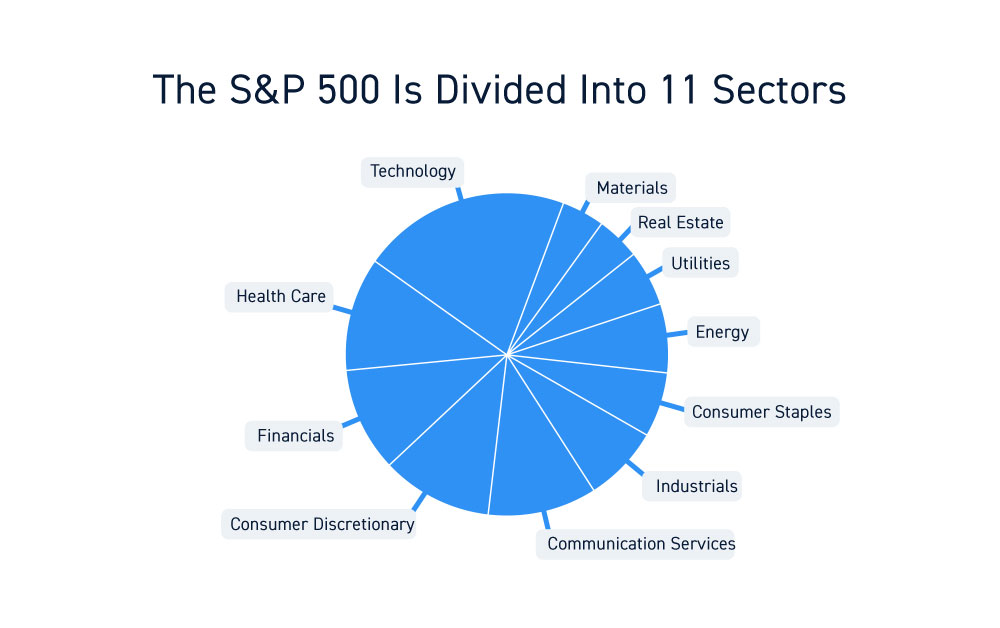
S&P Dow Jones Indices extends its reach far beyond U.S. equities. They maintain a vast array of global indices, such as the S&P Global 1200, which tracks large-cap stocks across developed and emerging markets, and regional indices for Europe, Asia, and other geographical areas. Furthermore, S&P also develops sector-specific indices, such as the S&P 500 Information Technology Index or the S&P 500 Energy Index. These allow investors to delve into specific industries, enabling targeted investment strategies based on sector performance and outlook. This comprehensive suite of indices provides the financial world with benchmarks for virtually every conceivable market segment and strategy, cementing S&P Global’s position as a cornerstone of financial market analysis.
In conclusion, “S&P stock” is a colloquial term that refers to the S&P 500 Index, a vital benchmark representing 500 of the largest U.S. companies. While you cannot buy “S&P stock” directly, you can invest in its performance through highly diversified and cost-effective ETFs and mutual funds. These investment vehicles offer investors a powerful way to gain broad market exposure, diversify their portfolios, and participate in the long-term growth of the U.S. economy, all while relying on the transparent and robust methodology provided by S&P Global.
aViewFromTheCave is a participant in the Amazon Services LLC Associates Program, an affiliate advertising program designed to provide a means for sites to earn advertising fees by advertising and linking to Amazon.com. Amazon, the Amazon logo, AmazonSupply, and the AmazonSupply logo are trademarks of Amazon.com, Inc. or its affiliates. As an Amazon Associate we earn affiliate commissions from qualifying purchases.