
Car insurance is often viewed as a static monthly expense—a necessary evil of vehicle ownership that remains fixed until an accident or a ticket forces a change. However, from a personal finance perspective, car insurance is a dynamic financial product with premiums that are subject to market shifts, underwriting adjustments, and individual risk profiles. To secure the best price, one must treat insurance not as a “set and forget” utility, but as a portfolio component that requires strategic management. Achieving the lowest possible rate without compromising essential coverage requires a deep dive into the mechanics of risk assessment, market timing, and policy optimization.
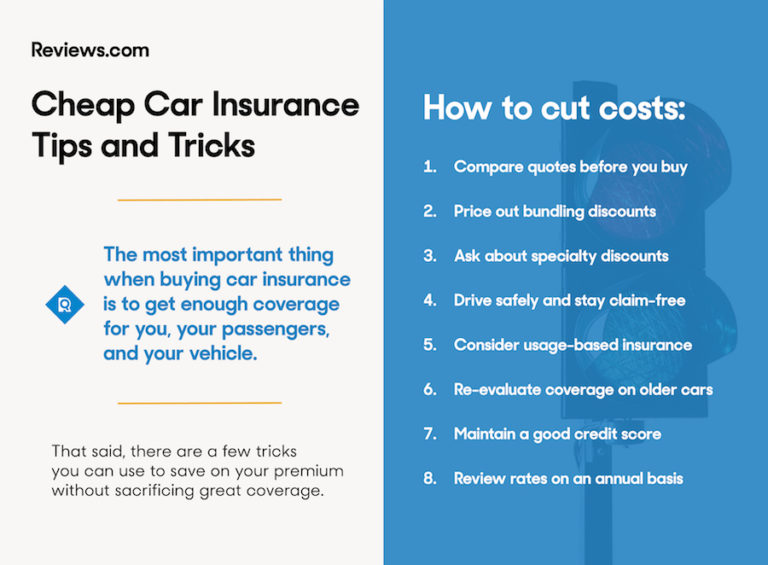
Mastering the Fundamentals of Risk Assessment and Premiums
To lower your insurance costs, you must first understand how insurance companies calculate your premium. At its core, insurance is the business of predicting the future based on historical data. Actuaries use vast datasets to determine the likelihood that a policyholder will file a claim. The higher your perceived risk, the higher your premium.
Understanding How Actuarial Data Impacts Your Rates
Insurers evaluate dozens of variables, many of which are outside your immediate control, such as your age, gender, and geographic location. For instance, living in a high-density urban area with a high rate of vehicle theft or frequent traffic accidents will naturally drive up your baseline costs compared to a rural setting. However, understanding “territorial ratings” can help you make informed decisions when moving or choosing a place of business.
Beyond geography, the specific make and model of your vehicle play a significant role. It is a common misconception that expensive cars are always more expensive to insure. In reality, insurers look at the “loss history” of a vehicle. A moderately priced sedan with poor safety ratings or high repair costs may cost more to insure than a luxury SUV equipped with advanced driver-assistance systems (ADAS). Before purchasing a vehicle, it is financially prudent to run insurance quotes on the specific VIN to understand the long-term cost of ownership.
The Correlation Between Credit Scores and Insurance Costs
In most states, insurance companies use a “credit-based insurance score” to help determine premiums. Actuarial studies have consistently shown a high correlation between credit management and insurance risk. From a financial standpoint, individuals who manage their credit effectively are statistically less likely to file claims.
If your credit score is in the “fair” or “poor” range, you may be paying 50% to 100% more for the exact same coverage as someone with “excellent” credit. Therefore, one of the most effective long-term strategies for lowering car insurance costs is improving your overall financial health. Paying down revolving debt, ensuring on-time payments, and monitoring your credit report for errors are not just good for your loan eligibility; they are direct levers you can pull to reduce your insurance overhead.
Strategic Comparison Shopping and Market Analysis
The insurance market is highly fragmented and competitive. Each company uses its own proprietary algorithm to assess risk, meaning the “best” price for one driver may be the “worst” for another. If you have been with the same carrier for more than three years, there is a high probability that you are overpaying due to a phenomenon known as “price optimization.”
Leveraging Independent Agents vs. Direct-to-Consumer Platforms
When shopping for the best price, consumers generally have two paths: direct-to-consumer platforms (like Geico or Progressive) and independent insurance agents. Direct platforms are convenient and often have lower overhead, which can translate to lower premiums for “standard” risks.
However, independent agents hold a distinct advantage for those with complex financial profiles or those seeking high-value coverage. These agents represent multiple carriers and can run your profile through several different underwriting systems simultaneously. They have access to regional players that do not spend billions on national advertising but offer highly competitive rates to attract local market share. By utilizing both methods—checking direct sites and consulting an independent agent—you ensure that you have covered the entire market spectrum.
The Hidden Danger of Price Optimization
Price optimization is a controversial data-mining practice used by some insurers to determine the maximum premium a customer is willing to pay before they switch companies. If an insurer’s data suggests you are a “loyalist” who rarely shops around, they may incrementally increase your rates over time, even if your risk profile hasn’t changed. This is often referred to as a “loyalty tax.”
To combat this, it is essential to re-shop your policy every 12 to 24 months. Even if you are satisfied with your current carrier, obtaining a lower quote from a competitor gives you leverage. In some cases, your current insurer may apply “retention discounts” to keep your business if they see you are actively looking elsewhere.
Optimizing Your Policy Structure for Long-Term Value
Getting the best price is not just about finding the lowest number; it is about ensuring the price-to-value ratio is optimized. Cutting the wrong coverage can lead to financial ruin in the event of a total loss or a significant liability claim.
Adjusting Deductibles and Coverage Limits

The deductible is your out-of-pocket cost before the insurance company pays a claim. From a cash-flow perspective, increasing your deductible from $250 to $1,000 can reduce your comprehensive and collision premiums by 15% to 30%. This is an effective strategy if you have a sufficient emergency fund to cover the $1,000 in the event of an accident. You are essentially self-insuring for small losses in exchange for a lower fixed monthly cost.
However, one area where you should never skimp is liability coverage. State minimum requirements are often laughably low—sometimes as little as $15,000 or $25,000 for bodily injury. In a modern legal environment, a single multi-car accident can result in hundreds of thousands of dollars in medical bills. If your coverage limits are too low, your personal assets, savings, and future wages are at risk. A “cheap” policy that leaves you exposed to litigation is a poor financial investment.
Deciding When to Drop Comprehensive and Collision
As a vehicle depreciates, the cost of insuring it against physical damage eventually outweighs the potential payout. A general rule of thumb in personal finance is the “10% Rule”: if the annual cost of collision and comprehensive coverage plus your deductible exceeds 10% of the car’s current market value, it may be time to drop those coverages.
For an older vehicle worth $3,000 with a $1,000 deductible, the maximum insurance payout you could receive after an accident is $2,000. If you are paying $400 a year for that specific coverage, you are paying a high premium for very little potential benefit. Reallocating those funds into a dedicated car-repair or replacement fund is often the smarter financial move.
Maximizing Discount Opportunities and Lifestyle Adjustments
Insurance companies offer a plethora of discounts that are often not automatically applied. Being proactive about identifying these can shave significant percentages off your bill.
Telematics and Usage-Based Insurance (UBI)
The most significant shift in insurance pricing over the last decade is the rise of telematics. By allowing an insurer to track your driving habits via a smartphone app or a plug-in device, you can receive a personalized rate based on how you actually drive, rather than how your demographic drives.
Usage-based insurance (UBI) tracks metrics such as hard braking, rapid acceleration, time of day, and total mileage. For low-mileage drivers or those who work from home, UBI can result in discounts of 30% or more. This turns insurance from a fixed cost into a variable cost that you can influence through safer driving behavior. If you are a high-mileage commuter or a frequent late-night driver, however, this may not be the best route for you.
Bundling Strategies and Multi-Policy Advantages
Bundling remains one of the most effective ways to secure a top-tier rate. By placing your homeowners, renters, or life insurance with the same carrier as your auto insurance, you create a “multi-policy” discount. Insurers value “multi-line” customers because they are statistically less likely to churn.
Beyond standard bundling, look for affinity discounts. Many insurers offer lower rates to members of specific professional organizations, alumni associations, or even certain employers. These “group rates” can often bypass standard pricing models, offering a flat discount that is not available to the general public.
Maintaining Low Rates Through Financial Discipline
Securing a low rate is one thing; keeping it is another. Your behavior as a policyholder dictates your future premiums more than any other factor.
The Impact of Claims History and Minor Incidents
While insurance exists to protect you from financial catastrophe, filing frequent small claims is a recipe for skyrocketing premiums. Most insurers offer a “claims-free discount” that can be as high as 20%. Filing a claim for a $700 windshield repair when you have a $500 deductible might seem like a gain of $200, but the subsequent loss of your claims-free discount over the next three to five years could cost you thousands.
For minor dings, scratches, or small glass chips, it is almost always more cost-effective to pay out of pocket. Save your insurance for the events that would cause genuine financial hardship.

Periodic Portfolio Reviews
Finally, treat your car insurance like an investment portfolio. Life changes—marriage, buying a home, a child going off to college, or retiring—all trigger significant shifts in your risk profile and eligibility for lower rates. A driver who gets married often sees a 10% drop in premiums. A driver who retires and no longer commutes can reclassify their vehicle for “pleasure use,” resulting in another significant reduction.
By staying informed, shopping strategically, and maintaining a high level of financial discipline, you can transform car insurance from an uncontrollable expense into an optimized part of your broader financial strategy. The “best price” is not a destination, but a continuous process of adjustment and market engagement.
aViewFromTheCave is a participant in the Amazon Services LLC Associates Program, an affiliate advertising program designed to provide a means for sites to earn advertising fees by advertising and linking to Amazon.com. Amazon, the Amazon logo, AmazonSupply, and the AmazonSupply logo are trademarks of Amazon.com, Inc. or its affiliates. As an Amazon Associate we earn affiliate commissions from qualifying purchases.