
In the landscape of modern investing, few companies have ignited as much debate, skepticism, and eventually, fervent enthusiasm as Palantir Technologies (PLTR). After years of being labeled a “black box” defense contractor with opaque financials and a controversial co-founder, the company has undergone a radical transformation in the eyes of Wall Street. The recent upward trajectory of Palantir’s stock is not merely a byproduct of a broader market rally; it is the result of a fundamental shift in the company’s business model, its inclusion in major market indices, and its emergence as a primary beneficiary of the generative artificial intelligence (AI) revolution.

To understand why Palantir is going up, investors must look beyond the daily price fluctuations and examine the structural pillars that are supporting this new valuation floor. From the explosive growth of its Artificial Intelligence Platform (AIP) to its newfound status as a profitable S&P 500 constituent, Palantir has moved from a speculative “meme stock” to a cornerstone of the modern enterprise software portfolio.
The AIP Catalyst: Revolutionizing the Sales Cycle and Commercial Adoption
For much of its public history, the primary criticism against Palantir was its “lumpy” revenue and long sales cycles. Selling complex data integration software to the Department of Defense or multi-national conglomerates used to take months, if not years. However, the introduction of the Artificial Intelligence Platform (AIP) changed the company’s financial DNA.
The “Boot Camp” Sales Model
The most significant driver behind Palantir’s commercial surge is its shift in go-to-market strategy. Instead of traditional, slow-moving pilot programs, Palantir introduced “AIP Boot Camps.” These are intensive, hands-on sessions where potential customers can see their own data integrated into Palantir’s ecosystem within days. This has drastically reduced the time from initial contact to contract signing. By demonstrating immediate ROI—showing a company how to optimize its supply chain or automate its logistics using Large Language Models (LLMs) in a matter of hours—Palantir has bypassed the traditional friction of enterprise software sales.
Dominance in the Commercial Sector
While Palantir’s roots are in government intelligence (Gotham), its recent stock appreciation is heavily fueled by the accelerating growth of its U.S. commercial segment. Investors reward diversification. As Palantir proves it can scale within the private sector, the market is re-rating the stock from a “government service provider” to a “SaaS powerhouse.” The exponential growth in commercial customer counts suggests that the company has finally crossed the chasm from niche tool to essential infrastructure for the modern digital enterprise.
Structural Milestones: The S&P 500 and Institutional Validation
Stock prices are driven by fundamentals, but they are also driven by the mechanics of the market. One of the most potent catalysts for Palantir’s recent rise was its official inclusion in the S&P 500 index. This transition represented more than just a badge of honor; it triggered a massive structural demand for the shares.
Passive Inflows and Index Tracking
When a company is added to the S&P 500, every exchange-traded fund (ETF) and mutual fund that tracks the index is required to purchase the stock. This creates a “forced” buying pressure that can push prices higher and, more importantly, provides a level of price stability. For Palantir, this inclusion signaled to the broader market that the company had met rigorous standards for profitability and market capitalization, effectively removing the “too risky” label that many institutional managers had previously applied.
Institutional Legitimacy
For years, Palantir was a favorite of retail investors but was often shunned by institutional “smart money” due to its unconventional governance structure and volatile earnings. The inclusion in the S&P 500, coupled with consecutive quarters of GAAP (Generally Accepted Accounting Principles) profitability, has forced institutional analysts to re-evaluate their positions. We are seeing a rotation where institutional ownership is increasing, providing a more stable foundation for the stock’s price action compared to the retail-driven volatility of 2021.
Financial Transformation: From Speculation to GAAP Profitability
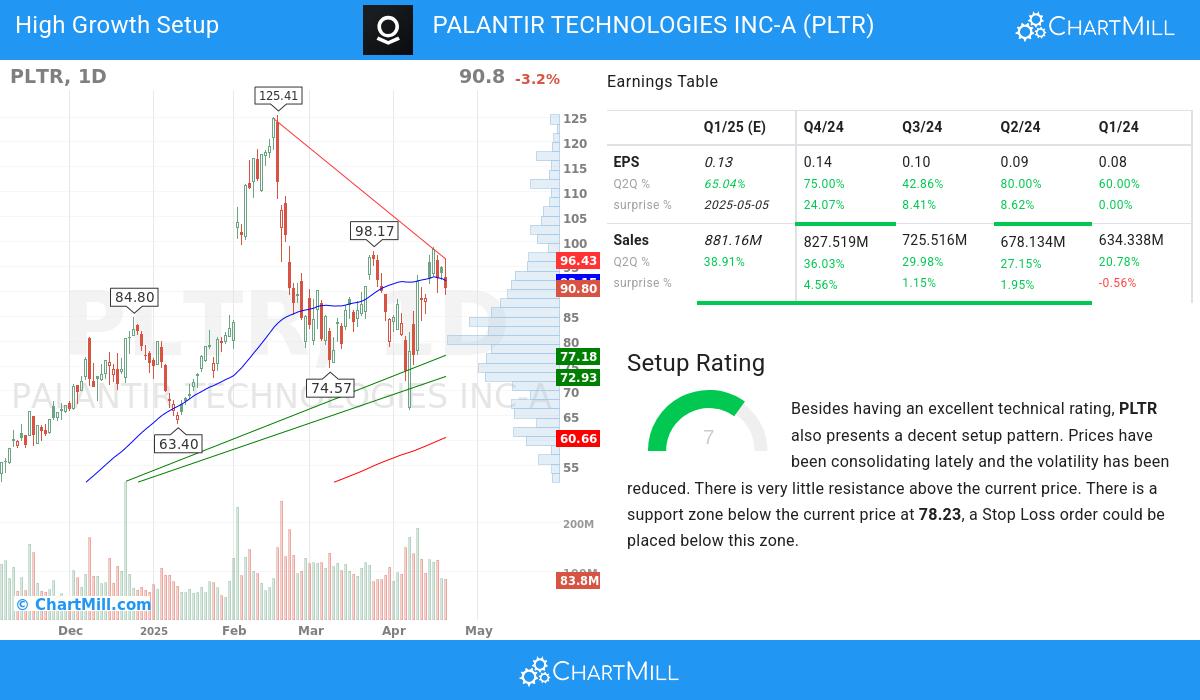
Perhaps the most concrete reason for Palantir’s upward movement is its vastly improved balance sheet. In the current high-interest-rate environment, the market has little patience for growth-at-all-costs companies that burn cash. Palantir has successfully transitioned into a high-growth, high-margin, and—most importantly—profitable enterprise.
Consistent Net Income Growth
Palantir has achieved several consecutive quarters of GAAP net income profitability. This is the “gold standard” for investors because it signifies that the company can sustain its operations and expansion through its own cash flow rather than relying on dilutive equity raises or debt. The ability to remain profitable while aggressively investing in AI research and development is a rare feat that justifies a premium valuation in the eyes of growth investors.
The Rule of 40 and Margin Expansion
In the software industry, the “Rule of 40” (the principle that a company’s combined growth rate and profit margin should exceed 40%) is a benchmark for elite performance. Palantir has consistently moved toward and exceeded this mark. Its contribution margins—the profit made on each dollar of revenue after variable costs—are exceptionally high, reflecting the scalability of its software. As the company grows, more of its revenue drops straight to the bottom line, a dynamic that investors find incredibly attractive.
The AI Moat: Beyond the Hype Cycle
While many companies have seen their stock prices rise simply by mentioning “AI” in their earnings calls, Palantir’s rally is backed by a perceived technological moat. Investors are increasingly distinguishing between “AI wrappers” (companies simply using third-party APIs) and “AI infrastructure” (companies providing the foundation for AI to work in a business context).
Solving the “Last Mile” of AI
The biggest challenge for corporations today is not finding an AI model; it’s making that model useful and safe within a complex corporate environment. This is the “last mile” problem. Palantir’s software acts as the operating system that allows AI to interact with legacy data systems while maintaining strict security and permissions. Because Palantir has spent two decades building data integration tools for the world’s most sensitive intelligence agencies, it has a head start in “sovereign” and “secure” AI that competitors are struggling to match.
Strategic Partnerships and Ecosystem Expansion
Palantir’s collaborations with hyperscalers like Microsoft Azure and Oracle Cloud have expanded its reach. These partnerships allow Palantir to deploy its software directly within the cloud environments that large enterprises already use. This “meet the customer where they are” approach has lowered the barrier to entry and accelerated the adoption of its platforms, creating a network effect that reinforces its market position.
Market Sentiment and the Scarcity Premium
Finally, the rise in Palantir’s stock can be attributed to its unique position in the market. There are very few pure-play AI companies that are profitable, growing at double-digit rates, and operating at the scale of Palantir. This creates a “scarcity premium.”
The “Must-Own” AI Play
As investors look for ways to play the AI revolution, they often look beyond hardware providers like NVIDIA. They want to own the software layer that captures the value of AI implementation. Palantir has positioned itself as the preeminent “AI implementation” play. For many portfolio managers, Palantir has become a “must-own” stock to gain exposure to the operational side of artificial intelligence, leading to a sustained demand that outweighs selling pressure.
Resilience Against Macroeconomic Headwinds
Despite concerns about global economic slowing, Palantir’s core business—efficiency and optimization—is counter-cyclical. In a downturn, companies and governments need to do more with less. Palantir’s tools are designed to find efficiencies, reduce waste, and streamline complex operations. This perceived “defensive growth” quality makes the stock an attractive option for investors who want growth exposure without the fragility of consumer-facing tech stocks.

Conclusion: A Fundamental Re-Rating
Palantir is going up because it has successfully navigated the difficult transition from a visionary startup to a mature, profitable industry leader. The confluence of the AI boom, the operational success of the AIP Boot Camps, and the mechanical boost from S&P 500 inclusion has created a “perfect storm” for the stock. While its valuation remains high by traditional metrics, the market is currently signaling that Palantir’s role as the “operating system for the modern enterprise” is a unique and highly valuable asset. As long as the company continues to demonstrate that it can turn AI hype into tangible corporate and government utility, its trajectory remains tied to its status as a foundational player in the fourth industrial revolution.
aViewFromTheCave is a participant in the Amazon Services LLC Associates Program, an affiliate advertising program designed to provide a means for sites to earn advertising fees by advertising and linking to Amazon.com. Amazon, the Amazon logo, AmazonSupply, and the AmazonSupply logo are trademarks of Amazon.com, Inc. or its affiliates. As an Amazon Associate we earn affiliate commissions from qualifying purchases.