
The quest to invest and make money fast is a universal aspiration, often fueled by tales of overnight successes and market windfalls. While the allure of rapid wealth accumulation is undeniable, the reality is far more nuanced. True financial acceleration doesn’t typically come from “get-rich-quick” schemes, but rather from a strategic combination of high-potential investment avenues, disciplined approaches, astute risk management, and often, an entrepreneurial spirit. This guide will delve into the actionable strategies and critical considerations for those looking to accelerate their financial growth responsibly and effectively, focusing on genuine opportunities rather than speculative fantasies.
The Allure and Reality of “Fast Money”
The concept of “fast money” is inherently attractive, promising a quicker route to financial independence or significant wealth. However, it’s crucial to distinguish between genuine speed and unsustainable shortcuts. Understanding this fundamental difference is the first step towards building a robust strategy for accelerated investing.
Defining “Fast”: Speed vs. Sustainability
When we talk about making money “fast” in the context of investing, it rarely implies instant wealth. Instead, it refers to strategies designed to generate returns at a pace significantly quicker than traditional, long-term, buy-and-hold approaches. This might mean achieving substantial gains within months or a few years, rather than decades. The key distinction here is sustainability. A truly “fast” investment strategy, while aggressive, should ideally be repeatable, adaptable, and based on sound financial principles, rather than fleeting market bubbles or speculative gambles that offer one-off, high-risk opportunities. The goal is accelerated growth, not a single, lucky shot. Sustainable speed requires understanding market dynamics, risk tolerance, and a commitment to continuous learning.
Dispelling Get-Rich-Quick Myths
The financial landscape is unfortunately littered with schemes promising immediate, effortless riches. These “get-rich-quick” myths often involve little to no effort, unrealistic returns, and obscure investment vehicles. Common hallmarks include guarantees of high returns with no risk, pressure to invest immediately, a lack of transparency, and reliance on recruiting others. In reality, legitimate fast money strategies in investing always involve a degree of risk, require diligent research, and often demand significant capital or active participation. Understanding that genuine acceleration comes from smart decisions and calculated risks, not magic formulas, is vital for protecting your capital and setting realistic expectations. True speed is a product of knowledge, timing, and disciplined execution.
The Core Principles of Accelerated Wealth Building
For those serious about accelerating their financial journey, several core principles underpin successful strategies. Firstly, higher returns often correlate with higher risk. This is a fundamental trade-off that cannot be ignored. Secondly, leverage, whether financial (e.g., borrowing to invest) or non-financial (e.g., leveraging skills, networks), can significantly amplify returns, but also magnify losses. Thirdly, active engagement is often required. Unlike passive index investing, strategies aiming for faster returns typically demand more research, monitoring, and decision-making. Finally, continuous learning and adaptability are paramount. Market conditions, technologies, and opportunities evolve rapidly, requiring investors to stay informed and adjust their approaches accordingly. These principles form the bedrock of any sound strategy aiming for accelerated financial growth.
High-Growth Investment Avenues for Rapid Returns
To achieve faster financial growth, investors often look beyond traditional, slow-and-steady assets towards sectors and instruments known for their volatility and potential for significant short-term gains. These avenues, while offering greater upside, inherently come with elevated risks.
Growth Stocks and Emerging Markets
Investing in growth stocks involves identifying companies expected to grow their earnings and revenues at a faster rate than the overall market. These are often disruptive innovators or companies in rapidly expanding industries. Examples include tech startups, biotechnology firms, or companies capitalizing on new consumer trends. While these stocks can skyrocket in value, they are also prone to sharp corrections if growth targets are missed or market sentiment shifts. Emerging markets offer another avenue for accelerated growth. Countries like India, Vietnam, or parts of Latin America, with rapidly industrializing economies and expanding middle classes, can present opportunities for significant returns as their markets mature. However, emerging markets come with additional risks such as political instability, currency fluctuations, and less stringent regulatory environments. Thorough due diligence and a deep understanding of geopolitical factors are critical.
Cryptocurrency: Volatility and Opportunity
Few asset classes have demonstrated the potential for rapid wealth creation — and destruction — quite like cryptocurrency. Digital assets like Bitcoin, Ethereum, and a myriad of altcoins have shown unprecedented price surges, driven by technological innovation, adoption trends, and speculative interest. The decentralized nature, global accessibility, and underlying blockchain technology present a compelling case for their long-term potential. However, the cryptocurrency market is notoriously volatile, subject to extreme price swings that can liquidate portfolios in a matter of hours. Regulatory uncertainty, security risks (like exchange hacks), and the speculative nature of many projects mean that while the potential for “fast money” is real, so is the potential for significant losses. A well-researched, diversified approach, with capital you can afford to lose, is essential for anyone considering this high-octane space.
Real Estate Flips and Short-Term Rentals
Beyond the stock market, real estate offers tangible assets with the potential for accelerated returns through specific strategies. House flipping involves purchasing undervalued properties, renovating them, and selling them quickly for a profit. Success hinges on accurately assessing renovation costs, understanding local market demand, and efficient project management. It requires capital, expertise, and a keen eye for value. Another strategy is investing in short-term rentals, such as those listed on platforms like Airbnb. By strategically acquiring properties in desirable locations and managing them efficiently, investors can generate significantly higher rental income than traditional long-term leases. This approach requires excellent management skills, customer service, and an understanding of local tourism trends and regulations. Both strategies offer faster returns than traditional buy-and-hold real estate but demand active involvement and carry risks related to market downturns, unforeseen expenses, and tenant issues.
Venture Capital and Angel Investing (for Accredited Investors)
For high-net-worth or accredited investors, Venture Capital (VC) and Angel Investing represent potentially the fastest route to exponential returns, albeit with the highest risk. This involves investing directly into early-stage startups with significant growth potential. If a company scales rapidly and achieves a successful exit (e.g., acquisition or IPO), the returns can be astronomical – 10x, 100x, or even more. However, the vast majority of startups fail, making this a highly speculative endeavor. It requires not only substantial capital but also a keen understanding of technology, market trends, and business models, often coupled with mentorship to the founders. Access to these opportunities is often limited to a select few, emphasizing the specialized nature of this high-risk, high-reward investment path.
Strategic Approaches to Maximize Investment Velocity
Simply identifying high-growth assets isn’t enough; accelerating investment returns requires strategic execution. This involves leveraging technology, understanding different trading philosophies, optimizing capital deployment, and maintaining a disciplined approach.
Leveraging Technology: Robo-Advisors and Trading Platforms
The digital age has revolutionized access to investing, democratizing tools once exclusive to institutional investors. Robo-advisors offer automated, algorithm-driven portfolio management, making it easier for new investors to build diversified portfolios aligned with their risk tolerance. While primarily geared towards long-term growth, some platforms offer tactical allocation strategies that can slightly accelerate returns within defined risk parameters. More significantly for “fast money,” advanced trading platforms provide direct access to global markets, real-time data, sophisticated analytical tools, and low-cost execution. Features like options trading, margin trading, and access to leveraged instruments (e.g., CFDs) allow experienced investors to amplify their potential returns, though they also amplify risk. The key is to use these tools intelligently, not impulsively, backed by thorough research and a clear strategy.
Active Trading vs. Long-Term Holding
The fundamental difference between active trading and long-term holding lies in their approach to market cycles and profit realization. Long-term holding (buy and hold) focuses on compounding returns over decades, riding out market fluctuations. While proven, it’s not designed for “fast money.” Active trading, on the other hand, aims to capitalize on short-term price movements. This includes day trading (buying and selling within the same day), swing trading (holding positions for a few days or weeks), and momentum trading (following trends). Active trading can generate substantial returns quickly, but it demands significant time commitment, emotional resilience, advanced analytical skills, and robust risk management. It’s a zero-sum game where consistent profitability is challenging, and most novice active traders lose money. Success requires dedication, continuous learning, and a deep understanding of technical analysis and market psychology.

Diversification for Growth, Not Just Safety
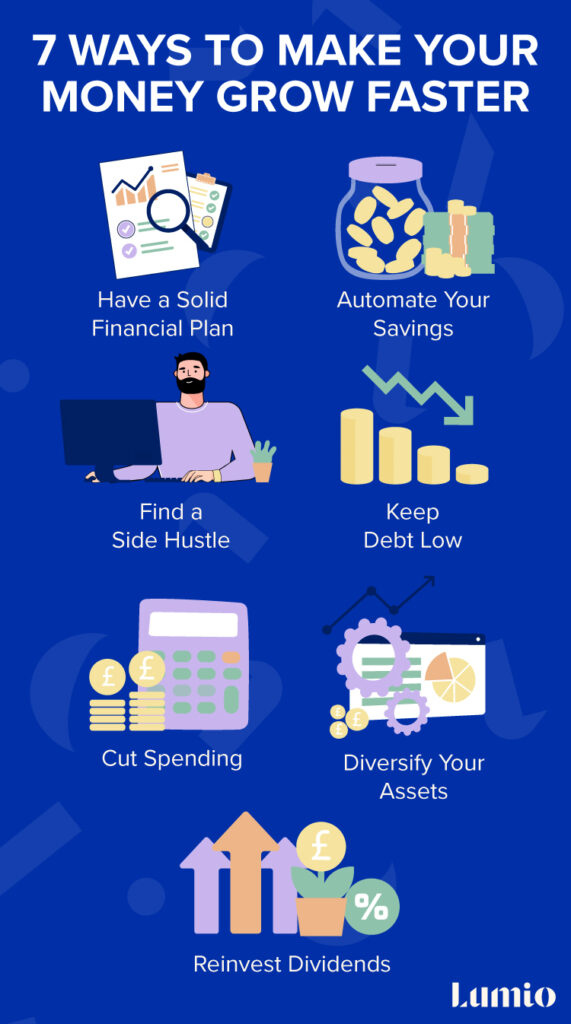
Traditional diversification advises spreading investments across various asset classes to minimize risk. While still crucial, for accelerated growth, diversification takes on a slightly different nuance. Instead of merely spreading risk, it becomes about spreading bets across multiple high-potential, yet distinct, growth avenues. This means perhaps holding a portfolio that includes a mix of aggressive growth stocks, a small allocation to cryptocurrencies, and potentially a stake in a real estate syndicate. The goal is to capture significant gains from whichever sector performs best, without putting all your “fast money” eggs in one highly volatile basket. This approach still mitigates catastrophic losses from any single underperforming asset, while maintaining overall exposure to rapid growth opportunities.
Reinvesting Profits: The Power of Compounding
One of the most powerful accelerators of wealth is the consistent reinvestment of profits. While it may not feel like a “fast” strategy in the immediate term, the exponential growth generated by compounding is unrivaled over even a moderate timeframe. When you make a profit from an investment, instead of withdrawing it, reinvesting those gains allows your capital to grow on itself. This snowball effect means that subsequent returns are earned on an ever-increasing principal amount, leading to an accelerated growth curve. For instance, if you achieve a 20% return on an investment, reinvesting that 20% profit ensures your next 20% return is calculated on a larger sum, amplifying your overall wealth much faster than if you continually withdrew profits.
Understanding Market Cycles and Timing
The ability to make money fast often correlates with an astute understanding of market cycles and timing. Markets move in cycles of expansion, peak, contraction, and trough. Investors who can identify these phases and position themselves accordingly can capture significant gains. Buying during a downturn (when assets are undervalued) and selling during an upturn (when assets are overvalued) is the essence of profitable timing. This requires deep market analysis, an understanding of macroeconomic indicators, and the discipline to go against the herd. While perfect market timing is impossible, developing the skill to identify broad trends and sentiment shifts can significantly enhance the speed at which capital grows, allowing investors to capitalize on cyclical opportunities rather than passively enduring them.
Essential Risk Management for Accelerated Investing
The pursuit of “fast money” inherently involves taking on higher risks. Therefore, robust risk management isn’t just advisable; it’s absolutely critical. Without it, the pursuit of rapid gains can quickly lead to rapid losses.
Capital Preservation: The Golden Rule
Before chasing high returns, the paramount rule for any investor, especially those seeking accelerated growth, is capital preservation. This means prioritizing the protection of your initial investment. The logic is simple: if you lose a significant portion of your capital, it takes disproportionately larger returns just to get back to square one. For example, a 50% loss requires a 100% gain just to break even. Strategies for fast money should never jeopardize your entire financial well-being. This might mean only allocating a small percentage of your total wealth to high-risk, high-reward ventures, or ensuring you have a solid emergency fund and stable investments elsewhere before venturing into more aggressive territory. Think of it as building a strong foundation before attempting to build a skyscraper quickly.
Due Diligence and Research
In the fast-paced world of high-potential investments, the importance of due diligence and thorough research cannot be overstated. “Fast money” opportunities often emerge from complex or rapidly evolving sectors. A deep dive into the underlying assets, the management team, market dynamics, competitive landscape, and regulatory environment is crucial. For growth stocks, this means scrutinizing financial statements, understanding business models, and assessing competitive advantages. For cryptocurrencies, it involves understanding the technology, use case, team, and tokenomics. For real estate, it requires market analysis, property inspections, and understanding local laws. Relying on hype or superficial information is a recipe for disaster. Investing “fast” doesn’t mean investing blindly; it means making quick, informed decisions based on comprehensive data.
Stop-Loss Orders and Position Sizing
Practical tools for managing risk in volatile markets include stop-loss orders and intelligent position sizing. A stop-loss order is an instruction to automatically sell a security when it reaches a certain price, thereby limiting potential losses. This is particularly vital for active traders or those in highly volatile assets like cryptocurrencies or growth stocks. While not foolproof (e.g., gap downs can bypass stop losses), they provide a critical safety net. Position sizing refers to determining the appropriate amount of capital to allocate to a particular investment. For high-risk, high-reward ventures, it’s prudent to only invest a small percentage of your total portfolio, typically 1-5%. This ensures that even if a single investment goes to zero, your overall financial health remains intact. These tools are indispensable for controlling downside risk while still allowing for significant upside potential.
Emotional Discipline in Volatile Markets
Perhaps the most challenging aspect of accelerated investing is maintaining emotional discipline in volatile markets. The rapid swings in asset prices can trigger fear when investments drop and greed when they soar. Both emotions can lead to irrational decisions – selling out of panic at the bottom or holding onto losing positions too long, or chasing bubbles at the peak. A disciplined investor sticks to their predetermined strategy, respects their risk parameters, and avoids making impulsive decisions based on market sentiment. Developing this discipline involves setting clear entry and exit points, adhering to stop-loss limits, and understanding that short-term fluctuations are part of the game. Successful fast money generation isn’t just about financial intelligence; it’s about emotional intelligence under pressure.
Beyond Traditional Investing: Active Income & Leverage
While traditional investing focuses on deploying capital, accelerating wealth often involves generating more capital to invest, or leveraging existing resources in creative ways. This blends financial acumen with entrepreneurial drive.
Side Hustles as Capital Generators
For many, particularly those starting with limited capital, the fastest way to get more money into high-potential investments is to generate additional income through side hustles. Instead of waiting for slow, incremental savings, a dedicated side hustle – be it freelancing, consulting, e-commerce, or developing a niche skill – can rapidly increase the capital available for investment. This active income can then be strategically deployed into the higher-growth avenues discussed earlier, effectively creating a feedback loop where increased earnings fuel increased investment, leading to faster compounding. This approach empowers individuals to take control of their capital generation rather than being solely dependent on their primary employment, significantly speeding up their journey to financial acceleration.
Business Ventures: Investing Your Time and Expertise
Beyond simply earning more, launching and scaling your own business venture is arguably the fastest way to create substantial wealth. While it demands significant time, effort, and often some initial capital, the returns can far outpace even the most aggressive stock market investments. In a business, you’re not just investing money; you’re investing your time, expertise, and strategic vision, leveraging your skills directly. A successful business provides not only potentially high income but also an asset that can be sold for a significant sum. This pathway is particularly suited for individuals with an entrepreneurial mindset, strong problem-solving skills, and a high tolerance for risk. It transforms you from a passive investor into an active value creator, often leading to exponential financial growth.
Debt Leverage (Cautionary Note)
Using debt leverage involves borrowing money to amplify investment returns. For instance, in real estate, using a mortgage allows you to control a much larger asset with a relatively small down payment. If the property appreciates, your return on the initial down payment is significantly magnified. Similarly, margin trading in stocks or options trading involves using borrowed funds to increase potential profits. While leverage can dramatically accelerate gains, it also dramatically amplifies losses. If an investment leveraged with debt declines, your losses are magnified, and you’re still obligated to repay the borrowed amount, potentially leading to financial ruin. This strategy should only be approached with extreme caution, a deep understanding of the risks, robust risk management protocols, and sufficient capital reserves to withstand adverse market movements. It is a double-edged sword that can cut both ways with alarming speed.

Continuous Learning and Skill Development
Finally, the most powerful and sustainable lever for accelerating wealth in any form is continuous learning and skill development. The financial landscape is constantly evolving, with new technologies, market trends, and investment vehicles emerging regularly. Staying informed, understanding complex financial instruments, refining analytical skills, and even developing new entrepreneurial capabilities directly translates into better investment decisions and greater earning potential. Whether it’s mastering technical analysis for active trading, understanding blockchain technology for crypto investments, or acquiring business management skills for a startup, investing in your own knowledge is an investment with an exceptionally high, and fast, rate of return that compounds throughout your life. It ensures you remain adaptable, competitive, and capable of identifying and capitalizing on the next wave of “fast money” opportunities.
In conclusion, “how to invest and make money fast” is not a question with a single, simple answer or a magic formula. It is a journey that demands a strategic blend of calculated risk-taking, continuous learning, diligent research, and unwavering discipline. By understanding the true nature of accelerated wealth, exploring high-growth avenues responsibly, employing smart strategies, managing risk effectively, and leveraging both active income and entrepreneurial spirit, you can significantly accelerate your financial trajectory and move closer to your wealth accumulation goals.
aViewFromTheCave is a participant in the Amazon Services LLC Associates Program, an affiliate advertising program designed to provide a means for sites to earn advertising fees by advertising and linking to Amazon.com. Amazon, the Amazon logo, AmazonSupply, and the AmazonSupply logo are trademarks of Amazon.com, Inc. or its affiliates. As an Amazon Associate we earn affiliate commissions from qualifying purchases.