
The desire to increase one’s income is a universal aspiration, driven by various factors ranging from the pursuit of financial security and freedom to funding ambitious personal goals. In an ever-evolving economic landscape, relying solely on a single income stream or passive growth can be limiting. Proactive strategies are essential for sustainable financial advancement. This comprehensive guide will explore diverse avenues, from optimizing your primary employment to cultivating multiple income streams and making astute investments, empowering you to take control of your financial destiny and embark on a path toward significant income growth.
Understanding Your Current Financial Landscape
Before embarking on any income-boosting strategies, a clear understanding of your current financial situation is paramount. This initial assessment provides the necessary foundation upon which to build effective plans.
Assessing Your Current Income and Expenses
The first step is a thorough audit of your finances. This involves meticulously tracking all sources of income and categorizing every expense over a period, typically a month or two. Tools like budgeting apps, spreadsheets, or even a simple notebook can aid in this process. Identify where your money comes from – salary, freelance work, small investments – and, more critically, where it goes. Distinguishing between needs and wants can reveal areas where spending can be optimized, freeing up capital that can be redirected towards income-generating activities or investments. Understanding your net income (income minus expenses) is crucial for identifying your capacity for saving and investment.
Defining Your Financial Goals
Increasing your income is not an end in itself; it’s a means to achieve specific financial objectives. Are you aiming to save for a down payment on a house, build an emergency fund, pay off debt, fund a child’s education, or retire early? Your goals will dictate the urgency, risk tolerance, and scale of your income-increasing efforts. Short-term goals might focus on quick cash generation through side hustles, while long-term goals might necessitate strategic investments and career advancement. Clearly defined, measurable, achievable, relevant, and time-bound (SMART) goals provide the motivation and direction for your income growth journey.
Identifying Skills and Resources
Take inventory of your existing skills, talents, and resources. What are you good at? What do you enjoy doing? Do you have specialized knowledge, practical abilities (e.g., writing, design, programming, craft), or even underutilized assets (e.g., a spare room, a vehicle, equipment)? These assets are your most valuable starting points for generating additional income. Consider certifications, work experience, hobbies, and even personal connections as potential resources. Often, the path to increased income begins with leveraging what you already possess or can readily acquire.
Traditional Avenues for Income Enhancement
While the allure of novel income streams is strong, don’t overlook the potential for growth within your existing professional life and through the intelligent management of your current assets.
Boosting Your Primary Employment Income
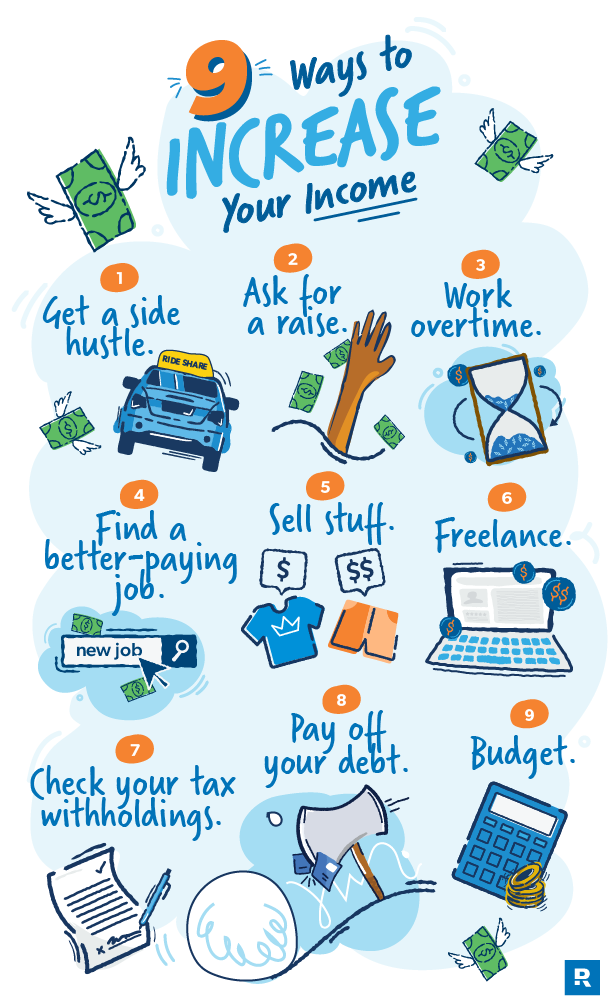
Your main job is often the most direct route to higher income. Proactive career management can yield substantial results. This includes negotiating your salary during hiring or annual reviews, backed by research into industry benchmarks and your proven value. Actively seeking promotions by demonstrating leadership, taking on more responsibility, and exceeding expectations can lead to significant pay raises. Upskilling through continuous learning, certifications, or advanced degrees makes you more valuable to your employer and the job market at large, often justifying a higher compensation package. If internal growth is limited, changing jobs to a company offering better pay for similar or advanced roles, or moving into a higher-paying industry, can be a strategic move.
Leveraging Your Existing Assets
Your physical assets can be powerful income generators. Consider renting out a spare room, a vacation home, or even your entire property through platforms like Airbnb. If you own a vehicle, participating in rideshare or delivery services can provide supplementary income. Selling unused items—from old electronics and furniture to clothes and collectibles—on platforms like eBay, Craigslist, or local marketplaces can provide a quick influx of cash. Furthermore, assets like intellectual property (e.g., patents, copyrighted works) can be licensed for ongoing royalties.
Smart Budgeting and Expense Reduction
While not directly increasing your income, reducing your expenses effectively increases your disposable income, which has the same effect as earning more. By cutting unnecessary costs, you free up more money for savings, investments, or debt repayment—all critical components of financial growth. This involves creating a detailed budget, identifying non-essential spending, and finding more economical alternatives for necessities. Examples include cooking at home more often, negotiating utility bills, cancelling unused subscriptions, or optimizing insurance plans. Every dollar saved is a dollar earned, contributing directly to your financial capacity.
Exploring Side Hustles and Entrepreneurship
The digital age has democratized income generation, opening up countless opportunities for individuals to earn extra money beyond their traditional jobs. These avenues can range from flexible part-time gigs to full-fledged entrepreneurial ventures.

Capitalizing on the Gig Economy
The gig economy offers unparalleled flexibility and diverse opportunities. Freelancing in areas like writing, graphic design, web development, digital marketing, or virtual assistance can be highly lucrative, leveraging skills you already possess or can quickly acquire. Platforms like Upwork, Fiverr, or specialized job boards connect freelancers with clients worldwide. Consulting offers a way to monetize your expertise, providing advice to businesses or individuals in your field. Simpler gigs like delivery services (Uber Eats, DoorDash), ridesharing (Uber, Lyft), or even participating in online surveys can provide supplemental income with minimal barriers to entry.
Developing Passive Income Streams
Passive income is the holy grail for many, allowing you to earn money with minimal ongoing effort after the initial setup. This includes:
-
Affiliate marketing: Promoting products or services and earning a commission on sales made through your unique link.
-
Creating and selling digital products: E-books, online courses, stock photos, software, or templates can generate revenue long after their creation.
-
Dividend investing: Owning shares in companies that distribute a portion of their profits to shareholders.
-
Real estate investments: Beyond direct rental properties, options like REITs (Real Estate Investment Trusts) offer a more hands-off approach.
-
Peer-to-peer lending: Lending money to individuals or small businesses through online platforms for interest.
Building passive income often requires an initial investment of time, money, or both, but the long-term rewards can be substantial.
Starting a Small Business
For those with an entrepreneurial spirit, starting a small business can lead to significant income growth and financial independence. This could involve an e-commerce store, a local service business, a specialized consulting firm, or a niche content creation platform. The key steps include identifying a market need, developing a viable product or service, creating a robust business plan, securing initial funding (if necessary), and committing to consistent marketing and customer service. While demanding, entrepreneurship offers unlimited income potential directly tied to your effort and innovation.
Strategic Investments for Long-Term Wealth Accumulation
While direct income generation focuses on increasing cash flow, strategic investing is about making your money work for you, accumulating wealth over time through capital appreciation and returns. This is a critical component of sustainable financial growth.
Diversifying Your Investment Portfolio
A well-diversified portfolio is crucial for managing risk and maximizing returns. This typically involves spreading investments across various asset classes:
-
Stocks: Representing ownership in companies, offering potential for high growth but also higher volatility.
-
Bonds: Debt instruments issued by governments or corporations, generally lower risk with fixed interest payments.
-
Mutual Funds and ETFs (Exchange-Traded Funds): Pooled investment vehicles that allow diversification across many stocks and bonds with a single investment.
-
Real Estate: Can provide rental income and property value appreciation, often with tax benefits.
-
Alternative Investments: Including commodities, cryptocurrencies, or private equity (though these often carry higher risks).
The right allocation depends on your age, financial goals, and risk tolerance.
Understanding Risk and Return
Every investment carries a degree of risk, and generally, higher potential returns come with higher risk. Understanding this fundamental trade-off is vital.
-
Risk assessment: Evaluate your personal comfort level with potential losses.
-
Due diligence: Research any investment thoroughly before committing capital.
-
Time horizon: Longer investment horizons typically allow more time to recover from market downturns, making higher-risk, higher-reward investments more suitable for long-term goals.
Balancing growth potential with capital preservation is key to a sustainable investment strategy.
Utilizing Financial Tools and Advisors
Navigating the investment landscape can be complex.
-
Robo-advisors: Automated, algorithm-driven financial planners that offer low-cost portfolio management based on your goals and risk tolerance.
-
Financial Planners/Advisors: Professionals who provide personalized advice on budgeting, investing, retirement planning, and other financial matters. They can be invaluable for complex situations or for those who prefer expert guidance.
-
Investment Platforms: Online brokers and apps provide access to various investment vehicles, often with user-friendly interfaces and educational resources. Leveraging these tools can streamline your investment journey and help you make informed decisions.
Continuous Learning and Adaptation
The economic world is in constant flux, and to continually increase your income, you must remain agile, informed, and committed to personal and professional development.
Acquiring New, High-Demand Skills
Investing in yourself is arguably the best investment you can make. The job market continuously evolves, and new skills become valuable while old ones may become obsolete. Identify skills that are in high demand in your industry or emerging fields. This could involve:
-
Online courses: Platforms like Coursera, Udemy, and edX offer a vast array of courses from leading universities and experts.
-
Certifications: Professional certifications can validate your expertise and make you more marketable.
-
Workshops and seminars: Focused learning experiences that can quickly impart new knowledge or techniques.
Learning new skills not only makes you more competitive for higher-paying roles but also opens doors to new side hustles and entrepreneurial ventures.
Networking for Opportunities
Your professional network is a powerful asset. Building and nurturing relationships with peers, mentors, and industry leaders can lead to invaluable opportunities. Networking can facilitate:
-
Job referrals: Often the most effective way to secure new employment.
-
Business partnerships: Collaborations that can expand your reach and income potential.
-
Mentorship: Guidance from experienced professionals can accelerate your growth.
-
Access to insider information: Staying abreast of industry trends and unadvertised opportunities.
Attend industry events, join professional organizations, and leverage platforms like LinkedIn to expand your network strategically.
Staying Informed About Economic Trends
Economic conditions, technological advancements, and market shifts directly impact income potential. Staying informed by reading financial news, following economic reports, and understanding global and local trends allows you to:
-
Anticipate changes: Prepare for shifts in demand for certain skills or services.
-
Identify emerging opportunities: Spot new niches for businesses or investments.
-
Adapt strategies: Adjust your career path or investment portfolio to optimize for current conditions.
Being proactive rather than reactive to economic changes positions you for continuous income growth.

Conclusion
Increasing your income is a multi-faceted journey that requires a blend of introspection, strategic planning, diligent effort, and continuous adaptation. It’s not a singular event but a continuous process of learning, applying, and refining your financial strategies. By thoroughly understanding your current financial state, leveraging both traditional and novel income streams, making astute investments, and committing to lifelong learning, you can systematically build a robust financial future. Start today by assessing your situation, setting clear goals, and taking the first actionable step towards greater financial prosperity. The power to increase your income lies within your informed decisions and consistent actions.
aViewFromTheCave is a participant in the Amazon Services LLC Associates Program, an affiliate advertising program designed to provide a means for sites to earn advertising fees by advertising and linking to Amazon.com. Amazon, the Amazon logo, AmazonSupply, and the AmazonSupply logo are trademarks of Amazon.com, Inc. or its affiliates. As an Amazon Associate we earn affiliate commissions from qualifying purchases.