
The question “who created the Tesla car?” often evokes a singular answer: Elon Musk. While Musk’s transformative leadership and audacious vision have undeniably been pivotal to Tesla’s meteoric rise and its profound impact on the automotive and energy industries, the reality of its creation is a far more complex tapestry woven by multiple visionary individuals, relentless engineers, and groundbreaking technological innovations. Tesla, at its core, is a technological marvel—a convergence of advanced battery science, sophisticated software engineering, AI-driven autonomy, and revolutionary manufacturing processes. Understanding its genesis requires a deep dive into the technological currents that shaped its initial concept and continue to drive its evolution as a leading-edge gadget on wheels.

The Foundational Vision: Pioneering Electric Vehicles
Before Tesla became a household name synonymous with electric mobility, it was an ambitious idea born from a shared concern about fossil fuel dependency and a desire to prove that electric vehicles (EVs) could be not just practical, but desirable and high-performance. The initial spark that ignited Tesla Motors was purely technological in its ambition: to develop an electric sports car that could outperform gasoline counterparts.
Martin Eberhard and Marc Tarpenning: The Genesis of Tesla Motors
The true architects of Tesla Motors were Martin Eberhard and Marc Tarpenning. In July 2003, these two Silicon Valley entrepreneurs co-founded the company, driven by a conviction that petroleum-fueled transportation was unsustainable and that a viable alternative was not only necessary but achievable with existing battery technology. Eberhard, an engineer with a background in digital storage, and Tarpenning, a software engineer, brought a unique blend of hardware and software expertise to the nascent EV industry. Their initial vision wasn’t just to build an electric car; it was to build a beautiful, fast, electric car that challenged the prevailing perception of EVs as golf carts or utilitarian, range-limited vehicles. They identified a critical gap in the market: the absence of a high-performance EV that could capture the imagination of consumers and fundamentally alter the narrative around electric transportation. Their early work involved extensive research into battery technology, motor efficiency, and power electronics, laying the intellectual and engineering groundwork for what would become the Tesla Roadster.
Early Engineering and Technological Hurdles
The development of the first Tesla car, the Roadster, was a monumental engineering feat. Instead of starting from scratch with an entirely new chassis, Eberhard and Tarpenning made a pragmatic decision to license a chassis design from Lotus Cars (the Elise), allowing them to focus their limited resources on the core technological innovations. The true breakthrough was in the powertrain and energy storage. Tesla pioneered the use of thousands of small, commodity lithium-ion battery cells (the same type found in laptops) bundled together to create a large, powerful battery pack. This required sophisticated Battery Management System (BMS) software to monitor each cell, prevent overheating, balance charge, and maximize overall pack life and performance. The challenges were immense: thermal management for the battery, designing highly efficient electric motors and power electronics capable of delivering sports car performance, and developing the software to seamlessly integrate all these components. This early stage was characterized by intense R&D into cell chemistry, cooling systems, power inverters, and drive unit mechanics, setting a new benchmark for what was technologically possible in electric vehicle design.
Elon Musk’s Transformative Influence and Scalability
While Eberhard and Tarpenning laid the foundation, Elon Musk’s involvement marked a pivotal turning point, accelerating Tesla from a promising startup into a global technological disruptor. His unique brand of visionary ambition, combined with a relentless push for innovation and vertical integration, fundamentally reshaped Tesla’s trajectory and its technological output.
From Investor to Visionary Leader: Shaping Tesla’s Direction
Elon Musk became Tesla’s largest investor in 2004, infusing critical capital into the company. By 2008, he had assumed the roles of CEO and Product Architect. Musk’s influence immediately broadened Tesla’s scope far beyond the initial Roadster. He articulated a bold “master plan” that envisioned a multi-tiered approach: first, a high-priced sports car (the Roadster) to fund the development of a mid-priced sedan (Model S), which would then fund an even more affordable mass-market vehicle (Model 3). This strategy was not just about product diversification; it was a technological roadmap for achieving economies of scale and driving down the cost of advanced EV technology. Musk’s insistence on vertical integration—designing and manufacturing almost every component in-house, from battery cells to software to charging infrastructure—was a radical departure from traditional automotive practices but allowed Tesla unprecedented control over its technology stack and faster iteration cycles. He pushed for breakthroughs in manufacturing engineering, recognizing that to scale production, the factory itself needed to be a product of innovation, leading to the concept of the “alien dreadnought” factory.
Expanding the Technological Frontier: Batteries, Software, and Manufacturing
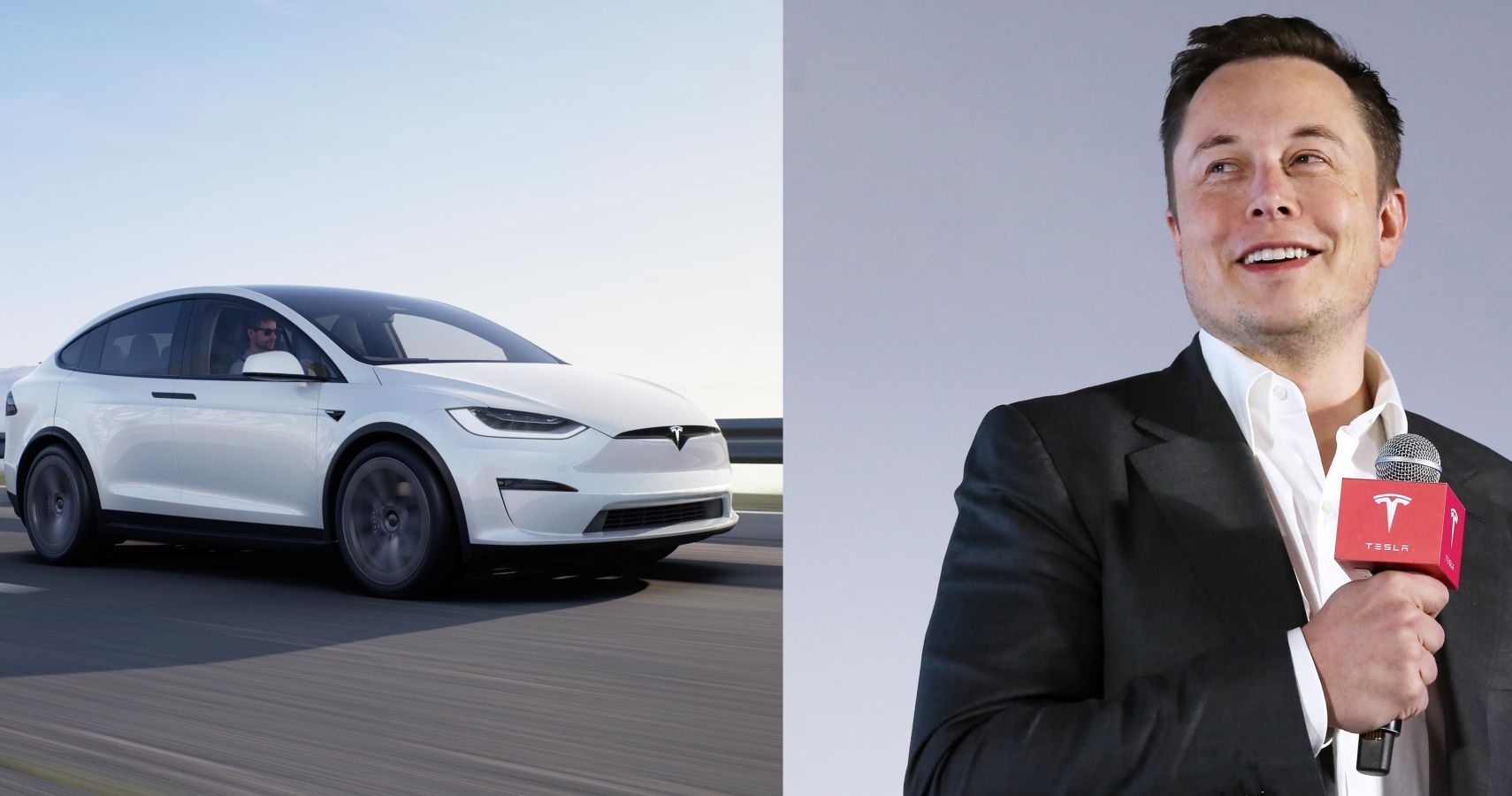
Under Musk’s leadership, Tesla embarked on a mission to continuously push the boundaries of EV technology. In battery technology, this meant not just optimizing existing cells but investing heavily in R&D to develop proprietary cells (like the 4680 format) that offered higher energy density, lower cost, and improved structural integration into the vehicle. The concept of the “structural battery pack,” where the battery becomes an integral stress-bearing part of the car’s chassis, is a testament to this holistic engineering approach. Tesla’s approach to software has been arguably its most significant differentiator. Unlike traditional automakers, Tesla views its vehicles as “computers on wheels,” with software governing everything from powertrain management and infotainment to advanced driver-assistance systems. Over-the-air (OTA) updates, a concept borrowed directly from the tech world, allowed Tesla to deploy new features, improve performance, and fix bugs remotely, constantly enhancing the vehicle’s capabilities throughout its lifespan. This rapid iteration and continuous improvement paradigm is fundamentally technological. Furthermore, manufacturing innovation became paramount. Tesla’s Gigafactories integrate advanced robotics, automation, and processes like gigacasting (casting large sections of the car’s underbody as a single piece) to simplify assembly, reduce parts count, and accelerate production—a purely technological solution to a complex engineering challenge.
The Evolution of Autonomy: Tesla’s AI and Software Prowess
Beyond electric propulsion, Tesla has positioned itself at the forefront of autonomous driving technology, leveraging artificial intelligence (AI) and sophisticated software to redefine the driving experience. This pursuit of full self-driving capabilities represents one of the most ambitious technological undertakings in the automotive world.
Full Self-Driving (FSD) and Neural Networks
Tesla’s approach to achieving Full Self-Driving (FSD) is distinct and highly technology-centric. Unlike many competitors who rely on a combination of lidar, radar, and cameras, Tesla has committed to a camera-only vision system (known as “Tesla Vision”), processing visual data with custom-designed AI hardware. This requires immensely powerful neural networks to interpret the world around the car in real-time. The development of Tesla’s in-house FSD computer chip and its massive Dojo supercomputer for AI training underscores its commitment to technological independence and pushing the boundaries of AI at the edge. The FSD software is a continuously evolving product, trained on petabytes of real-world driving data collected from millions of Tesla vehicles globally. This data-driven approach, combined with sophisticated machine learning algorithms, aims to enable the car to perceive its environment, predict actions of other road users, and navigate complex driving scenarios without human intervention. The engineering challenge here lies in developing robust perception systems, precise prediction models, and reliable planning algorithms capable of operating safely across diverse conditions.
Over-the-Air Updates and the Connected Car Ecosystem
The continuous improvement of Tesla’s autonomous features, as well as its core vehicle functionality, is enabled by its robust over-the-air (OTA) update system. This mirrors the iterative development cycle seen in software and smartphone industries, allowing Tesla to deploy software enhancements directly to vehicles remotely. This means a Tesla car’s capabilities can evolve significantly long after it leaves the factory floor—new features, performance optimizations, and even safety improvements can be introduced with a simple software download. This makes the Tesla car a dynamically evolving gadget, continuously benefiting from the latest technological advancements without requiring a visit to a service center. The connected car ecosystem extends beyond FSD to include advanced infotainment systems, seamless integration with mobile apps, robust digital security protocols, and connectivity features that enhance the user experience. The car’s software architecture is designed to be highly modular and extensible, allowing for rapid development and deployment of new technologies, solidifying its position as a leading-edge piece of consumer electronics.
Beyond the Vehicle: Tesla’s Holistic Tech Ecosystem
Tesla’s technological aspirations extend far beyond the vehicle itself, encompassing a broader ecosystem of energy solutions and advanced robotics, cementing its identity as a full-fledged technology company rather than solely an automaker. This holistic approach ensures that all aspects of sustainable energy and future technology are integrated.
Energy Storage and Charging Infrastructure
A critical component of the electric vehicle revolution is the charging infrastructure, and here too, Tesla has applied its technological prowess. The Supercharger network is renowned for its speed, reliability, and ease of use, designed to make long-distance EV travel practical. The Superchargers themselves are advanced pieces of power electronics, capable of delivering extremely high wattages to quickly recharge battery packs, optimized through sophisticated software to manage power flow and protect battery health. Beyond vehicle charging, Tesla leverages its battery technology expertise in large-scale energy storage solutions. Products like the Powerwall for home energy storage and the Megapack for utility-scale grid storage demonstrate the versatility of its battery chemistry and energy management systems. These systems are essentially giant, intelligent batteries, governed by complex software that optimizes energy flow, integrates with renewable sources (like solar), and provides grid stabilization services—a significant technological contribution to the global energy transition.
The Future of Mobility and Innovation
Tesla continues to push the boundaries of what is technologically feasible across multiple domains. The Cybertruck, with its radical exoskeleton design and stainless-steel construction, represents a foray into materials science and manufacturing processes that challenge conventional automotive engineering. Concepts like the Tesla Bot (Optimus), a humanoid robot designed for general-purpose tasks, showcase the company’s ambition in advanced robotics and artificial intelligence, extending its core competencies in perception, motion planning, and battery technology into new frontiers. These future endeavors reinforce the idea that Tesla is fundamentally a technology company, driven by a mission to accelerate the world’s transition to sustainable energy and advanced AI. Its innovations are not merely incremental improvements but often paradigm shifts, rooted in deep engineering challenges and sophisticated software solutions.
In conclusion, while Elon Musk’s role in scaling Tesla and setting its ambitious vision is undeniable and transformative, the creation of the Tesla car is a testament to a collaborative and evolving technological journey. It began with the foundational vision and engineering prowess of Martin Eberhard and Marc Tarpenning, who tackled the initial hurdles of electric vehicle design. It then grew under Musk’s leadership, which propelled it into realms of advanced battery technology, revolutionary software development, AI-driven autonomy, and innovative manufacturing processes. The Tesla car, therefore, is not the product of a single individual but a continuous masterpiece of engineering, software, and artificial intelligence—a shining example of how relentless technological innovation can reshape an entire industry and redefine our perception of mobility.
aViewFromTheCave is a participant in the Amazon Services LLC Associates Program, an affiliate advertising program designed to provide a means for sites to earn advertising fees by advertising and linking to Amazon.com. Amazon, the Amazon logo, AmazonSupply, and the AmazonSupply logo are trademarks of Amazon.com, Inc. or its affiliates. As an Amazon Associate we earn affiliate commissions from qualifying purchases.