
Navigating the landscape of federal tax payments can seem daunting, a complex maze of deadlines, forms, and payment methods. Yet, understanding precisely where and how to direct your hard-earned money to the Internal Revenue Service (IRS) is a fundamental aspect of financial literacy and responsible citizenship. Incorrect or delayed payments can lead to costly penalties and unnecessary stress, making it crucial for individuals, self-employed professionals, and business owners alike to be well-versed in the available options. This guide aims to demystify the process, offering a comprehensive look at the various avenues for fulfilling your federal tax obligations, ensuring accuracy, timeliness, and peace of mind.
Understanding Your Federal Tax Obligations
Before delving into the mechanics of payment, it’s essential to grasp the foundational aspects of federal tax obligations. Knowing why and what you’re paying for sets the stage for making informed decisions about how and where to send it.
Who Needs to Pay Federal Taxes?
Virtually every working individual and entity in the United States is subject to federal taxes. This includes:
-
Individuals: Most wage earners and salaried employees have federal income tax withheld from their paychecks, but many still owe additional taxes or are due a refund come tax season.
-
Self-Employed Individuals: Freelancers, independent contractors, and small business owners operating as sole proprietors or partners are responsible for paying self-employment taxes (Social Security and Medicare) in addition to income tax. These are typically paid quarterly.
-
Businesses: Corporations, S corporations, and partnerships have various federal tax responsibilities, including corporate income tax, payroll taxes for employees, and potentially excise taxes.
-
Investors: Individuals earning income from investments, such as capital gains, dividends, or interest, may also have specific tax obligations.
Types of Federal Taxes
The federal tax system encompasses several categories, each with its own rules and payment considerations:
-
Income Tax: The primary tax on earnings, whether from wages, salaries, business profits, or investments.
-
Estimated Tax: Payments made throughout the year by individuals who expect to owe at least $1,000 in tax, or corporations expecting to owe at least $500, often due to self-employment income, investment income, or insufficient withholding.
-
Self-Employment Tax: Covers Social Security and Medicare taxes for individuals who work for themselves.
-
Payroll Tax: Taxes employers withhold from employee wages (income tax, Social Security, Medicare) and often pay a matching portion themselves.
-
Estate and Gift Taxes: Taxes on the transfer of wealth, either upon death or through gifts exceeding certain thresholds.
Key Deadlines and Filing Requirements
Tax deadlines are non-negotiable. The most widely known deadline for individual income tax returns is April 15th (or the next business day if April 15th falls on a weekend or holiday). However, this is just one piece of the puzzle. Quarterly estimated tax payments are typically due on April 15th, June 15th, September 15th, and January 15th of the following year. Businesses have various payroll tax deposit schedules (monthly or semi-weekly) and corporate income tax deadlines. Missing these deadlines can result in penalties and interest, underscoring the importance of meticulous financial planning and calendar management.
Navigating the Payment Methods for Individuals
The IRS has significantly expanded its payment options over the years, offering a blend of modern digital solutions and traditional methods. Choosing the right one often comes down to convenience, cost, and personal preference.
Electronic Payment Options: Speed and Convenience
Electronic payments are increasingly popular due to their speed, security, and immediate confirmation.
-
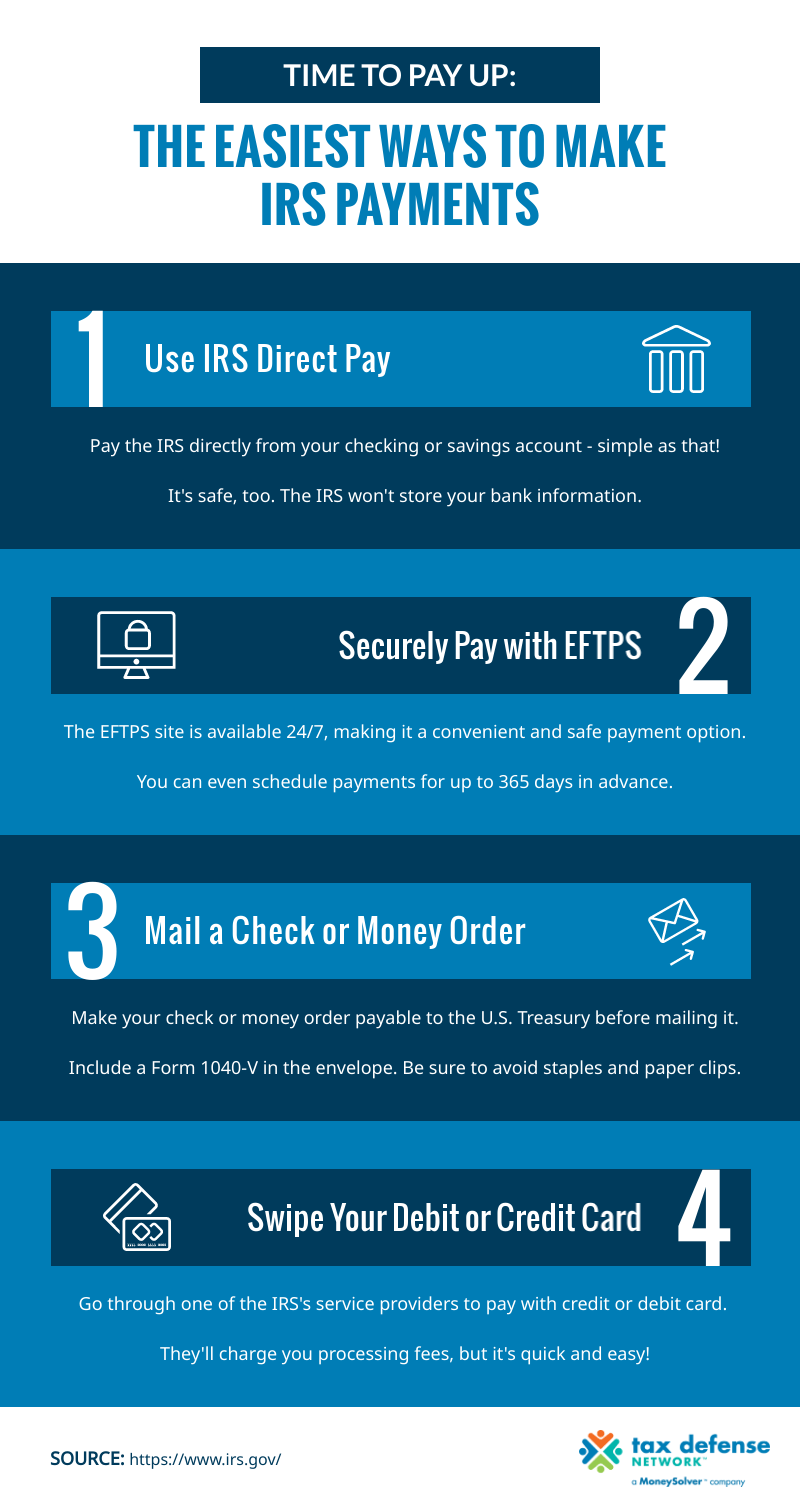
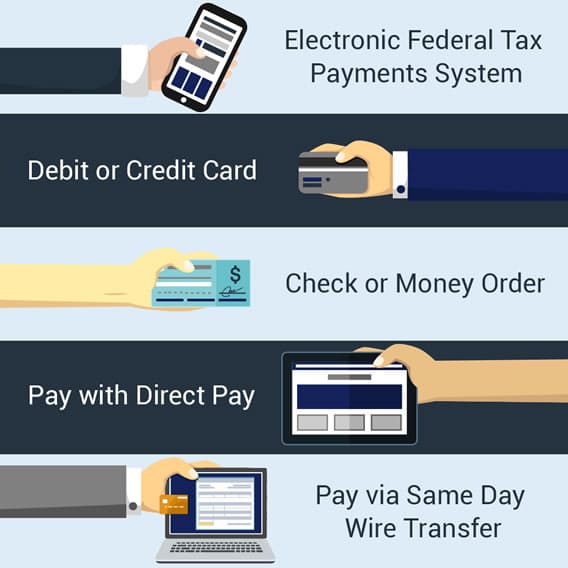
IRS Direct Pay: This free, secure service allows you to pay directly from your checking or savings account. You can schedule payments up to 365 days in advance and receive an email confirmation. It’s suitable for income tax, estimated tax, and other types of federal tax payments.
-
Electronic Federal Tax Payment System (EFTPS): A robust system designed for both individuals and businesses, EFTPS allows you to pay all types of federal taxes electronically. It requires enrollment, which can take several days to process, so plan ahead. Once enrolled, you can schedule payments up to 365 days in advance and view your payment history. It’s especially recommended for those making recurring estimated tax payments.
-
Credit Card, Debit Card, or Digital Wallet: Several third-party payment processors are authorized by the IRS to accept tax payments via credit card, debit card, or digital wallet (e.g., PayPal). While convenient, these services typically charge a processing fee, which can range from 1.87% to 2.25% for credit cards, and a flat fee for debit cards. This option can be appealing for those who want to earn credit card rewards or need more time to pay, but the fees should be weighed against the benefits.
-
Tax Software or Professional Tax Preparer: If you use tax preparation software (like TurboTax or H&R Block) or work with a tax professional, you can often arrange for your payment to be sent directly to the IRS as part of the filing process. This integrates payment seamlessly with your tax return submission.
Traditional Payment Options: When Digital Isn’t Preferred
For those who prefer or require non-digital methods, the IRS still accommodates traditional payment channels.
-
Paying by Mail with a Check or Money Order: This remains a viable option. You should make your check or money order payable to the “U.S. Treasury.” Crucially, include your name, address, daytime phone number, Social Security number or Employer Identification Number (EIN), the tax year, and the related tax form number (e.g., “2023 Form 1040”) on the payment itself. Always send your payment with the appropriate payment voucher (e.g., Form 1040-V) to the correct IRS address, which varies depending on your state and the type of payment. These addresses are published in the instructions for each form. Mail payments must be postmarked by the due date to be considered timely.
-
Cash Payments: While less common, cash payments are an option through IRS retail partners. Services like PayNearMe or MoneyGram allow taxpayers to make cash payments at participating retail stores. You’ll need to obtain a payment code or form from the IRS website before visiting a retail location, and there may be a small service fee. This method provides a receipt for your payment.
Business and Estimated Tax Payments: Special Considerations
Businesses, especially those with employees, and self-employed individuals have specific requirements that often necessitate the use of particular payment systems.
EFTPS: The Primary Choice for Businesses
For most businesses, especially those with significant payroll tax liabilities, the Electronic Federal Tax Payment System (EFTPS) is not just a recommended option but often a mandatory one. Federal tax deposits for businesses generally must be made electronically. EFTPS allows businesses to schedule payments for corporate income tax, estimated tax, payroll taxes, and more. Its secure environment and the ability to track payment history make it an indispensable tool for business financial management. Enrollment, as with individuals, is required in advance.
Estimated Tax Payments for Self-Employed and Other Income
Self-employed individuals, partners in a business, and those with substantial income not subject to withholding (like rental income, interest, dividends, or capital gains) typically need to make estimated tax payments throughout the year. The goal is to pay income and self-employment taxes as you earn or receive income, rather than waiting until the annual tax deadline.
To calculate estimated taxes, you generally project your income, deductions, and credits for the year. Form 1040-ES, Estimated Tax for Individuals, provides worksheets to help with this. Payments can be made using IRS Direct Pay, EFTPS, credit/debit cards, or by mail with Form 1040-ES payment vouchers. Failure to pay enough estimated tax throughout the year can result in an underpayment penalty.
Payroll Tax Deposits
Employers are responsible for withholding federal income tax, Social Security tax, and Medicare tax from their employees’ wages. These withheld amounts, along with the employer’s share of Social Security and Medicare taxes, must be deposited with the U.S. Treasury. The frequency of these deposits (monthly or semi-weekly) depends on the total tax liability reported during a lookback period. Almost all payroll tax deposits are required to be made electronically via EFTPS. Strict penalties apply for late or incorrect payroll tax deposits, making precise adherence to schedules critical for businesses.
Ensuring Accurate and Timely Payments
The devil is often in the details when it comes to tax payments. A small error or oversight can lead to significant headaches.
Common Pitfalls to Avoid
-
Wrong Address: Mailing your payment to the incorrect IRS address can cause delays and potential penalties. Always double-check the instructions for the specific form you’re paying.
-
Incorrect Amount: Ensure the amount on your payment matches the amount due on your return or estimated tax voucher.
-
Missed Deadlines: Even one day late can trigger penalties. Utilize calendars and reminders for all tax deadlines.
-
Payment Type Mismatch: Using an individual payment method for a business tax, or vice-versa, can cause processing issues.
-
Lack of Identification on Payment: For mailed checks, ensure your name, SSN/EIN, tax year, and form number are clearly written.
-
Not Enrolling in EFTPS in Advance: If you plan to use EFTPS, especially for estimated or business taxes, enroll weeks before your first payment is due.
What If You Can’t Pay?
If you find yourself unable to pay your federal taxes by the deadline, don’t ignore the problem. The IRS offers several options:
-
Payment Plans: You may be able to set up an Offer in Compromise (OIC) or an Installment Agreement (IA) that allows you to pay your tax liability over time.
-
Short-Term Payment Agreement: A brief extension (up to 180 days) if you can pay your taxes in full within that period.
-
Penalty Abatement: In certain circumstances (e.g., reasonable cause for failure to pay), you might be able to have penalties reduced or removed.
-
Offer in Compromise (OIC): Allows certain taxpayers to resolve their tax liability with the IRS for a lower amount than they originally owed, under specific financial hardship conditions.
It’s crucial to file your return on time even if you can’t pay the full amount due, as the penalty for failure to file is generally much higher than the penalty for failure to pay.
Verifying Your Payment Was Received
After making a payment, it’s wise to confirm its receipt.
-
Confirmation Numbers: Electronic payment methods (IRS Direct Pay, EFTPS, third-party processors) provide immediate confirmation numbers. Save these.
-
Bank Statements: Monitor your bank or credit card statements to ensure the payment has cleared.
-
IRS Online Account: You can create an IRS online account to view your payment history and tax records.
-
Proof of Mailing: For mailed payments, consider using certified mail with a return receipt for critical payments to have official proof of timely submission.
Leveraging Financial Tools for Tax Management
Effective tax payment isn’t just about knowing where to send the money; it’s also about how you manage your finances throughout the year to ensure the money is available.
Tax Preparation Software
Modern tax preparation software not only guides you through filing your return but also integrates payment options. Many allow you to schedule direct debits from your bank account or pay via credit card directly from within the application, simplifying the end-to-end process. These tools often keep records of your payments, aiding in future tax planning.
Budgeting and Financial Planning Apps
Proactive tax planning is critical, especially for the self-employed or those with fluctuating income. Budgeting and financial planning apps can help you:
-
Allocate Funds: Designate a portion of each paycheck or invoice payment specifically for taxes.
-
Track Income and Expenses: Maintain accurate records that are essential for calculating estimated taxes and preparing your annual return.
-
Monitor Cash Flow: Ensure you have sufficient liquidity to meet upcoming tax obligations without last-minute scrambling.
Professional Tax Advisors
For individuals with complex financial situations, business owners, or those who simply prefer expert guidance, a professional tax advisor (e.g., a CPA or Enrolled Agent) can be invaluable. They can help you:
-
Optimize Tax Strategy: Identify deductions, credits, and payment strategies to minimize your tax liability.
-
Calculate Estimated Taxes: Accurately project and plan for quarterly payments.
-
Navigate Compliance: Ensure all payments are made correctly and on time, often handling the submission process on your behalf.
-
Address Payment Issues: Assist in resolving any IRS notices or payment discrepancies.
Conclusion
The act of sending your federal tax payment is a critical financial responsibility that demands attention to detail and an understanding of the available options. Whether you opt for the speed and convenience of electronic platforms like IRS Direct Pay and EFTPS, or prefer the traditional route of mailing a check, the key is to choose a method that aligns with your financial habits and ensures timely, accurate submission. By understanding your obligations, leveraging modern financial tools, and staying informed about IRS guidelines, you can navigate the tax payment process with confidence, avoiding pitfalls and contributing smoothly to the nation’s fiscal health. Proactive planning, meticulous record-keeping, and a clear understanding of where and how to pay are your best defenses against the complexities of federal taxation.
aViewFromTheCave is a participant in the Amazon Services LLC Associates Program, an affiliate advertising program designed to provide a means for sites to earn advertising fees by advertising and linking to Amazon.com. Amazon, the Amazon logo, AmazonSupply, and the AmazonSupply logo are trademarks of Amazon.com, Inc. or its affiliates. As an Amazon Associate we earn affiliate commissions from qualifying purchases.