
For many self-employed individuals, independent contractors, small business owners, and those with significant investment or other non-wage income, understanding federal quarterly estimated tax payments is paramount. Unlike employees whose taxes are automatically withheld from each paycheck, these taxpayers operate on a “pay-as-you-go” system, requiring them to estimate their income and pay taxes throughout the year. Failing to meet these obligations on time or in sufficient amounts can lead to unwelcome penalties. This guide will clarify the crucial due dates, explain who needs to pay, and provide insights into calculating and submitting your payments effectively, ensuring you remain compliant with IRS regulations and maintain sound financial health.
Who Needs to Pay Quarterly Estimated Taxes?
The federal tax system operates on a principle of continuous payment. If you anticipate owing at least $1,000 in tax for the year, and your income isn’t subject to adequate withholding, you likely need to make estimated tax payments. This requirement primarily applies to individuals and entities whose income doesn’t have taxes automatically deducted at the source.
Common Taxpayers Subject to Estimated Taxes
Several categories of taxpayers typically fall under the requirement to pay estimated taxes:
-
Self-Employed Individuals: This extensive group includes freelancers, independent contractors, sole proprietors, and gig workers. Since no employer withholds taxes from their earnings, they are solely responsible for calculating and remitting their income and self-employment taxes (Social Security and Medicare).
-
Small Business Owners: Partners in partnerships and members of multi-member LLCs, whose share of business profits is taxable, must often make estimated payments. Corporations also have estimated tax obligations if they expect to owe $500 or more in tax.
-
Individuals with Significant Investment Income: Income derived from investments, such as dividends, interest from savings accounts or bonds, and capital gains from the sale of stocks or other assets, is generally not subject to withholding and thus requires estimated payments.
-
Retirees with Unwithheld Income: Those receiving pensions, annuities, or Social Security benefits that are taxable, and who choose not to have tax withheld from these sources, may need to pay estimated taxes.
-
Anyone with Insufficient Withholding: Even if you have a traditional W-2 job, if you have substantial additional income from other sources, or if your W-4 withholding is intentionally or unintentionally set too low, you may need to supplement your payments with estimated taxes to avoid underpayment penalties.
The critical assessment is whether your total anticipated tax liability for the year will be adequately covered by any existing withholdings or tax credits. If not, estimated payments bridge the gap, ensuring your compliance.
The “Pay-As-You-Go” Principle
The IRS mandates this “pay-as-you-go” system to prevent taxpayers from facing a massive, potentially unmanageable tax bill at year-end. This not only eases the burden on individual taxpayers by spreading payments throughout the year but also ensures a steady revenue stream for the government. Compliance means paying taxes on income as it is earned, rather than in one lump sum at the end of the tax year. Ignoring this principle can result in penalties for underpayment, even if you eventually pay your full tax liability by the annual filing deadline in April. Proactive management of estimated taxes is therefore not just a legal obligation but a wise financial strategy that helps maintain cash flow and reduces year-end stress.
The Standard Federal Quarterly Due Dates
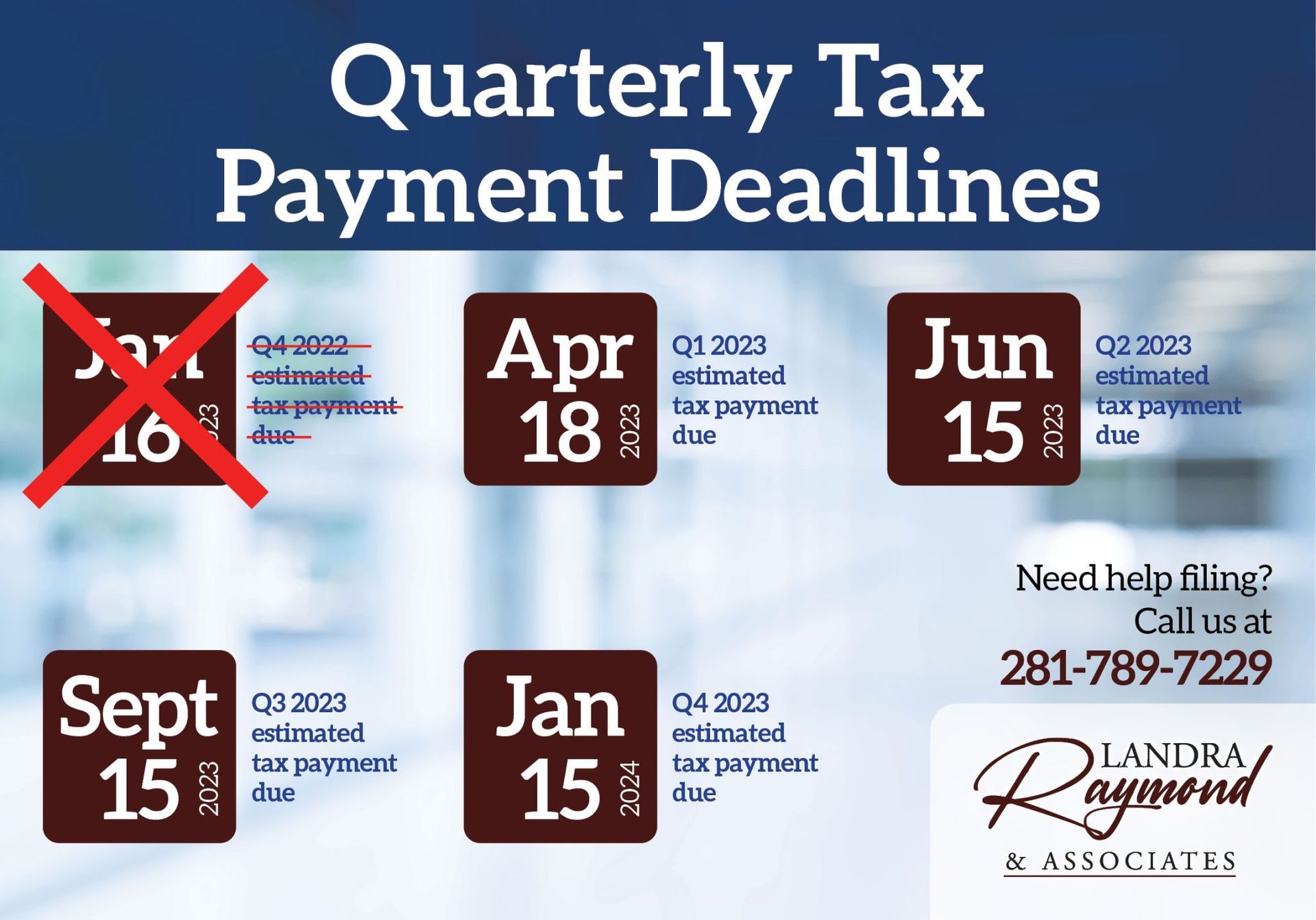
While often referred to as “quarterly,” the payment periods for federal estimated taxes do not perfectly align with calendar quarters. It’s crucial for taxpayers to mark these specific dates on their calendars, remembering a key rule: if a due date falls on a weekend or legal holiday, the deadline automatically shifts to the next business day. This flexibility is important, but taxpayers should aim to submit payments well in advance to avoid any last-minute issues.
Key Deadlines for Individuals
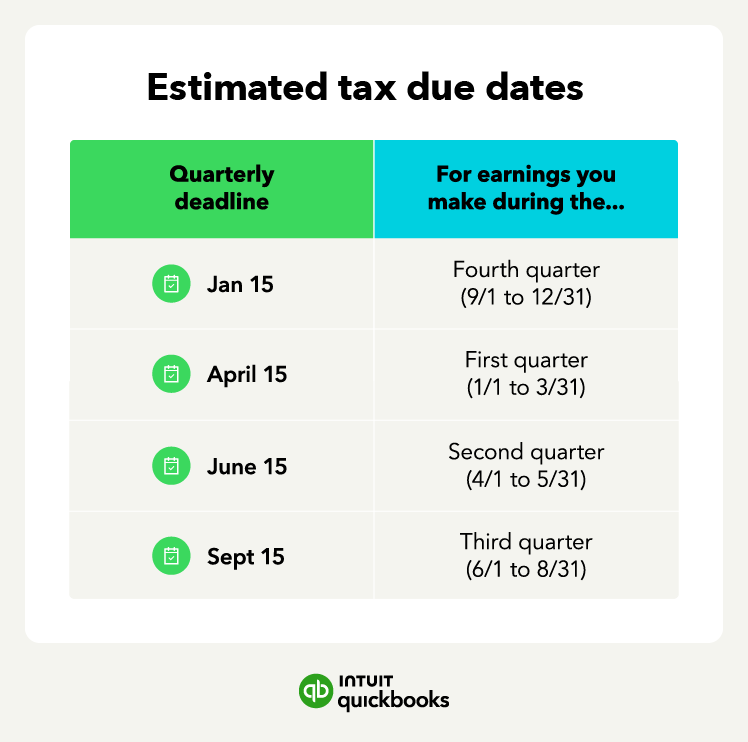
The tax year is divided into four payment periods, each with a distinct due date. Understanding these deadlines is fundamental to remaining compliant and avoiding penalties:
-
First Quarter Payment (January 1 to March 31 income): Due April 15. This initial payment covers income earned during the first three months of the calendar year. For many, this deadline coincides with the annual tax filing deadline for the previous year, making it a particularly busy time for tax planning and submissions.
-
Second Quarter Payment (April 1 to May 31 income): Due June 15. This payment covers income earned during April and May. Notice that this period is shorter than a full three months, comprising only two months of income. Taxpayers need to quickly reassess their earnings after the busy April 15 period.
-
Third Quarter Payment (June 1 to August 31 income): Due September 15. This payment covers income earned over the summer months. By this point in the year, many self-employed individuals and business owners have a clearer picture of their year-to-date income and expenses, allowing for more accurate adjustments to their remaining estimated payments.
-
Fourth Quarter Payment (September 1 to December 31 income): Due January 15 of the next year. This payment covers income from the final quarter of the calendar year, extending into the subsequent year for its due date. This timing provides a slight buffer after the holiday season but means it’s one of the first tax obligations to address in the new year, well before the next annual tax season begins.
Always verify the exact dates for a given tax year with the IRS, especially due to potential weekend or holiday shifts. Missing these deadlines, or significantly underpaying for any period, can trigger penalties even if your annual return ultimately shows you paid enough.
Calculating Your Estimated Tax Payments
Accurately estimating your tax liability for the entire year is often the most challenging part of the process. It requires careful foresight and diligent record-keeping. The primary goal is to pay enough to meet the IRS’s requirements and avoid penalties without significantly overpaying, which would tie up your capital unnecessarily.
Using Form 1040-ES and Estimating Income
The IRS provides Form 1040-ES, Estimated Tax for Individuals, specifically to help taxpayers calculate and pay their estimated taxes. While you don’t actually file this form quarterly, it contains detailed worksheets and instructions that guide you through the estimation process. To accurately project your annual tax liability, you’ll need to estimate:
-
Total Gross Income: Project all expected earnings from every source, including self-employment income, investment returns (dividends, interest, capital gains), rental income, and any wages not subject to sufficient withholding. It’s helpful to review previous years’ income and consider any new contracts or business ventures.
-
Deductions and Credits: Account for any anticipated standard or itemized deductions you plan to take, as well as any applicable tax credits (e.g., child tax credit, education credits). These reduce your taxable income and, consequently, your overall tax liability.
-
Self-Employment Tax: For self-employed individuals, a significant component of estimated taxes is self-employment tax, which covers Social Security and Medicare contributions. This is calculated on your net earnings from self-employment.
-
Total Tax Liability: Once you have estimated your taxable income and factored in all applicable taxes and credits, apply the current year’s tax rates (available on the IRS website or through tax software) to arrive at your projected total tax liability for the year.
It’s often wise to err on the side of slightly overestimating your income and conservatively estimating your deductions, especially if your income fluctuates. This creates a buffer against potential underpayment penalties.
The Safe Harbor Rules
To avoid penalties for underpayment, the IRS offers “safe harbor” provisions. You generally won’t owe a penalty if your total tax paid through withholding and estimated payments during the year is at least:
-
90% of the tax shown on your current year’s return, or
-
100% of the tax shown on your previous year’s return, whichever amount is smaller.
For higher-income taxpayers (those whose Adjusted Gross Income (AGI) was $150,000 or more in the prior year, or $75,000 for married filing separately), the 100% rule increases to 110% of your previous year’s tax liability. Using the prior year’s tax liability as a safe harbor is a popular strategy because that amount is a known figure, simplifying calculations and providing a degree of certainty against penalties, even if your current year’s income exceeds expectations.
Adjusting Payments Throughout the Year
Your financial situation can, and often does, change significantly throughout the year. If your income increases or decreases unexpectedly, or if you incur substantial business expenses or qualify for new tax credits, you can (and should) adjust your subsequent quarterly payments. This flexibility allows for a more accurate reflection of your tax liability as the year progresses, preventing either significant overpayment (which ties up your funds) or potential penalties due to unexpected income changes. Regularly reviewing your financial performance, ideally before each upcoming due date, is a critical best practice for effective tax management.
Methods for Paying and Avoiding Penalties
Once you’ve calculated your estimated tax, the next crucial step is to select a convenient and secure method for payment. Equally important is understanding the potential consequences of non-compliance and implementing strategies to mitigate them.
Convenient Payment Options
The IRS provides several secure and efficient ways to submit your quarterly estimated tax payments, catering to various preferences:
-
IRS Direct Pay: This is a free, secure online service that allows you to make direct payments from your checking or savings account. It requires no pre-registration, offers immediate confirmation of your payment, and allows you to schedule payments up to 365 days in advance. It’s an excellent option for individual estimated payments.
-
Electronic Federal Tax Payment System (EFTPS): Also a free service provided by the Treasury Department, EFTPS requires initial enrollment (which takes a few days). Once registered, it offers more robust features, including the ability to schedule payments up to 365 days in advance, view payment history for up to 15 months, and make payments for various federal tax types. It’s particularly useful for businesses or individuals who make multiple types of federal tax payments.
-
Payment by Mail: For those who prefer traditional methods, you can complete the appropriate payment voucher from Form 1040-ES, make a check or money order payable to the “U.S. Treasury,” and mail it to the correct IRS address. Ensure your payment is postmarked by the due date.
-
Through Tax Software: Many commercial tax software programs (e.g., TurboTax, H&R Block) allow you to calculate your estimated taxes and often facilitate the electronic payment process directly through their platforms, integrating with IRS payment systems for a streamlined experience.
Electronic payment methods are generally preferred for their speed, security, and immediate proof of payment, which is vital for record-keeping.
Understanding and Avoiding Underpayment Penalties
If you fail to pay enough tax through withholding and estimated payments throughout the year, you may face an underpayment penalty, even if you ultimately pay your full tax liability by the annual April 15 deadline. This penalty is calculated on Form 2210, Underpayment of Estimated Tax by Individuals, Estates, and Trusts, and is essentially an interest charge on the unpaid amount for the period it was due.
To proactively avoid these penalties:
-
Meet a Safe Harbor: The most straightforward approach is to ensure your total payments meet either the 90% current year tax rule or the 100% (or 110% for high-income taxpayers) prior year tax rule. Many simply make four equal payments based on their prior year’s known liability.
-
Adjust W-4 Withholding: If you have a W-2 job in addition to other income, you can adjust your Form W-4 with your employer to increase your paycheck withholding. This can be an efficient way to cover additional income sources without needing separate quarterly payments.
-
Annualized Income Method: If your income is highly seasonal or fluctuates significantly throughout the year, the standard four equal payments may not be appropriate. The annualized income method allows you to calculate your payment based on the income earned up to each payment period, providing a more accurate reflection of your tax liability and potentially reducing penalties. This method is more complex and typically requires tax software or professional assistance.
-
Set Reminders and Stay Organized: Mark the due dates on your calendar, set digital reminders, and keep meticulous records of all income, expenses, and payments. Submitting payments before or on their respective due dates is key.
In specific, limited circumstances (e.g., casualty events, disaster, or certain qualifying retirements/disabilities), the IRS may waive the penalty if you can demonstrate reasonable cause and not willful neglect. However, it is always best to aim for full and timely compliance.
Conclusion
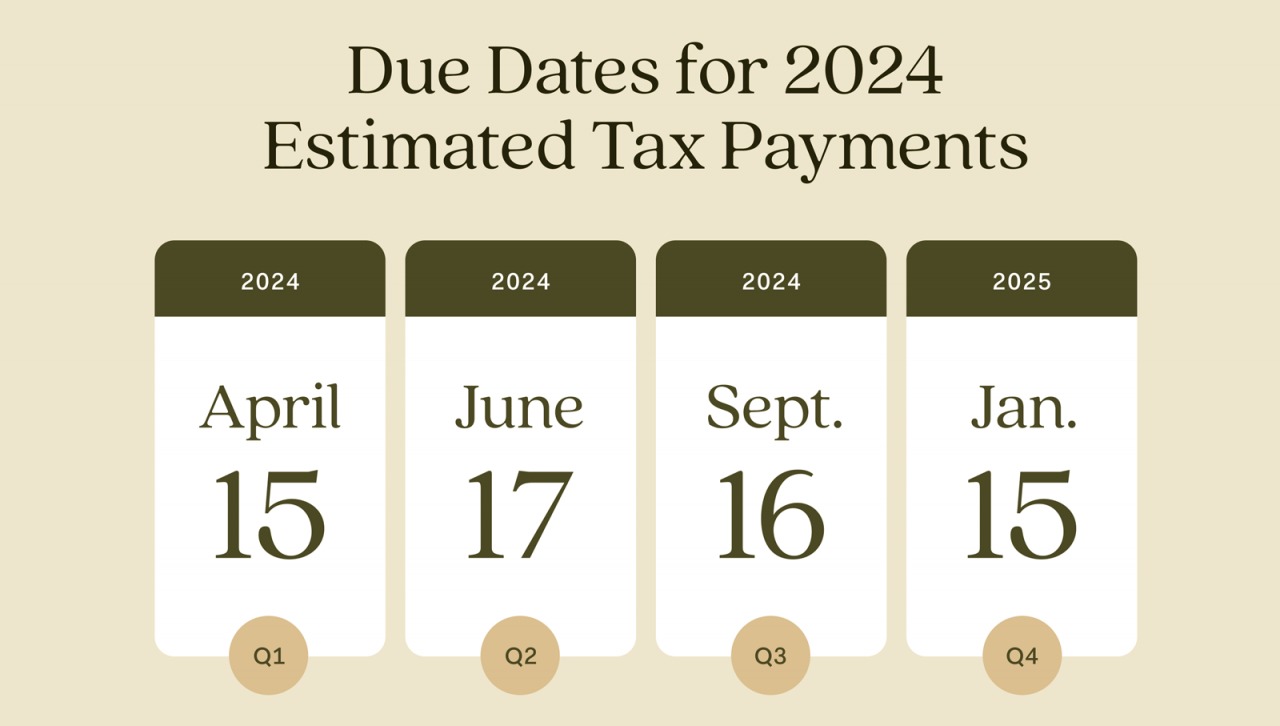
Effectively managing federal quarterly estimated taxes is a cornerstone of responsible financial planning for anyone with income not subject to sufficient withholding. By understanding the standard due dates—April 15, June 15, September 15, and January 15 of the following year—you can establish a clear roadmap for your tax obligations and avoid the stress of last-minute scrambles.
Beyond simply knowing “when,” it is equally vital to leverage tools like Form 1040-ES to accurately project your income and expenses, adhere to the IRS’s safe harbor rules, and proactively adjust your payments throughout the year as your financial situation evolves. Utilizing secure and convenient online payment methods ensures timely submission and provides immediate peace of mind through confirmation. By embracing these practices, you not only avoid potential underpayment penalties but also foster better cash flow management and integrate a complex tax requirement into a manageable and integral part of your overall financial success. Proactive tax planning is a hallmark of sound personal and business finance.
aViewFromTheCave is a participant in the Amazon Services LLC Associates Program, an affiliate advertising program designed to provide a means for sites to earn advertising fees by advertising and linking to Amazon.com. Amazon, the Amazon logo, AmazonSupply, and the AmazonSupply logo are trademarks of Amazon.com, Inc. or its affiliates. As an Amazon Associate we earn affiliate commissions from qualifying purchases.