
Navigating the complexities of tax obligations can often feel daunting, but understanding your financial standing with the Internal Revenue Service (IRS) is a cornerstone of sound personal finance. Whether you suspect an outstanding balance, are reconciling your records, or simply want to ensure compliance, proactively discovering what you owe the IRS is a critical step. This guide will meticulously detail the official channels, necessary steps, and crucial considerations for accurately assessing your tax debt, empowering you to manage your financial health with confidence and clarity.
The Imperative of Knowing Your Tax Obligations
For many, the idea of owing money to the IRS can trigger anxiety. However, ignorance is rarely bliss when it comes to taxes. Proactively uncovering and understanding your tax obligations offers significant advantages, mitigating potential issues and empowering better financial planning.
Preventing Penalties and Interest
One of the most compelling reasons to know your tax debt is to avoid the escalating costs of penalties and interest. The IRS imposes various penalties for non-compliance, including failure to file on time, failure to pay on time, and accuracy-related penalties. These can quickly compound, turning a manageable sum into a substantial burden.
-
Failure-to-File Penalty: Typically 5% of the unpaid taxes for each month or part of a month that a tax return is late, capped at 25% of your unpaid tax.
-
Failure-to-Pay Penalty: Usually 0.5% of your unpaid taxes for each month or part of a month that taxes remain unpaid, also capped at 25%.
-
Interest: Interest accrues on underpayments and unpaid taxes from the due date of the return until the date of payment. This interest rate can change quarterly and applies to both the unpaid tax and any penalties.
By identifying what you owe promptly, you can take steps to pay or arrange a payment plan, stopping or at least slowing the accumulation of these additional charges.
Financial Planning and Budgeting
Knowing your true financial picture includes understanding all your debts, and tax obligations are no exception. An accurate understanding of what you owe the IRS allows you to integrate this liability into your overall financial planning and budgeting. This means you can allocate funds, adjust spending, or plan for future earnings to systematically address the debt without disrupting other financial goals. It removes uncertainty and allows for more realistic long-term financial projections, from retirement planning to saving for a down payment.
Avoiding Surprises and Stress
Few things are more unsettling than an unexpected letter from the IRS demanding payment for a debt you were unaware of. Such surprises can cause significant stress, forcing immediate, often reactive, financial decisions. By regularly checking your tax status, you eliminate the element of surprise. This proactive approach fosters peace of mind, allowing you to deal with tax matters on your own terms rather than under duress, and ensuring you maintain a good standing with the federal tax authority.
Official IRS Channels for Accessing Your Tax Information
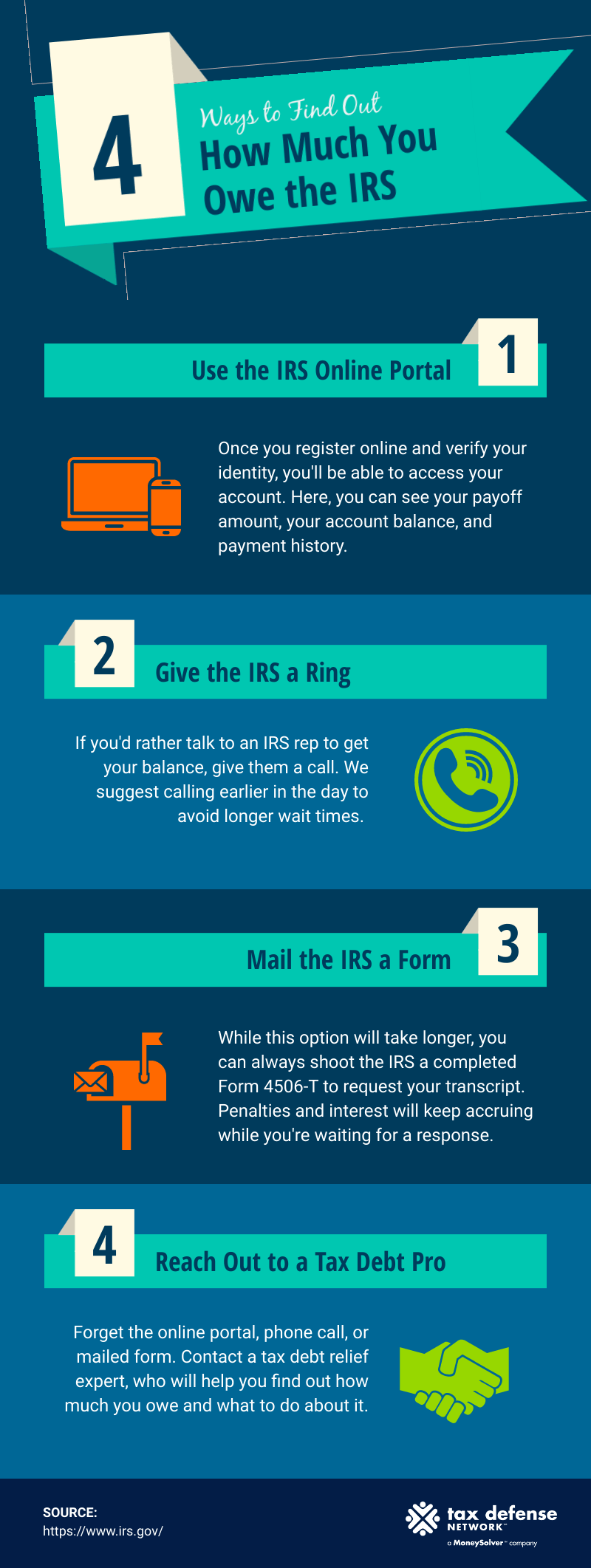
The IRS provides several secure and reliable methods for taxpayers to access their account information and determine any outstanding balances. It’s crucial to utilize these official channels to ensure accuracy and protect your personal information.
Utilizing Your IRS Online Account
The IRS Online Account is arguably the most comprehensive and convenient tool for taxpayers. It provides a secure portal to view your tax information instantly.
-
How to Access: Visit IRS.gov and search for “IRS Online Account.” You’ll need to create an account if you don’t already have one, which involves a robust identity verification process (often requiring a government ID and a selfie, or answering specific questions from your credit history).
-
Information Available: Once logged in, you can typically view:
-
Balance Due: Your total tax balance for each tax year, including any accrued penalties and interest.
-
Payment History: Records of all payments made to the IRS.
-
Tax Transcripts: View, print, or download various tax transcripts (detailed below).
-
Payment Plans: Details of any existing installment agreements.
-
Notices: Some notices issued by the IRS.
-
Tax Records: Key data from your most recently filed tax return.
-
This platform offers a real-time snapshot of your account and is the fastest way to ascertain what you owe.
Requesting Tax Transcripts
Tax transcripts are summaries of your tax return information or your tax account activity. They are free and can be incredibly useful for verifying balances or other tax details.
-
Types of Transcripts:
-
Account Transcript: Shows most items from the original return filed, plus subsequent adjustments made by you or the IRS. It also shows your payment history and any balance due. This is often the best transcript for determining what you owe.
-
Record of Account Transcript: Combines the information from the Account Transcript and the Tax Return Transcript, providing a more comprehensive view.
-
Wage and Income Transcript: Shows data from information returns, such as Forms W-2, 1099, 1098, and Form 5498.
-
Tax Return Transcript: Shows most line items from your original tax return (Form 1040, 1040-SR, 1040-NR), as it was filed, but does not include any changes made after you filed.
-
-
How to Request: You can request transcripts online via your IRS Online Account, by mail using Form 4506-T (Request for Transcript of Tax Return) or Form 4506-T-EZ (Short Form Request for Individual Tax Return Transcript), or by calling the IRS automated transcript service.
Reviewing IRS Notices and Letters
The IRS communicates significant information, including outstanding balances, through official notices and letters sent via postal mail. It is crucial never to ignore these communications.
-
Common Notices Indicating Debt:
-
CP14: Balance Due. This is one of the most common notices, informing you that you have an unpaid balance on your tax account.
-
CP2000: Proposed Changes to Your Tax Return. This notice indicates a discrepancy between income reported by third parties (like employers or banks) and what you reported on your tax return, which could lead to an increase in your tax liability.
-
Letter 11 (or similar): Final Notice of Intent to Levy. This is a very serious notice indicating the IRS plans to seize assets if the debt isn’t resolved.
-
Carefully read any notice you receive. It will typically explain the reason for the notice, the amount owed, and what steps you need to take.
Direct Communication via Phone or Mail
While online tools are efficient, sometimes direct communication with an IRS representative is necessary, especially for complex issues or if you’re unable to access online services.
-
Calling the IRS: You can call the IRS toll-free at 1-800-829-1040 (for individuals) or 1-800-829-4933 (for businesses). Be prepared for potential wait times. Have your Social Security number, date of birth, filing status, and prior year tax information ready to verify your identity.
-
Writing to the IRS: For specific inquiries or formal correspondence, you can write to the IRS. The correct address will typically be provided on any notice you’ve received, or you can find it on IRS.gov. Be sure to include your name, address, Social Security number, and the tax year(s) in question. Keep a copy of everything you send.
Deciphering Your Tax Debt and Understanding the Details
Once you’ve accessed your IRS account information or reviewed official notices, the next step is to understand exactly what the numbers mean. A tax debt is rarely a simple lump sum; it often comprises several components.

Interpreting Your Account Balance
Your total balance due, as shown on your IRS Online Account or a notice, typically includes more than just the original tax owed.
-
Principal Tax: This is the original amount of tax liability before any payments, penalties, or interest.
-
Penalties: As discussed earlier, these can include failure-to-file, failure-to-pay, and accuracy-related penalties. Your account statement should break down the specific penalties applied.
-
Interest: This is the charge for the late payment of tax and applies to both the principal tax and any penalties. Interest continues to accrue until the debt is paid in full.
Understanding these components is vital, especially if you plan to request a penalty abatement or negotiate a payment plan, as the IRS treats each component differently.
Reconciling Your Records with IRS Data
It’s good practice to compare the information the IRS has on file with your own records. This includes your filed tax returns, records of estimated tax payments, and any correspondence with the IRS.
-
Check Payments: Verify that all payments you’ve made (e.g., estimated taxes, payments with extensions, payments made after filing) are accurately reflected in your IRS payment history.
-
Review Filed Returns: Ensure the tax return information (income, deductions, credits) matches what you filed. Sometimes, data entry errors can occur.
-
Match Notices: Cross-reference any IRS notices with your own understanding of your tax situation. Do you agree with the reason for the notice and the proposed changes?
Identifying Potential Errors or Discrepancies
If there’s a difference between your records and the IRS’s information, or if you believe the IRS has made an error, it’s crucial to address it promptly.
-
Mathematical Errors: Simple calculation mistakes can happen.
-
Missing Payments: Your payment might have been misapplied or not yet processed. Provide proof of payment (canceled check, bank statement, confirmation number).
-
Incorrect Income/Deductions: The IRS might have received incorrect information from a third party (e.g., a W-2 with incorrect income) or misinterpreted an item on your return.
If you identify an error, gather all supporting documentation and contact the IRS. You might need to submit an amended return (Form 1040-X) or respond to a specific IRS notice, explaining your position and providing evidence.
Strategies for Addressing Your IRS Tax Debt
Once you’ve accurately determined what you owe, the next step is to formulate a plan to address the debt. The IRS offers various options, depending on your financial situation.
Prompt Payment Options
If you have the financial means, paying your tax debt in full as quickly as possible is generally the best approach. This stops penalties and interest from accruing further.
-
IRS Direct Pay: Make secure payments directly from your checking or savings account for free.
-
Credit/Debit Card: Pay through approved third-party payment processors. While convenient, these usually involve a processing fee.
-
Electronic Federal Tax Payment System (EFTPS): A free service primarily used for business taxes and estimated taxes, but individuals can also use it. Requires enrollment.
-
Electronic Funds Withdrawal: Authorize a direct debit from your bank account when e-filing your return.
-
Check, Money Order, or Cashier’s Check: Mail a payment with Form 1040-V to the IRS. Cash payments can be made through retail partners.
Setting Up a Payment Plan
If you cannot pay your full tax debt immediately, the IRS offers several payment options to help you settle your obligations over time.
-
Short-Term Payment Plan: You might be granted up to 180 additional days to pay your tax liability in full, although interest and penalties still apply. You can often set this up online.
-
Installment Agreement (Long-Term Payment Plan): If you need more time, you can request an installment agreement to make monthly payments for up to 72 months (6 years). You can apply for an installment agreement online if you owe a combined total of under $50,000 (tax, penalties, and interest) and have filed all required returns. The IRS charges a setup fee for installment agreements, though it may be reduced for low-income taxpayers.
-
Offer in Compromise (OIC): An OIC allows certain taxpayers to resolve their tax liability with the IRS for a lower amount than what they originally owe. This option is generally considered when taxpayers are experiencing significant financial hardship and cannot pay their full tax liability. The IRS will consider your ability to pay, income, expenses, and asset equity when evaluating an OIC. It’s a complex process and usually requires professional assistance.
Understanding Abatement of Penalties
In certain circumstances, the IRS may reduce or remove penalties. Interest generally cannot be abated unless the underlying tax is abated.
-
First-Time Penalty Abatement: If you have a clean compliance history (no prior penalties for the preceding three tax years), you may qualify for abatement of failure-to-file, failure-to-pay, and failure-to-deposit penalties for a single tax period. You must have filed all required returns and paid (or arranged to pay) any tax due.
-
Reasonable Cause: You may be able to have penalties abated if you can demonstrate you had reasonable cause and acted in good faith but were unable to meet your tax obligations due to circumstances beyond your control (e.g., serious illness, natural disaster, death in the immediate family, incorrect advice from the IRS). This often requires detailed documentation and explanation.
When to Seek Professional Guidance
While many tax matters can be managed independently, certain situations warrant the expertise of a qualified tax professional. Knowing when to ask for help can save you time, money, and considerable stress.
The Role of Tax Professionals
Various professionals specialize in different aspects of tax law and can assist with your IRS debt.
-
Certified Public Accountants (CPAs): Licensed accountants who can prepare tax returns, provide financial planning, and represent clients before the IRS in audits or collection matters.
-
Enrolled Agents (EAs): Federally authorized tax practitioners who are licensed to represent taxpayers before the IRS in all tax matters, including audits, appeals, and collections. They specialize in taxation and are proficient in navigating IRS procedures.
-
Tax Attorneys: Lawyers specializing in tax law. They are particularly valuable for complex legal issues, tax litigation, criminal tax matters, or intricate negotiations with the IRS.
Choosing the right professional depends on the complexity of your situation and the specific type of assistance you need.
Navigating Complex Tax Situations
You should strongly consider professional help if you encounter any of the following:
-
Significant Tax Debt: If you owe a substantial amount that impacts your financial stability.
-
IRS Audit or Examination: Professionals can represent you, prepare necessary documentation, and communicate with the IRS on your behalf.
-
Unfiled Returns for Multiple Years: Getting caught up on several years of unfiled taxes can be complicated, especially if penalties have accumulated.
-
Disputes with the IRS: If you disagree with an IRS assessment, a professional can help you understand your appeal rights and represent your case.
-
Offers in Compromise (OICs): As mentioned, the OIC process is highly detailed and requires a thorough understanding of IRS guidelines regarding financial hardship.
-
Levies, Liens, or Wage Garnishments: If the IRS has initiated collection actions, a professional can often intervene to negotiate solutions and protect your assets.
-
International Tax Issues: If you have income or assets abroad, the tax implications can be highly complex.

Choosing the Right Advisor
When selecting a tax professional, look for someone with specific experience in your type of tax issue.
-
Credentials: Verify their CPA, EA, or Attorney licensure.
-
Experience: Ask about their experience with cases similar to yours.
-
Fees: Understand their fee structure upfront (hourly, flat fee).
-
Communication: Choose someone you feel comfortable communicating with and who can clearly explain complex tax concepts.
-
Reputation: Check reviews or ask for references.
By knowing your tax obligations, utilizing the official channels to gather information, and understanding the options available for resolution, you can effectively manage your relationship with the IRS. Proactivity and, when necessary, professional guidance are your strongest allies in maintaining sound financial health and achieving peace of mind.
aViewFromTheCave is a participant in the Amazon Services LLC Associates Program, an affiliate advertising program designed to provide a means for sites to earn advertising fees by advertising and linking to Amazon.com. Amazon, the Amazon logo, AmazonSupply, and the AmazonSupply logo are trademarks of Amazon.com, Inc. or its affiliates. As an Amazon Associate we earn affiliate commissions from qualifying purchases.