
For many job seekers entering the workforce or looking for a stable shift in the retail sector, H&M (Hennes & Mauritz) represents more than just a global fashion powerhouse. It is a major employer with a massive footprint, offering thousands of roles ranging from part-time floor staff to high-level corporate executives. When evaluating a potential employer, the primary question is almost always financial: How much does H&M pay, and is it a sustainable choice for your personal finance goals?
Understanding the compensation structure at H&M requires looking beyond a single hourly rate. As a multinational corporation, H&M’s pay scales are influenced by geographic location, local labor laws, internal tiering, and the company’s own commitment to fair wage practices. In this guide, we will break down the earning potential across various roles, the value of the benefits package, and how a career at H&M fits into a broader financial strategy.
The Entry-Level Reality: Sales Advisor Wages and Expectations
The most common entry point for employees at H&M is the Sales Advisor role. These individuals are the face of the brand, responsible for customer service, stocking, and maintaining the visual standards of the store. Because these roles are often the first step for many young professionals or students, the pay is typically structured as an hourly wage.
Hourly Rates for Sales Advisors
In the United States, the hourly pay for a Sales Advisor generally ranges from $13 to $18 per hour. This variance is largely dictated by the cost of living in specific regions. For instance, a Sales Advisor in a high-cost urban center like New York City or San Francisco may start at the higher end of that spectrum, often approaching or exceeding $17 per hour to align with local minimum wage mandates and competitive retail standards. Conversely, in regions with a lower cost of living, the starting pay might hover closer to the $13 to $15 mark.
The Impact of Shift Differentials and Overtime
For those looking to maximize their income as a Sales Advisor, timing is everything. H&M frequently utilizes seasonal hiring surges, particularly during the holiday months and “back-to-school” periods. During these times, opportunities for overtime increase significantly. Working overtime (any hours beyond 40 in a standard work week) typically pays time-and-a-half, which can provide a substantial boost to a monthly budget. Additionally, some locations may offer slight premiums for overnight shifts—usually reserved for inventory processing and floor resets—which can add an extra dollar or two to the hourly base.
Escalating Your Earnings: Management and Specialized Roles
While entry-level positions provide a steady baseline, the real financial growth within H&M occurs as employees move into leadership and specialized roles. The company is known for its “promote from within” culture, which allows dedicated employees to climb the ladder into salaried positions.
Department and Shift Managers
Once an employee moves into a leadership role, such as a Department Manager or a Shift Lead, the compensation structure often shifts. Shift Leads may remain hourly but typically see a raise of $2 to $4 above the standard Sales Advisor rate.
Department Managers, however, often move into salaried territory or significantly higher hourly brackets. In the U.S. market, a Department Manager can expect to earn between $45,000 and $60,000 annually. At this level, the financial focus shifts from merely “trading time for money” to managing team performance and meeting store-specific KPIs (Key Performance Indicators), which can sometimes influence annual performance bonuses.
Store Managers and Regional Leadership
The Store Manager role is a high-responsibility position that commands a professional-grade salary. Store Managers at H&M generally earn between $65,000 and $95,000 per year, depending on the volume and location of the store they oversee. Those managing flagship locations in major metropolitan areas may see total compensation packages that exceed $100,000 when bonuses and incentives are included.
Beyond the store level, H&M offers roles in visual merchandising, area management, and regional operations. Visual Merchandisers, who are responsible for the aesthetic “look” of the store, typically earn between $18 and $25 per hour, or roughly $40,000 to $55,000 as a base salary. Regional managers, who oversee multiple store locations, move into the executive tier, with salaries often starting well above $110,000.
The “Total Reward” Package: Benefits as a Financial Tool

When calculating the true “pay” of a job at H&M, one must look at the “Total Reward” package. For many employees, the secondary benefits provide financial relief that is equivalent to several extra dollars per hour.
Health and Wellness Benefits
H&M offers a comprehensive benefits package to eligible employees, which typically includes health, dental, and vision insurance. From a personal finance perspective, having access to employer-sponsored health insurance is a critical component of wealth protection. It prevents medical emergencies from becoming financial catastrophes. For full-time employees, H&M’s insurance premiums are often competitive, allowing workers to retain more of their take-home pay compared to purchasing individual plans on the open market.
Retirement Planning and the 401(k)
One of the most overlooked aspects of H&M’s compensation is the 401(k) retirement plan. The company offers a matching contribution up to a certain percentage of the employee’s salary. This is essentially “free money” and a guaranteed return on investment. For an employee making $40,000 a year, a 4% match adds an additional $1,600 to their total annual wealth, which grows tax-deferred over decades.
The Employee Discount: A Budgeting Hack
H&M employees receive a significant discount—usually 25%—on all H&M Group brands (which can include COS, Weekday, and others depending on the region). For someone who spends a significant portion of their budget on clothing and lifestyle goods, this discount serves as a direct reduction in personal expenses. By lowering the cost of essential professional attire, the discount effectively increases the employee’s discretionary income.
Navigating Regional Variances and Economic Factors
It is important to acknowledge that H&M’s pay scale is not static. It is highly reactive to the broader economic environment, including inflation and the “Great Resignation” trends that have reshaped the retail labor market.
The Fair Wage Initiative
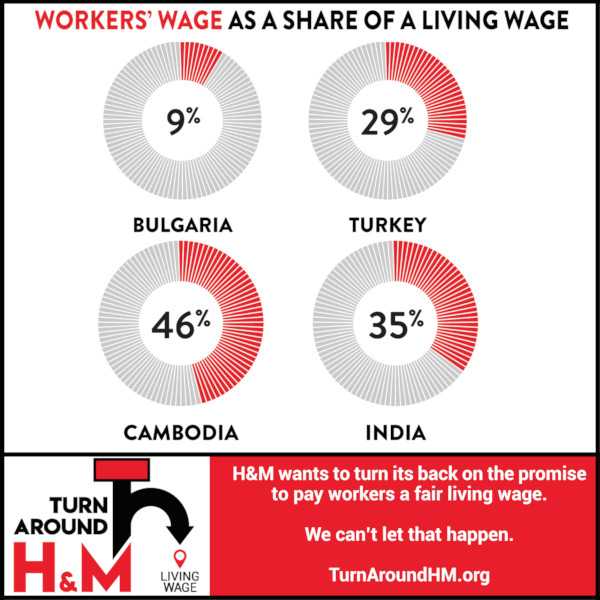
H&M has been a vocal proponent of the “Fair Wage Method.” This is an internal initiative designed to ensure that wages are not just meeting the legal minimums, but are also reflecting the actual cost of living and the performance of the individual. For a prospective employee, this means that H&M is generally more inclined than some of its “fast-fashion” competitors to adjust wages upward in response to local economic pressures.
Geographic Pay Differentials
A Sales Advisor in a suburban mall in Ohio will not make the same as a Sales Advisor on 5th Avenue in New York. When researching “how much H&M pays,” you must adjust your expectations based on your zip code. In high-cost-of-living states like California, Washington, and New York, the base pay is significantly higher to account for rent and transportation costs. However, the purchasing power of $15 in a low-cost state may actually be higher than $19 in a high-cost city. Smart financial planning requires looking at the “real wage”—what is left over after local expenses are paid.
Building a Financial Future Within the H&M Ecosystem
Working at H&M can be a strategic financial move, whether it is a short-term side hustle or a long-term career path. To maximize the financial benefit of working here, employees should focus on three specific strategies:
1. Pursuing Internal Promotion
Because H&M values internal growth, the fastest way to increase your income is to master the entry-level role and move into a “Trainer” or “Shift Lead” position within the first six to twelve months. This shows a trajectory that leads to the higher-paying salaried roles mentioned earlier.
2. Leveraging the Education and Training
H&M provides significant on-the-job training. These skills—inventory management, team leadership, visual merchandising, and conflict resolution—are highly transferable. From a business finance perspective, you are essentially getting paid to acquire a skill set that could eventually lead to high-paying roles in corporate retail, supply chain management, or even entrepreneurship.

3. Maximizing the 401(k) and Benefits
Even for part-time employees who may become eligible for certain benefits after a period of service, it is vital to enroll in the 401(k) as soon as possible. The power of compounding interest means that the small contributions made while working a retail job in your 20s can become the foundation of a significant retirement nest egg later in life.
In conclusion, H&M pays a competitive retail wage that generally aligns with or slightly exceeds industry averages for the fast-fashion sector. While the starting hourly rates are modest, the potential for growth, the stability of the “Total Reward” benefits, and the internal pathways to management make it a viable option for those looking to build a career in the business of fashion. By understanding the nuances of the pay scale and taking full advantage of the corporate benefits, an employee can turn a job at H&M into a strong pillar of their personal financial health.
aViewFromTheCave is a participant in the Amazon Services LLC Associates Program, an affiliate advertising program designed to provide a means for sites to earn advertising fees by advertising and linking to Amazon.com. Amazon, the Amazon logo, AmazonSupply, and the AmazonSupply logo are trademarks of Amazon.com, Inc. or its affiliates. As an Amazon Associate we earn affiliate commissions from qualifying purchases.