
Navigating the complexities of tax obligations can often feel daunting. For many, the question of “how much do I owe the IRS?” might arise unexpectedly after filing, or perhaps linger as an uneasy thought throughout the year. Understanding your current tax liability is not just about financial prudence; it’s a critical step in maintaining fiscal health, avoiding penalties, and ensuring peace of mind. This comprehensive guide will walk you through the official channels and best practices for accurately determining your outstanding balance with the Internal Revenue Service, all within the crucial realm of personal and business finance.
Understanding Your Tax Obligation
Before diving into the specifics of checking your balance, it’s essential to grasp the foundational aspects of why you might owe the IRS and why knowing your precise liability is paramount. Tax obligations are a cornerstone of financial responsibility, and a clear understanding empowers you to manage them effectively.
Why Knowing Your Balance Matters
Ignoring a tax debt does not make it disappear; in fact, it often leads to escalating penalties and interest charges. Proactively checking your balance allows you to:
-
Prevent Further Penalties: The IRS assesses penalties for failure to pay, failure to file, and underpayment of estimated taxes. Knowing your balance enables you to address it promptly, minimizing additional costs.
-
Avoid Collection Actions: Unpaid taxes can eventually lead to IRS collection actions such as liens, levies, or wage garnishments, which can severely impact your credit and financial stability.
-
Plan Your Finances: Understanding your debt allows you to budget, explore payment options, and integrate tax payments into your broader financial strategy.
-
Ensure Accuracy: By reviewing your account, you can cross-reference IRS records with your own, identifying and rectifying any potential discrepancies.
Common Reasons for Owing the IRS
Several scenarios can lead to an outstanding tax balance. Recognizing these can help you better understand your situation and prevent future liabilities:
-
Underpayment of Estimated Taxes: If you are self-employed, an independent contractor, or have significant income not subject to withholding, you might need to make quarterly estimated tax payments. A failure to pay enough throughout the year can result in a balance due.
-
Insufficient Withholding: For employees, your Form W-4 dictates how much income tax is withheld from your paycheck. If you claim too many allowances or do not adjust your withholding for significant life changes (e.g., marriage, new job, secondary income), you might owe at tax time.
-
Unreported Income: Forgetting to report certain types of income, such as capital gains, rental income, or gig economy earnings, can lead to a surprise tax bill.
-
Audit Adjustments: Following an audit, the IRS might determine that additional taxes are due based on their review of your return and supporting documentation.
-
Missed or Incomplete Payments: Sometimes, a balance is due simply because a payment was missed, misapplied, or not for the full amount.
The Importance of Proactive Tax Management
Effective financial planning always incorporates tax management. This involves more than just filing your return; it includes regular reviews of your income, deductions, and potential liabilities. By staying informed and proactive, you can anticipate tax burdens, make necessary adjustments throughout the year, and avoid the stress of unexpected bills.
Official IRS Channels to Ascertain Your Balance
The IRS provides several secure and reliable methods for taxpayers to check their account balance. Utilizing these official channels ensures accuracy and protects your sensitive financial information.
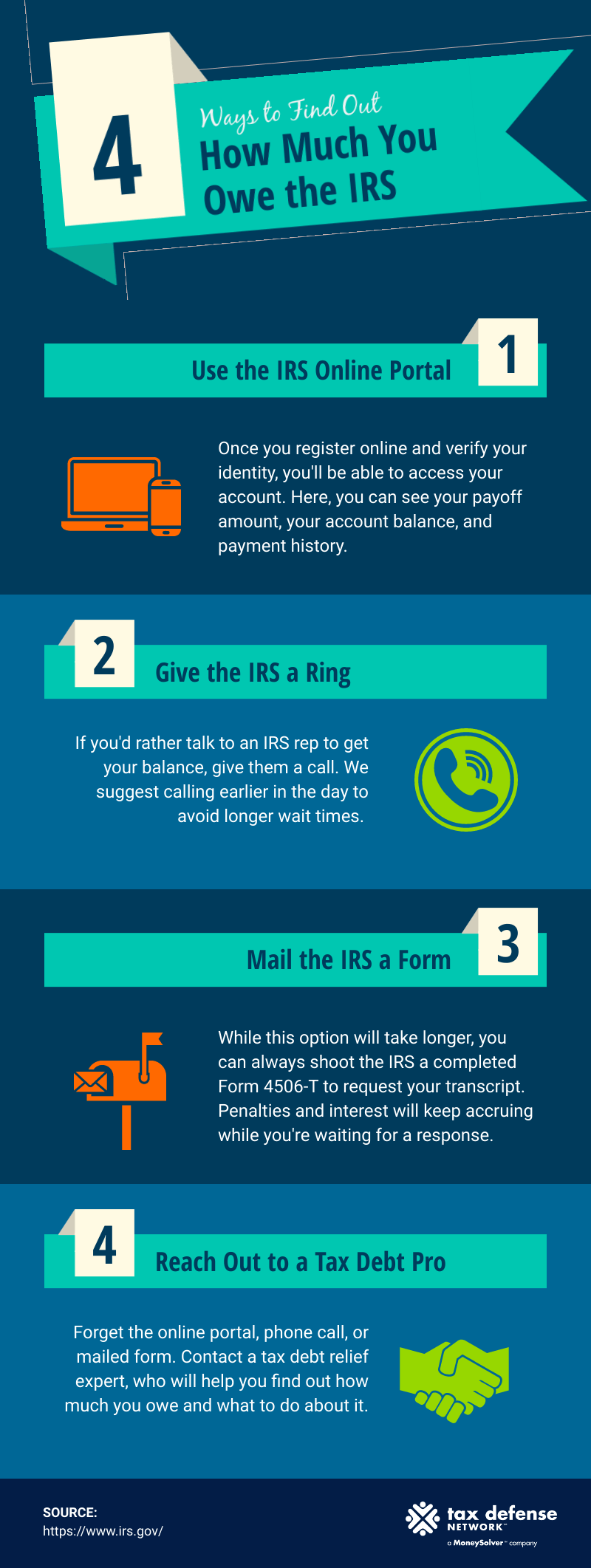
The IRS Online Account
The IRS Online Account is arguably the most convenient and comprehensive tool for individual taxpayers to manage their tax affairs. It offers a secure portal to view a wealth of information:
-
Account Balance: See the amount you owe, updated with the latest interest and penalties.
-
Payment History: Review your past payments, including those made directly or through withholding.
-
Tax Records: Access transcripts, notices, and other communications from the IRS.
-
Payment Options: Set up payment plans or make direct payments.
How to Set Up and Access: You’ll need to create an account through the IRS website (IRS.gov). This typically involves a multi-factor authentication process to verify your identity, often requiring personal information such as your Social Security number, date of birth, filing status, and perhaps a financial account number (e.g., credit card, loan, or previous tax return information). Once set up, you can log in anytime to view your updated balance.
Requesting a Transcript or Tax Account Information
While the online account provides real-time data, you can also formally request a transcript of your tax account information.
-
Tax Account Transcript: This transcript provides summary data from your original return and information from any subsequent adjustments or payments. It shows current balance due, payment history, penalty assessments, and any amended returns.
-
Record of Account Transcript: This combines the tax return and tax account transcripts into one document, offering a more complete picture.
How to Request: You can request these online via the “Get Transcript Online” tool on IRS.gov (requires identity verification), by mail using Form 4506-T or 4506T-EZ, or by phone. While not as immediate as the online account for just checking a balance, transcripts can be crucial for detailed record-keeping or for providing information to lenders.
Contacting the IRS Directly
For situations requiring personalized assistance or if online tools aren’t sufficient, you can contact the IRS by phone.
-
IRS Tax Assistance Center (TAC): You can locate your nearest TAC on IRS.gov and schedule an appointment for in-person help. While TACs can assist with various tax issues, wait times can be significant.
-
IRS Phone Lines: The IRS provides specific phone numbers for individuals and businesses. Be prepared for potentially long wait times, especially during peak tax season. Have your Social Security number, date of birth, filing status, and the tax year in question readily available. It’s often helpful to have a copy of your most recently filed tax return as well.
Consulting Your Tax Professional
For many, the easiest and most reliable method is to engage a qualified tax professional—such as a Certified Public Accountant (CPA) or Enrolled Agent (EA).
-
Authorized Access: With your permission (typically via Form 2848, Power of Attorney), a tax professional can directly communicate with the IRS on your behalf, access your account information, and ascertain your balance.
-
Expert Interpretation: They can not only tell you what you owe but also explain why you owe it, decipher complex IRS notices, and advise on the best course of action.
-
Resolution Strategies: A professional can help you explore payment options, negotiate with the IRS, or even identify errors in the IRS’s assessment.
Deciphering IRS Notices and Communications
The IRS communicates tax liabilities primarily through official notices mailed to your last known address. Understanding these notices is crucial for responding appropriately and managing your debt.
Understanding Common Notice Types
The IRS uses various series of notices, each indicating a specific issue:
-
CP Notices (Computer Paragraph Notices): These are automated notices generated by the IRS computer system. Examples include:
-
CP14: Balance Due. The most common notice for an outstanding balance.
-
CP2000: Proposed Changes to Your Return. Indicates a mismatch between income reported to the IRS by third parties (like employers or banks) and what you reported on your return.
-
CP501, CP503, CP504: Subsequent collection notices, indicating increasing urgency and potential intent to levy.
-
-
Letter Series Notices: These are typically more complex and may address audit results, penalty abatements, or collection issues. Examples include:
-
Letter 11: Demand for Payment.
-
Letter 1058: Final Notice of Intent to Levy.
-

What Information Do These Notices Provide?
Regardless of the specific code, IRS notices generally provide key pieces of information:
-
Tax Year: The specific year for which the balance is owed.
-
Original Amount Due: The initial tax amount due.
-
Penalties: Itemized penalties for late filing, late payment, or underpayment.
-
Interest: Interest accrued on the unpaid balance and penalties.
-
Total Amount Due: The grand total you currently owe.
-
Payment Instructions: How and where to send your payment.
-
Contact Information: A phone number and address if you need to dispute the notice or have questions.
How to Respond to an IRS Notice
-
Do Not Ignore It: The most critical rule. Ignoring an IRS notice can lead to severe consequences.
-
Read Carefully: Understand the reason for the notice and the required action.
-
Verify Information: Compare the information on the notice with your own records. If you disagree, be prepared to explain why and provide supporting documentation.
-
Respond Promptly: The notice will often provide a deadline for response.
-
Pay What You Owe (If Correct): If the notice is accurate and you can pay, do so immediately to stop further interest and penalties.
-
Contact a Professional: If the notice is confusing, disputed, or involves a large sum, consult with a tax professional.
Navigating Payment Options and Resolving Balances
Once you know how much you owe, the next step is to address the debt. The IRS offers several payment solutions designed to help taxpayers resolve their liabilities, even if they can’t pay immediately.
Direct Pay and Other Electronic Payment Methods
The easiest way to pay a balance due is electronically:
-
IRS Direct Pay: Pay directly from your checking or savings account for free.
-
Debit Card, Credit Card, or Digital Wallet: Payments can be made via third-party payment processors, though they typically charge a processing fee.
-
Electronic Federal Tax Payment System (EFTPS): This is a free service provided by the U.S. Department of the Treasury. It’s particularly useful for businesses or individuals who need to make estimated tax payments regularly.
-
Electronic Funds Withdrawal: If you e-file your tax return, you can authorize an electronic funds withdrawal from your bank account to pay any balance due.
Short-Term Payment Plans
If you need a little more time to pay your full balance but expect to do so within a few months, a short-term payment plan might be an option.
- Less Than 180 Days: The IRS may grant up to 180 additional days to pay your tax liability in full, though interest and penalties still apply. You can often request this online through your IRS Online Account.
Installment Agreements
For those who need more than 180 days, an installment agreement allows you to make monthly payments for up to 72 months.
-
Eligibility: Generally available if you owe $50,000 or less in combined tax, penalties, and interest (for individuals) or $25,000 or less (for businesses).
-
Setup: You can apply online via the IRS website, by phone, or by mail using Form 9465, Installment Agreement Request.
-
Consequences: Interest and penalties continue to accrue, though the failure-to-pay penalty may be reduced. Failing to make payments on time can result in default.
Offers in Compromise (OIC)
An OIC allows certain taxpayers to settle their tax liability with the IRS for a lower amount than what they originally owe. This is typically an option when you are experiencing significant financial difficulty.
-
Eligibility: The IRS considers your ability to pay, income, expenses, and asset equity. An OIC is generally approved when the IRS believes the amount offered is the most it can expect to collect within a reasonable timeframe.
-
Process: It’s a complex process, often requiring professional assistance, and involves submitting Form 656, Offer in Compromise, along with detailed financial statements.
What Happens if You Can’t Pay
Ignoring your tax debt is never a good strategy. If you genuinely cannot pay, contact the IRS immediately or consult a tax professional. The IRS has various collection tools:
-
Penalties and Interest: These continue to grow daily.
-
Federal Tax Lien: A legal claim by the U.S. government on your property (real estate, vehicles, etc.) as security for your tax debt.
-
IRS Levy: The legal seizure of your property or assets to satisfy a tax debt. This can include bank accounts, wages, retirement income, or even Social Security benefits.
Proactive Strategies for Future Tax Seasons
Preventing future tax surprises is the ultimate goal of effective financial management. By implementing proactive strategies, you can reduce the likelihood of owing the IRS and foster greater financial stability.
Adjusting Withholding (W-4 Form)
If you’re an employee, your W-4 form is your primary tool for managing how much tax is withheld from each paycheck.
-
Regular Review: Review your W-4 annually or whenever you experience a significant life event (marriage, divorce, birth of a child, new job, secondary income).
-
IRS Tax Withholding Estimator: Use the IRS’s online tool to accurately estimate your tax liability and determine the correct withholding amount to avoid owing or receiving a large refund (which essentially means you overpaid the government interest-free).
Making Estimated Tax Payments (Form 1040-ES)
If you have income not subject to withholding (e.g., self-employment income, rental income, interest, dividends), you are generally required to make estimated tax payments throughout the year using Form 1040-ES.
-
Quarterly Schedule: Payments are typically due April 15, June 15, September 15, and January 15 of the following year.
-
Avoid Penalties: Paying enough through estimated taxes (or withholding) helps you avoid underpayment penalties.
Maintaining Accurate Records
Good record-keeping is foundational to accurate tax preparation and management.
-
Organized System: Keep all income statements (W-2s, 1099s), receipts for deductible expenses, bank statements, and investment records organized.
-
Digital vs. Physical: Whether you prefer digital or physical records, ensure they are secure, accessible, and maintained for at least three to seven years.

The Value of Professional Tax Assistance
For complex tax situations, significant life changes, or simply for peace of mind, the ongoing guidance of a tax professional can be invaluable.
-
Strategic Planning: They can help you identify deductions, credits, and tax-saving strategies you might overlook.
-
Compliance: Ensure you remain compliant with ever-changing tax laws.
-
Representation: In the event of an audit or dispute, a professional can represent you before the IRS.
Knowing your tax obligations is a fundamental aspect of sound financial management. By utilizing the official tools and strategies outlined above, you can confidently determine how much you owe the IRS, address any liabilities responsibly, and proactively plan for a more financially secure future. Don’t let uncertainty dictate your financial health; take control by staying informed and engaged with your tax responsibilities.
aViewFromTheCave is a participant in the Amazon Services LLC Associates Program, an affiliate advertising program designed to provide a means for sites to earn advertising fees by advertising and linking to Amazon.com. Amazon, the Amazon logo, AmazonSupply, and the AmazonSupply logo are trademarks of Amazon.com, Inc. or its affiliates. As an Amazon Associate we earn affiliate commissions from qualifying purchases.