
Navigating the complexities of federal taxes can be a daunting endeavor for even the most financially savvy individuals. One of the most critical aspects of maintaining fiscal health is staying informed about your standing with the Internal Revenue Service (IRS). Whether you are anticipating a refund or concerned about potential underpayments, knowing exactly how much you owe—or if you owe anything at all—is the first step toward effective financial planning. In an era of increasing digital transparency, the IRS has modernized many of its systems, providing taxpayers with several avenues to access their account information. This guide provides an in-depth look at the various methods available to check your IRS balance, the documentation required, and the strategic steps to take once you have identified your tax liability.

Leveraging the IRS Online Account Portal
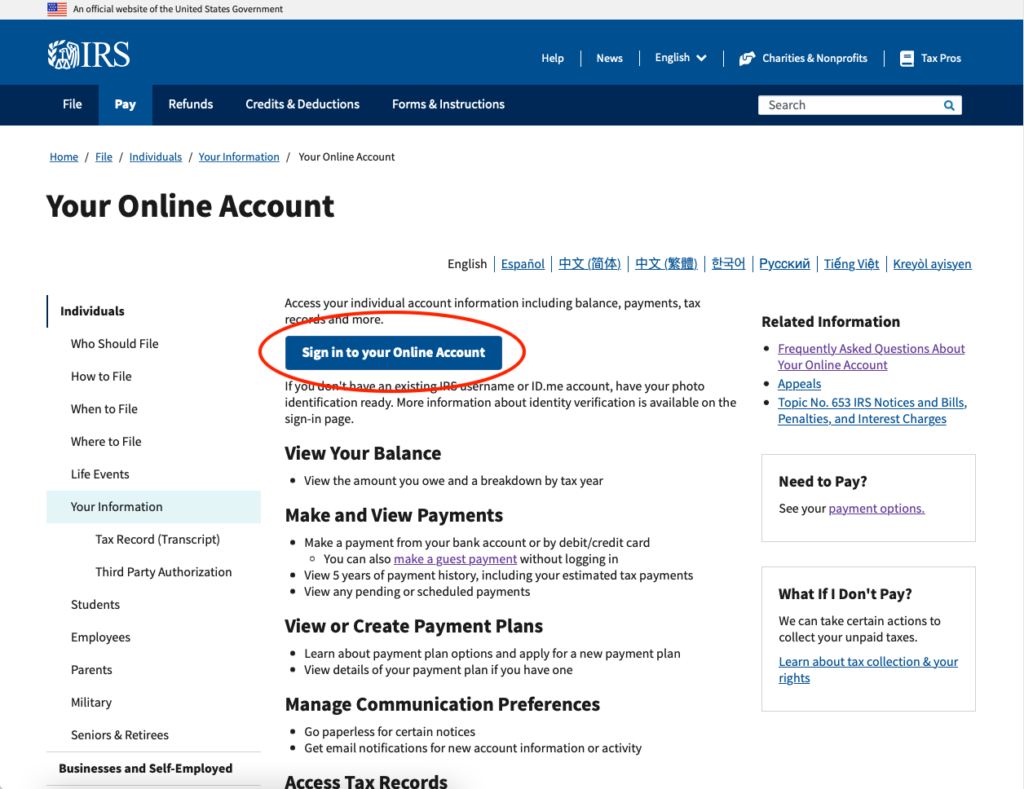
The most efficient and direct method for checking a tax balance in the current landscape is through the official IRS Online Account. This digital gateway is designed to provide taxpayers with a secure, real-time snapshot of their federal tax obligations, payment history, and key data from their most recently filed tax returns.
Setting Up Your Identity Verification (ID.me)
To ensure the security of sensitive financial data, the IRS utilizes a third-party identity verification service called ID.me. Before you can view your balance, you must create an account and verify your identity. This process typically requires a government-issued photo ID—such as a driver’s license, state ID, or passport—and a smartphone or computer with a camera to take a “selfie” for biometric verification.
While the verification process may seem rigorous, it is a necessary safeguard against identity theft and tax fraud. Once verified, you gain access not only to your current balance but also to several years of tax records. It is worth noting that the balance shown in the portal is updated once every 24 hours, usually overnight, so any payments made today may not reflect until the following business day.
Navigating the Online Dashboard
Once logged in, the primary dashboard provides a clear breakdown of your “Amount Owed.” This total includes the principal tax amount, as well as any accrued interest and penalties. The portal categorizes balances by tax year, allowing you to see exactly which filing periods have outstanding liabilities.
Beyond simply viewing a number, the Online Account allows you to:
-
View your payment history for the last 18 months.
-
Access digital copies of select notices sent by the IRS.
-
View key information from your most recent tax return.
-
Apply for payment plans or installment agreements directly through the interface.
Alternative Methods for Checking Your Balance
While the online portal is the preferred method for most, it is not the only option. Technical issues, lack of high-speed internet, or difficulty with the identity verification process may lead some taxpayers to seek alternative routes.
Phone Inquiries and Automated Systems
For those who prefer a more traditional approach, the IRS maintains a toll-free customer service line. Individual taxpayers can call 800-829-1040, while businesses should utilize 800-829-4933. The automated system is available 24/7 and can often provide basic balance information without the need to speak to a representative.
However, if your situation is complex or if you need to discuss specific discrepancies, you may need to wait for a live agent. When calling, it is imperative to have your Social Security Number (SSN) or Individual Taxpayer Identification Number (ITIN), date of birth, and your tax filing status ready. Be prepared for significant hold times, particularly during the peak tax season from January through April. Calling early in the morning, specifically when lines open at 7:00 AM local time, is generally the most effective strategy for reaching an agent quickly.
Requesting a Tax Transcript
A tax transcript is a detailed summary of your tax return and subsequent account activity. While it does not look like a traditional “bill,” it provides a comprehensive overview of your financial standing with the IRS. There are several types of transcripts, but for the purpose of checking a balance, the Account Transcript is the most useful. It shows any adjustments made after the return was filed, payments made, and the remaining balance.
You can request a transcript through the “Get Transcript” tool on the IRS website. You can choose to receive it by mail (which takes 5 to 10 calendar days) or view it online immediately if you have already cleared the ID.me verification. For those without internet access, transcripts can be requested by calling 800-908-9946 or by mailing Form 4506-T (Request for Transcript of Tax Return).
Reviewing IRS Notices and Letters
The IRS is legally required to notify taxpayers of any balances due through official correspondence sent via the United States Postal Service. If you have an outstanding balance, you will likely receive a Notice CP14. This is the initial notice informing you that you have unpaid taxes.
If the balance remains unpaid, subsequent notices such as the CP501, CP503, and CP504 will follow, each increasing in urgency. These letters are critical documents; they provide a breakdown of the tax, interest, and penalties, and they include a specific deadline for payment to avoid further collection actions, such as a federal tax lien or a levy on your bank account or wages.

Strategies for Managing and Paying Your Tax Debt
Discovering that you owe a balance to the IRS can be a source of significant stress. However, the IRS offers several mechanisms to help taxpayers manage their liabilities. Understanding these tools is essential for maintaining your personal creditworthiness and financial stability.
Utilizing the Electronic Federal Tax Payment System (EFTPS)
For taxpayers who owe money frequently—such as small business owners or independent contractors—the Electronic Federal Tax Payment System (EFTPS) is an invaluable tool. Managed by the U.S. Department of the Treasury, EFTPS is a free service that allows you to schedule payments in advance. This ensures that you never miss a deadline, which is crucial for avoiding the late-payment penalties that can rapidly inflate your total balance.
Short-Term Extensions and Long-Term Installment Agreements
If you cannot pay your full balance immediately, the IRS offers several payment plan options.
-
Short-Term Payment Plan: This gives you up to 180 days to pay your liability in full. While interest and penalties still accrue, this option often carries lower administrative fees than a long-term plan.
-
Long-Term Payment Plan (Installment Agreement): If you need more than six months to pay, you can apply for an installment agreement. This allows for monthly payments over a period of up to 72 months. Depending on the amount owed, you may be able to set this up online without speaking to an IRS agent.
It is important to note that even with a payment plan, the IRS continues to charge interest and failure-to-pay penalties. However, establishing a formal agreement stops the more aggressive collection activities, providing you with the breathing room needed to reorganize your finances.
Offer in Compromise and Hardship Options
In extreme cases where a taxpayer can demonstrate that they will never be able to pay the full amount owed, the IRS may consider an Offer in Compromise (OIC). This is an agreement that allows the taxpayer to settle their tax debt for less than the full amount they owe. The IRS evaluates the taxpayer’s ability to pay, income, expenses, and asset equity.
Because the OIC process is rigorous and has a high rejection rate, it is often viewed as a last resort. For those facing temporary financial crises, such as a medical emergency or job loss, the IRS may place the account in “Currently Not Collectible” status. This does not erase the debt, but it temporarily halts collection efforts until the taxpayer’s financial situation improves.
Security and Prevention: Protecting Your Financial Information
As you navigate the process of checking and paying your IRS balance, security must remain a top priority. Tax-related identity theft and phishing scams are rampant, often targeting individuals who are anxious about their tax status.
Avoiding Tax Scams and Phishing
A fundamental rule to remember is that the IRS will never initiate contact with a taxpayer via email, text message, or social media to request personal or financial information. Furthermore, the IRS does not demand immediate payment over the phone using specific payment methods like gift cards, prepaid debit cards, or wire transfers.
Official communication regarding a balance will almost always begin with a letter delivered by the USPS. If you receive a suspicious phone call from someone claiming to be from the IRS, the safest course of action is to hang up and check your balance independently using the official IRS Online Account portal or the 800-829-1040 number.
Regular Monitoring and Annual Tax Planning
The best way to manage an IRS balance is to prevent a surprise liability from occurring in the first place. This involves proactive tax planning. For employees, this means periodically reviewing your Form W-4 to ensure your employer is withholding the correct amount of tax from your paycheck. For the self-employed, it involves making accurate quarterly estimated tax payments.
Monitoring your IRS account at least once a year—perhaps during the summer or fall—can help you identify any issues long before the April filing deadline. This “check-up” ensures that all payments have been correctly applied and that there are no red flags on your account that could lead to unexpected penalties.
The Role of Professional Guidance in Tax Resolution
While many taxpayers can manage their IRS balance through the online portal, certain situations necessitate professional intervention. If you are dealing with a balance that exceeds $50,000, or if you are facing a federal tax lien or levy, consulting with a tax professional is highly recommended.
Certified Public Accountants (CPAs), Enrolled Agents (EAs), and tax attorneys possess the expertise to negotiate with the IRS on your behalf. They can assist in filing back taxes, requesting penalty abatement, and determining which payment plan or settlement option is most advantageous for your specific financial profile. While there is a cost associated with professional services, the potential savings in interest, penalties, and stress often far outweigh the initial investment.
In conclusion, checking your IRS balance is a straightforward process when approached with the right tools and information. By utilizing the IRS Online Account, staying vigilant against scams, and understanding the available payment options, you can take control of your federal tax obligations and ensure your long-term financial health.
aViewFromTheCave is a participant in the Amazon Services LLC Associates Program, an affiliate advertising program designed to provide a means for sites to earn advertising fees by advertising and linking to Amazon.com. Amazon, the Amazon logo, AmazonSupply, and the AmazonSupply logo are trademarks of Amazon.com, Inc. or its affiliates. As an Amazon Associate we earn affiliate commissions from qualifying purchases.