
In the dynamic world of personal and business finance, understanding and fulfilling your tax obligations is paramount. For many, the annual ritual of filing a tax return in April is the extent of their interaction with the Internal Revenue Service (IRS). However, for a significant portion of the population – including freelancers, small business owners, investors, and those with substantial income not subject to traditional employer withholding – estimated federal tax payments are a crucial, ongoing responsibility. This guide delves into the intricacies of estimated taxes, providing a clear roadmap to help you navigate your obligations, avoid penalties, and maintain financial peace of mind.
Understanding Estimated Federal Taxes: Who, What, and Why
Estimated taxes are the method used to pay tax on income that is not subject to withholding. This typically includes income from self-employment, interest, dividends, rent, alimony, and capital gains. The U.S. tax system operates on a pay-as-you-go basis, meaning taxpayers are expected to pay most of their tax liability throughout the year, rather than in a single lump sum at tax time. For those whose income sources don’t automatically deduct taxes, estimated payments bridge this gap.
What Are Estimated Taxes?
At its core, estimated tax is exactly what it sounds like: a prepayment of your anticipated income tax liability for the year. Instead of waiting until April 15th of the following year to settle up, the IRS requires individuals and certain businesses to make these payments quarterly. The concept is straightforward: you estimate your total income and deductions for the year, calculate your expected tax, and then divide that amount into four installments.
The primary purpose of estimated taxes is to ensure a steady flow of revenue to the government and to prevent taxpayers from facing a massive, unmanageable tax bill at year-end. It also helps individuals and businesses budget more effectively by factoring tax obligations into their ongoing financial planning. Neglecting this responsibility can lead to significant financial strain and potential penalties.
Who Needs to Pay Estimated Taxes?
The requirement to pay estimated taxes isn’t universal, but it applies to a broad spectrum of taxpayers. Generally, you must pay estimated tax if you expect to owe at least $1,000 in tax for the year. Corporations, on the other hand, must make estimated tax payments if they expect to owe $500 or more.
Common scenarios that trigger the need for estimated tax payments include:
-
Self-Employed Individuals: Freelancers, independent contractors, consultants, and sole proprietors whose business income is not subject to employer withholding.
-
Small Business Owners: Partners in a partnership and shareholders of S corporations, who often receive income that flows through to their personal tax returns.
-
Investors: Individuals with substantial income from interest, dividends, capital gains from stock or property sales, or other investment-related earnings.
-
Retirees: Those receiving pension or annuity income, or Social Security benefits that are taxable, and who haven’t adequately adjusted their withholding.
-
Individuals with Other Income: This can include rent from properties, alimony (for divorce agreements before 2019), gambling winnings, or even prize money.
If you are an employee but also have significant income from these sources, you might still need to make estimated payments. Alternatively, you can often adjust your W-4 form with your employer to increase your withholding and cover the additional tax liability, thereby avoiding the need for quarterly payments.
The Importance of Timely Payments
Failing to pay enough estimated tax throughout the year can result in an underpayment penalty. This penalty is essentially interest charged by the IRS on the amount of underpaid tax for the period it remained unpaid. It underscores the “pay-as-you-go” nature of our tax system and serves as an incentive for taxpayers to meet their obligations promptly. Understanding these requirements not only keeps you compliant but also prevents unnecessary financial setbacks that could otherwise be avoided with proper planning.
Calculating Your Quarterly Tax Liability
Accurately calculating your estimated tax liability is the cornerstone of effective tax planning for those required to make quarterly payments. It’s an exercise in forecasting, blending a clear understanding of your current financial situation with an educated projection of your year-end income, deductions, and credits. This process, while seemingly daunting, becomes manageable with the right tools and approach.
Projecting Your Income and Deductions
The first step in determining your estimated tax is to project your adjusted gross income (AGI) for the entire tax year. This involves a comprehensive review of all your anticipated income sources – not just the income that requires estimated payments, but also any wages from traditional employment, pension income, and so forth. Consider your earnings history, any expected changes in business activity or investments, and potential windfalls or losses.
Simultaneously, you’ll need to estimate your deductions and credits. Will you itemize or take the standard deduction? What business expenses do you anticipate? Are you eligible for any tax credits, such as the child tax credit, education credits, or credits for energy-efficient home improvements? These deductions and credits directly reduce your taxable income or your tax liability, respectively, and are crucial for an accurate estimate. For self-employed individuals, don’t forget to factor in self-employment taxes (Social Security and Medicare), which are a significant component of your overall tax burden.
Utilizing Form 1040-ES
The IRS provides Form 1040-ES, Estimated Tax for Individuals, specifically to guide you through this calculation. This form includes a worksheet that walks you through the steps: estimating your income, deductions, credits, and ultimately, your total estimated tax for the year. It also helps you account for self-employment tax if applicable.
While you don’t file Form 1040-ES itself (unless you’re mailing in a payment voucher), its worksheet is an invaluable tool. It prompts you to consider various income types and tax scenarios, ensuring a more thorough and accurate projection. Many tax software programs and professional tax preparers also use similar methodologies to assist clients with these calculations.
The Safe Harbor Rules
To avoid underpayment penalties, you generally need to pay at least 90% of your current year’s tax liability or 100% of your prior year’s tax liability through withholding and estimated payments. This is known as the “safe harbor” rule. For taxpayers whose AGI in the prior year exceeded $150,000 (or $75,000 for married individuals filing separately), the safe harbor threshold for the prior year’s tax liability increases to 110%.
Meeting one of these safe harbor thresholds is critical. If your income fluctuates significantly year-to-year, relying on the prior year’s tax liability (if lower than the current year’s projected liability) can be a sensible strategy to avoid penalties. However, if your current year’s income is substantially higher, you’ll need to adjust your payments accordingly to meet the 90% rule.
Accounting for Credits and Withholding
Remember to factor in any federal income tax withheld from wages, pensions, or other income. This withholding counts towards your estimated tax payments. For instance, if you have a full-time job and also freelance, the tax withheld from your regular paycheck helps offset your overall tax liability, reducing the amount you need to pay through estimated taxes.
Similarly, tax credits directly reduce the amount of tax you owe, dollar for dollar. Carefully identifying and estimating your eligibility for various credits can significantly lower your estimated tax burden. An accurate calculation considers all these moving parts to arrive at a realistic quarterly payment amount.
Methods and Deadlines for Making Payments
Once you’ve calculated your estimated tax liability for the year, the next crucial step is to make your payments on time and through the appropriate channels. The IRS offers several convenient methods, and understanding the quarterly deadlines is essential to avoid penalties.
IRS Direct Pay and EFTPS
For most taxpayers, electronic payments are the most secure, efficient, and recommended method.
-
IRS Direct Pay: This free service allows you to pay your taxes directly from your checking or savings account. You can schedule payments up to 365 days in advance, receive email confirmations, and even modify or cancel payments up to two days before the scheduled date. It’s ideal for individual taxpayers making one-off or scheduled quarterly payments.
-
Electronic Federal Tax Payment System (EFTPS): This is another free service offered by the Treasury Department. While it requires prior enrollment and a slightly more involved setup process, EFTPS is highly robust and suitable for both individuals and businesses (including corporations and those paying employment taxes). It allows you to schedule payments up to 365 days in advance, review payment history, and manage multiple tax obligations. Many business owners find EFTPS indispensable for managing their various federal tax responsibilities.
Electronic payments offer instant confirmation, reduce the risk of lost mail, and provide a clear digital record of your transactions, simplifying reconciliation.
Paying by Mail
While electronic payments are preferred, you can still pay your estimated taxes by mail, though this method is slowly being phased out for efficiency. If you choose this option, you must send a check or money order payable to the “U.S. Treasury” along with a payment voucher from Form 1040-ES. It is critical to:

-
Write your name, address, Social Security number, and the tax year on your payment.
-
Do not staple or paperclip the payment to the voucher.
-
Mail your payment and voucher to the correct IRS address for your region. These addresses are listed in the Form 1040-ES instructions.
Always allow ample time for mail delivery, especially as the deadline approaches, and consider using certified mail for proof of timely submission.
Other Payment Options
Beyond the primary methods, the IRS also facilitates payments through:
-
Debit or Credit Card: You can pay estimated taxes using a debit or credit card through third-party payment processors. While convenient, these processors typically charge a small fee based on the payment amount.
-
Electronic Funds Withdrawal (EFW): If you file your tax return electronically using tax preparation software or a tax professional, you might have the option to schedule estimated tax payments as part of that process. This allows you to integrate your estimated payments directly into your annual tax filing strategy.
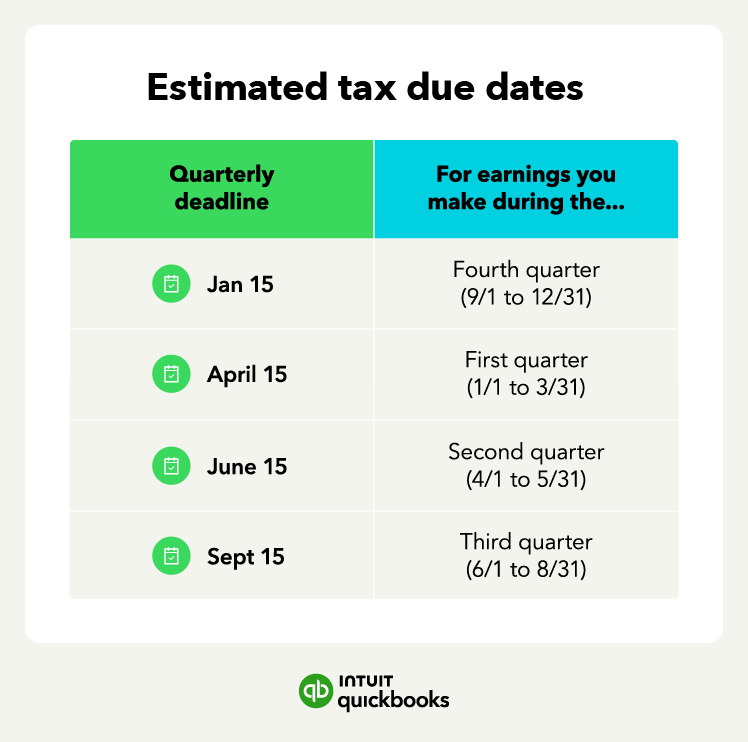
Quarterly Payment Due Dates
Estimated taxes are generally paid in four installments. The due dates are as follows for a calendar tax year (January 1 – December 31):
-
1st Quarter (January 1 to March 31): Due April 15
-
2nd Quarter (April 1 to May 31): Due June 15
-
3rd Quarter (June 1 to August 31): Due September 15
-
4th Quarter (September 1 to December 31): Due January 15 of the next year
If any of these dates fall on a weekend or holiday, the deadline is typically pushed to the next business day. It’s important to note that if your income is not earned evenly throughout the year (e.g., seasonal businesses), you may be able to use the annualized income method on Form 2210 to adjust your payment amounts and avoid a penalty.
Avoiding Penalties and Staying Compliant
The specter of tax penalties can be a source of anxiety for many taxpayers. However, with careful planning and adherence to IRS guidelines, underpayment penalties for estimated taxes are largely avoidable. Proactive management and a clear understanding of the rules are your best defense.
Understanding Underpayment Penalties
The IRS imposes an underpayment penalty if you don’t pay enough tax through withholding and estimated payments throughout the year. The penalty is calculated based on the amount of the underpayment, the period it was underpaid, and the applicable interest rate, which the IRS sets quarterly.
You can generally avoid this penalty if:
-
You owe less than $1,000 in tax after subtracting your withholding and refundable credits.
-
You paid at least 90% of the tax shown on your current year’s return.
-
You paid 100% of the tax shown on your prior year’s return (or 110% if your prior year’s AGI was over $150,000).
There are also certain exceptions and waivers, such as for casualty or disaster victims, or if you retired or became disabled during the tax year and had reasonable cause for underpayment. However, these are specific circumstances, and generally, meeting the safe harbor rules is the most common way to avoid penalties.
Strategies to Avoid Penalties
The best way to avoid penalties is to accurately estimate your income and pay your estimated taxes on time. Here are key strategies:
-
Annual Review and Adjustment: Don’t just set your estimated payments once and forget them. Review your income and expenses at least quarterly. If your business is doing better (or worse) than expected, or if you have unexpected income or deductions, adjust your subsequent estimated payments accordingly.
-
Annualizing Income: If you receive income unevenly during the year (e.g., significant income in the third quarter), you might benefit from using the annualized income method. This method allows you to figure your estimated tax payments based on your income as it’s earned, rather than assuming it’s earned equally throughout the year. This can help you avoid a penalty by preventing an underpayment in earlier quarters. You calculate this using Form 2210, Underpayment of Estimated Tax by Individuals, Estates, and Trusts.
-
Increase Withholding (if applicable): If you also have a W-2 job, increasing your federal income tax withholding from your salary is an easy way to cover potential estimated tax shortfalls. Any withholding taken from your pay counts as being paid evenly throughout the year, regardless of when it was actually withheld. This can be a strategic move late in the year to catch up on underpayments without incurring a penalty for earlier quarters.
-
Maintain Excellent Records: Accurate and organized records of all income, expenses, and payments are invaluable. They not only aid in accurate estimation but are also crucial if the IRS ever questions your tax payments.
The Role of Accurate Record-Keeping
Meticulous record-keeping is not just good practice; it’s a fundamental requirement for anyone making estimated tax payments. Keep detailed records of:
-
All sources of income: Including dates, amounts, and payors.
-
All business expenses: Categorized and supported by receipts.
-
All estimated tax payments made: Including dates, amounts, and confirmation numbers (for electronic payments).
-
Any W-2 income and withholding.
These records will be indispensable when you prepare your annual tax return, helping you reconcile your actual income and expenses against your estimates. In the event of an audit or inquiry, robust records provide clear evidence of your compliance and diligence.
Advanced Strategies and Professional Guidance
While the core principles of estimated taxes are straightforward, their application can become complex, particularly for individuals with varied income streams or growing businesses. Employing advanced strategies and knowing when to seek professional help can optimize your tax position and provide peace of mind.
Adjusting Payments Throughout the Year
The flexibility to adjust estimated payments is one of their most valuable features. Life and business are rarely predictable, and your financial situation can change dramatically from one quarter to the next.
-
Income Fluctuations: If your self-employment income unexpectedly surges or declines, don’t wait until year-end. Adjust your next estimated payment to reflect the change. Overpaying initially and then realizing you’re making less can tie up capital unnecessarily, while underpaying can lead to penalties.
-
Major Life Events: Marriage, divorce, the birth of a child, a significant inheritance, or a large capital gain from selling an asset can all impact your tax liability. Re-evaluate your estimates whenever such events occur.
-
New Deductions or Credits: If you qualify for a new tax credit or incur significant deductible expenses (e.g., large medical bills or business investments), factor these into your revised estimates.
The key is to view estimated taxes as an ongoing process, not a one-time calculation at the beginning of the year. Regular review, ideally quarterly, allows you to maintain accuracy and adapt to evolving circumstances.
State Estimated Taxes
It’s crucial to remember that federal estimated taxes are only one piece of the puzzle. Most states with an income tax also require estimated tax payments if you expect to owe a certain amount (often around $500 or $1,000, depending on the state). The rules, forms, and due dates for state estimated taxes can vary significantly from federal requirements.
Neglecting state estimated taxes can result in separate state-level underpayment penalties. When planning your federal estimated payments, always factor in your potential state tax liability and integrate state estimated payments into your financial calendar. Some states even have different quarterly due dates, so careful tracking is essential.
When to Seek Professional Tax Advice
While this guide provides a comprehensive overview, certain situations warrant the expertise of a qualified tax professional:
-
Complex Financial Situations: If you have multiple income streams, own various types of investments, engage in international business, or experience significant capital gains/losses, a tax advisor can help optimize your estimates and ensure compliance.
-
Business Growth and Changes: As your business grows, its tax structure might need to evolve (e.g., from sole proprietorship to S-corp). A CPA or enrolled agent can provide strategic advice on entity selection, payroll, and estimated tax implications.
-
Uncertain Income: If your income is highly variable and difficult to project, a professional can help you navigate methods like annualizing income to minimize penalties.
-
IRS Notices or Audits: If you receive a notice from the IRS regarding underpayment or an audit, professional representation is highly advisable.
A good tax professional can not only help with calculations but also offer proactive planning strategies to reduce your overall tax burden and ensure you’re taking advantage of all eligible deductions and credits. The cost of professional advice often pales in comparison to potential penalties or missed opportunities for tax savings.

Integrating Estimated Taxes into Your Financial Plan
Ultimately, managing estimated federal tax payments is more than just an annual chore; it’s an integral part of sound financial planning. By regularly forecasting your income, setting aside funds for taxes, and making timely payments, you transform a potential financial headache into a manageable and predictable expense. Budgeting for taxes proactively ensures that you have the necessary funds available when payments are due, preventing cash flow crises and fostering financial stability. This responsible approach to tax obligations empowers you to focus on your income-generating activities with confidence, knowing your tax burden is under control.
aViewFromTheCave is a participant in the Amazon Services LLC Associates Program, an affiliate advertising program designed to provide a means for sites to earn advertising fees by advertising and linking to Amazon.com. Amazon, the Amazon logo, AmazonSupply, and the AmazonSupply logo are trademarks of Amazon.com, Inc. or its affiliates. As an Amazon Associate we earn affiliate commissions from qualifying purchases.