
Navigating the complexities of the U.S. tax system can often feel like a daunting task, especially when it comes to the final step: remitting your payment to the Internal Revenue Service (IRS). Beyond simply knowing that you owe taxes, understanding how to pay them correctly, efficiently, and on time is crucial for maintaining good financial standing and avoiding unnecessary penalties. For individuals, families, and businesses alike, the IRS offers a variety of payment methods designed to accommodate different preferences and financial situations. This guide aims to demystify the process, providing a professional, insightful, and engaging overview of your options, ensuring you can meet your tax obligations with confidence and ease. From modern electronic solutions to traditional paper-based approaches, we’ll explore each avenue, empowering you to choose the method that best suits your financial strategy.
Understanding Your Tax Payment Obligations
Before diving into the mechanics of payment, it’s essential to grasp the foundational aspects of your tax liability. Knowing who needs to pay, when payments are due, and the potential repercussions of missed deadlines sets the stage for responsible financial planning and tax compliance. This foundational understanding is a cornerstone of sound personal and business finance.
Who Needs to Pay?
Virtually everyone who earns income in the United States is subject to federal income tax, though the specific requirements and amounts vary greatly. This includes:
-
Individuals: Employees who receive wages, self-employed individuals, freelancers, and those with investment income. Most employees have taxes withheld from their paychecks, but many others, particularly the self-employed, are responsible for making estimated tax payments throughout the year.
-
Businesses: Corporations, partnerships, and sole proprietorships also have federal tax obligations. The type of business entity often dictates how and when taxes are paid. For instance, pass-through entities like sole proprietorships and S-corporations pass their income through to the owners, who then report it on their personal tax returns, often requiring estimated tax payments. Corporations, conversely, pay corporate income tax directly.
-
Estates and Trusts: These entities also have specific tax filing and payment requirements based on their income and assets.
Understanding your specific tax-paying identity is the first step in correctly identifying your payment responsibilities and navigating the associated financial tools.
When Are Payments Due?
Tax payment deadlines are as critical as the act of paying itself. Missing these dates can trigger penalties and interest, impacting your overall financial health. Key deadlines include:
-
Annual Tax Filing Deadline: For most individual taxpayers, this is typically April 15th of the following year (or the next business day if April 15th falls on a weekend or holiday). This is when any remaining balance due for the prior tax year must be paid.
-
Estimated Tax Payments: If you’re self-employed, receive significant investment income, or have other income not subject to withholding, you likely need to make estimated tax payments quarterly. These payments ensure you’re paying taxes throughout the year as you earn income, rather than facing a large bill at year-end. The four estimated tax payment due dates are typically April 15, June 15, September 15, and January 15 of the following year.
-
Extension to File, Not to Pay: While you can file for an extension to submit your tax return (typically until October 15th), this generally does not extend the deadline to pay any taxes you owe. If you anticipate owing money, you should still pay by the original April 15th deadline to avoid interest and penalties.
Diligent tracking of these deadlines is a vital component of effective financial planning and tax compliance.
The Consequences of Non-Payment or Late Payment
Ignoring tax obligations or missing deadlines carries significant financial repercussions. The IRS is authorized to impose penalties and charge interest for various infractions:
-
Failure to Pay Penalty: This is a penalty for not paying your taxes by the due date, even if you filed for an extension. It’s typically 0.5% of the unpaid taxes for each month or part of a month that taxes remain unpaid, capped at 25% of your unpaid tax bill.
-
Failure to File Penalty: If you fail to file your tax return by the due date (including extensions), you could face a penalty of 5% of the unpaid taxes for each month or part of a month that a return is late, capped at 25% of your unpaid tax bill. If both penalties apply, the failure-to-file penalty is reduced by the failure-to-pay penalty for any month they overlap.
-
Interest: In addition to penalties, the IRS charges interest on underpayments and unpaid tax. The interest rate is adjusted quarterly and can compound daily, making even small delays costly over time.
-
Liens and Levies: In more severe cases of prolonged non-payment, the IRS can place a federal tax lien on your property (a claim against your assets) or issue a levy (seize your property or wages) to collect the outstanding debt.
Understanding these financial risks underscores the importance of proactive tax planning and prompt payment.
Exploring Official IRS Payment Methods
The IRS offers a diverse range of payment methods, catering to the digital age while still providing traditional options. Choosing the right method involves balancing convenience, security, and sometimes cost. Familiarizing yourself with these options is key to efficient financial management.
Electronic Payment Options
Electronic payments are often the most convenient, secure, and quickest way to pay your federal taxes. The IRS actively encourages their use.
-
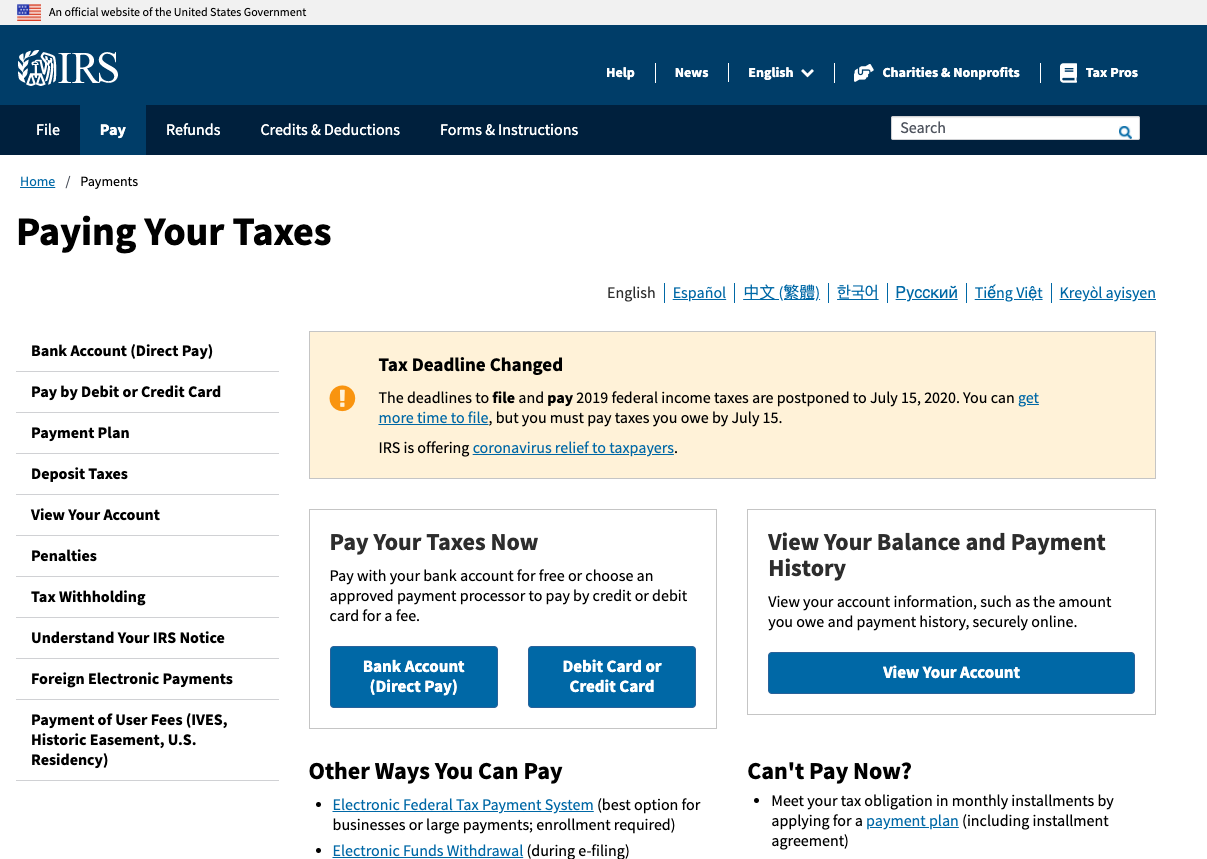
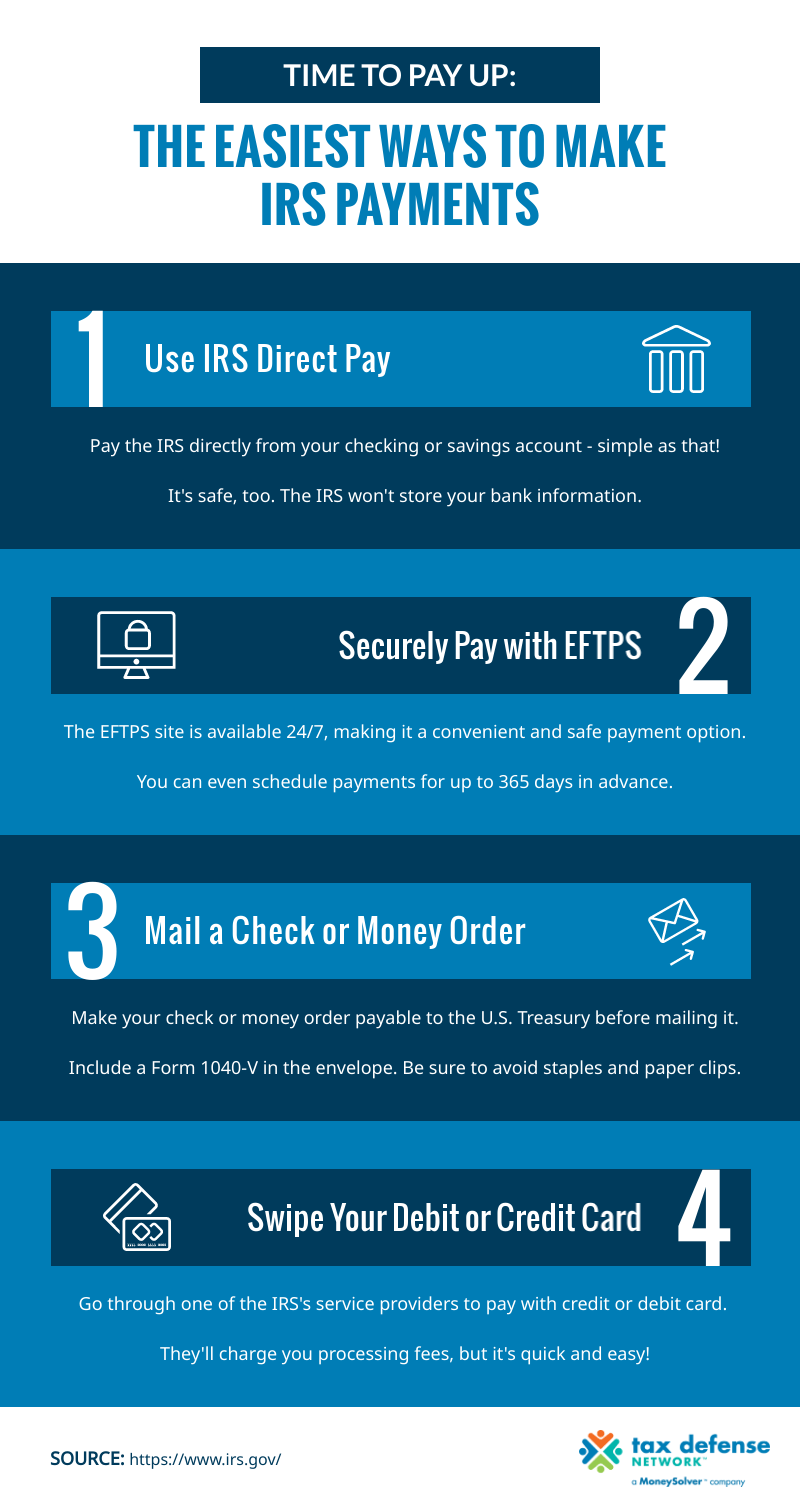
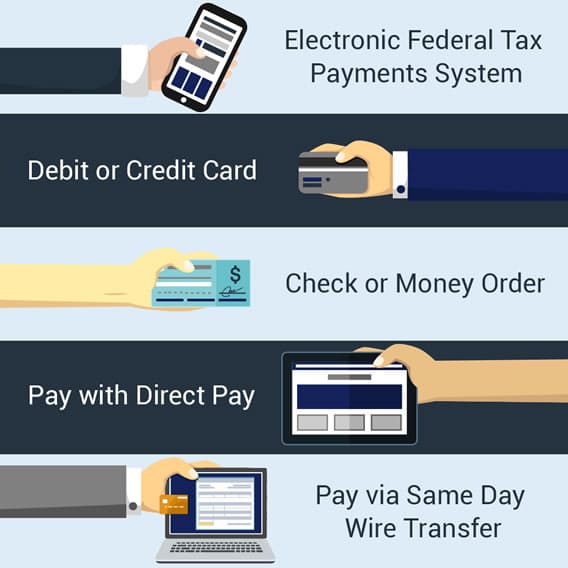
IRS Direct Pay: This free service allows you to pay directly from your checking or savings account. You can schedule payments up to 365 days in advance, receive email confirmations, and modify or cancel payments up to two days before the scheduled withdrawal. It’s simple, secure, and doesn’t require pre-registration.
-
Electronic Federal Tax Payment System (EFTPS): This free service is ideal for businesses and individuals who make recurring payments, such as estimated taxes or payroll taxes. It requires enrollment and provides a payment history. Payments can be scheduled up to 365 days in advance and are debited directly from your bank account.
-
Debit Card, Credit Card, or Digital Wallet: You can pay your taxes using a third-party payment processor via debit card, credit card, or digital wallet (like PayPal or Click to Pay). While convenient, these services charge a processing fee, which varies depending on the processor and card type. This fee is paid directly to the processor, not the IRS. This option provides flexibility, especially for those who prefer using credit cards for rewards or managing cash flow, but the fees should be factored into your financial calculations.
-
Electronic Funds Withdrawal (EFW): If you’re filing your federal tax return electronically through tax software or a tax professional, you can authorize an electronic funds withdrawal from your bank account. The payment is made when your return is filed. This is a seamless option that integrates payment directly into the filing process.
Traditional Payment Methods
For those who prefer or require non-electronic options, the IRS still accommodates traditional payment methods.
-
Mail a Check or Money Order: You can send a check or money order payable to the “U.S. Treasury.” Be sure to include your name, address, daytime phone number, Social Security Number (or EIN for businesses), the tax year, and the related tax form or notice number on the payment. Always mail your payment to the correct IRS address, which varies by state and form type. While simple, this method relies on postal services and may take longer to process, requiring careful planning to ensure it arrives by the deadline.
-
Cash Payments: While less common for federal taxes, you can pay your taxes with cash at IRS retail partners. This involves selecting a payment provider via the IRS website, getting a payment code, and taking the code to a participating retail location (like a 7-Eleven or Family Dollar) to make the cash payment. There may be a small fee for this service. This option can be useful for those who deal primarily in cash or are unbanked.
Payment Plans and Assistance
If you find yourself unable to pay your taxes in full by the due date, the IRS offers various solutions to help you meet your obligations and avoid further penalties. Proactive communication with the IRS is crucial here.
-
Short-Term Payment Plan: You may be granted up to 180 additional days to pay your tax liability in full, though interest and penalties still apply.
-
Installment Agreement: If you need more time, you can request an installment agreement to make monthly payments for up to 72 months. This option is available if you owe a combined total of under $50,000 in tax, penalties, and interest (for individuals) or $25,000 (for businesses that owe only tax). While setting up an installment agreement reduces the failure-to-pay penalty, interest still accrues.
-
Offer in Compromise (OIC): An OIC allows certain taxpayers to resolve their tax liability with the IRS for a lower amount than what they originally owe. This is typically an option when taxpayers are experiencing significant financial hardship and cannot pay their full tax liability. The IRS considers your ability to pay, income, expenses, and asset equity when evaluating an OIC.
-
Currently Not Collectible Status: If you’re experiencing severe financial difficulties and cannot pay any of your tax debt, the IRS may determine that your account is “currently not collectible.” This is a temporary status, and the IRS may review your financial situation periodically.
These options provide crucial financial relief mechanisms, demonstrating the IRS’s understanding that financial circumstances can change.
Choosing the Right Payment Method for You
Selecting the optimal tax payment method involves a personal assessment of various factors. What works best for one individual or business might not be ideal for another. Thoughtful consideration of these elements can lead to a more streamlined and less stressful tax experience.
Factors to Consider
-
Convenience: Do you prefer the ease of online transactions or a traditional paper trail? Electronic methods generally offer the most convenience, allowing payments from anywhere with an internet connection.
-
Cost: While most electronic payments directly from a bank account are free, using a credit card or digital wallet incurs a processing fee. Cash payments through retail partners might also have a small fee. Factor these costs into your financial planning.
-
Security: Electronic payments made directly through IRS.gov or EFTPS are highly secure. When using third-party processors, ensure they are IRS-authorized. Mailing a check involves the security risks associated with postal mail.
-
Record Keeping: Electronic payments often provide immediate confirmation emails and transaction histories, simplifying record-keeping. For mailed payments, keeping a copy of the check and proof of mailing (e.g., certified mail) is advisable.
-
Payment Scheduling: Do you need to schedule payments in advance, or are you paying last-minute? Many electronic options allow for future-dated payments, which is excellent for proactive financial management.
Tips for Accurate and Timely Payments
-
Double-Check All Information: Ensure your Social Security Number (SSN) or Employer Identification Number (EIN), tax year, and payment amount are absolutely correct, regardless of the payment method. Errors can cause significant delays and complications.
-
Pay Early: To avoid last-minute stress, system glitches, or postal delays, aim to make your payment several days before the deadline.
-
Use IRS-Authorized Channels: Stick to the official IRS website or approved third-party processors. Be wary of phishing scams or unofficial payment sites.
-
Keep Proof of Payment: Always retain confirmation numbers, cancelled checks, or payment receipts as proof that you submitted your payment.
Record Keeping Best Practices
Maintaining meticulous records of your tax payments is paramount for financial accountability and future reference.
-
Digital Records: For electronic payments, save confirmation emails and screenshots of successful transactions. If using EFTPS, regularly review and download your payment history.
-
Physical Records: For mailed checks, keep a copy of the check and note the date it was mailed. Consider using certified mail with a return receipt for critical payments.
-
Centralized System: Store all tax-related documents, including payment records, in a centralized, easily accessible location, whether digital or physical. This simplifies future tax preparation and provides a clear audit trail if ever needed.
-
Annual Review: At the end of each tax year, reconcile all your payments with your tax liability to ensure everything aligns before filing.
Navigating Payment Challenges and Getting Help
Even with the best intentions, financial unforeseen circumstances can arise, making it difficult to meet your tax obligations. The IRS recognizes these challenges and provides avenues for assistance. Knowing how to react in such situations is a critical part of responsible financial management.
What to Do If You Can’t Pay On Time
The most important advice if you cannot pay your taxes by the due date is: Don’t ignore the problem.
-
File Your Return Anyway: Even if you can’t pay, always file your tax return or an extension by the deadline. This avoids the much higher “failure to file” penalty.
-
Pay What You Can: Even a partial payment can help reduce the amount of penalties and interest that accrue.
-
Contact the IRS: Proactively reaching out to the IRS to discuss your situation is crucial. They can explain available payment options like short-term payment plans or installment agreements, which can prevent more severe collection actions.
-
Consider a Loan: In some cases, taking out a low-interest personal loan might be cheaper than the IRS’s combined penalties and interest. However, always analyze the interest rates carefully.
Understanding Penalties and Interest
It’s vital to understand how penalties and interest work and how they can compound:
-
Penalty Abatement: In certain circumstances, the IRS may waive or reduce penalties if you can demonstrate a “reasonable cause” for non-compliance (e.g., natural disaster, serious illness, death in the family). This is not typically granted for interest, which is statutorily mandated.
-
Interest Calculation: Interest starts accruing on the unpaid amount from the day after the tax due date until the date the tax is fully paid. The rate is adjusted quarterly and can be found on the IRS website.
Understanding these mechanisms allows you to better assess your financial exposure and decide on the best course of action.
Seeking Professional Advice
When facing complex tax situations or significant financial hardship, consulting a qualified tax professional is invaluable.
-
Tax Preparers: Can assist with accurate filing and identifying all eligible deductions and credits.
-
Enrolled Agents (EAs): Federally authorized tax practitioners who can represent taxpayers before the IRS.
-
CPAs (Certified Public Accountants): Offer a broad range of accounting and financial services, including tax planning and representation.
-
Tax Attorneys: Specialise in tax law and can provide legal advice and representation, particularly in complex cases or disputes.
These professionals can help you understand your obligations, explore payment options, negotiate with the IRS, and ensure you’re making financially sound decisions regarding your tax liability. Their expertise can provide peace of mind and prevent costly mistakes, making them an important financial tool in your overall wealth management strategy.
Paying your IRS taxes is a non-negotiable aspect of financial citizenship. By understanding the diverse payment methods available, adhering to deadlines, and knowing how to navigate challenges, you can fulfill your tax obligations efficiently and confidently. Proactive financial planning, meticulous record-keeping, and leveraging available resources are your best allies in this process, ensuring your financial health remains robust year after year.
aViewFromTheCave is a participant in the Amazon Services LLC Associates Program, an affiliate advertising program designed to provide a means for sites to earn advertising fees by advertising and linking to Amazon.com. Amazon, the Amazon logo, AmazonSupply, and the AmazonSupply logo are trademarks of Amazon.com, Inc. or its affiliates. As an Amazon Associate we earn affiliate commissions from qualifying purchases.