
For many individuals, the annual tax ritual involves simply filing a Form 1040 and perhaps receiving a refund or paying a small balance due. However, for a growing segment of the population – freelancers, independent contractors, small business owners, investors, and those with significant income not subject to withholding – the tax landscape is different. These individuals are often responsible for paying estimated taxes throughout the year. Ignoring this obligation can lead to unexpected penalties, creating unnecessary financial stress. This comprehensive guide will demystify quarterly estimated taxes, providing clear, actionable steps on how to calculate, pay, and manage these crucial financial responsibilities, ensuring you remain compliant and financially sound.
1. Demystifying Estimated Taxes: Who Needs to Pay and Why?
Estimated taxes are the IRS’s way of ensuring that taxpayers with income not subject to sufficient withholding – such as wages from an employer – pay their fair share of income tax, self-employment tax, and other taxes throughout the year as they earn income. This “pay-as-you-go” system prevents a massive, unmanageable tax bill at the end of the year and ensures the government has a steady stream of revenue.
The Rationale Behind Estimated Payments
The U.S. tax system operates on a “pay-as-you-go” basis. For most employees, this is handled automatically through payroll withholding by their employers. However, if you earn income from sources where taxes aren’t withheld, or if the withholding isn’t sufficient, you’re expected to estimate your tax liability and pay it in quarterly installments. This applies to various types of income, including:
-
Self-employment income: Profits from a sole proprietorship, partnership, or S corporation. This includes both income tax and self-employment taxes (Social Security and Medicare).
-
Rental income: Income from properties you own and rent out.
-
Investment income: Interest, dividends, capital gains from stock sales, and other investment earnings.
-
Alimony: (for divorce or separation agreements executed before 2019)
-
Pensions and annuities: If you elect not to have enough tax withheld.
-
Prizes and awards: If significant.
Essentially, if you expect to owe at least $1,000 in tax for the year (after subtracting any withholding and credits), you likely need to make estimated tax payments. Corporations generally need to make estimated payments if they expect to owe $500 or more.
Key Taxpayers Required to Pay Estimated Taxes
While anyone with significant untaxed income might need to pay, certain groups are almost guaranteed to fall into this category:
-
Freelancers, Independent Contractors, and Gig Workers: This rapidly growing segment of the workforce often receives Form 1099-NEC or similar documents rather than a W-2, indicating that no taxes were withheld from their earnings.
-
Small Business Owners (Sole Proprietors, Partners, S-Corp Shareholders): Your business profits are typically passed through to your personal income, making you responsible for estimated taxes.
-
Investors with Substantial Capital Gains or Dividend Income: If you frequently trade stocks, realize significant gains, or have a large portfolio generating dividends, you’ll need to account for these taxes.
-
Retirees with Untaxed Pension or Social Security Income: While some pensions allow for withholding, others may not, or the amount withheld might be insufficient.
-
Individuals with Other Income Sources: This could include royalties, gambling winnings, or even income from a hobby that crosses into profitability.
Understanding Underpayment Penalties
The primary reason to pay estimated taxes diligently is to avoid penalties. The IRS can impose an underpayment penalty if you don’t pay enough tax through withholding and estimated payments throughout the year. The penalty is essentially interest charged on the amount you underpaid.
There are two main “safe harbor” rules that, if met, can help you avoid penalties:
-
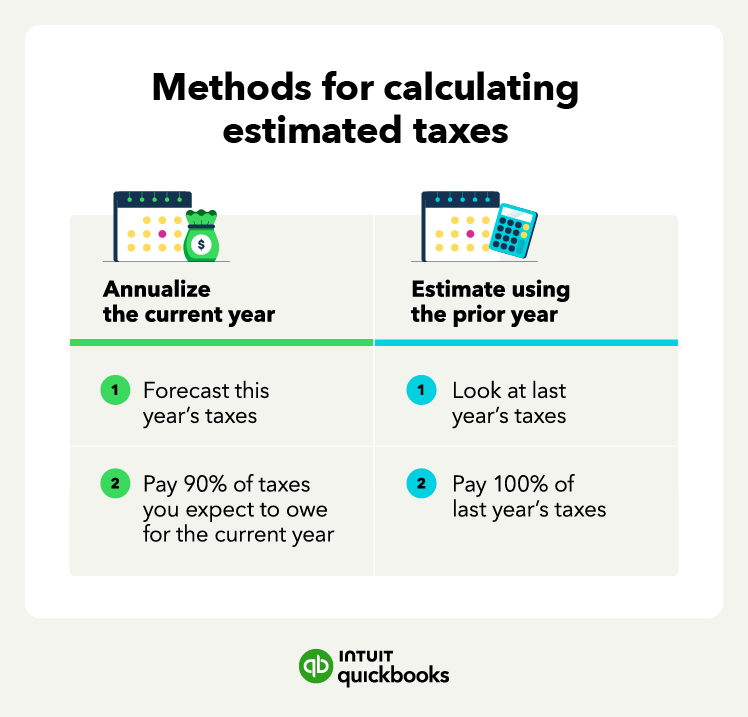
90% Rule: You pay at least 90% of your current year’s tax liability through estimated payments and withholding.
-
100% (or 110%) Rule: You pay 100% of your prior year’s tax liability (or 110% if your Adjusted Gross Income (AGI) in the prior year was over $150,000, or $75,000 if married filing separately), through estimated payments and withholding.
Meeting either of these safe harbor rules will generally protect you from underpayment penalties, even if your actual tax liability for the current year ends up being higher than anticipated. It’s often advisable to aim for the 100% (or 110%) prior year rule, as it provides a concrete, known target.
2. The Art of Estimation: Calculating Your Tax Liability
Calculating your estimated tax can feel like peering into a crystal ball, especially if your income fluctuates. However, with a structured approach, you can arrive at a reasonably accurate figure. The goal isn’t perfect precision, but rather a robust estimate that fulfills your obligations and avoids penalties.
Gathering Essential Financial Information
Before you can estimate, you need data. Collect all relevant financial documents from the previous tax year and any current year projections:
-
Last Year’s Tax Return (Form 1040): This is your most valuable resource. It provides a baseline for your income, deductions, credits, and overall tax liability.
-
Income Records: Pay stubs (if you have W-2 income), 1099-NEC forms, bank statements, profit and loss statements from your business, dividend statements, interest statements, and any other income sources.
-
Deduction and Credit Information: Itemized deductions (medical expenses, state and local taxes, mortgage interest, charitable contributions) or the standard deduction amount. Also, consider any potential tax credits (child tax credit, education credits, energy credits, etc.).
-
Estimated Business Expenses: If self-employed, project your business operating costs.
Leveraging Form 1040-ES for Individuals
The IRS provides Form 1040-ES, Estimated Tax for Individuals, specifically to help you calculate your estimated tax. While you don’t file this form when you pay, it contains a worksheet designed to guide you through the process. The worksheet walks you through:
-
Estimating your adjusted gross income (AGI): All your income sources minus certain deductions (like traditional IRA contributions).
-
Calculating your estimated deductions: Standard deduction or itemized deductions.
-
Determining your taxable income.
-
Applying tax rates: Use the current year’s tax rate schedules (usually found in the Form 1040-ES instructions) to figure your income tax.
-
Adding self-employment tax: For self-employed individuals, calculate this separately. Remember, you can deduct one-half of your self-employment taxes when calculating your AGI.
-
Subtracting any credits: Child tax credit, education credits, etc.
-
Subtracting any expected withholding: From W-2 jobs or pensions.
-
The remaining amount is your estimated tax liability for the year. Divide this by four to get your quarterly payment amount.
Incorporating Deductions, Credits, and Other Income
Don’t forget to factor in all potential deductions and credits when making your calculation. Overlooking these can lead to overpaying your estimated taxes, tying up funds you could use elsewhere. Conversely, underestimating them could lead to underpayment.
-
Standard vs. Itemized Deductions: Choose the larger of the two.
-
Business Deductions: If self-employed, remember all legitimate business expenses reduce your taxable income. Keep meticulous records.
-
Tax Credits: These are dollar-for-dollar reductions of your tax liability and can significantly lower your estimated payments.
-
Other Income: Be sure to include all sources, even sporadic ones, if they are significant.
Strategies for Variable Income: The Annualized Method
For many freelancers or those with seasonal businesses, income isn’t earned evenly throughout the year. If you expect to earn a significant portion of your income later in the year, paying equal installments might result in overpaying in early quarters and underpaying in later ones (and potentially incurring penalties if you don’t make up for it).
The annualized income method allows you to account for uneven income. Instead of dividing your estimated annual income by four, you estimate your income and deductions for each payment period as it occurs. This method involves:

-
Estimating income and deductions for the first payment period (January 1 to March 31).
-
Calculating the tax due on that annualized income.
-
Making the payment for the first quarter.
-
Repeating this process for subsequent quarters, adjusting your estimates based on actual income and deductions earned up to that point.
This method requires more effort but can prevent penalties if your income is heavily skewed towards certain parts of the year. You would use Form 2210, Underpayment of Estimated Tax by Individuals, Estates, and Trusts, Part III, to calculate the penalty if you use this method.
3. Making Your Payments: Convenient Methods and Critical Deadlines
Once you’ve calculated your estimated tax, the next step is to make your payments accurately and on time. The IRS offers several convenient ways to pay, and understanding the deadlines is paramount to avoiding penalties.
Embracing Digital: Online Payment Portals
The most convenient and secure way to pay your estimated taxes is electronically.
-
IRS Direct Pay: This free service allows you to make payments directly from your checking or savings account. You can schedule payments up to 365 days in advance, view your payment history, and receive email confirmations. It’s suitable for individual payments.
-
Electronic Federal Tax Payment System (EFTPS): This is a free service provided by the U.S. Department of the Treasury. It’s primarily used for business taxpayers but can also be used by individuals. You need to enroll in EFTPS, which can take several days. Once enrolled, you can schedule payments up to 365 days in advance and view your payment history. It’s particularly useful if you make frequent business tax payments.
-
Debit Card, Credit Card, or Digital Wallet: You can pay through authorized third-party payment processors via the IRS website. While convenient, these processors typically charge a small fee based on the payment amount.
The Traditional Route: Paying by Mail
If you prefer to pay by check or money order, you can do so by mail.
-
Form 1040-ES Payment Voucher: You must include a payment voucher from Form 1040-ES with your check or money order. Ensure the voucher is correctly filled out with your name, address, Social Security number, and the amount of payment.
-
Check or Money Order: Make it payable to the “U.S. Treasury.” Write your name, address, daytime phone number, Social Security number, and “20XX Form 1040-ES” (replace XX with the tax year) on the check or money order.
-
Mailing Address: The mailing address depends on where you live. Refer to the Form 1040-ES instructions for the correct address. Mail it early enough to ensure it’s postmarked by the due date.
Quarterly Payment Due Dates: Mark Your Calendar
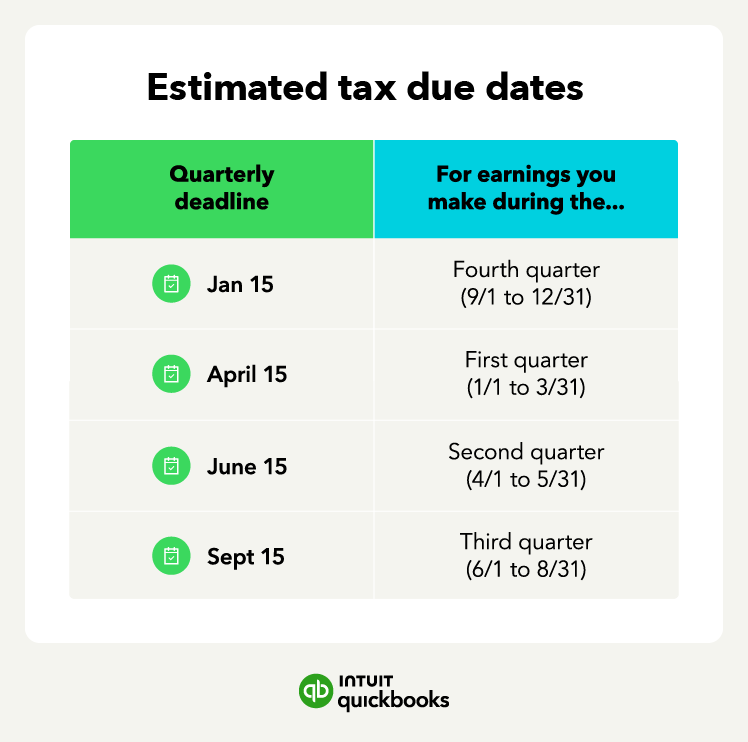
Estimated tax payments are generally due in four installments throughout the year. These dates are critical, and missing them can trigger penalties.
-
1st Quarter (Jan 1 to Mar 31): Due April 15
-
2nd Quarter (Apr 1 to May 31): Due June 15
-
3rd Quarter (Jun 1 to Aug 31): Due September 15
-
4th Quarter (Sep 1 to Dec 31): Due January 15 of the next year
Important Notes:
-
If a due date falls on a weekend or holiday, the deadline shifts to the next business day.
-
Farmers and fishermen have special rules and may only need to make one payment by January 15 of the following year if they meet specific criteria.
-
If you file your income tax return by January 31 of the following year and pay your entire tax liability at that time, you might not need to make the fourth estimated payment.
Handling Missed Payments or Overpayments
-
Missed Payments: If you realize you missed a payment, make it as soon as possible. While you might still incur a penalty for the late portion, paying promptly can stop the penalty from accruing further. You can usually pay the amount of the missed installment along with your next scheduled payment.
-
Overpayments: If you realize you’ve overpaid in a prior quarter, you can simply reduce the amount of your subsequent estimated payments. You don’t need to apply for a refund mid-year. Any remaining overpayment will be reconciled when you file your annual tax return, and you’ll receive a refund or can apply it to the next year’s taxes.
4. Proactive Planning: Strategies for Seamless Estimated Tax Management
Effective management of estimated taxes goes beyond just calculating and paying. It involves proactive planning and ongoing monitoring to adapt to changes in your financial situation and ensure long-term compliance without stress.
The Importance of Regular Financial Review
Your income and expenses aren’t static, especially if you’re self-employed. What you estimated in January might be vastly different by September.
-
Quarterly Check-ins: At the end of each quarter (or before each payment due date), take time to review your actual income and expenses year-to-date. Compare these figures to your initial projections.
-
Adjusting Estimates: If your income is significantly higher or lower than expected, or if you’ve had unexpected deductions or credits, adjust your estimated payments for the remaining quarters. This is crucial for avoiding underpayment penalties or tying up too much cash.
-
Life Events: Major life changes like marriage, divorce, having a child, buying a home, or starting a new business venture can all impact your tax liability. Factor these in promptly.
Building a Dedicated Tax Savings Strategy
One of the biggest challenges for those paying estimated taxes is having the funds readily available when payments are due. Without a disciplined approach, the quarterly deadlines can become a scramble.
-
Separate Savings Account: Open a dedicated savings account specifically for your estimated taxes. This physically separates the funds from your operating capital or personal spending, reducing the temptation to dip into it.
-
Automated Transfers: As you earn income (e.g., after each client payment or monthly), set up an automated transfer to move a percentage of that income into your tax savings account. Many self-employed individuals aim to set aside 25-35% of their gross income, depending on their income level and state tax obligations.
-
Treat It as an Expense: Think of estimated taxes not as an optional payment, but as a mandatory business expense. Budget for it just as you would for rent or supplies.
When to Seek Professional Guidance
While this guide provides a solid foundation, complex financial situations often warrant professional advice.
-
Complex Income Sources: If you have multiple income streams, investments, international income, or intricate business structures.
-
Significant Life Changes: A major inheritance, the sale of a large asset, or starting a particularly complex business.
-
Difficulty in Estimation: If you consistently struggle to accurately estimate your income or navigate the various deductions and credits.
-
Time Constraints: If you simply don’t have the time or inclination to manage your taxes meticulously, a professional can alleviate the burden.
A qualified tax professional (CPA, Enrolled Agent, or tax attorney) can help you optimize your tax strategy, ensure compliance, and potentially identify deductions or credits you might have overlooked. They can also represent you in case of an IRS inquiry.
Adjusting Estimates Mid-Year
It’s perfectly acceptable, and often advisable, to revise your estimated tax payments throughout the year. The IRS allows you to amend your Form 1040-ES calculation at any time if your income or deductions change. If you used the annualized income method, adjustments are built into the process. Even if you don’t use the annualized method, you can simply adjust the amounts of your remaining payments to compensate for any changes in your total estimated tax liability. For example, if you had a very profitable second quarter and realize you’ll owe more tax than initially estimated, you can increase your payments for the third and fourth quarters to make up the difference.
Paying quarterly estimated taxes is a critical responsibility for many taxpayers. While it requires diligence and planning, understanding the process, utilizing available tools, and maintaining a proactive approach can transform it from a daunting task into a manageable part of your financial routine. By staying informed and organized, you can meet your tax obligations with confidence, avoiding penalties and securing your financial well-being.
aViewFromTheCave is a participant in the Amazon Services LLC Associates Program, an affiliate advertising program designed to provide a means for sites to earn advertising fees by advertising and linking to Amazon.com. Amazon, the Amazon logo, AmazonSupply, and the AmazonSupply logo are trademarks of Amazon.com, Inc. or its affiliates. As an Amazon Associate we earn affiliate commissions from qualifying purchases.