
Navigating the labyrinthine world of US taxes can feel like a daunting task for individuals and businesses alike. From understanding your obligations to meticulously gathering documentation and choosing the right payment method, each step requires precision and attention to detail. This comprehensive guide aims to demystify the process, offering a clear, professional, and insightful roadmap to effectively pay your US taxes, ensuring compliance and peace of mind. Whether you’re a first-time filer, a seasoned entrepreneur, or a foreign resident with US income, understanding the fundamentals is crucial for avoiding penalties and optimizing your financial health.
Understanding Your Tax Obligations
Before you even think about filing, it’s essential to grasp the scope of your tax obligations. The US tax system is complex, with various layers of federal, state, and sometimes local taxes, each with its own rules and deadlines.
Who Needs to Pay?
The fundamental question is, “Am I required to pay US taxes?” The answer largely depends on your residency status and the source of your income.
-
US Citizens and Resident Aliens: If you are a US citizen or a resident alien (generally, someone who meets the green card test or the substantial presence test), you are subject to US tax on your worldwide income, regardless of where you live or where the income is earned. This includes wages, salaries, investment income, business profits, and more.
-
Non-Resident Aliens: If you are a non-resident alien, you are generally only taxed on income effectively connected with a US trade or business, and on certain US-sourced fixed, determinable, annual, or periodical (FDAP) income (e.g., interest, dividends, rents, royalties). Tax treaties may modify these rules.
-
Businesses Operating in the US: Corporations, partnerships, and sole proprietorships conducting business within the United States are subject to various federal and potentially state and local business taxes, including corporate income tax, self-employment tax, and payroll taxes.
Key Tax Types
The term “US taxes” encompasses a broad range of levies. Understanding the primary types you might encounter is crucial for accurate planning and payment.
-
Income Tax (Federal, State, and Local): This is the most common tax, levied on an individual’s or entity’s taxable income. The federal income tax is progressive, meaning higher earners pay a higher percentage. Most states also impose income tax, and some cities or counties have local income taxes.
-
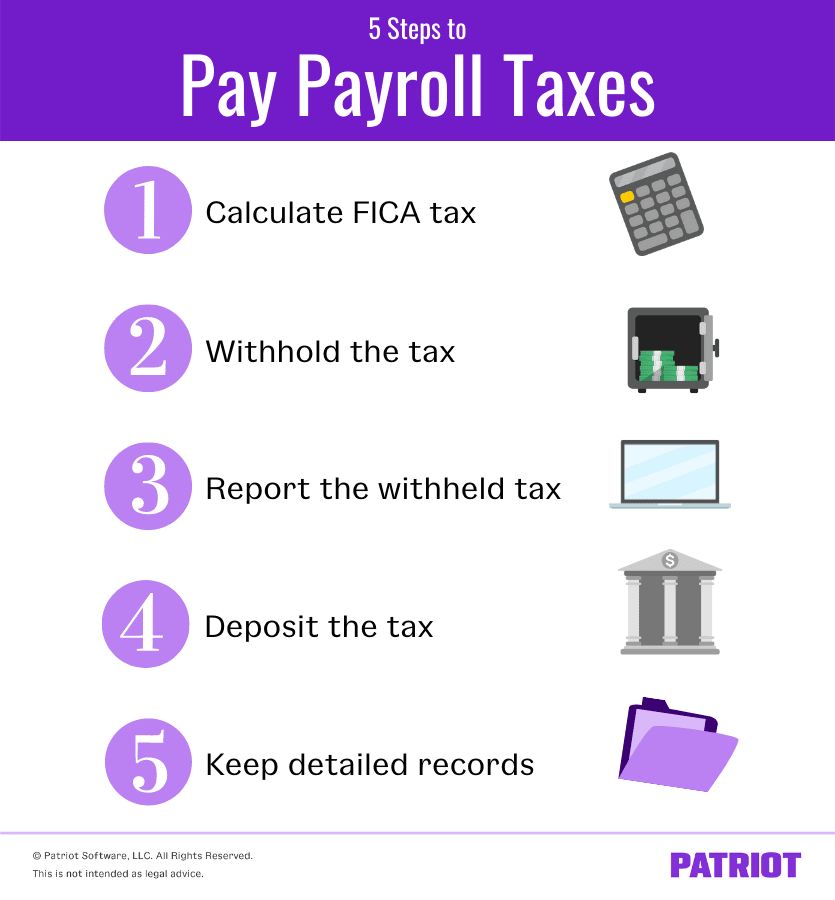
Payroll Taxes (Social Security and Medicare): These are mandatory contributions paid by both employees and employers to fund Social Security (retirement, disability, survivor benefits) and Medicare (health insurance for the elderly and disabled). Employees typically see these withheld from their paychecks as FICA (Federal Insurance Contributions Act) taxes.
-
Self-Employment Tax: If you are self-employed or an independent contractor, you are responsible for paying both the employee and employer portions of Social Security and Medicare taxes. This is known as self-employment tax and is calculated on your net earnings from self-employment.
-
Estimated Taxes: If you expect to owe at least $1,000 in tax (for individuals) or $500 (for corporations) for the year from income not subject to withholding (e.g., self-employment income, rental income, investment income), you are generally required to pay estimated taxes quarterly throughout the year. Failure to do so can result in penalties.
-
Sales Tax (State and Local): This is a consumption tax levied on the sale of goods and services, typically collected by the vendor at the point of sale and remitted to the taxing authority. Rates vary significantly by state and locality.
-
Property Tax (Local): Imposed by local governments (counties, cities, school districts) on real estate, property taxes are typically used to fund local services like schools, police, and fire departments.
Important Deadlines
Timeliness is paramount in tax compliance. Missing deadlines can lead to penalties and interest.
-
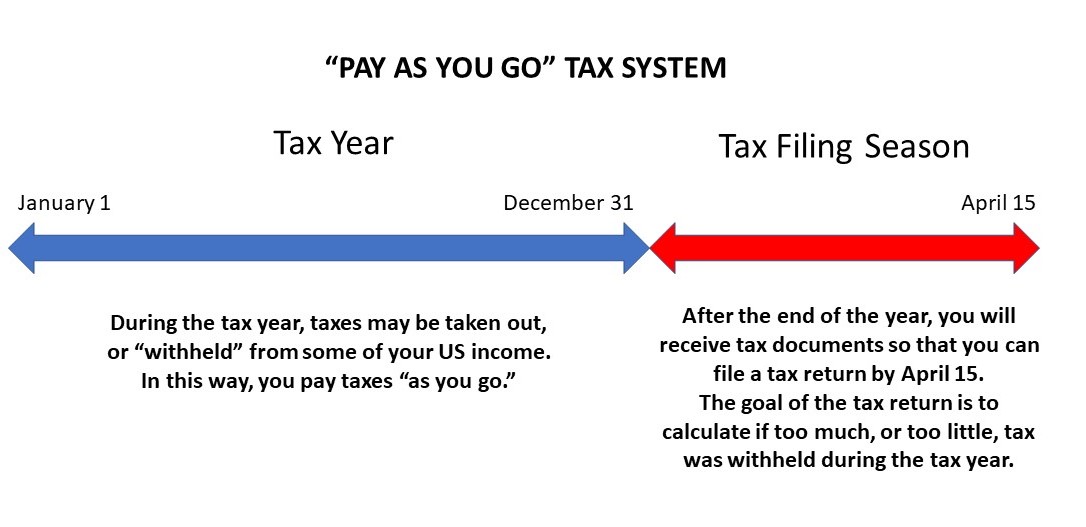
April 15th: This is the most widely known deadline for individual federal income tax returns (Form 1040) and payment of any taxes due. If April 15th falls on a weekend or holiday, the deadline shifts to the next business day. Some states may have different filing deadlines.
-
Quarterly Estimated Tax Payments: These are due on April 15, June 15, September 15, and January 15 of the following year. Again, adjustments are made for weekends and holidays.
-
Business Specific Deadlines: Corporations, partnerships, and S-corporations have different filing deadlines for their respective income tax returns (e.g., March 15 for calendar year S-corps and partnerships, April 15 for calendar year C-corps).
-
Extensions: If you need more time to file your federal income tax return, you can request an extension using Form 4868, which typically grants an additional six months (until October 15 for individuals). Note: An extension to file is not an extension to pay. You must still pay any estimated taxes due by the original deadline to avoid penalties.
Gathering Your Financial Documents
Before you can accurately report your income and claim eligible deductions and credits, you’ll need to meticulously gather all relevant financial documentation. This step is critical for ensuring accuracy and minimizing the risk of errors or audits.
Income Documentation
This category includes all forms that report the income you received throughout the year.
-
W-2s (Wage and Tax Statement): Issued by employers, this form reports your annual wages, tips, and other compensation, along with federal, state, and local taxes withheld. You should receive one from each employer you worked for during the tax year.
-
1099 Forms: A variety of 1099 forms report different types of income not from an employer:
-
1099-NEC (Nonemployee Compensation): For independent contractors or freelancers who received $600 or more from a single payer.
-
1099-MISC (Miscellaneous Information): Reports various types of income, such as rents, royalties, or prize winnings.
-
1099-INT (Interest Income): From banks, credit unions, and other financial institutions.
-
1099-DIV (Dividends and Distributions): From stocks and mutual funds.
-
1099-B (Proceeds From Broker and Barter Exchange Transactions): Reports capital gains or losses from selling stocks, bonds, or other investments.
-
1099-R (Distributions From Pensions, Annuities, Retirement or Profit-Sharing Plans, IRAs, Insurance Contracts, etc.): For retirement plan distributions.
-
1099-G (Certain Government Payments): Such as unemployment compensation or state tax refunds.
-
-
K-1s (Schedule K-1): If you are a partner in a partnership, a shareholder in an S-corporation, or a beneficiary of an estate or trust, you will receive a Schedule K-1 detailing your share of the entity’s income, losses, and deductions.
-
Other Income Records: This includes records for any other income sources not reported on formal tax forms, such as rental income and expenses (e.g., from property you own), capital gains/losses statements not covered by 1099-B, or foreign income.
Deduction and Credit Documentation
To reduce your taxable income or directly lower your tax liability, you’ll need documentation supporting any deductions or credits you plan to claim.
-
Mortgage Interest Statements (Form 1098): Reports the amount of mortgage interest you paid during the year, which may be deductible.
-
Student Loan Interest Statements (Form 1098-E): Details the student loan interest paid, potentially eligible for a deduction.
-
Medical Expense Records: Receipts and statements for unreimbursed medical and dental expenses.
-
Charitable Contribution Receipts: Documentation for cash and non-cash donations to qualified charities. For contributions over certain thresholds, specific IRS rules apply.
-
Childcare Expenses: Records of payments made to childcare providers, which may qualify for the Child and Dependent Care Credit.
-
Education Expenses (Form 1098-T): Reports tuition and related expenses paid to eligible educational institutions, which could qualify for education credits.
-
Records for Business Expenses (if self-employed): Comprehensive records of all deductible business expenses, including receipts, invoices, mileage logs, and bank statements.
-
Retirement Contributions: Records of contributions to IRAs, 401(k)s, or other retirement accounts.
-
Property Tax Records: Statements showing the amount of state and local property taxes paid.
Personal Information
Finally, ensure you have all necessary personal identification details readily available.
-
Social Security Numbers (SSN) or Individual Taxpayer Identification Numbers (ITIN): For yourself, your spouse, and all dependents. Accuracy here is vital.
-
Bank Account Information: For direct deposit of refunds or direct debit of tax payments. This typically includes your bank’s routing number and your account number.
-
Prior Year Tax Returns: These are often helpful as a reference, especially if you have carryovers (e.g., capital losses, net operating losses) or need to recall specific information from the previous year.
Choosing Your Filing Method
Once your documents are in order, the next step is to decide how you will prepare and file your tax return. Several options are available, catering to different levels of complexity and comfort with tax preparation.
DIY Tax Software
For many taxpayers, especially those with straightforward returns, using do-it-yourself tax software is a popular and cost-effective choice.
-
Overview of Popular Options: Software like TurboTax, H&R Block Tax Software, FreeTaxUSA, and TaxAct offer user-friendly interfaces that guide you through the filing process step-by-step. They ask questions about your income, deductions, and credits, then populate the correct forms automatically.
-
Pros: Cost-effective (many offer free federal filing for simple returns), convenient (can be done from anywhere with internet access), provides guidance, and performs calculations automatically, reducing mathematical errors. Many also offer audit support features.
-
Cons: Requires you to understand your own tax situation, can still lead to errors if questions are misunderstood or information is entered incorrectly, and may not be suitable for highly complex tax scenarios (e.g., intricate business structures, foreign income with treaty considerations).
-
Free File Program: The IRS partners with tax software companies to offer the Free File program. If your adjusted gross income (AGI) is below a certain threshold (which changes annually), you can use participating software to file your federal tax return for free. The IRS website provides links to eligible providers.
Professional Tax Preparer
If your tax situation is complex, or you simply prefer to have an expert handle your taxes, a professional tax preparer can be invaluable.
-
When to Consider One: You might consider a professional if you own a small business, have significant investments, deal with foreign income or assets, experienced a major life event (marriage, divorce, birth of a child, home purchase), or if you simply lack the time or confidence to prepare your own return. They can also offer valuable tax planning advice.
-
Types of Preparers:
-
Certified Public Accountants (CPAs): Licensed by state boards of accountancy, CPAs have extensive training in accounting and tax law.
-
Enrolled Agents (EAs): Federally licensed tax practitioners who specialize in taxation and have unlimited rights to represent taxpayers before the IRS.
-
Tax Attorneys: Lawyers specializing in tax law, often engaged for highly complex tax issues, disputes, or planning for high-net-worth individuals.
-
-
Pros: Expertise in tax law, ensures accuracy, can identify deductions and credits you might miss, offers audit representation, and provides tailored tax planning.
-
Cons: Higher cost compared to DIY software.
-
Tips for Choosing a Preparer: Look for credentials (CPA, EA), inquire about their experience with your specific tax situation, check for a valid Preparer Tax Identification Number (PTIN), ask about fees upfront, and ensure they are available year-round for questions.
IRS Direct Tools
The IRS also provides resources directly that can assist with filing and payment.
-
IRS Website Resources: The official IRS website (IRS.gov) is a treasure trove of information, offering free access to all tax forms, instructions, publications, and frequently asked questions. While it doesn’t offer a step-by-step filing tool for most, it’s essential for research.
-
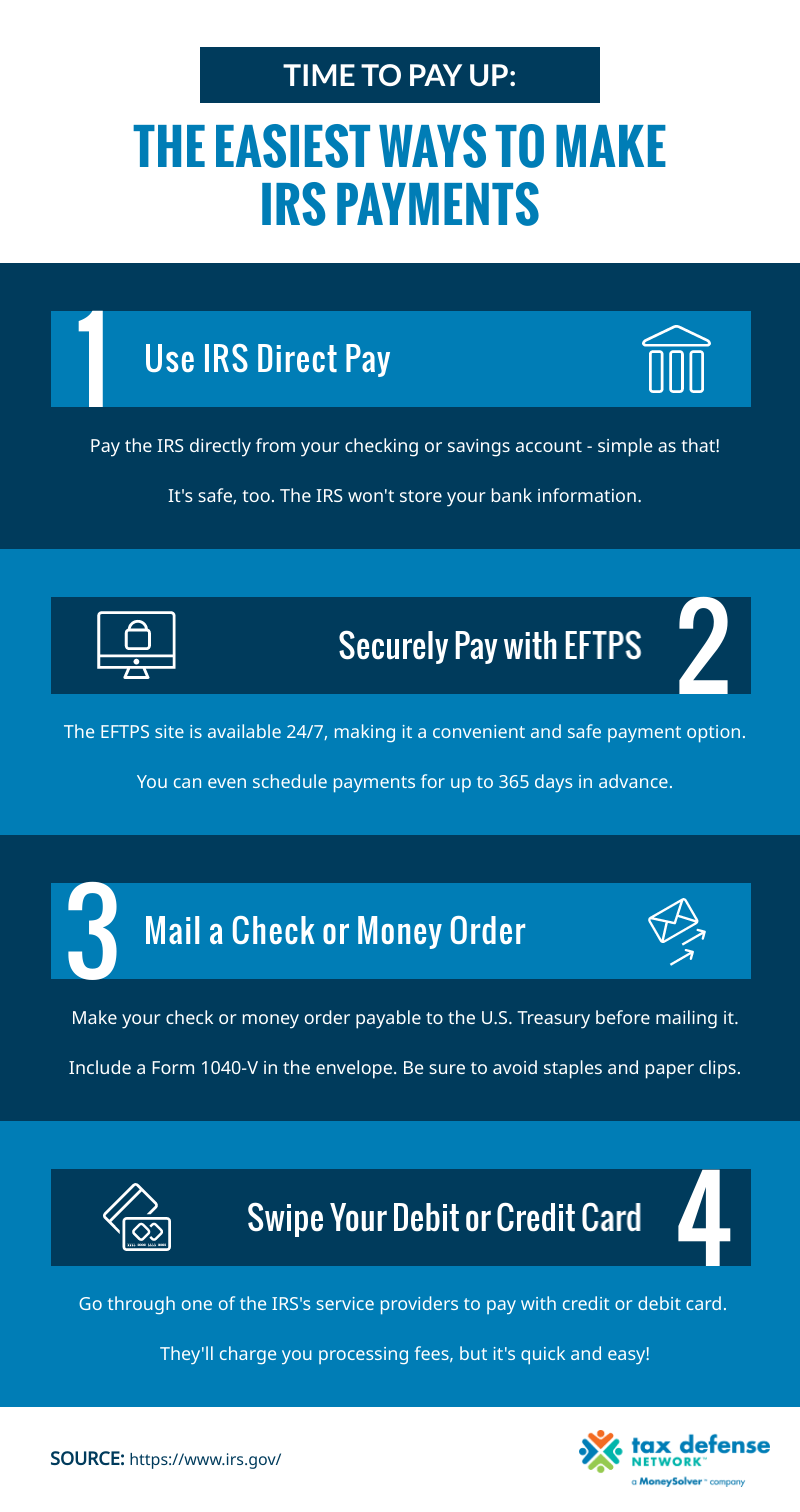
IRS Direct Pay: For making tax payments, the IRS offers its own secure online service, IRS Direct Pay, which allows you to pay your taxes directly from your checking or savings account.
Making Your Tax Payments
Once your return is prepared and you know how much tax you owe, the final step is to make your payment. The IRS offers several convenient methods, catering to different preferences.
Direct Pay from Bank Account (IRS Direct Pay)
This is one of the most popular and recommended methods for paying federal taxes.
-
Convenience and No Fees: IRS Direct Pay allows you to pay directly from your checking or savings account. It’s free, secure, and straightforward. You simply provide your bank account details, the amount you want to pay, and the tax year and type of payment (e.g., Form 1040, estimated tax).
-
Availability: It can be used for a variety of tax forms, including Form 1040 series, estimated taxes, and even some business taxes. You can schedule payments up to 365 days in advance.
Debit/Credit Card or Digital Wallet
If you prefer to pay with plastic or a digital service, these options are available through third-party processors.
-
Third-Party Processors: The IRS utilizes approved third-party payment processors (e.g., PayUSAtax, ACI Payments, Link2Gov Corporation). You will choose a processor from the IRS website, and they will facilitate the payment.
-
Fees Involved: Be aware that these processors charge a convenience fee, which varies depending on the amount paid and the processor used. These fees are generally a percentage for credit/debit cards or a flat fee for digital wallets.
-
Good for Rewards Points: While there’s a fee, some taxpayers choose this method to earn credit card rewards points or miles.
Electronic Federal Tax Payment System (EFTPS)
EFTPS is a free service provided by the US Department of the Treasury that allows you to make federal tax payments electronically.
-
Primarily for Businesses, but Individuals Can Use: While commonly used by businesses for various tax types (payroll, corporate income tax), individuals can also enroll and use EFTPS for estimated tax payments or payments due with their income tax return.
-
Requires Enrollment: You must enroll in EFTPS online or by mail and receive a PIN before you can use the service. This process can take a few days, so plan ahead. Once enrolled, you can schedule payments up to 365 days in advance.
Check or Money Order by Mail
The traditional method of paying by mail remains an option for those who prefer it.
-
Traditional Method: You can pay your federal taxes by sending a check or money order through the mail.
-
Ensure Proper Labeling and Mailing Address: Make your check or money order payable to the “U.S. Treasury.” Include your name, address, daytime phone number, Social Security number (or ITIN), the tax year, and the related tax form or notice number (e.g., “2023 Form 1040”) on the payment. The correct mailing address depends on your location and the type of form you are filing, so always consult IRS.gov or your tax form instructions. Mail early to ensure it’s postmarked by the deadline.
Payment Plans and Options for Difficulty
If you cannot pay your full tax liability by the due date, the IRS offers several options to help. It’s crucial to contact the IRS or apply for a payment plan as soon as possible to avoid further penalties.
-
Offer in Compromise (OIC): An OIC allows certain taxpayers to resolve their tax liability with the IRS for a lower amount than what they originally owe. This is typically granted when there’s genuine doubt about the taxpayer’s ability to pay, the amount owed, or when collecting the full amount would create economic hardship.
-
Installment Agreements: This allows you to make monthly payments for up to 72 months. You’ll still owe interest and penalties until the balance is paid in full, but it prevents more aggressive collection actions.
-
Temporary Delay of Collection: In cases of severe financial hardship, the IRS may temporarily delay collection until your financial situation improves.
Post-Filing and Ongoing Compliance
Paying your taxes is not merely a one-time annual event; it’s part of an ongoing commitment to financial compliance. After your return is filed and taxes are paid, there are still important steps to take and best practices to maintain.
Record Keeping
Effective record keeping is the bedrock of good financial management and essential for tax compliance.
-
How Long to Keep Tax Records: The IRS generally recommends keeping tax records for at least three years from the date you filed your original return or two years from the date you paid the tax, whichever is later. However, for certain situations, this period extends: seven years if you filed a claim for a worthless security or bad debt deduction, and indefinitely if you filed a fraudulent return or failed to file a return at all. It’s prudent to keep records related to property for as long as you own the property plus at least three years after you sell it.
-
Digital vs. Physical Records: You can keep records in either physical or electronic format, as long as they are legible and accessible. Consider using cloud storage, encrypted external drives, or secure document management systems for digital records, and a fireproof safe or secure filing cabinet for physical documents.
Amending Your Return
Mistakes happen, and if you discover an error or omission on a previously filed tax return, you can correct it.
-
Form 1040-X (Amended U.S. Individual Income Tax Return): This is the form used by individuals to correct a previously filed Form 1040, 1040-SR, or 1040-NR.
-
When and Why to Amend: You might need to amend your return if you discover you forgot to report income, claimed an incorrect deduction or credit, or made a mathematical error. If the amendment results in a refund, you’ll want to file it promptly. If it results in more tax due, amending it quickly can help minimize penalties and interest. Generally, you have three years from the date you filed your original return or two years from the date you paid the tax (whichever is later) to file Form 1040-X to claim a refund.
Staying Informed
Tax laws are not static; they change frequently, sometimes with significant impacts on your tax liability and filing requirements.
-
IRS Publications and News: Regularly check IRS.gov for updates, news releases, and official publications. Subscribing to IRS email alerts can keep you informed about important changes and deadlines.
-
Changes in Tax Law: Major legislative changes can affect everything from tax brackets and standard deductions to specific credits and business write-offs. Staying informed allows you to adjust your tax planning proactively.
-
Proactive Tax Planning: Don’t wait until April to think about your taxes. Engage in year-round tax planning. This includes adjusting your withholding, making estimated tax payments, contributing to retirement accounts, and strategizing on asset sales or charitable giving. A tax professional can provide invaluable assistance with proactive planning.
Paying US taxes, while seemingly complex, becomes manageable with a structured approach and a clear understanding of the requirements. By comprehending your obligations, diligently gathering documentation, selecting an appropriate filing method, making timely payments, and maintaining robust post-filing compliance, you can navigate the US tax system with confidence. Remember, accuracy and timeliness are your greatest allies in avoiding penalties and ensuring a smooth financial journey. Proactive planning and staying informed are not just about compliance; they are about optimizing your financial future.
aViewFromTheCave is a participant in the Amazon Services LLC Associates Program, an affiliate advertising program designed to provide a means for sites to earn advertising fees by advertising and linking to Amazon.com. Amazon, the Amazon logo, AmazonSupply, and the AmazonSupply logo are trademarks of Amazon.com, Inc. or its affiliates. As an Amazon Associate we earn affiliate commissions from qualifying purchases.