
In the dynamic world of technology and finance, few companies command as much attention as Nvidia. A titan in the semiconductor industry, Nvidia has become synonymous with the cutting edge of artificial intelligence, high-performance computing, and advanced graphics processing. Consequently, its quarterly earnings announcements are not mere corporate formalities; they are seismic events that can send ripples across global markets, dictating investor sentiment, shaping sector-wide trends, and offering crucial insights into the health of the broader tech economy. For savvy investors, understanding the timing, context, and potential implications of Nvidia’s earnings call is not just advisable—it’s paramount.
This article delves into why Nvidia’s earnings disclosure is a tentpole event, what key metrics investors should prioritize, and how to effectively prepare for and interpret the information released. It’s an exploration tailored for those who understand that in investing, knowing when something happens is just the first step; understanding why it matters and what to do with that information is where true financial acumen lies.
The Undeniable Gravitas of Earnings Announcements
Earnings reports serve as a vital quarterly health check for publicly traded companies, offering a transparent glimpse into their financial performance, operational efficiency, and future outlook. For a company like Nvidia, whose market capitalization often places it among the world’s most valuable entities, these reports carry an amplified significance, impacting not just its own stock but also influencing related sectors and the broader market indexes.
Market Volatility and Investor Sentiment
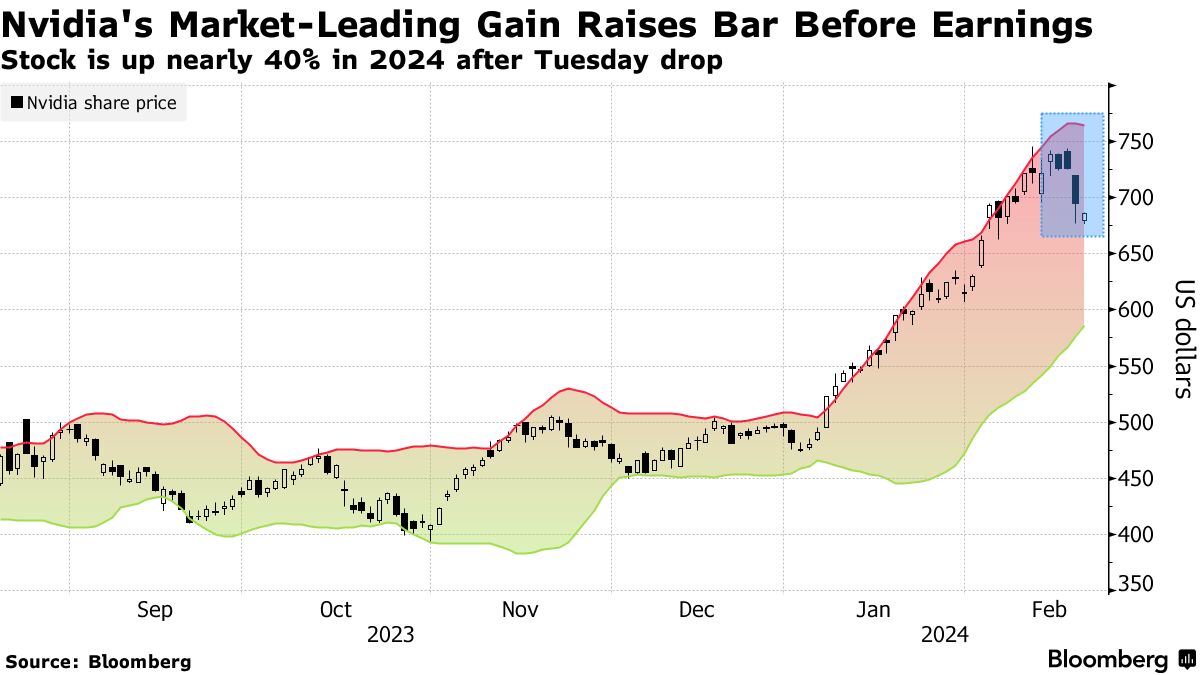
The release of earnings figures often triggers significant market volatility. Expectations are meticulously built up in the weeks leading to the announcement, with analysts, financial media, and investors all attempting to forecast the company’s performance. When actual results deviate from these expectations – whether a “beat” (better than expected) or a “miss” (worse than expected) – the stock price can react dramatically, sometimes swinging by double-digit percentages in after-hours trading or the subsequent day. This immediate reaction is a direct reflection of shifting investor sentiment. A strong report can instill confidence, leading to buying pressure, while a weak one can spark a sell-off as investors re-evaluate their positions.
A Bellwether for the Tech and AI Sector
Nvidia isn’t just a chipmaker; it’s a foundational pillar of the AI revolution. Its GPUs power data centers, train sophisticated AI models, and drive innovation across countless industries. As such, Nvidia’s earnings are often viewed as a bellwether for the entire technology sector, particularly segments focused on AI and high-performance computing. Strong demand for Nvidia’s products suggests robust investment and growth within these critical areas, providing a positive signal for other AI-related companies and tech infrastructure providers. Conversely, any signs of weakness could indicate broader challenges, prompting a reassessment of growth prospects across the industry. Therefore, investors in a wide array of tech stocks often scrutinize Nvidia’s numbers for clues about broader market trends.
Informing Investment Decisions
Beyond the immediate price fluctuations, earnings reports provide fundamental data essential for long-term investment decisions. They offer concrete evidence of a company’s ability to generate revenue, manage costs, and deliver profits. For active investors and portfolio managers, this information is critical for re-evaluating their investment thesis, adjusting portfolio allocations, and making informed decisions about whether to buy, hold, or sell shares. It helps validate or challenge prior assumptions about a company’s competitive advantages, market share, and future growth trajectory. Without these regular financial disclosures, investors would largely be operating in the dark, making reasoned capital allocation significantly more challenging.
Navigating Nvidia’s Financial Landscape
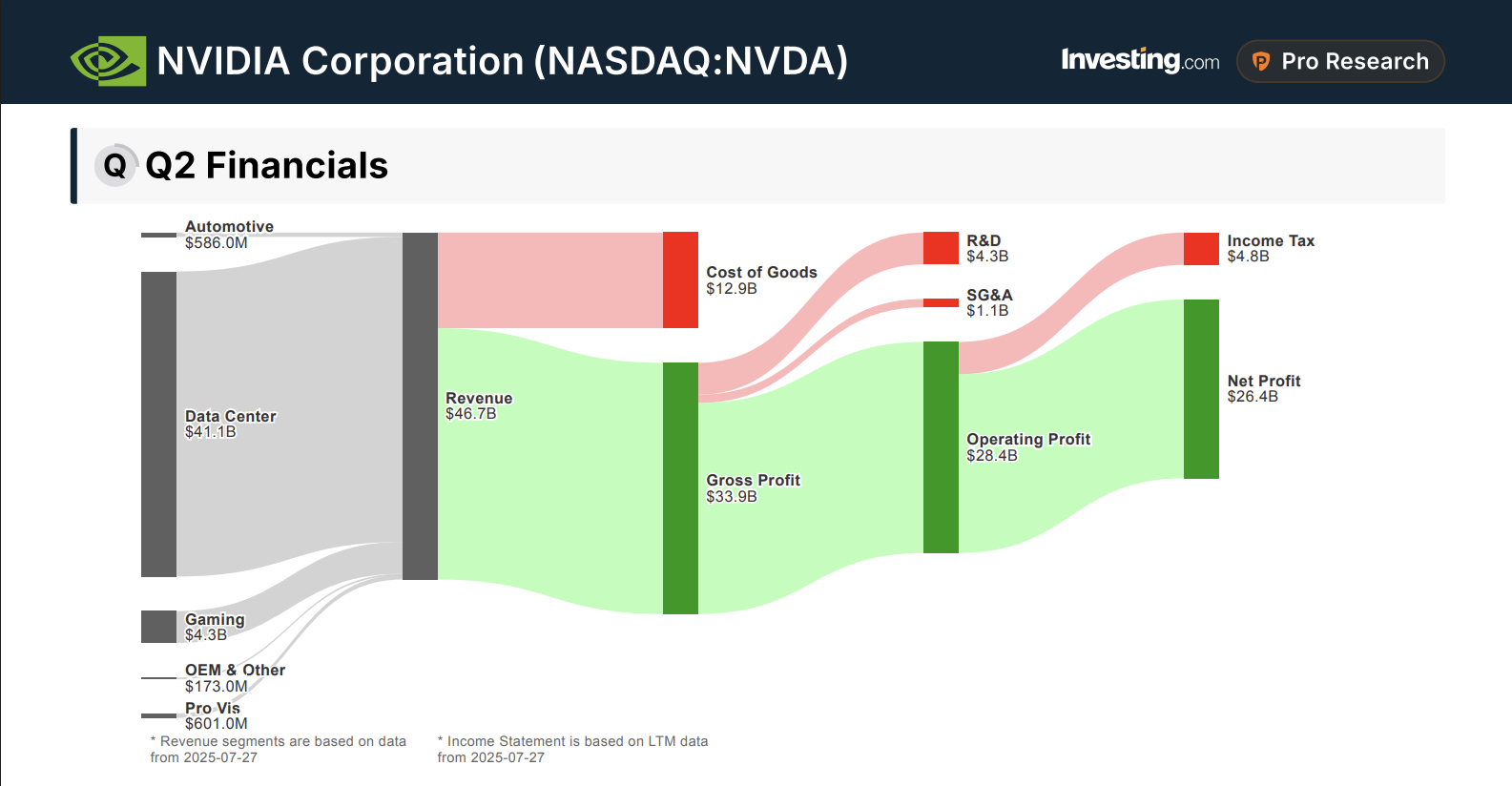
To truly understand Nvidia’s earnings, one must first appreciate the intricate ecosystem of its business. While best known for its graphics cards, the company’s revenue streams are diverse, with certain segments now dwarfing others in importance and growth potential.
Understanding Nvidia’s Core Business Segments
Nvidia primarily operates across four key segments:
-
Data Center: This has become Nvidia’s powerhouse, driven by the insatiable demand for GPUs to power AI training and inference, high-performance computing, and cloud infrastructure. Its growth rate is often the most scrutinized metric.
-
Gaming: The traditional bedrock of Nvidia’s business, encompassing GeForce GPUs for PC gaming. While mature, it remains a significant and profitable segment.
-
Professional Visualization: Catering to architects, engineers, and content creators with Quadro GPUs and software for demanding professional applications.
-
Automotive: Developing platforms for autonomous vehicles, infotainment systems, and AI-powered cockpits. This segment, while smaller, holds significant long-term potential.
Understanding the proportional contribution and growth rates of each segment is crucial. For instance, spectacular growth in the Data Center division can easily overshadow a modest performance in Gaming, dictating the overall narrative of the earnings report.
The Analyst Consensus: A Benchmark for Performance
Weeks before the earnings report, financial analysts from various investment banks publish their consensus estimates for Nvidia’s revenue, earnings per share (EPS), and sometimes even segment-specific performance. These estimates are aggregated to form the “analyst consensus,” which serves as the market’s benchmark for success.
The earnings report is then judged against this consensus. A company “beating” expectations—reporting higher revenue or EPS than the consensus—is generally viewed positively, signaling strong performance. Conversely, “missing” expectations can trigger a negative reaction. It’s important to remember that beating or missing the consensus often has a greater impact on short-term stock price movements than the absolute numbers themselves, as it reflects whether the company exceeded or fell short of what the market was expecting.
Historical Performance and Forward-Looking Guidance
While current earnings figures are important, investors also look at historical trends to understand the company’s growth trajectory and consistency. Has Nvidia consistently beaten expectations? Are its growth rates accelerating or decelerating?
However, arguably the most impactful piece of information in any earnings report is the company’s forward-looking guidance. This is management’s projection for future revenue and earnings, typically for the upcoming quarter or fiscal year. Guidance often dictates whether a stock rallies or falters, even if current results are strong. A solid beat on current earnings can be negated by weak guidance, as it signals potential headwinds or a slowdown in future growth. Conversely, a slight miss on current numbers might be overlooked if the guidance is exceptionally strong, painting a positive picture for the future. Nvidia’s guidance on its Data Center segment, in particular, is often the most critical element for investors.
Key Metrics and What to Watch For
When Nvidia’s earnings report hits the wires, investors need to quickly identify and interpret several key financial metrics. These numbers tell a story about the company’s past quarter and offer clues about its future.
Revenue and Earnings Per Share (EPS)
These are the headline numbers:
-
Revenue: The total amount of money generated from sales of products and services. For Nvidia, this means sales of GPUs, software, and other related technologies. Strong revenue growth, especially year-over-year, indicates increasing demand and market penetration.
-
Earnings Per Share (EPS): A company’s profit divided by the number of outstanding shares. EPS is a crucial indicator of profitability and is often the most cited metric when comparing actual results against analyst consensus. Investors look for consistent EPS growth, which signifies improving profitability for shareholders.
Gross Margin and Operating Income
Beyond the top line (revenue) and bottom line (EPS), profitability metrics offer deeper insights:
-
Gross Margin: The percentage of revenue left after subtracting the cost of goods sold (COGS). A high and stable gross margin indicates pricing power, efficient manufacturing, and strong product value. For a hardware company like Nvidia, maintaining high margins amidst supply chain complexities is a key challenge and a strong indicator of competitive advantage.
-
Operating Income: The profit generated from a company’s core operations before interest and taxes. This metric reveals how efficiently Nvidia is managing its business activities, including research and development (R&D), sales, and administrative costs. Growth in operating income demonstrates effective cost control and scalability.
Data Center Performance and AI Demand
Given Nvidia’s strategic positioning, the performance of its Data Center segment warrants special attention:
-
Data Center Revenue Growth: This figure is arguably the most important for understanding Nvidia’s current market position and future trajectory in AI. Investors will be looking for continued robust growth, indicating sustained demand for its AI accelerators and platforms.
-
Order Backlog and Supply Chain Commentary: Any indications regarding future orders, inventory levels, and the ability to meet demand will be critical. In a high-demand environment, supply chain constraints can limit revenue, so management commentary on production capacity and component availability is invaluable.
-
Emerging AI Trends: While not a direct metric, listening for management’s insights on new AI applications, partnerships, and competitive landscape within the earnings call can provide qualitative context for the numbers.
Cash Flow and Balance Sheet Strength
While less emphasized in immediate reactions, these metrics are vital for long-term health:
-
Free Cash Flow (FCF): The cash generated by a company after accounting for cash outflows to support operations and maintain its capital assets. Strong FCF allows Nvidia to invest in R&D, make acquisitions, repurchase shares, or pay dividends.
-
Cash and Equivalents: A robust cash balance provides flexibility for strategic investments and cushions against economic downturns.
-
Debt Levels: While common for large corporations, excessive debt can be a red flag. Investors look for a healthy debt-to-equity ratio, indicating financial stability.
Post-Earnings Analysis: Strategy and Outlook
The immediate reaction to an earnings report is often driven by algorithms and short-term traders. For serious investors, the real work begins after the initial flurry, with a methodical analysis of the results and the management’s commentary.
Interpreting the Nuances Beyond the Headlines
Simply knowing if Nvidia “beat” or “missed” estimates is insufficient. A deeper dive is required:
-
Quality of the Beat/Miss: Was a beat driven by sustainable core business growth or one-time factors? Was a miss due to temporary headwinds or systemic issues?
-
Segment Performance Breakdown: Which segments performed well, and which lagged? Is the growth coming from the most strategic areas (e.g., Data Center)?
-
Guidance vs. Current Performance: How does the future outlook compare to the past quarter? Is management conservative, optimistic, or realistic? Guidance often reveals more about the company’s future prospects than past results.
Analyst Reactions and Price Target Adjustments
Following the earnings release and conference call, analysts typically update their research notes, ratings, and price targets for Nvidia’s stock. These updates can further influence market sentiment. While analysts’ opinions should not be blindly followed, their collective views, based on their models and management discussions, can offer additional perspectives and help validate or challenge an investor’s own conclusions. Look for common themes in their upgrades or downgrades.
Long-Term Implications and Strategic Positioning
For long-term investors, the earnings report is less about the immediate stock price movement and more about how it impacts Nvidia’s long-term competitive advantage and strategic positioning.
-
Market Share: Is Nvidia gaining or losing market share in its key segments?
-
Innovation Pipeline: Is the company continuing to invest heavily in R&D and maintain its technological lead, especially in AI?
-
Competitive Landscape: How do Nvidia’s results compare to its key competitors (e.g., AMD, Intel, custom AI chip developers)?
-
Risk Factors: Are there any new risks emerging (e.g., geopolitical tensions, supply chain disruptions, regulatory challenges) highlighted by management?
A robust post-earnings analysis allows investors to refine their investment thesis, ensuring that their portfolio aligns with their long-term financial goals and risk tolerance. It’s about discerning the signal from the noise and understanding the underlying trends that will shape Nvidia’s value over months and years, not just days.
Preparing for Nvidia’s Earnings Call
Knowing “what time is Nvidia’s earnings” is the starting gun; the preparation leading up to it is the race itself. Diligent preparation can significantly enhance an investor’s ability to extract valuable insights and make informed decisions.
Accessing Information: Your Investor Toolkit
The primary source for all official earnings information is Nvidia’s Investor Relations (IR) website. Here, you will find:
-
Earnings Release: The detailed financial statements and summary of results.
-
Earnings Call Webcast and Transcript: A live audio broadcast (and often a replay) of management’s prepared remarks and the Q&A session with analysts. A transcript typically becomes available soon after.
-
Supplemental Materials: Often, the company will provide a presentation slide deck with additional data, charts, and key highlights.
Additionally, reputable financial news outlets (e.g., Bloomberg, Reuters, The Wall Street Journal, CNBC) will provide extensive coverage, analysis, and often live blogs during the earnings event. It’s wise to review pre-earnings analyst reports and news coverage to understand market expectations before the official release.
Crafting Your Pre-Call Questions and Focus Areas
Before the call, formulate specific questions based on your investment thesis and current market concerns. This structured approach helps in actively listening and identifying crucial information. Consider questions around:
-
Guidance Specifics: Are there any nuances to the revenue or EPS guidance? What assumptions are embedded in these forecasts?
-
Data Center Growth Drivers: What specific products, customers, or geographic regions are driving Data Center growth? What are the forward-looking indicators?
-
Gaming Market Trends: How is the consumer GPU market performing? Are there any inventory build-ups or pricing pressures?
-
Competitive Landscape: What are management’s views on new competitors or technological shifts?
-
Capital Allocation: How does Nvidia plan to use its cash flow (e.g., R&D, M&A, share buybacks, dividends)?
-
Macroeconomic Headwinds: How is Nvidia positioned to navigate potential economic downturns, inflation, or geopolitical risks?
By having a clear set of focus areas, you can more effectively process the vast amount of information presented and discern what is most relevant to your investment strategy. The Q&A session, in particular, often yields candid insights from management that aren’t available in the prepared remarks.
In conclusion, for investors keen on understanding the pulse of the tech industry and the potential trajectory of one of its most influential players, Nvidia’s earnings announcements are indispensable. They are not merely dates on a calendar but critical junctures that demand thorough preparation, meticulous analysis, and a commitment to understanding the financial and strategic narratives unfolding behind the numbers. By approaching these events with a professional, insightful, and engaging mindset, investors can transform raw data into actionable intelligence, steering their financial journey with greater confidence and clarity.
aViewFromTheCave is a participant in the Amazon Services LLC Associates Program, an affiliate advertising program designed to provide a means for sites to earn advertising fees by advertising and linking to Amazon.com. Amazon, the Amazon logo, AmazonSupply, and the AmazonSupply logo are trademarks of Amazon.com, Inc. or its affiliates. As an Amazon Associate we earn affiliate commissions from qualifying purchases.