
NVIDIA GeForce is more than just a brand; it represents a pioneering force in the realm of computer graphics, defining the cutting edge of visual fidelity and interactive experiences for over two decades. At its core, GeForce is NVIDIA’s flagship line of graphics processing units (GPUs) and related technologies, primarily designed to deliver unparalleled performance in gaming, professional content creation, and increasingly, artificial intelligence workloads. From the breathtaking landscapes of the latest AAA video games to the intricate computations of scientific simulations, GeForce GPUs serve as the engine that brings digital worlds to life and accelerates complex operations.
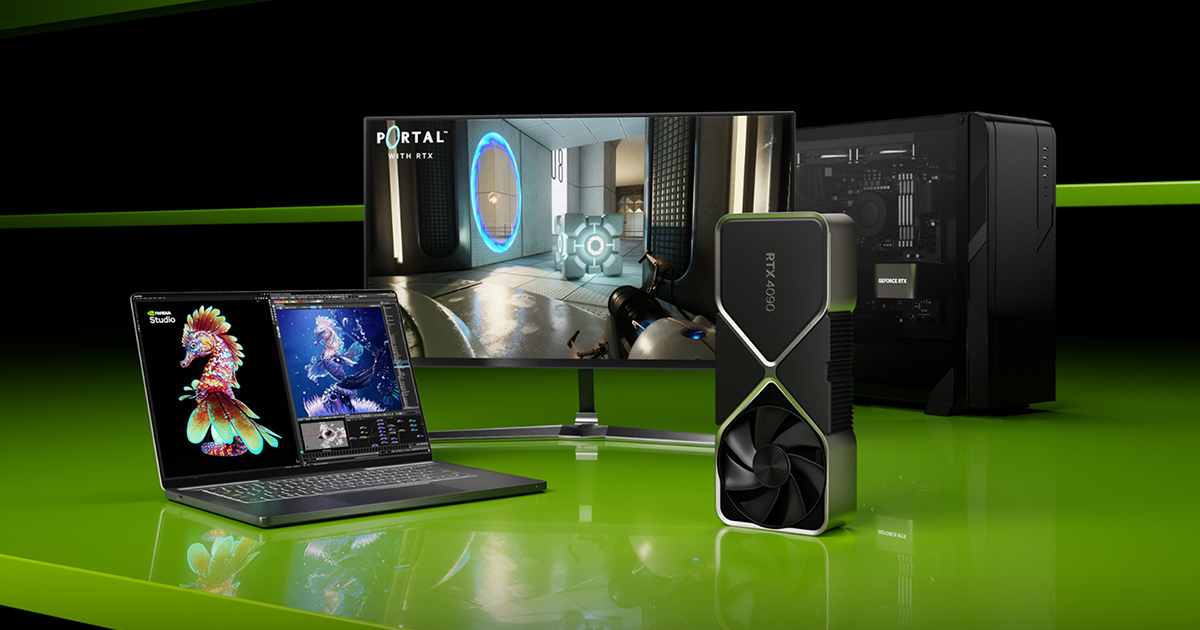
In an era where visual information dominates our digital lives, understanding the technology behind our screens is paramount. NVIDIA GeForce has consistently pushed the boundaries of what’s possible, transforming pixels into immersive realities and empowering users with tools that were once the exclusive domain of supercomputers. This article will delve into the origins, technological advancements, diverse applications, and profound impact of NVIDIA GeForce, offering a comprehensive look at how this powerful brand has shaped, and continues to shape, the technological landscape.
The Genesis and Evolution of NVIDIA GeForce
The story of NVIDIA GeForce is inextricably linked to the rapid advancement of 3D computer graphics and the burgeoning personal computer market. Before GeForce, specialized graphics cards existed, but they often struggled with standardization and lacked the raw processing power needed for truly immersive 3D environments. NVIDIA sought to change this, and in doing so, forged a legacy that remains dominant today.
From 3D Graphics to Modern GPUs
NVIDIA launched its first GeForce-branded GPU, the GeForce 256, in 1999. Dubbed the “world’s first GPU” by NVIDIA, it was revolutionary for its integrated transform, clipping, and lighting (T&L) engine. This integration meant that the GPU could handle these critical 3D rendering tasks independently, offloading the CPU and dramatically increasing graphics performance. This single innovation laid the groundwork for the modern GPU architecture, establishing a clear path for graphics processors to evolve into highly specialized, parallel computing powerhouses.
Following the GeForce 256, NVIDIA iterated rapidly. The GeForce 2 series introduced dual-pipeline architecture, further boosting performance. The GeForce 3 (NV20) was a pivotal moment, being the first GPU to fully support programmable shaders, allowing developers unprecedented flexibility in creating realistic lighting, shadows, and textures. This was a critical step away from fixed-function pipelines and towards the flexible, programmable architecture that defines modern GPUs.
Through successive generations—from the GeForce 4, FX, 6, 7, 8 series (introducing the unified shader model), and eventually the GTX series (GTX 200, 400, 500, 600, 700, 900, 10 series)—NVIDIA continuously refined its architecture, enhancing performance, efficiency, and introducing new features. Each generation brought significant leaps in shader performance, memory bandwidth, and overall computational capability, cementing GeForce’s reputation as the gold standard for PC graphics.
Key Architectural Milestones: Turing, Ampere, and Ada Lovelace
The trajectory of GeForce reached new heights with the introduction of ground-breaking architectures that redefined what GPUs could do.
-
Turing Architecture (2018): This was a monumental leap, ushering in the era of real-time ray tracing and AI-powered super sampling. Turing-based GPUs (the GeForce RTX 20 series) introduced dedicated RT Cores for accelerating ray tracing calculations and Tensor Cores for AI processing. Ray tracing simulates the physical behavior of light, offering unprecedented realism in reflections, shadows, and global illumination. Tensor Cores, originally designed for deep learning, found a powerful application in DLSS (Deep Learning Super Sampling), an AI rendering technology that uses deep learning to upscale lower-resolution images to higher resolutions, resulting in sharper visuals and significantly improved performance. Turing proved that photorealism in real-time gaming was not just a distant dream, but a tangible reality.
-
Ampere Architecture (2020): Building upon the foundations of Turing, Ampere-based GPUs (the GeForce RTX 30 series) offered a generational leap in performance and efficiency. It featured second-generation RT Cores for even faster ray tracing, third-generation Tensor Cores for enhanced DLSS, and new streaming multiprocessors (SMs) that doubled FP32 throughput. Ampere brought ray tracing and DLSS to a broader audience, making high-fidelity gaming more accessible and pushing the boundaries of what consumers could experience on their PCs.
-
Ada Lovelace Architecture (2022): The latest iteration, powering the GeForce RTX 40 series, the Ada Lovelace architecture continues the trend of exponential improvement. It introduces third-generation RT Cores, fourth-generation Tensor Cores, and new Optical Flow Accelerators. These advancements further enhance ray tracing performance, improve DLSS 3 (which now includes Frame Generation), and deliver unprecedented levels of performance and efficiency. Ada Lovelace is designed to tackle the most demanding next-generation games and applications, solidifying NVIDIA’s position at the forefront of visual computing.
Core Technologies and Innovations
Beyond raw performance, NVIDIA GeForce is defined by a suite of proprietary technologies that enhance the user experience, often becoming industry standards or driving significant advancements across the board. These innovations differentiate GeForce products and contribute to their market leadership.
Ray Tracing: Bringing Realism to Graphics
Ray tracing is a revolutionary rendering technique that simulates the physical behavior of light. Instead of using traditional rasterization (which approximates lighting), ray tracing tracks individual rays of light from a virtual camera into a scene, calculating their interactions with objects—how they bounce, refract, and reflect. This results in incredibly realistic shadows, reflections, refractions, and global illumination, fundamentally transforming the visual fidelity of games and professional renders. NVIDIA’s introduction of dedicated RT Cores with the Turing architecture made real-time ray tracing in consumer hardware a reality, setting a new benchmark for graphical immersion. While computationally intensive, the visual impact of ray tracing is profound, creating scenes that are almost indistinguishable from reality.
DLSS: AI-Powered Performance Boost
DLSS, or Deep Learning Super Sampling, is one of NVIDIA’s most impactful innovations. It’s an AI-rendering technology that uses dedicated Tensor Cores on RTX GPUs to boost frame rates while generating beautifully sharp images. How does it work? Instead of rendering a game at its native resolution, DLSS renders it at a lower resolution and then uses an AI model, trained on supercomputers with millions of high-resolution images, to intelligently upscale the image to the target resolution. This process reconstructs details with incredible accuracy, often producing an image that is visually superior to native resolution rendering while significantly improving performance. DLSS has evolved through several iterations (DLSS 1.0, 2.0, and 3.0), with DLSS 3 introducing AI-powered Frame Generation, which creates entirely new, high-quality frames using the Optical Flow Accelerator, further boosting frame rates beyond what traditional rendering can achieve.
NVIDIA Reflex and Broadcast: Enhancing the User Experience
NVIDIA’s commitment extends beyond visual quality to the entire user experience, particularly for competitive gamers and content creators.
-
NVIDIA Reflex: This technology is designed to reduce system latency (input lag) in competitive games. By optimizing the rendering pipeline between the CPU and GPU, Reflex ensures that player inputs are registered and reflected on screen as quickly as possible. Lower latency translates to better responsiveness, giving competitive gamers a distinct advantage and a more fluid experience.
-
NVIDIA Broadcast: A suite of AI-powered tools aimed at streamers, content creators, and remote workers. It leverages Tensor Cores to enhance microphones and webcams with features like noise removal (eliminating keyboard clicks, fan noise), virtual backgrounds (without a green screen), and automatic camera framing. These features significantly elevate the production quality of live streams and video calls, making professional-grade broadcasting accessible to everyone with an RTX GPU.
GeForce Beyond Gaming: Professional Applications
While GeForce is synonymous with gaming, its powerful parallel processing capabilities extend far beyond entertainment, making it an indispensable tool in various professional fields. The underlying architecture and specialized cores that make games look stunning also accelerate demanding creative and scientific workloads.

Content Creation and Design
GeForce GPUs are the workhorses for millions of content creators, artists, and designers.
-
Video Editing and Production: Tasks like real-time playback of 4K/8K footage, applying complex effects, color grading, and rendering final videos are dramatically accelerated by GPU compute. Software like Adobe Premiere Pro, DaVinci Resolve, and Blender leverage NVIDIA’s CUDA cores and Tensor Cores to cut down rendering times from hours to minutes.
-
3D Modeling and Rendering: Architects, product designers, and VFX artists use GeForce GPUs for faster viewport rendering, intricate simulations, and final frame rendering in applications like Autodesk Maya, 3ds Max, Blender, and Cinema 4D. Ray tracing acceleration is particularly beneficial for realistic lighting and material rendering.
-
Graphic Design and Photography: While often CPU-bound, applications like Adobe Photoshop and Lightroom utilize GPU acceleration for filters, image manipulation, and AI-powered features, speeding up workflows for graphic designers and photographers.
NVIDIA specifically offers Studio Drivers for GeForce GPUs, which are optimized and extensively tested for stability and performance in leading creative applications, ensuring artists and designers have the most reliable and efficient experience possible.
AI and Machine Learning Workloads
The same Tensor Cores that power DLSS in games are fundamental to the advancements in artificial intelligence and machine learning. While NVIDIA’s professional-grade data center GPUs (like the A100 or H100) are built for large-scale AI training, GeForce RTX GPUs offer powerful capabilities for AI development, inferencing, and smaller-scale model training on a desktop. Researchers, data scientists, and developers use GeForce cards for:
-
Deep Learning Development: Experimenting with neural networks, training smaller models, and performing rapid prototyping.
-
AI Inferencing: Deploying pre-trained AI models for tasks like image recognition, natural language processing, and medical imaging analysis.
-
Machine Learning Acceleration: Speeding up various machine learning algorithms that can be parallelized on the GPU.
The accessibility and power of GeForce RTX GPUs have democratized AI development, allowing more individuals and smaller teams to engage with cutting-edge machine learning research and applications.
Understanding the GeForce Product Stack
Navigating the multitude of GeForce models can seem daunting, but understanding the nomenclature and product segmentation clarifies which GPU is right for a given task and budget.
Decoding Model Numbers: RTX vs. GTX, Series, Ti/Super
NVIDIA employs a systematic naming convention that conveys a lot of information about a GPU’s capabilities:
-
GTX vs. RTX: This is the most significant distinction in current generations.
-
GTX (Graphics eXtreme): Represents older generations or entry-level modern cards without dedicated RT Cores or Tensor Cores. They offer excellent traditional rasterization performance but lack hardware-accelerated ray tracing and DLSS capabilities. Examples include the GTX 10-series.
-
RTX (Ray Tracing eXtreme): Introduced with the Turing architecture, RTX cards feature dedicated RT Cores for ray tracing and Tensor Cores for AI (including DLSS). These are NVIDIA’s flagship GPUs, delivering the most advanced graphics features and performance. Examples include the RTX 20-series, 30-series, and 40-series.
-
-
Series Numbers (e.g., 20, 30, 40): The first two digits (or sometimes three, as in 10-series) indicate the generation of the GPU. A higher number signifies a newer generation, generally offering architectural improvements and increased performance over the previous generation (e.g., an RTX 4070 is newer and typically more powerful than an RTX 3070).
-
SKU Numbers (e.g., 60, 70, 80, 90): The last two digits denote the performance tier within that generation.
-
Entry-level/Mid-range: Usually xx50, xx60 (e.g., RTX 4050, RTX 4060). These offer good performance for their price, suitable for mainstream gaming.
-
High-end: xx70, xx80 (e.g., RTX 4070, RTX 4080). These are powerful cards targeting enthusiast gamers and serious content creators.
-
Flagship/Ultra-high-end: xx90 (e.g., RTX 4090). These represent the pinnacle of performance for that generation, designed for uncompromising users who demand the absolute best.
-
-
Suffixes (Ti, Super): These indicate enhanced versions of a base model within the same series.
-
Ti (Titanium): Generally signifies a more powerful variant of its base model (e.g., RTX 4070 Ti is more powerful than an RTX 4070).
-
Super: Also denotes an enhanced version, often slotting in between existing models or offering a refresh with improved specifications. These suffixes provide incremental performance upgrades without stepping up to the next full SKU number.
-
This structured nomenclature allows consumers to quickly gauge a card’s relative position in terms of generation, performance, and feature set.
The Ecosystem: Drivers, GeForce Experience, and Studio Drivers
A GPU’s hardware is only as good as the software that supports it. NVIDIA provides a robust ecosystem to ensure optimal performance and user experience:
-
Game Ready Drivers: These are regularly released software updates that optimize GeForce GPUs for the latest games, ensuring the best performance, stability, and new feature support upon a game’s launch. They are meticulously tested by NVIDIA to provide a smooth gaming experience.
-
GeForce Experience: This application is a central hub for GeForce users. It automatically optimizes game settings for your specific GPU, records and streams gameplay (using ShadowPlay), keeps drivers up to date, and provides access to features like NVIDIA Freestyle (post-process filters) and NVIDIA Ansel (advanced in-game photography).
-
Studio Drivers: As mentioned previously, for creative professionals, NVIDIA offers Studio Drivers. These are designed for maximum stability and performance in a wide range of professional applications, including Adobe Creative Suite, Autodesk products, and DaVinci Resolve, ensuring reliability for critical workflows.
The Impact and Future of GeForce
NVIDIA GeForce has undeniably left an indelible mark on the tech industry, not just as a product line, but as a driving force behind innovation in visual computing. Its impact extends far beyond the confines of a computer case, influencing how we interact with digital content and perceive virtual realities.
Shaping the PC Gaming Landscape
For decades, GeForce has been synonymous with high-performance PC gaming. It has consistently pushed the boundaries of graphical fidelity, enabling developers to create increasingly immersive and visually stunning worlds. The introduction of technologies like programmable shaders, unified architecture, and more recently, ray tracing and DLSS, have not only raised the bar for graphics but have also democratized access to experiences that were once unimaginable. GeForce’s influence on the gaming industry is profound, driving sales of high-end monitors, promoting esports, and fostering a culture of hardware enthusiasts constantly seeking the ultimate gaming experience. It’s a key player in the symbiotic relationship between hardware and software, where each pushes the other to new heights.

The Road Ahead: Continued Innovation
The future of NVIDIA GeForce is poised for even greater breakthroughs, driven by trends in artificial intelligence, virtual and augmented reality, and cloud computing. We can anticipate:
-
Deeper AI Integration: Beyond DLSS, AI will likely play an even larger role in rendering, content generation, and intelligent upscaling, potentially leading to fully AI-generated game assets or dynamic content.
-
Hyper-Realistic Graphics: Further advancements in ray tracing, path tracing, and real-time global illumination will blur the lines between virtual and physical reality, creating truly photorealistic experiences.
-
Ubiquitous Connectivity: As cloud gaming services become more sophisticated, GeForce technology will power both local high-end machines and remote data centers, delivering premium gaming experiences across various devices.
-
Expansion into New Frontiers: GeForce’s parallel processing power will continue to be leveraged in emerging fields such as the metaverse, digital twins, and advanced scientific visualization, extending its utility beyond traditional applications.
-
Energy Efficiency: With increasing performance, there will be a continued focus on improving power efficiency, making powerful computing more sustainable and accessible.
In essence, NVIDIA GeForce is not merely a component; it is a catalyst for innovation. From its humble beginnings as the “world’s first GPU” to its current status as a powerhouse of real-time ray tracing and AI, GeForce continues to define the pinnacle of visual computing. It empowers gamers to explore new realities, creators to unleash their imagination, and researchers to accelerate discovery. As technology relentlessly marches forward, NVIDIA GeForce remains at the vanguard, consistently redefining what’s possible and shaping the digital future for us all.
aViewFromTheCave is a participant in the Amazon Services LLC Associates Program, an affiliate advertising program designed to provide a means for sites to earn advertising fees by advertising and linking to Amazon.com. Amazon, the Amazon logo, AmazonSupply, and the AmazonSupply logo are trademarks of Amazon.com, Inc. or its affiliates. As an Amazon Associate we earn affiliate commissions from qualifying purchases.