
Cruising has long been marketed as one of the most cost-effective ways to travel, offering a seemingly all-inclusive experience that combines transportation, lodging, and dining. However, for the financially savvy traveler, the sticker price seen on a travel agency’s website is rarely the final cost of the journey. Determining exactly how much it costs to go on a cruise requires a deep dive into tiered pricing structures, ancillary fees, and the variable costs associated with land-side logistics.
To build a realistic budget, one must look past the “from $499” advertisements and analyze the total cost of ownership for a vacation. From port taxes and mandatory gratuities to specialty dining and shore excursions, the financial landscape of a cruise is complex. This guide breaks down the economics of cruising to help you allocate your capital efficiently and avoid the common “bill shock” at the end of a voyage.
Understanding the Base Fare: The Foundation of Your Budget
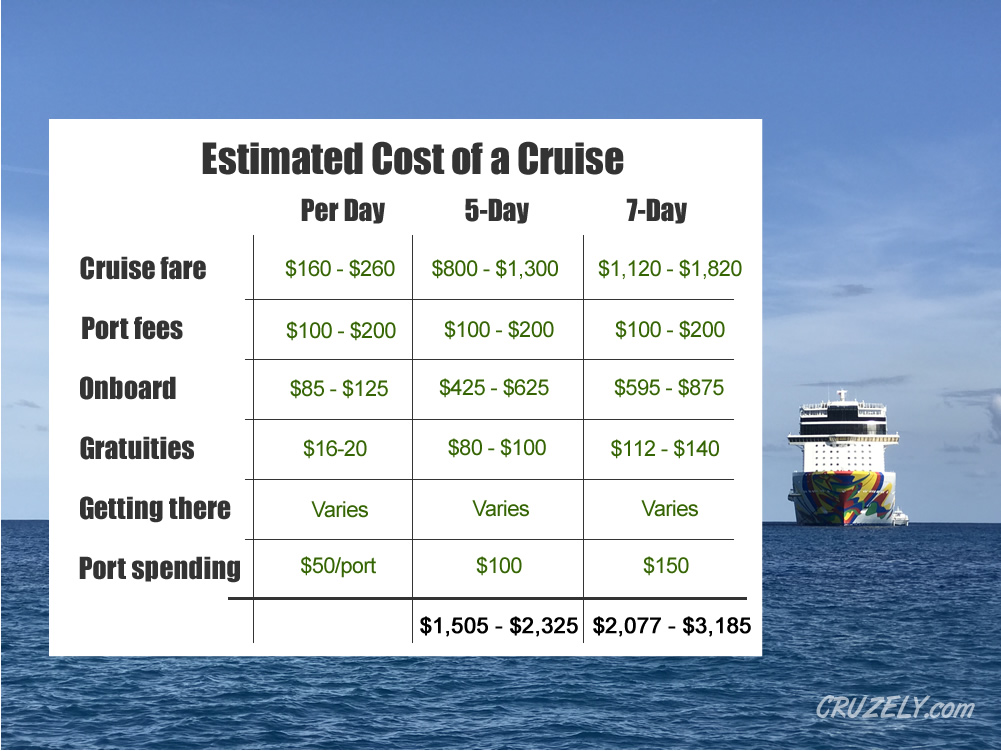
The base fare is the initial price paid to secure a cabin on the ship. In the financial world of maritime travel, this is often referred to as the “cruise-only” rate. While it covers the essentials—your room, standard meals in the main dining room or buffet, and basic entertainment—it is important to understand how this price is calculated.
The Tiered Pricing Model and Double Occupancy
Cruise lines operate on a business model rooted in double occupancy. Most advertised rates are “per person, based on double occupancy.” For a solo traveler, this often leads to a “single supplement” fee, which can be as high as 100% of the second person’s fare. Conversely, adding a third or fourth person to a cabin (such as children) often comes at a significantly discounted rate, lowering the average cost per person.
Cabin categories also play a massive role in the base fare. An interior cabin on a standard 7-day Caribbean cruise might cost $600 per person, while a balcony suite on the same ship could exceed $2,500. When budgeting, you must decide if the premium for a view provides a sufficient return on investment for your specific travel style.
Port Fees, Taxes, and NCFs
One of the most frequent surprises for first-time cruisers is the addition of port fees and government taxes. These are not included in the initial advertised price but are mandatory. Depending on the itinerary, these can range from $150 to $500 per person. For example, an Alaskan cruise involving multiple stops in protected waters will carry significantly higher port fees than a short hop to a private island in the Bahamas.
Furthermore, many cruise lines include “Non-Commissionable Fares” (NCF) within the total. While these are usually baked into the final quote, understanding that a portion of your payment goes directly to port authorities and maritime fees helps clarify why cruise prices don’t fluctuate as wildly as airline tickets might.
Variable Costs and Onboard Spending
Once you step foot on the ship, the cruise line’s goal shifts from room occupancy to ancillary revenue. For the cruise industry, onboard spending is the primary driver of profit margins. For the traveler, it is the area where a budget is most likely to collapse.
Gratuities and Service Charges
Most major cruise lines now utilize an automated daily gratuity system. These service charges are distributed among the dining staff, room stewards, and behind-the-scenes crew. Typically, these range from $16 to $20 per person, per day. For a family of four on a week-long cruise, this adds nearly $500 to the total cost. While these can often be adjusted at the guest services desk, they are considered a standard cost of the cruise experience and should be factored into your primary budget.
Beverage Packages: The Break-Even Analysis
Alcohol and specialty coffees are rarely included in the base fare of mainstream cruise lines. To manage this, many travelers opt for beverage packages. Financially, these packages require a “break-even” analysis. If a package costs $70 per day plus an 18% automatic gratuity, you must consume roughly seven to nine alcoholic drinks daily to make the investment profitable compared to paying a la carte. For light drinkers, paying per drink is almost always the more fiscally responsible choice.
Specialty Dining and Luxury Add-ons
While the main dining room offers high-quality meals included in the fare, modern ships feature “specialty restaurants”—steakhouses, sushi bars, or French bistros—that charge a cover fee ranging from $30 to $100 per person. While these are optional, they are a significant temptation. Budgeting for one or two specialty meals can enhance the experience without overextending your financial plan.

Land-Based Expenses and Travel Logistics
The cost of a cruise does not begin and end at the gangway. Often, the expenses incurred before reaching the port and during stops at various destinations can equal the cost of the cruise fare itself.
The High Cost of Shore Excursions
The most expensive part of a cruise day is often what you do off the ship. Guided tours, helicopter rides over glaciers, or private beach cabanas can cost anywhere from $50 to over $1,000 per person. To maintain a strict budget, many seasoned travelers research “independent” excursions. Booking directly with local operators rather than through the cruise line can save 20% to 40%, though it carries the risk of the ship not waiting if the tour returns late.
Pre-Cruise Travel and Logistics
A common financial mistake is failing to account for the “shoulder” costs of reaching the departure port. If you are flying to a cruise hub like Miami, Barcelona, or Singapore, you must factor in airfare, baggage fees, and airport transfers.
Furthermore, travel experts strongly recommend arriving at the port city at least one day before departure to account for flight delays. This necessitates a hotel stay and meals in the port city. Neglecting to include these “Day Zero” costs can lead to a 15-20% underestimation of your total travel budget.
Connectivity and Communication
In the digital age, staying connected at sea is a premium service. Satellite internet packages on cruise ships are notoriously expensive, often costing $20 to $35 per day for a single device. If your work or personal life requires constant connectivity, this is a non-negotiable line item in your budget.
Strategies for Maximizing Value and Saving Money
Navigating the financial landscape of cruising requires a strategic approach to timing and purchasing. There are several levers a traveler can pull to reduce the total cost of the voyage without sacrificing the quality of the experience.
Timing the Market: Wave Season and Last-Minute Deals
The cruise industry has its own “Black Friday” known as “Wave Season,” which typically runs from January through March. During this period, cruise lines offer their best incentives, such as reduced deposits, free onboard credit, or included beverage packages. Booking during this window provides the highest value for those planning well in advance.
Alternatively, for those with flexible schedules, “last-minute” bookings (typically 60 to 90 days before sailing) can yield massive discounts as cruise lines attempt to fill remaining inventory. At this stage, the cruise line has already covered its fixed costs, and any additional passenger represents high-margin ancillary revenue potential.
Leveraging Credit Card Rewards and Loyalty Programs
For frequent travelers, the choice of credit card can significantly offset cruise costs. Many general travel cards allow you to “erase” travel purchases using points. Additionally, cruise line-specific credit cards offer “Onboard Credit” (OBC), which functions as a cash balance on your ship account. Utilizing these financial tools effectively can cover the cost of gratuities or shore excursions, effectively lowering your out-of-pocket spend.
Travel Insurance: Protecting Your Capital
From a personal finance perspective, travel insurance should be viewed as a mandatory hedge against loss. Given that cruise fares are often non-refundable within 90 days of sailing, a medical emergency or flight cancellation could result in a 100% loss of your investment. A comprehensive policy typically costs 5% to 10% of the total trip cost but protects the thousands of dollars you have committed to the voyage.
Conclusion: The Reality of the Total Cost
So, how much does it truly cost to go on a cruise? While a budget-conscious traveler might manage a 7-day voyage for $1,200 total (including all fees and modest spending), a more standard experience typically lands between $1,800 and $2,500 per person when accounting for airfare, excursions, and onboard amenities.
By treating a cruise as a series of distinct financial components—base fare, mandatory fees, variable onboard spending, and external logistics—you can build a budget that is both realistic and sustainable. The key to a successful cruise, from a financial standpoint, is not finding the lowest sticker price, but understanding the total cost of the journey before you ever provide a credit card number. With proper planning and a critical eye toward ancillary expenses, a cruise remains one of the most rewarding ways to deploy your travel capital.
aViewFromTheCave is a participant in the Amazon Services LLC Associates Program, an affiliate advertising program designed to provide a means for sites to earn advertising fees by advertising and linking to Amazon.com. Amazon, the Amazon logo, AmazonSupply, and the AmazonSupply logo are trademarks of Amazon.com, Inc. or its affiliates. As an Amazon Associate we earn affiliate commissions from qualifying purchases.