
For millions, student loans represent both an investment in their future and a significant financial obligation. As graduation approaches or repayment periods begin, one of the most pressing questions on a borrower’s mind is, “What will my student loan payment be?” The answer isn’t always straightforward; it’s a complex calculation influenced by several key factors, ranging from your loan’s specific terms to the repayment plan you choose. Understanding these variables is not just about preparing for a monthly expense; it’s about gaining control over your financial future, making informed decisions, and navigating the path to financial freedom. This comprehensive guide will break down the essential components that determine your student loan payment, explore various repayment options, and equip you with the knowledge to estimate and manage your financial commitments effectively.

Deconstructing Your Student Loan Payment: The Core Variables
Before you can even begin to estimate your monthly payment, it’s crucial to understand the foundational elements that contribute to its calculation. These variables form the bedrock of your student loan debt and directly influence the size and duration of your financial obligation.
Principal Balance: The Foundation of Your Debt
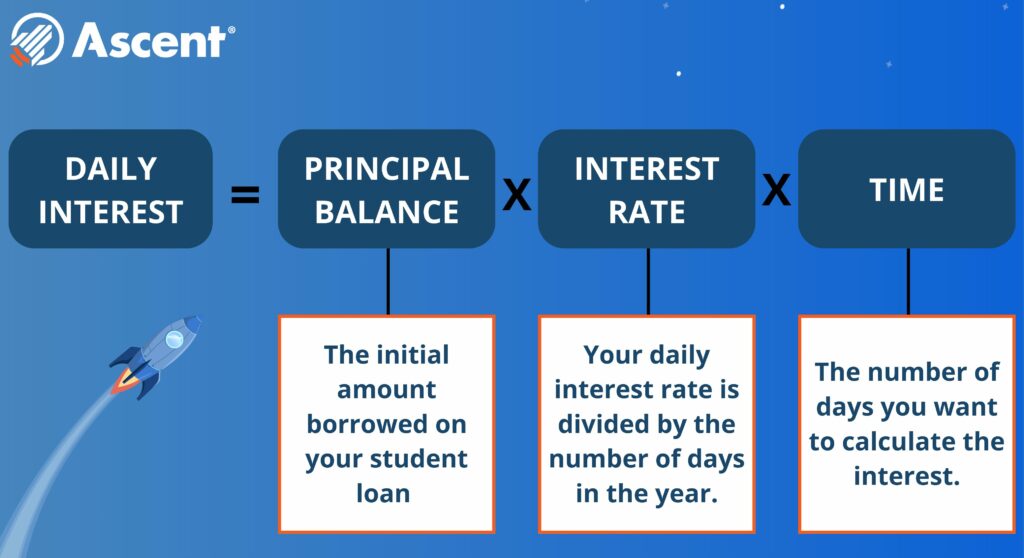
Your principal balance is the total amount of money you borrowed for your education, plus any capitalized interest (unpaid interest added to the principal) that may have accrued. This is the starting point for all payment calculations. A higher principal balance, naturally, will result in higher monthly payments or a longer repayment period. It’s important to remember that this balance doesn’t just include tuition; it can encompass living expenses, books, and other educational costs financed through loans. Keeping track of your principal is the first step in understanding the magnitude of your debt.
Interest Rate: The Cost of Borrowing
The interest rate is arguably the most impactful variable after the principal balance. It’s the percentage charged by the lender for the use of their money. Interest rates can be fixed (stay the same throughout the life of the loan) or variable (fluctuate with market conditions). A higher interest rate means you’ll pay more over the life of the loan, and a larger portion of your early payments will go towards interest rather than reducing your principal. Even a slight difference in interest rates can translate into thousands of dollars over a 10- or 20-year repayment term. Understanding your specific interest rate, whether for federal or private loans, is critical for accurate payment estimation.
Loan Term: How Long You’ll Be Paying
The loan term is the length of time you have to repay your loan. Standard federal student loan repayment plans typically have a 10-year term, but other plans can extend this to 20, 25, or even 30 years. Generally, a shorter loan term will lead to higher monthly payments but less interest paid over the life of the loan. Conversely, a longer loan term will result in lower monthly payments, providing more financial breathing room in the short term, but will accumulate significantly more interest over time. Your chosen repayment plan directly dictates your loan term, making it a critical factor in determining your monthly payment.
Loan Type: Federal vs. Private Distinctions
The type of student loan you have – federal or private – profoundly impacts not only your interest rates but also the available repayment options, protections, and flexibility. Federal student loans, provided by the U.S. government, often come with fixed interest rates, income-driven repayment plans, deferment and forbearance options, and potential eligibility for forgiveness programs. Private student loans, offered by banks and other financial institutions, typically have fewer borrower protections, interest rates that can be variable and generally higher depending on creditworthiness, and less flexible repayment terms. The benefits and limitations associated with each loan type will directly influence your payment amount and your ability to manage it.
Navigating Repayment Plans: Options and Implications
Beyond the core variables of your individual loans, the repayment plan you choose plays a pivotal role in determining your monthly student loan payment. Federal student loans offer a diverse array of options designed to cater to different financial situations, while private loans typically have more rigid structures.
Standard Repayment: The Default Path
For federal student loans, the Standard Repayment Plan is often the default choice if you don’t actively select another option. Under this plan, you’ll make fixed monthly payments for up to 10 years (or up to 30 years for consolidated loans). This plan is designed to ensure your loans are paid off quickly and with the least amount of interest over time, but it often results in the highest monthly payment among federal options. If you can afford the payments, this is generally the most cost-effective approach.
Income-Driven Repayment (IDR) Plans: Tailoring to Your Earnings
Income-Driven Repment (IDR) plans are a lifeline for many federal student loan borrowers, especially those with high debt-to-income ratios. These plans calculate your monthly payment based on your discretionary income and family size, rather than your loan balance. Payments can be as low as $0 per month if your income falls below a certain threshold. There are several IDR plans, including:
-
Revised Pay As You Earn (REPAYE): Generally, 10% of your discretionary income.
-
Pay As You Earn (PAYE): Generally, 10% of your discretionary income, capped at the Standard Repayment Plan amount.
-
Income-Based Repayment (IBR): Generally, 10% or 15% of your discretionary income.
-
Income-Contingent Repayment (ICR): The lesser of 20% of your discretionary income or what you’d pay on a fixed 12-year plan.
While IDR plans offer affordability, they often extend the repayment term to 20 or 25 years, leading to more interest paid over time. Any remaining balance after the repayment period is typically forgiven, though it may be considered taxable income.
Extended and Graduated Repayment: Stretching Out Payments
For borrowers who need lower payments than the Standard Plan but don’t qualify for or prefer an IDR plan, Extended and Graduated Repayment offer alternatives:
-
Extended Repayment: Allows borrowers with more than $30,000 in federal student loans to extend their repayment period up to 25 years. Payments can be fixed or graduated. This lowers monthly payments but increases the total interest paid.
-
Graduated Repayment: Payments start low and gradually increase, usually every two years, over a 10-year term (or up to 30 years for consolidated loans). This plan is designed for those whose income is expected to grow over time but results in more interest paid than the Standard Plan.
Refinancing and Consolidation: Restructuring Your Debt
-
Federal Direct Loan Consolidation: This process combines multiple federal student loans into a single new loan with one servicer and one monthly payment. The new interest rate is the weighted average of your original loans, rounded up to the nearest one-eighth of a percent. Consolidation can simplify payments and open eligibility for certain IDR plans, but it doesn’t necessarily lower your interest rate. It can, however, extend your loan term, reducing your monthly payment at the cost of more interest over time.
-
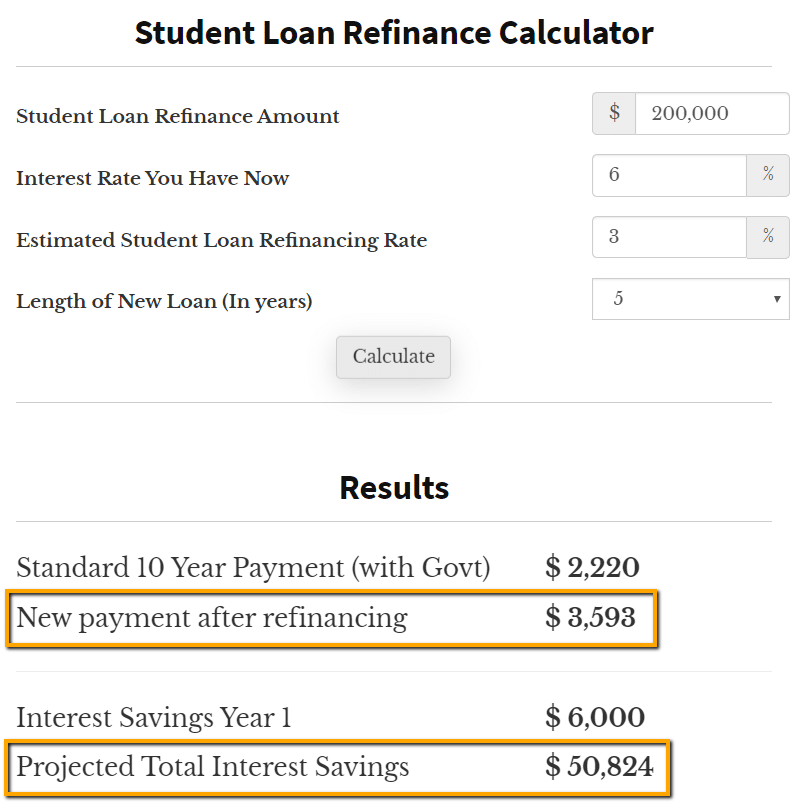
Private Student Loan Refinancing: This involves taking out a new loan from a private lender to pay off your existing student loans (federal, private, or both). The primary goal is often to secure a lower interest rate, which can significantly reduce your monthly payment and/or the total cost of the loan. Eligibility depends on your credit score, income, and debt-to-income ratio. Refinancing federal loans into a private loan means sacrificing federal protections like IDR plans and forgiveness options. This is a crucial consideration for anyone contemplating this option.
Calculating Your Payment: Practical Tools and Considerations
Estimating your student loan payment requires more than just understanding the variables; it requires practical application using available tools and a clear understanding of your overall financial picture.
Online Calculators: Your First Estimation Tool
The internet is replete with student loan payment calculators, many provided by the U.S. Department of Education (for federal loans), individual loan servicers, and reputable financial websites. These calculators allow you to input your principal balance, interest rate, and desired loan term or repayment plan to generate an estimated monthly payment. They are excellent for getting a preliminary idea and comparing different scenarios (e.g., how much your payment would change if you extended your term or qualified for a lower interest rate). Be sure to use calculators specific to federal or private loans, as their functionalities and available plans differ.
Loan Servicer Portals: The Official Source
Once your loans enter repayment, your loan servicer (the company that manages your loan) will provide you with official statements and access to an online portal. This portal is your most accurate source for your specific payment amount, due dates, and detailed loan information. You can often explore and switch between eligible federal repayment plans directly through your servicer’s website, which will then generate an updated, official payment schedule. Regularly checking your servicer’s portal is essential for staying informed about your obligations.
The Importance of Your Budget: Integrating Payments into Your Finances
Knowing your student loan payment is only half the battle; integrating it effectively into your overall personal budget is the other. Your student loan payment should be viewed as a fixed expense alongside rent/mortgage, utilities, and other regular bills.
-
Create a detailed budget: List all your income and expenses. This will show you how much discretionary income you have available.
-
Assess affordability: Can you comfortably make the standard payment, or do you need to explore income-driven or extended plans? Don’t overextend yourself, but also be mindful of the long-term cost of lower payments.
-
Prioritize debt: Decide where student loans fit into your debt repayment strategy, especially if you have other debts like credit card balances or car loans.
Proactive Strategies for Managing and Reducing Your Burden
Understanding your student loan payment is the first step; actively managing and, where possible, reducing that burden requires proactive engagement and strategic planning.
Understanding Grace Periods and Deferment/Forbearance
Upon leaving school, most federal student loans enter a grace period (typically six months) before payments are due. This offers a buffer to find employment and get financially organized. If you face financial hardship, federal loans offer options like deferment and forbearance, which allow you to temporarily postpone payments.
-
Deferment: Interest may or may not accrue depending on the loan type.
-
Forbearance: Interest typically accrues on all loan types during forbearance.
While these options provide temporary relief, they generally lead to a larger total amount repaid due to accumulating interest. Use them wisely and understand the long-term financial implications.
Making Extra Payments: Accelerating Your Payoff
If your budget allows, making extra payments can significantly reduce the total interest you pay and shorten your repayment term. Even small additional payments can make a big difference over time. Ensure that any extra payments are applied directly to the principal balance of your highest-interest loan, rather than simply moving your due date forward. Contact your servicer to specify how you want extra payments allocated. This “debt snowball” or “debt avalanche” strategy can save you thousands of dollars.
Exploring Forgiveness Programs: Opportunities for Relief
Certain federal student loan forgiveness programs can eliminate a portion or all of your remaining loan balance under specific conditions.
-
Public Service Loan Forgiveness (PSLF): Available to borrowers employed by qualifying non-profit organizations or government agencies who make 120 qualifying payments under an IDR plan.
-
Teacher Loan Forgiveness: For teachers who work for five complete and consecutive academic years in low-income schools.
-
Income-Driven Repayment (IDR) Forgiveness: As mentioned, any remaining balance after 20 or 25 years of payments under an IDR plan may be forgiven (though potentially taxable).
Researching and understanding your eligibility for these programs can dramatically alter your long-term repayment outlook.
Building an Emergency Fund: A Financial Safety Net
Regardless of your student loan payment amount, building and maintaining an emergency fund is a cornerstone of sound personal finance. Having 3-6 months’ worth of living expenses saved can protect you from unexpected financial shocks, such as job loss or medical emergencies, without jeopardizing your ability to make student loan payments. This buffer reduces the likelihood of needing to resort to costly options like deferment or forbearance, keeping you on track with your repayment plan.
Calculating your student loan payment is a critical step in taking charge of your financial well-being. By understanding the underlying variables, exploring all available repayment plans, utilizing online tools, and implementing proactive management strategies, you can transform a daunting financial obligation into a manageable part of your financial life. Stay informed, stay proactive, and build a path toward financial freedom from student loan debt.
aViewFromTheCave is a participant in the Amazon Services LLC Associates Program, an affiliate advertising program designed to provide a means for sites to earn advertising fees by advertising and linking to Amazon.com. Amazon, the Amazon logo, AmazonSupply, and the AmazonSupply logo are trademarks of Amazon.com, Inc. or its affiliates. As an Amazon Associate we earn affiliate commissions from qualifying purchases.