
Navigating the transition from a student to a borrower is one of the most significant financial milestones for any graduate. While the Free Application for Federal Student Aid (FAFSA) is the gateway to obtaining funding for higher education, the actual process of repayment involves a sophisticated ecosystem of loan servicers, repayment schedules, and federal regulations. Understanding how to pay federal student loans efficiently requires a strategic approach that balances your current monthly cash flow with your long-term wealth-building goals.
Managing federal student debt is not merely about sending a check every month; it is about choosing the right repayment architecture to minimize interest, maximize potential forgiveness, and protect your credit score. This guide explores the essential steps and advanced strategies for successfully managing and retiring your federal student loan balance.
Navigating the Federal Student Loan Ecosystem
Before you can effectively pay your loans, you must identify exactly what you owe and to whom. The FAFSA process results in several types of federal loans, including Direct Subsidized, Direct Unsubsidized, and PLUS loans. Each of these carries different interest structures and terms.
Identifying Your Loan Servicer
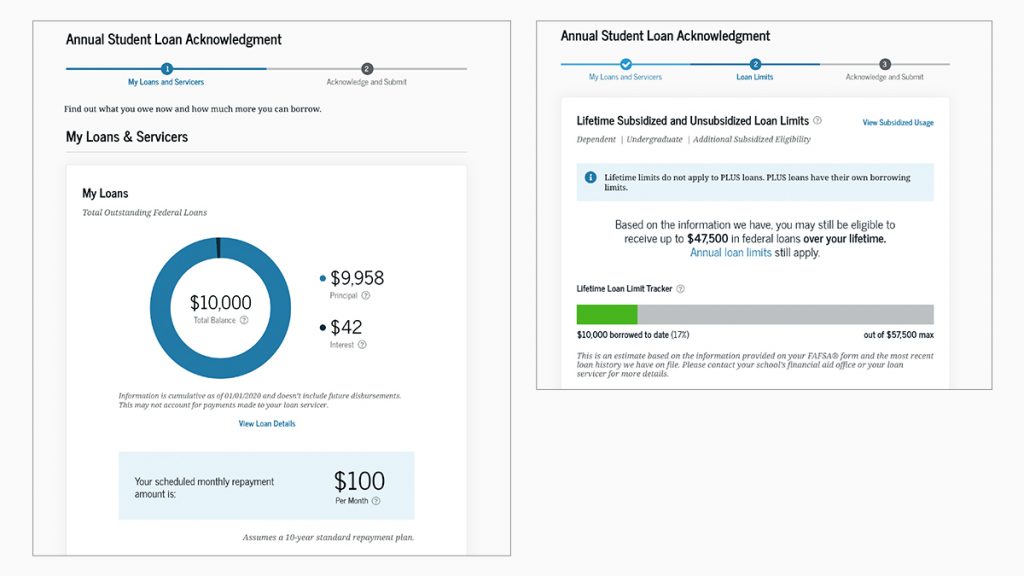
The U.S. Department of Education does not typically collect your monthly payments directly. Instead, they assign your debt to a third-party loan servicer, such as Nelnet, MOHELA, or EdFinancial. Your first step should always be to log in to your account at StudentAid.gov. This central dashboard provides a comprehensive view of all federal loans, their current balances, interest rates, and the specific company assigned to manage your billing.
The Importance of the Grace Period
Most federal student loans offer a six-month grace period after you graduate, leave school, or drop below half-time enrollment. This window is designed to give you time to find employment and stabilize your finances. However, it is a common misconception that interest stops accruing during this time. For unsubsidized loans, interest continues to accumulate and will eventually “capitalize,” meaning it is added to your principal balance once your formal repayment begins. If your budget allows, making interest-only payments during your grace period can prevent your balance from growing before you even make your first official payment.
Evaluating Your Repayment Plan Options
The federal government offers a variety of repayment structures. The right choice depends entirely on your income, family size, and how quickly you want to be debt-free.
The Standard Repayment Plan
By default, most borrowers are placed on the Standard Repayment Plan. This plan features fixed monthly payments over a 10-year term. While the monthly payments may be higher than other options, this is the most cost-effective way to pay off your loans because it minimizes the total interest paid over the life of the loan. If you can afford the payments, staying on this plan is the fastest path to total debt elimination.
Income-Driven Repayment (IDR) Plans
For those whose debt is high relative to their income, IDR plans are essential tools. These plans, such as the Saving on a Valuable Education (SAVE) plan—which replaced the older REPAYE plan—calculate your monthly payment based on a percentage of your discretionary income and family size.
The primary advantage of IDR plans is that they can lower your monthly obligation to as little as $0 if your income is below a certain threshold. Furthermore, many IDR plans offer loan discharge after 20 or 25 years of qualifying payments. The SAVE plan, in particular, is highly beneficial because it prevents interest from accruing beyond your monthly payment amount, ensuring your balance does not balloon even if your required payment is low.
Graduated and Extended Repayment
If you expect your income to rise steadily over time, the Graduated Repayment Plan starts with lower payments that increase every two years. Alternatively, the Extended Repayment Plan allows you to stretch your payments over 25 years, significantly lowering the monthly cost but greatly increasing the total interest you will pay over time. These are generally viewed as “survival” plans rather than “thrive” plans, as they prioritize current cash flow over long-term savings.
Advanced Strategies for Accelerated Debt Elimination
Once you have established a baseline repayment plan, you can employ specific financial tactics to pay down your principal faster and save thousands of dollars in interest charges.

The Power of Interest Rate Reductions
Almost all federal loan servicers offer a 0.25% interest rate reduction if you sign up for automatic debit. While a quarter of a percent might seem negligible, when applied to a five-figure or six-figure balance over a decade, it results in substantial savings. Beyond the financial benefit, autopay ensures you never miss a deadline, which is crucial for maintaining a healthy credit profile.
Strategic Overpayment: The Avalanche vs. the Snowball
If you have extra room in your monthly budget, applying additional funds toward your loans can drastically shorten your repayment timeline. There are two primary schools of thought:
-
The Debt Avalanche: You apply extra payments to the loan with the highest interest rate. Mathematically, this is the most efficient method, as it reduces the total cost of borrowing.
-
The Debt Snowball: You focus on paying off the smallest individual loan balance first. This provides a psychological “win” and simplifies your finances by reducing the number of individual loans you manage.
When making extra payments, you must explicitly instruct your servicer to apply the overage to your principal balance rather than “advancing the due date.” Advancing the due date simply pays your next month’s bill early, whereas applying it to the principal reduces the base upon which future interest is calculated.
Avoiding the Refinancing Trap
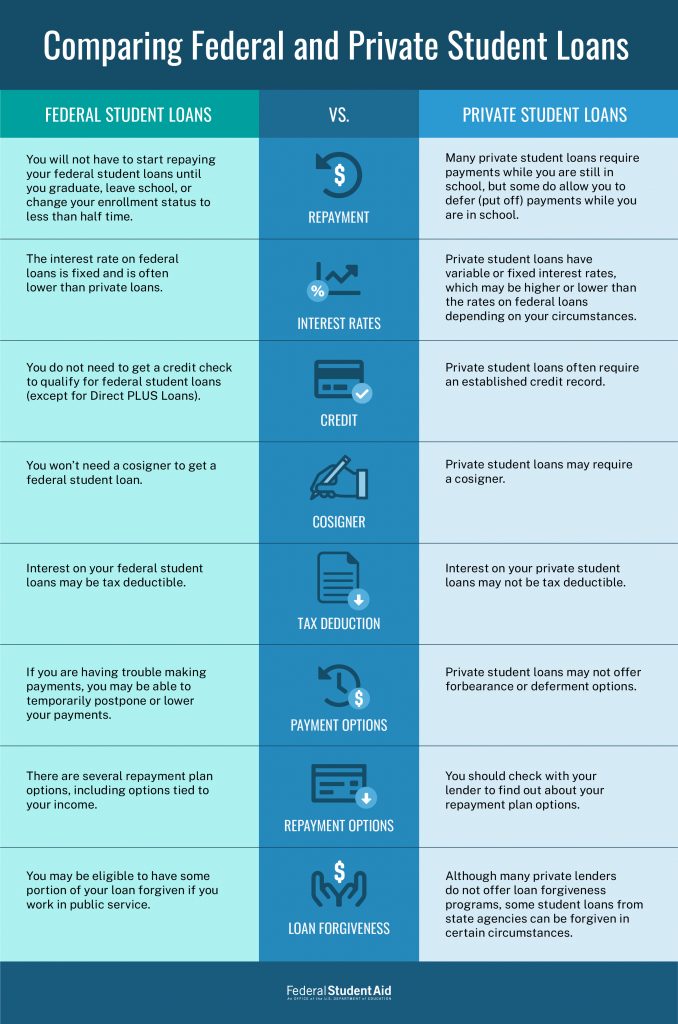
You will likely receive offers from private banks to “refinance” your federal loans at a lower interest rate. While this can be tempting if you have excellent credit, it is a high-risk move. By converting federal loans into private loans, you permanently lose access to federal benefits such as IDR plans, Public Service Loan Forgiveness (PSLF), and federal deferment or forbearance options. In most cases, the flexibility and safety net provided by federal loans far outweigh the benefit of a slightly lower private interest rate.
Forgiveness Pathways and Discharge Programs
The federal student loan system includes several provisions that allow for the total cancellation of debt under specific circumstances.
Public Service Loan Forgiveness (PSLF)
PSLF is arguably the most powerful tool for borrowers working in the non-profit or government sectors. After making 120 qualifying monthly payments while working full-time for a qualifying employer (such as a 501(c)(3) organization or a government agency), the remaining balance of your Direct Loans is forgiven tax-free. To succeed with PSLF, you must ensure you are on an IDR plan and submit an Employment Certification Form annually to track your progress.
Teacher Loan Forgiveness
Educators who work full-time for five complete and consecutive academic years in low-income schools or educational service agencies may be eligible for forgiveness of up to $17,500 on their Direct or Stafford loans. While this amount is lower than what is offered by PSLF, the timeline is shorter, making it an excellent option for those who do not plan to stay in public service for a full decade.
IDR Discharge
Even if you do not work in public service, all IDR plans include a “light at the end of the tunnel.” If you have not paid off your loans after 20 or 25 years of qualifying payments, the remaining balance is discharged. It is important to note that, unlike PSLF, the amount forgiven under IDR plans may be considered taxable income by the IRS, depending on current tax laws. This necessitates a long-term strategy to save for a potential “tax bomb” at the end of the repayment period.
Navigating Financial Turbulence: Deferment and Forbearance
Life is unpredictable, and there may be times when you cannot meet your monthly obligations due to unemployment, medical emergencies, or other financial hardships.
Temporary Relief Options
Federal loans offer two primary forms of “pause”:
-
Deferment: This allows you to stop making payments temporarily. If you have subsidized loans, the government may pay the interest for you during this period.
-
Forbearance: This also allows you to stop or reduce payments for up to 12 months. However, interest continues to accrue on all loan types, including subsidized ones.
While these tools are excellent for preventing default, they should be used sparingly. The accrual of interest during forbearance can lead to “negative amortization,” where your loan balance grows even though you aren’t spending any money. In many cases, switching to an IDR plan with a $0 payment is a better alternative than forbearance, as it counts toward the clock for eventual loan forgiveness.
The Impact of Default
Failing to pay your federal student loans has severe consequences. Unlike other forms of debt, student loans are rarely dischargeable in bankruptcy. Defaulting can lead to wage garnishment, the withholding of tax refunds, and a significant drop in your credit score. If you find yourself struggling, the most important step is to communicate with your servicer immediately. The federal system is designed with multiple safety nets to help you avoid default, but you must be proactive in requesting them.
Managing FAFSA-derived student loans is a marathon, not a sprint. By understanding your options, leveraging federal protections, and strategically applying extra payments when possible, you can master your debt and move toward a position of total financial independence.
aViewFromTheCave is a participant in the Amazon Services LLC Associates Program, an affiliate advertising program designed to provide a means for sites to earn advertising fees by advertising and linking to Amazon.com. Amazon, the Amazon logo, AmazonSupply, and the AmazonSupply logo are trademarks of Amazon.com, Inc. or its affiliates. As an Amazon Associate we earn affiliate commissions from qualifying purchases.