
For decades, the name Navient was synonymous with student loan repayment for millions of Americans. As one of the largest student loan servicers in the United States, the company managed a massive portfolio of both federal and private debt. However, in recent years, a series of strategic exits, regulatory settlements, and corporate handovers have left many borrowers asking a critical question: Who took over Navient?
The answer is not a simple one-to-one replacement. Instead, Navient’s transition represents a calculated retreat from the frontline of loan servicing. Depending on the type of loan a borrower holds—whether it is a federal Direct Loan, a Federal Family Education Loan (FFEL), or a private student loan—the entity now responsible for managing those payments has changed. The two primary names that have stepped into the void are Aidvantage and MOHELA.
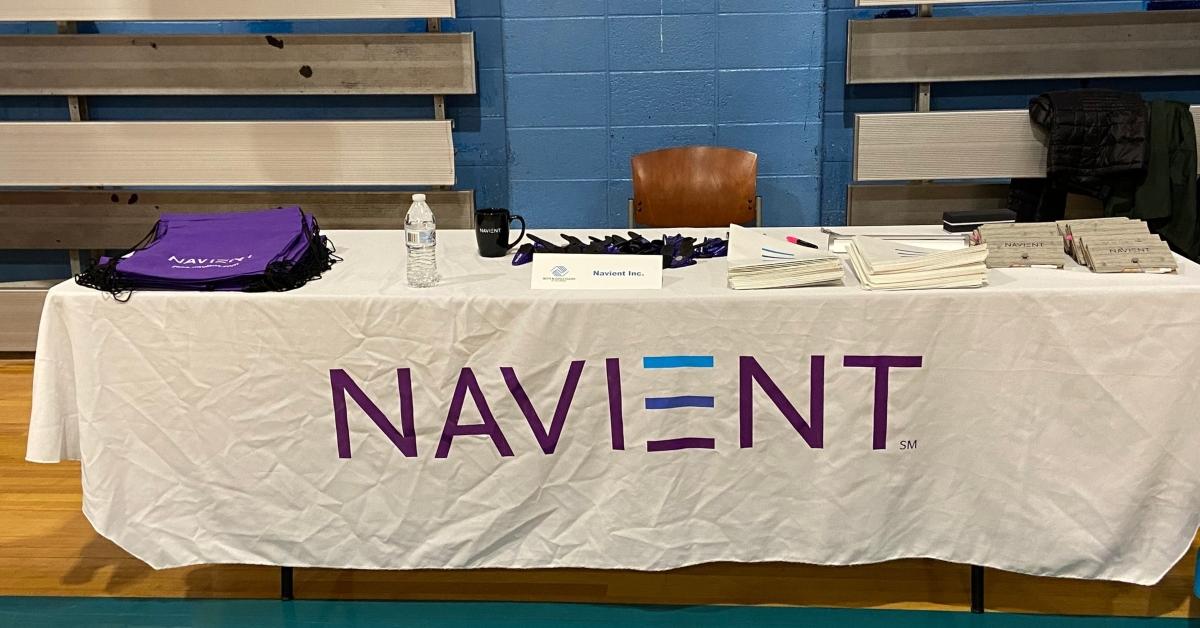
The Federal Exit: How Aidvantage Became the New Face of Navient Accounts
The most significant shift in Navient’s business model occurred in late 2021 when the company received approval from the U.S. Department of Education to transfer its contract for servicing federal student loans. This move effectively signaled Navient’s departure from the federal Direct Loan program, a space it had occupied since its spin-off from Sallie Mae in 2014.
The Role of Maximus and the Birth of Aidvantage
The entity that officially took over Navient’s federal loan portfolio is Maximus, a government services contractor. To handle this massive influx of nearly 6 million borrowers, Maximus created a dedicated division known as Aidvantage.
The transition was designed to be a “seamless” transfer of data, payment histories, and terms. Maximus did not buy the loans—the federal government still owns the debt—but they took over the administrative responsibility. This includes processing monthly payments, managing income-driven repayment (IDR) plan applications, and providing customer support. For borrowers, the transition meant a change in web portals and mailing addresses, but the underlying legal obligations of their debt remained anchored in federal law.
Why Navient Walked Away from Federal Servicing
Navient’s decision to exit the federal market was largely driven by a combination of regulatory pressure and narrow profit margins. For years, the company faced intense scrutiny from the Consumer Financial Protection Bureau (CFPB) and various state attorneys general. Allegations of “steering” borrowers into expensive forbearances rather than more affordable income-driven repayment plans created a PR nightmare and a mounting legal liability. By transferring the contract to Maximus, Navient was able to shed a high-risk segment of its business and pivot toward a more specialized financial model.
The 2024 Shift: The Navient and MOHELA Strategic Alliance
While the federal Direct Loan transition to Aidvantage was completed years ago, Navient still held a significant portfolio of private student loans and legacy FFELP (Federal Family Education Loan Program) loans. In early 2024, Navient announced a major strategic shift that addressed these remaining accounts, signaling the near-total end of its role as a primary loan servicer.
Outsourcing to MOHELA
In a move to further streamline its operations, Navient entered into a long-term agreement with the Missouri Higher Education Loan Authority, better known as MOHELA. Under this agreement, MOHELA took over the servicing of Navient’s remaining loan portfolios.
It is important to distinguish the nature of this deal from the Aidvantage transition. In the case of private loans, Navient often still owns the debt or manages the underlying trust that holds the debt. However, they no longer want to deal with the day-to-day operations of collecting money, answering phones, or managing defaults. By outsourcing this to MOHELA, Navient effectively became a “capital light” asset manager rather than a customer-facing service provider.
The Significance of the FFELP Portfolio
The FFELP loans are a unique category—they are federal loans that were originated by private lenders but guaranteed by the government. These loans have been a source of confusion for many borrowers, especially during the COVID-19 payment pause, which did not apply to many FFELP loans held by private entities like Navient. By handing these over to MOHELA, Navient further distanced itself from the complexities of federal compliance while maintaining the interest income generated by the assets.
The Catalysts of Change: Regulatory Headwinds and Settlements
The transition of Navient’s accounts was not merely a business decision made in a vacuum; it was the byproduct of a decade of legal battles. To understand who took over Navient, one must understand why Navient felt compelled to give up its territory.
The CFPB and the $1.85 Billion Turning Point
In January 2022, Navient reached a landmark $1.85 billion settlement with 39 state attorneys general. The settlement addressed long-standing allegations that the company engaged in predatory lending and deceptive servicing practices. As part of this agreement, Navient was required to cancel $1.7 billion in subprime private student loan debt for approximately 66,000 borrowers and pay $145 million in restitution.
This legal pressure made the business of “servicing” increasingly expensive. The cost of compliance, coupled with the potential for further fines, made the traditional servicing model unattractive for a publicly traded company like Navient. By offloading the servicing duties to specialized entities like Maximus (Aidvantage) and MOHELA, Navient could minimize its regulatory footprint.
Addressing Mismanagement Allegations
The primary complaint against Navient was that its compensation structures for employees incentivized them to keep calls short, which often led to pushing borrowers toward forbearance rather than taking the time to explain more complex but beneficial options like IDR plans. This “shorthand” servicing resulted in billions of dollars in added interest for American borrowers. The entities that took over—specifically Aidvantage—have been under immense pressure to prove that they will not repeat these systemic failures.
Navigating the New Reality: A Guide for Impacted Borrowers
If your loan was formerly with Navient, the “takeover” process means you are now interacting with a different interface. Understanding how to manage this transition is vital for maintaining your financial health and credit score.
Verifying Your New Servicer
For those who are unsure where their loans landed, the first step is to log into the Federal Student Aid (FSA) website at StudentAid.gov. Your dashboard will list your current servicer. If you have private loans, you should check your credit report. The “tradeline” for Navient will likely be marked as “transferred” or “closed,” and a new entry for MOHELA or another servicer will appear.
Managing Payments and Record-Keeping
The most common issue during a servicer takeover is the “lost” payment or the disruption of autopay settings. Borrowers should:
-
Download History: If you still have access to the Navient portal during a transition period, download all payment histories and tax documents (1098-E).
-
Re-establish Autopay: Autopay settings rarely transfer between companies for security reasons. You will likely need to re-link your bank account with Aidvantage or MOHELA.
-
Monitor Credit Scores: Keep a close eye on your credit report for 90 days following a transfer to ensure the new servicer is accurately reporting your on-time payments.
The Broader Economic Impact: Navient’s Pivot to a Business-Services Model
The story of who took over Navient is also a story of how Navient is reinventing itself. The company is not going out of business; rather, it is evolving into a more diverse financial services firm that focuses on government processing and business process outsourcing (BPO).
The “Capital Light” Strategy
Navient’s leadership has explicitly stated a desire to move toward a “capital light” model. This means they want to hold onto high-value assets and earn interest without the heavy overhead of thousands of customer service agents and the massive IT infrastructure required to service millions of individual accounts. By outsourcing the labor to MOHELA and exiting the federal contract, Navient has significantly reduced its headcount and operational complexity.

The Consolidation of the Servicing Market
The exit of Navient from the federal space, followed by similar exits from companies like Pennsylvania Higher Education Assistance Agency (PHEAA/FedLoan), has led to a consolidation in the market. Today, a handful of giants—Maximus (Aidvantage), MOHELA, and Nelnet—manage the vast majority of the nation’s $1.7 trillion student debt.
This consolidation is a double-edged sword. On one hand, it allows for more standardized communication from the Department of Education. On the other hand, it creates “too-big-to-fail” entities in the student loan space. If MOHELA or Aidvantage experiences a systemic failure, there are fewer alternatives for the government to turn to, making the stability of these “takeover” entities a matter of national economic importance.
In conclusion, while Navient still exists as a corporate entity, it has effectively handed over the keys of its servicing empire. For the federal borrower, the answer is Aidvantage. For the private and FFELP borrower, the answer is increasingly MOHELA. As the landscape of student debt continues to shift, these transfers highlight a broader trend of traditional lenders retreating from the front lines of consumer debt management in favor of more specialized, lower-risk roles in the global financial ecosystem.
aViewFromTheCave is a participant in the Amazon Services LLC Associates Program, an affiliate advertising program designed to provide a means for sites to earn advertising fees by advertising and linking to Amazon.com. Amazon, the Amazon logo, AmazonSupply, and the AmazonSupply logo are trademarks of Amazon.com, Inc. or its affiliates. As an Amazon Associate we earn affiliate commissions from qualifying purchases.