
The Nasdaq Composite Index, a barometer for the technology-driven economy, frequently captures headlines with its monumental surges and occasional dramatic retreats. For investors, financial analysts, and anyone tracking market health, understanding the Nasdaq’s all-time high is not just about a specific number; it’s about comprehending the forces that propel innovation, economic growth, and investor sentiment. This article delves into the historical peaks of the Nasdaq, exploring the factors behind its ascent and what these milestones signify for the broader financial landscape.
Understanding the Nasdaq Composite: A Market Bellwether
Before dissecting its all-time highs, it’s crucial to grasp what the Nasdaq Composite is and why it holds such significant sway in the financial world. Unlike some other indices that use a select number of companies, the Nasdaq Composite reflects the performance of virtually all common stocks listed on the Nasdaq stock market. This broad inclusion makes it a comprehensive gauge, particularly for growth-oriented sectors.

What is the Nasdaq Composite?
The Nasdaq Composite Index is a market-capitalization-weighted index of more than 3,000 common equities listed on the Nasdaq stock market. Its composition is heavily skewed towards technology and growth companies, making it a powerful indicator of the health and investor confidence in these sectors. From tech giants like Apple, Microsoft, Amazon, and Google (Alphabet) to emerging biotech firms and software innovators, the Nasdaq provides a snapshot of companies pushing the boundaries of technology and modern commerce. This concentration in forward-looking industries means the index often experiences greater volatility compared to more diversified indices, reacting sharply to technological breakthroughs, shifts in consumer behavior, and changes in the economic outlook.
Nasdaq vs. Other Indices
To appreciate the Nasdaq’s unique character, it helps to compare it with other major market indices:
-
Dow Jones Industrial Average (DJIA): Comprising just 30 large, established “blue-chip” companies, the Dow is price-weighted and offers a narrower view of the industrial sector and mature businesses. Its movements are often seen as reflecting the health of the traditional economy.
-
S&P 500 Index: This index tracks 500 of the largest U.S. publicly traded companies, selected by Standard & Poor’s. It’s market-capitalization-weighted and is generally considered the best gauge of large-cap U.S. equities and the overall health of the U.S. stock market due to its broader representation across various sectors.
The Nasdaq, with its profound emphasis on technology and growth, frequently outperforms (or underperforms) these broader indices during periods of rapid innovation or significant tech disruption. Its volatility can be a double-edged sword, offering substantial returns during booms but also steeper declines during downturns.
Tracing the Nasdaq’s Peaks: A Historical Perspective
The journey to an all-time high is rarely a straight line. The Nasdaq’s history is punctuated by periods of euphoric growth followed by painful corrections, each contributing to its unique story and resilience. Understanding these historical peaks provides context for its current valuations.
The Dot-Com Bubble: The First Major Peak
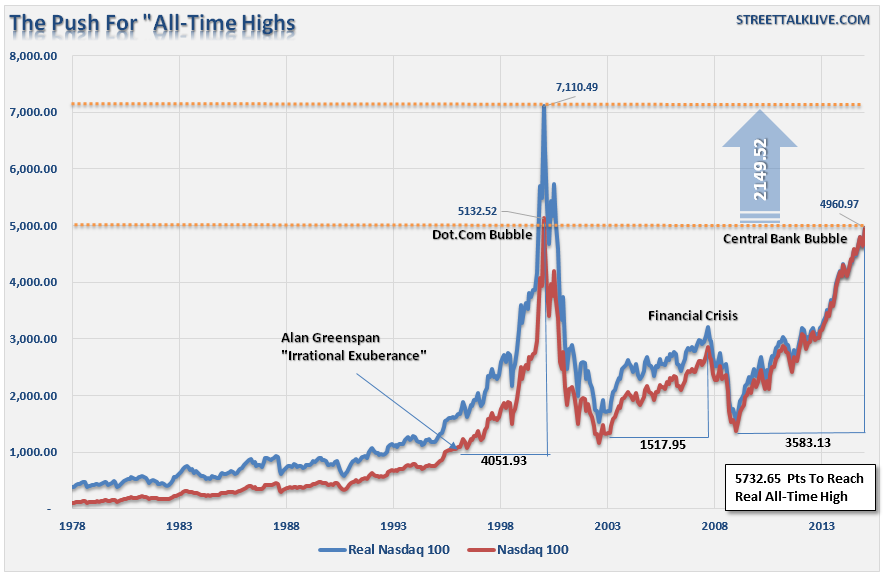
The late 1990s witnessed an unprecedented surge in internet-related companies, fueled by speculative enthusiasm and rapid technological adoption. This era, dubbed the “dot-com bubble,” saw the Nasdaq Composite climb to dizzying heights. Its first significant all-time high was reached on March 10, 2000, when it closed at 5,048.62 points. This peak represented a nearly 400% increase in five years. However, this growth was largely unsustainable, based on speculative valuations rather than robust profits. The subsequent burst of the bubble led to a severe market correction, with the Nasdaq losing almost 78% of its value over the next two and a half years, not reclaiming its dot-com peak for over 15 years.
The Post-2008 Recovery and Tech Boom
Following the 2008 financial crisis, the Nasdaq embarked on a long, steady recovery driven by a new wave of technological innovation and the emergence of genuinely profitable tech giants. Companies like Apple, Google, Amazon, and Facebook (Meta) matured, dominating their respective markets and generating substantial earnings. This period also saw the rise of cloud computing, mobile technology, and social media, fundamentally reshaping global industries. The Nasdaq methodically chipped away at its previous high, finally surpassing its dot-com peak in April 2015, a testament to the enduring power of innovation and the sustained profitability of modern tech firms.
The Pandemic-Era Surge: Digital Transformation Acceleration
The COVID-19 pandemic, paradoxically, became a significant catalyst for the Nasdaq. As global lockdowns forced businesses and individuals online, demand for digital services, e-commerce, cloud infrastructure, and remote work solutions exploded. Companies providing these services—many of which are Nasdaq components—saw their revenues and stock prices skyrocket. The pandemic accelerated digital transformation by years, leading to multiple new all-time highs for the Nasdaq throughout 2020 and 2021. The index demonstrated remarkable resilience and growth during a period of immense global uncertainty, underscoring the critical role technology plays in modern life and the economy.
The Recent All-Time Highs: AI and Disinflationary Hopes
More recently, after a challenging 2022 marked by rising interest rates and inflation concerns, the Nasdaq Composite has once again climbed to new record levels. The current wave of optimism has been largely driven by the excitement surrounding artificial intelligence (AI). Companies at the forefront of AI development and infrastructure, such as Nvidia, Microsoft, and Google, have experienced phenomenal growth, pulling the broader index higher. Additionally, expectations for potential interest rate cuts by central banks, coupled with signs of cooling inflation, have fueled investor confidence in growth stocks, which tend to be more sensitive to borrowing costs. As of early June 2024, the Nasdaq Composite closed at its all-time high of 17,343.55 on June 5, 2024, showcasing the market’s strong belief in the transformative power of AI and a potentially more favorable monetary policy environment. Please note: Market records are dynamic. This specific high reflects data available at the time of writing and may be surpassed.
Factors Driving Nasdaq’s Ascent to All-Time Highs
The Nasdaq’s journey to record valuations is rarely a singular phenomenon. A confluence of technological advancement, economic conditions, and psychological factors typically coalesce to create the momentum required for such peaks.
Technological Innovation
At its core, the Nasdaq is a technology index. Therefore, groundbreaking innovations are the primary fuel for its growth. From the internet’s early days to the advent of mobile computing, cloud services, and now artificial intelligence, each technological revolution has opened new markets, created new industries, and significantly boosted the revenues and profit potential of companies at the forefront. The promise of future technological leaps often drives investor enthusiasm and pushes valuations higher, sometimes even ahead of current profitability.
Economic Conditions

Macroeconomic factors play a crucial role. Periods of low interest rates, for instance, make it cheaper for companies to borrow and invest, encouraging expansion. Low rates also make future earnings streams more valuable in present terms, which particularly benefits growth companies with high future earnings potential. Strong economic growth generally translates to higher consumer and business spending, benefiting tech companies through increased sales of devices, software, and services. Conversely, a robust job market and rising wages can lead to increased consumer purchasing power, further stimulating demand for technology products.
Investor Sentiment and Market Psychology
The “fear of missing out” (FOMO) and herd mentality can powerfully influence market movements. When the Nasdaq is on an upward trajectory, positive sentiment can become self-fulfilling, drawing in more investors and pushing prices higher. Institutional investors, hedge funds, and retail traders all contribute to this dynamic. Analyst upgrades, positive earnings reports, and optimistic forecasts can create a virtuous cycle of buying. This psychological aspect can sometimes decouple stock prices from underlying fundamentals in the short term, leading to overvaluation, as seen during the dot-com era.
Global Events and Geopolitics
While less direct, global events and geopolitical shifts can indirectly impact the Nasdaq. Periods of stability and globalization can foster international trade and expansion for tech companies. Conversely, trade wars, supply chain disruptions (as seen during the pandemic), or geopolitical tensions can create uncertainty, affect production, and dampen investor enthusiasm. The pandemic, for example, highlighted the critical role of technology in keeping economies running, leading to an accelerated adoption of digital tools and a corresponding boost for tech stocks.
Implications for Investors: Navigating Highs and Volatility
For investors, an all-time high is both a cause for celebration and a moment for careful consideration. While it signifies robust returns, it also often raises questions about market sustainability and future potential.
Evaluating Market Valuations
When the Nasdaq reaches new highs, it’s essential to scrutinize company valuations. Metrics like Price-to-Earnings (P/E) ratios, Price-to-Sales (P/S) ratios, and growth prospects become critical. Are the high prices justified by strong earnings growth and future potential, or are they driven by speculative fervor? Investors should assess whether current valuations reflect a sustainable business model or an overextended bubble. A high valuation isn’t necessarily a bad thing if the company can deliver exceptional growth, but it does imply a higher risk should growth falter.
Diversification Strategies
Putting all your investment eggs in one basket, particularly in a high-flying sector like technology, can be risky. Even within the tech sector, diversification across different sub-industries (e.g., software, semiconductors, e-commerce, hardware) and company sizes (large-cap, mid-cap, small-cap) can mitigate risk. Beyond tech, balancing a portfolio with exposure to other sectors like healthcare, consumer staples, financials, and industrials can provide a cushion during tech-specific downturns and offer more stable returns.
Long-Term vs. Short-Term Perspectives
Successful investing in a volatile market like the Nasdaq often benefits from a long-term perspective. Chasing short-term gains during market highs can lead to impulsive decisions and potentially significant losses if a correction occurs. Strategies like dollar-cost averaging (investing a fixed amount regularly, regardless of market highs or lows) can smooth out returns over time. Focusing on the fundamental strength and long-term growth trajectory of companies, rather than reacting to daily market fluctuations, is key.
Risk Management in a High-Flying Market
Even in a bull market, prudent risk management is paramount. This includes setting clear investment goals, understanding your risk tolerance, and implementing strategies like stop-loss orders to limit potential downsides. Regularly rebalancing your portfolio to maintain your desired asset allocation can prevent overexposure to certain sectors that have experienced rapid appreciation. For example, if tech stocks have grown to represent an outsized portion of your portfolio, you might trim some gains to reinvest in underperforming but fundamentally sound assets.
The Future of the Nasdaq: Sustaining Momentum or Facing Correction?
Predicting the market’s future is notoriously difficult, but several factors will likely shape the Nasdaq’s trajectory in the coming years.
Emerging Technologies
Beyond current AI advancements, the next wave of technological innovation will undoubtedly influence the Nasdaq. Fields such as biotechnology, quantum computing, clean energy solutions, advanced robotics, and space technology could give rise to new industry leaders and drive future growth. Companies that successfully leverage and commercialize these emerging technologies will likely become the next generation of Nasdaq heavyweights.
Regulatory Environment and Antitrust Concerns
As tech giants grow larger and more influential, they face increasing scrutiny from regulators worldwide. Antitrust investigations, data privacy regulations, and calls for greater accountability could impact business models, limit growth opportunities, or even lead to breakups for some companies. The regulatory landscape will play a significant role in shaping the competitive environment and the profitability of major tech firms.
Interest Rate Trajectory and Monetary Policy
The direction of interest rates set by central banks will continue to be a critical determinant for growth stocks. Lower interest rates generally favor tech companies by reducing borrowing costs and making future earnings more attractive. Conversely, sustained high-interest rates or aggressive monetary tightening could dampen investor appetite for growth stocks and lead to downward pressure on valuations.
Global Economic Outlook
The health of the global economy, including factors like inflation, GDP growth, and geopolitical stability, will inevitably affect the Nasdaq. A robust global economy with increasing prosperity tends to drive demand for technology products and services. Conversely, economic slowdowns, recessions, or significant geopolitical conflicts could introduce uncertainty and volatility.
In conclusion, the Nasdaq Composite’s all-time highs are more than just numerical records; they are reflections of human ingenuity, economic cycles, and the ever-evolving landscape of investment. While the thrill of new peaks is undeniable, a clear understanding of the underlying drivers and a disciplined investment approach remain essential for navigating this dynamic and often exhilarating market.
aViewFromTheCave is a participant in the Amazon Services LLC Associates Program, an affiliate advertising program designed to provide a means for sites to earn advertising fees by advertising and linking to Amazon.com. Amazon, the Amazon logo, AmazonSupply, and the AmazonSupply logo are trademarks of Amazon.com, Inc. or its affiliates. As an Amazon Associate we earn affiliate commissions from qualifying purchases.