
The Nasdaq composite index, often seen as a bellwether for the technology sector and growth stocks, frequently captures the imagination of investors and the general public alike. Its peaks and valleys tell a compelling story of innovation, economic cycles, and investor sentiment. Understanding the highest points the Nasdaq has ever reached isn’t just a matter of trivia; it provides crucial insights into market dynamics, periods of intense speculation, and the underlying forces driving technological progress and economic expansion. For anyone involved in investing, personal finance, or simply observing the financial landscape, tracing the Nasdaq’s historical highs is essential for comprehending the broader money ecosystem and making informed decisions.

Decoding the Nasdaq: More Than Just a Number
To truly appreciate the significance of the Nasdaq’s highest points, one must first understand what the Nasdaq represents and the distinct indices often referred to interchangeably. It’s a dynamic entity, reflecting the cutting edge of industry and the collective hopes and fears of millions of investors.
Understanding the Nasdaq Composite vs. Nasdaq 100
When people ask “what is the highest the Nasdaq has ever been,” they are typically referring to either the Nasdaq Composite or the Nasdaq 100. While both are integral to the Nasdaq stock market, they serve slightly different purposes and comprise different sets of companies.
The Nasdaq Composite index includes virtually all common stocks listed on the Nasdaq stock market, encompassing over 3,000 companies. This broad inclusion makes it a comprehensive gauge of the overall health of the technology-heavy Nasdaq exchange. Its diverse range of companies, from mega-cap tech giants to small, emerging growth firms, provides a wide lens through which to view market performance.
The Nasdaq 100, on the other hand, is a modified market-capitalization-weighted index of the 100 largest non-financial companies listed on the Nasdaq stock market. It is heavily concentrated in technology and growth sectors, featuring household names like Apple, Microsoft, Amazon, Google (Alphabet), and Nvidia. Because it excludes financial companies and focuses on the largest innovators, the Nasdaq 100 is often considered a purer play on the performance of big tech and next-generation industries. Consequently, its movements can be more volatile and pronounced than the broader Composite. When discussing the highest points, both indices are relevant, but the Nasdaq 100 often reaches more staggering numbers due to its concentrated portfolio of high-growth stocks.
The Nasdaq’s Role in the Global Economy
Beyond just a collection of stocks, the Nasdaq serves as a critical barometer for innovation and economic growth on a global scale. Its heavy weighting towards technology, biotechnology, and internet-related companies means that its performance often reflects the market’s enthusiasm (or apprehension) for future-facing industries. During periods of rapid technological advancement or paradigm shifts (like the rise of the internet, cloud computing, or artificial intelligence), the Nasdaq tends to outperform broader market indices like the S&P 500 or Dow Jones Industrial Average.
Its constituents are frequently global leaders, driving research and development, creating new markets, and influencing consumer behavior worldwide. Therefore, the Nasdaq’s trajectory isn’t just about financial numbers; it’s a reflection of human ingenuity and the evolving economic landscape driven by technological progress. Its highs symbolize periods of immense confidence in this progress, while its lows often signal skepticism or economic uncertainty.
Charting the Peaks: A Historical Perspective
The Nasdaq’s journey to its highest points is marked by several distinct eras, each driven by unique economic conditions, technological breakthroughs, and investor psychology. Understanding these historical peaks provides context for its current position and potential future movements.
The Dot-Com Bubble Peak (Early 2000s)
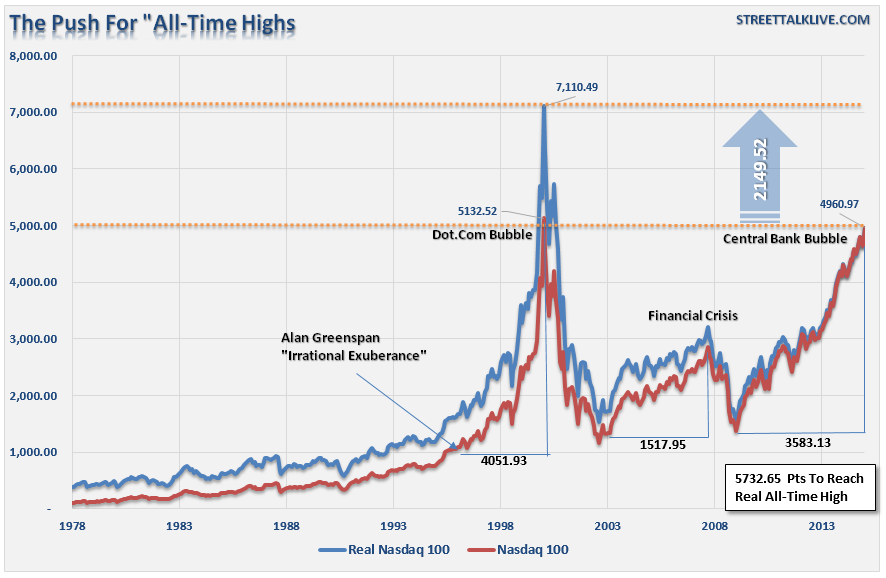
One of the most memorable and dramatic peaks in the Nasdaq’s history occurred during the late 1990s and early 2000s, famously known as the Dot-Com Bubble. Fueled by the revolutionary promise of the internet, irrational exuberance, and easy access to capital, tech stocks soared to unprecedented valuations. The Nasdaq Composite surged from under 1,000 points in the early 1990s to an astonishing 5,048.62 on March 10, 2000. Companies, regardless of profitability or sustainable business models, saw their stock prices skyrocket merely by adding “.com” to their names. This period was characterized by aggressive speculation, venture capital pouring into unproven startups, and a widespread belief that traditional valuation metrics no longer applied to internet companies. The subsequent burst of the bubble led to a brutal bear market, with the Nasdaq Composite losing nearly 80% of its value by late 2002, wiping out trillions in market capitalization and fundamentally reshaping the tech industry.
The Post-Financial Crisis Recovery & Tech Surge (2010s)
Following the dot-com bust and the subsequent global financial crisis of 2008, the Nasdaq embarked on a remarkable and sustained recovery. The 2010s were characterized by a steady climb, largely driven by the emergence of truly transformative technology companies – often referred to as FAANG stocks (Facebook, Apple, Amazon, Netflix, Google). These companies, unlike many of their dot-com predecessors, had strong revenue streams, sustainable business models, and immense market dominance.
Low interest rates following the financial crisis, coupled with a growing global embrace of digital technologies (smartphones, social media, cloud computing), created an ideal environment for tech growth. The Nasdaq Composite not only recovered its dot-com era losses but surpassed them, slowly but surely establishing new all-time highs throughout the latter half of the decade. This period saw a more mature and fundamental-driven ascent, albeit still with strong growth stock momentum.
The Pandemic-Era Tech Boom & All-Time Highs (2020-2024)
The most recent and dramatic surge in the Nasdaq’s history occurred during and after the COVID-19 pandemic. The sudden shift to remote work, online education, e-commerce, and digital entertainment accelerated digital transformation across industries, making technology companies more essential than ever. With unprecedented monetary stimulus from central banks, leading to ultra-low interest rates and ample liquidity, investors flocked to growth stocks, particularly those that benefited from the “stay-at-home” economy.
This environment propelled the Nasdaq Composite to unprecedented heights. After a sharp but brief dip in early 2020, the index roared back, hitting numerous all-time highs throughout 2020 and 2021. The Nasdaq Composite reached a peak of 16,212.23 on November 19, 2021. The Nasdaq 100 similarly soared, topping out around 16,764.86 on November 22, 2021. After a challenging 2022 marked by rising inflation and interest rates, the tech-heavy indices once again began a strong recovery in 2023 and continued into 2024, driven by renewed optimism around artificial intelligence and continued strong performance from mega-cap tech. In mid-2024, the Nasdaq Composite once again eclipsed its previous peaks, reaching levels beyond 17,000 (e.g., hitting 17,178.55 on June 10, 2024), while the Nasdaq 100 also achieved new records, surpassing 19,000 (e.g., reaching 19,035.79 on June 10, 2024). These recent peaks highlight the enduring power of innovation and the market’s continued appetite for high-growth companies.
Drivers Behind Nasdaq’s Ascent and Volatility
Understanding the Nasdaq’s highest points requires an examination of the fundamental and psychological forces that propel its climb and often contribute to its subsequent volatility.
Innovation and Technological Advancements
At its core, the Nasdaq’s performance is inextricably linked to innovation and technological advancements. Breakthroughs in areas like artificial intelligence (AI), cloud computing, e-commerce, biotechnology, and renewable energy continuously create new markets and disrupt old ones. Companies at the forefront of these innovations, listed predominantly on the Nasdaq, experience rapid growth in revenue and profitability, which translates into higher stock valuations. The anticipation of future breakthroughs often fuels speculative buying, pushing stock prices even higher. Recent enthusiasm surrounding generative AI is a prime example of how a technological leap can drive significant market movements.
Monetary Policy and Economic Environment
The broader monetary policy and economic environment play a crucial role in shaping the Nasdaq’s trajectory. Periods of low interest rates, often implemented by central banks to stimulate economic growth, make it cheaper for companies to borrow and expand, and also make future earnings streams from growth stocks more attractive to investors (as discounted cash flows are higher). Quantitative easing (QE) injects liquidity into the financial system, further boosting market valuations. Conversely, periods of rising interest rates, aimed at combating inflation, tend to weigh heavily on growth stocks, as their future earnings become less valuable and borrowing costs increase. A strong, growing economy generally supports corporate earnings and investor confidence, providing a tailwind for the Nasdaq.
Investor Sentiment and Market Psychology
Beyond fundamentals, investor sentiment and market psychology significantly influence the Nasdaq’s peaks. “Fear of Missing Out” (FOMO), speculative frenzies, and herd mentality can drive valuations far beyond what traditional metrics might suggest, creating bubbles. Conversely, panic selling and risk aversion during economic downturns can lead to sharp corrections. Positive news cycles, analyst upgrades, and widespread optimism can create powerful momentum that pushes indices to new highs, while negative headlines or increased uncertainty can quickly reverse these gains. The balance between rational analysis and emotional decision-making is a constant factor in market movements.
Global Events and Geopolitical Factors
The interconnected nature of the global economy means that global events and geopolitical factors can also profoundly impact the Nasdaq. Trade wars, pandemics, supply chain disruptions, energy crises, and international conflicts can introduce significant uncertainty, affecting corporate revenues, consumer spending, and investor confidence. While many Nasdaq companies are global entities, their supply chains and customer bases are vulnerable to international instability. Positive geopolitical developments or easing tensions can provide a boost, whereas escalating conflicts or economic instability in major markets can trigger sell-offs.
Implications for Investors: Beyond the Peaks
For individual investors and financial planners, understanding the Nasdaq’s highest points is not just about celebrating market triumphs, but about gleaning practical lessons for managing wealth and risk.
Understanding Market Cycles
The Nasdaq’s history vividly illustrates the concept of market cycles. Periods of rapid ascent (bull markets) are often followed by corrections or bear markets, where prices decline significantly. The dot-com bust, the 2008 financial crisis, and the 2022 tech downturn all serve as powerful reminders that even the most innovative sectors are not immune to cyclical forces. A long-term perspective is crucial; while market highs can be exhilarating, investors must be prepared for inevitable drawdowns. Understanding that volatility is a normal part of investing, especially in growth-oriented indices like the Nasdaq, helps in managing expectations and avoiding emotional decisions during downturns.
Diversification and Risk Management
The concentration of the Nasdaq 100 in a relatively small number of mega-cap tech companies underscores the importance of diversification and risk management. While these companies have been phenomenal performers, an over-reliance on a single sector or a few dominant stocks can expose an investor to substantial risk. If a few key companies face headwinds, or if the tech sector as a whole experiences a downturn, a concentrated portfolio can suffer disproportionately. Diversifying across different asset classes (stocks, bonds, real estate), industries, and geographies helps mitigate specific sector risks and smooth out portfolio returns over time, even if it means missing out on some of the extreme upside of a narrowly focused tech rally.
The Future Outlook: What to Watch For
Looking ahead, the Nasdaq’s future trajectory will be shaped by several critical factors. Investors should pay close attention to the direction of interest rates from central banks, as this directly impacts the valuation of growth stocks. The regulatory environment for big tech, including antitrust scrutiny and data privacy laws, could introduce new challenges. Most importantly, continued technological innovation will remain the primary engine of growth. Breakthroughs in AI, quantum computing, sustainable energy, and biotech will continue to create new leaders and drive market cycles. Global economic stability, geopolitical developments, and consumer adoption rates of new technologies will also play significant roles in determining whether the Nasdaq can sustain its current high-flying status or reach even loftier peaks in the years to come.
In conclusion, the Nasdaq’s journey to its highest points reflects a compelling narrative of human ambition, technological prowess, and the often-volatile dynamics of financial markets. From the speculative frenzy of the dot-com era to the fundamental strength of today’s tech giants, its peaks offer invaluable lessons for every investor navigating the complex world of money. While the specific numerical highs are a snapshot in time, the underlying drivers and the cyclical nature of market behavior are timeless principles that continue to guide informed financial decisions.
aViewFromTheCave is a participant in the Amazon Services LLC Associates Program, an affiliate advertising program designed to provide a means for sites to earn advertising fees by advertising and linking to Amazon.com. Amazon, the Amazon logo, AmazonSupply, and the AmazonSupply logo are trademarks of Amazon.com, Inc. or its affiliates. As an Amazon Associate we earn affiliate commissions from qualifying purchases.