
The Nasdaq Index, more accurately referred to as the Nasdaq Composite Index or its more famous cousin, the Nasdaq 100 Index, represents far more than just a list of companies. It is a dynamic barometer of innovation, a cornerstone of global financial markets, and a crucial indicator for investors worldwide. For many, the name Nasdaq immediately conjures images of groundbreaking technology companies and rapid growth, reflecting its unique position in the investment landscape. Understanding what the Nasdaq index is, how it functions, and its significance is fundamental for anyone looking to navigate the complexities of modern finance. It’s not merely a numerical value; it’s a window into the evolving economic ecosystem driven by progress and enterprise.

Understanding the Nasdaq Index: A Gateway to Innovation
The Nasdaq Stock Market, established in 1971, revolutionized the way stocks were traded. As the world’s first electronic stock market, it eschewed the traditional physical trading floor in favor of computerized networks, ushering in an era of faster, more efficient transactions. From its inception, Nasdaq positioned itself as a market for forward-thinking companies, often those too nascent or unconventional for the established exchanges. This foundational characteristic intrinsically linked the Nasdaq with innovation, a reputation that has only solidified over decades. The indices built upon this market naturally reflect this innovative spirit, offering investors a targeted exposure to industries shaping the future.
The Birth of a Market: From OTC to Global Powerhouse
Before Nasdaq, trading securities often involved a fragmented and less transparent “over-the-counter” (OTC) market. Nasdaq’s introduction of an electronic quotation system brought unprecedented transparency and efficiency, making it easier for investors to access information and execute trades. This technological leap attracted a new breed of companies – particularly those in semiconductors, software, and biotechnology – that were often overlooked by older exchanges. As these industries grew, so did Nasdaq’s prominence, transforming it from a niche market into a global powerhouse. This journey underscores Nasdaq’s inherent connection to progress, mirroring the very companies it lists.
Nasdaq vs. NYSE: Key Differentiators
While both the Nasdaq and the New York Stock Exchange (NYSE) are major U.S. stock exchanges, they possess distinct characteristics. The NYSE, with its iconic trading floor, represents a more traditional, auction-based market structure, listing many of the world’s oldest and largest industrial and financial companies. In contrast, Nasdaq operates as a dealer-based, electronic market, primarily attracting companies from the technology, biotech, and growth sectors. This fundamental difference in market structure and listing focus means that the Nasdaq indices tend to have a higher concentration of growth stocks and a greater susceptibility to technology-driven market trends compared to broader market indices like the S&P 500 or the Dow Jones Industrial Average, which are heavily influenced by NYSE-listed entities.
Why the “Tech-Heavy” Reputation?
The perception of Nasdaq as “tech-heavy” is not merely anecdotal; it’s rooted in the composition of its flagship indices. When innovative technology companies like Microsoft, Apple, Google (Alphabet), Amazon, and Meta (Facebook) chose to list on Nasdaq, they attracted other tech-oriented firms, creating a positive feedback loop. This concentration of technology and growth stocks within the Nasdaq indices means that their performance often correlates strongly with the health and sentiment surrounding the technology sector. While Nasdaq does list companies from various industries, the sheer market capitalization and influence of its technology components undeniably give it a distinctive “tech” flavor, making it a critical benchmark for the digital economy.
Deconstructing the Nasdaq Composite and Nasdaq 100
When people refer to “the Nasdaq index,” they are typically thinking of one of two primary indices: the Nasdaq Composite Index or the Nasdaq 100 Index. Both track the performance of companies listed on the Nasdaq Stock Market, but they do so with different scopes and methodologies, catering to distinct analytical and investment needs. Understanding the nuances between these two indices is vital for any investor considering exposure to the Nasdaq market.
The Broad Stroke: Nasdaq Composite Explained
The Nasdaq Composite Index is the broadest of the two, representing virtually all common stocks listed on the Nasdaq Stock Market. It’s a market-capitalization-weighted index, meaning companies with larger market values have a greater impact on the index’s performance. As of early 2024, it includes over 3,000 companies, providing a comprehensive snapshot of the entire Nasdaq ecosystem. Its wide breadth means it reflects the overall sentiment and performance of growth-oriented companies across various sectors, though technology still holds a significant weighting due to the size of its constituent companies. The Nasdaq Composite serves as a general indicator of the entire Nasdaq market’s health and a broader gauge of investor appetite for growth stocks.
The Elite Performers: Focusing on the Nasdaq 100
The Nasdaq 100 Index is perhaps the more frequently cited and invested-in index. It comprises 100 of the largest, non-financial companies listed on the Nasdaq Stock Market. Like the Composite, it is market-capitalization-weighted, but its selective nature makes it a more concentrated play on large-cap growth companies, predominantly from the technology, biotechnology, retail, and industrial sectors. Companies like Apple, Microsoft, Amazon, Alphabet, and Tesla are perennial fixtures. The exclusion of financial companies (like banks and investment firms) is a key distinguishing factor, giving the Nasdaq 100 a distinct sector focus and often making it more volatile than broader market indices, yet also offering higher potential for growth.
Criteria for Inclusion: What Makes a Company Nasdaq 100-Worthy?
Inclusion in the Nasdaq 100 is a mark of prestige and a signal of a company’s significant market presence and financial health. The primary criteria for consideration include:
-
Listing on Nasdaq: The company must be listed on the Nasdaq Stock Market.
-
Non-Financial: Companies classified as financial (e.g., banks, insurance companies) are explicitly excluded.
-
Market Capitalization: It must be among the 100 largest non-financial companies by market capitalization on Nasdaq.
-
Liquidity: Companies must meet certain liquidity requirements to ensure their stocks can be easily traded.
-
Seasoning Period: A company must have been listed on Nasdaq for at least three months.
-
Regular Review: The index is rebalanced annually in December, and adjustments can occur quarterly, ensuring it remains representative of the largest non-financial companies.
These stringent requirements ensure that the Nasdaq 100 consistently represents a collection of highly influential, often innovative, and well-capitalized companies.
Investing in the Nasdaq: Strategies and Considerations
Investing in the Nasdaq indices is a popular strategy for those seeking exposure to growth companies, particularly within the technology sector. However, like any investment, it comes with its own set of considerations, risks, and potential rewards. Understanding the various avenues for investment and the inherent characteristics of Nasdaq-focused portfolios is crucial for making informed financial decisions.
Direct Investment vs. Index Funds and ETFs
While it’s theoretically possible to buy shares of every single company in the Nasdaq Composite or Nasdaq 100, it’s neither practical nor cost-effective for most individual investors. The most common and efficient way to invest in the Nasdaq indices is through index funds or Exchange Traded Funds (ETFs).
-
Index Funds: These are mutual funds that aim to replicate the performance of a specific index, such as the Nasdaq 100. They hold a portfolio of securities that mirror the index’s composition.
-
ETFs: Similar to index funds, ETFs also track an index. However, they trade like individual stocks on an exchange throughout the day, offering greater flexibility and often lower expense ratios. Popular ETFs tracking the Nasdaq 100 include the Invesco QQQ Trust (QQQ).
These financial instruments provide diversified exposure to the Nasdaq market without requiring investors to actively manage a portfolio of individual stocks, making them accessible and convenient.
Sector Diversification and Concentration Risk
One of the key considerations when investing in Nasdaq indices is the inherent sector concentration. While the Nasdaq Composite offers broader industry representation, both indices, especially the Nasdaq 100, are heavily weighted towards technology and other growth sectors. This means that while they offer significant potential for upside during periods of technological advancement and economic expansion, they can also be more susceptible to downturns in these specific sectors.
Investors should be mindful of concentration risk – the risk that a significant portion of their portfolio is tied to the performance of a limited number of industries or even individual companies. A well-diversified portfolio typically balances exposure to growth-heavy indices like Nasdaq with other asset classes or indices representing different sectors (e.g., value stocks, bonds, international markets) to mitigate this risk.
Volatility and Growth Potential: A Dual Perspective
The same characteristics that give Nasdaq indices their allure – a focus on innovative, fast-growing companies – also contribute to their volatility. Growth stocks tend to be more sensitive to changes in economic conditions, interest rates, and investor sentiment compared to more mature, stable companies. This can lead to larger price swings in Nasdaq-linked investments.
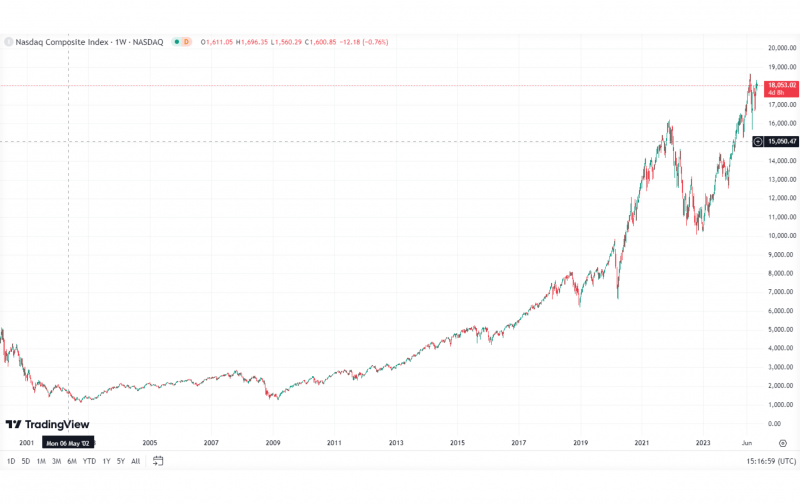
However, this volatility is often accompanied by significant growth potential. The companies leading technological shifts and market disruption are frequently found within the Nasdaq, offering investors the opportunity for substantial capital appreciation over the long term. Historically, despite periods of significant drawdowns, the Nasdaq indices have demonstrated impressive recovery and long-term growth, reflecting the enduring human drive for innovation and progress. Investors should approach Nasdaq investments with a long-term perspective and an understanding of their own risk tolerance.
The Nasdaq’s Role in the Global Financial Landscape
Beyond being an investment vehicle, the Nasdaq indices play a crucial role in the broader global financial landscape. They serve as key economic indicators, influence investor sentiment, and reflect underlying shifts in the global economy. Their distinct composition and market focus give them a unique vantage point, making them indispensable tools for economists, analysts, and policymakers alike.
A Barometer for Technological Progress
Given its heavy concentration of technology and innovation-driven companies, the Nasdaq index, particularly the Nasdaq 100, acts as a de facto barometer for technological progress and the health of the digital economy. Its performance often mirrors the broader trends in innovation, venture capital funding, and the adoption of new technologies. A strong Nasdaq can signal robust R&D, successful product development, and strong consumer or enterprise demand for new solutions, while a struggling Nasdaq might indicate headwinds for tech companies or a shift in market priorities. This makes it a valuable metric for tracking the pace and direction of technological advancement globally.
Impact on Investor Sentiment and Market Trends
The performance of the Nasdaq indices significantly influences overall investor sentiment, particularly among growth-oriented investors. Strong performance can foster optimism, encouraging greater risk-taking and capital allocation towards innovative sectors. Conversely, sharp declines can trigger broader market caution, impacting sentiment across different exchanges and asset classes. Nasdaq’s movements are often closely watched for clues about future economic trends, making it a bellwether for market cycles related to growth and innovation. Its pronounced influence stems from the sheer size and global reach of its constituent companies, many of which are household names with significant economic power.
Regulatory Framework and Market Integrity
The Nasdaq Stock Market, and by extension its indices, operates under the robust regulatory framework of the U.S. Securities and Exchange Commission (SEC). This oversight ensures fair and orderly markets, investor protection, and transparency. Companies listed on Nasdaq are subject to stringent reporting requirements, corporate governance standards, and rules designed to prevent market manipulation. This commitment to market integrity is fundamental to investor confidence and the efficient functioning of the capital markets. The regulatory environment surrounding Nasdaq helps ensure that the indices accurately reflect the underlying value and performance of its constituent companies, providing a reliable benchmark for financial professionals and individual investors alike.
Beyond the Index: The Future of Nasdaq
The Nasdaq organization is not static; it continually evolves, adapting to new technologies and global market dynamics. While its indices remain a core focus, Nasdaq’s broader vision encompasses advancements in trading technology, global expansion, and catering to the ever-changing needs of issuers and investors. This forward-looking approach ensures that Nasdaq remains at the forefront of financial innovation.
Innovation in Trading Technology
True to its roots as an electronic exchange, Nasdaq continues to be a pioneer in trading technology. It constantly invests in and develops cutting-edge systems to enhance speed, efficiency, and security of transactions. This includes exploring blockchain technology for certain market functions, leveraging artificial intelligence for market surveillance, and continuously optimizing its matching engines. These technological advancements not only benefit its own exchange operations but also influence the broader financial infrastructure, setting benchmarks for other markets globally. The future of Nasdaq trading will likely see even greater automation, algorithmic intelligence, and cybersecurity measures.
Global Expansion and New Markets
Nasdaq’s influence extends far beyond the U.S. borders. It operates exchanges and provides technology solutions to markets around the world. Its strategy involves continuous global expansion, identifying new emerging markets, and deepening its presence in established international financial centers. This global footprint allows Nasdaq to list a diverse range of companies from various geographies and offer investors access to a broader spectrum of international growth opportunities. As capital markets become increasingly interconnected, Nasdaq’s global reach will likely continue to expand, facilitating cross-border investment and fostering international economic development.
Adapting to Evolving Investor Needs
The investing landscape is constantly changing, driven by new demographics, technological shifts, and evolving financial goals. Nasdaq is actively adapting to these changes by exploring new listing requirements for nascent industries (e.g., SPACs, direct listings), offering data analytics tools for investors, and enhancing its educational resources. It recognizes the growing importance of environmental, social, and governance (ESG) factors in investment decisions and is developing products and services to cater to these demands. By remaining agile and responsive to the needs of issuers and investors, Nasdaq aims to maintain its relevance as a leading force in the financial markets, driving capital towards the innovations that will define our collective future.
aViewFromTheCave is a participant in the Amazon Services LLC Associates Program, an affiliate advertising program designed to provide a means for sites to earn advertising fees by advertising and linking to Amazon.com. Amazon, the Amazon logo, AmazonSupply, and the AmazonSupply logo are trademarks of Amazon.com, Inc. or its affiliates. As an Amazon Associate we earn affiliate commissions from qualifying purchases.