
Understanding what drives mortgage rates is not merely an academic exercise; it’s a critical component of personal finance, real estate investment, and macroeconomic insight. For millions of homeowners and prospective buyers, the difference of even a quarter or half-point on a mortgage rate can translate into tens of thousands of dollars over the lifetime of a loan, significantly impacting affordability and financial planning. These rates, which dictate the cost of borrowing money to purchase a home, are not set in a vacuum. Instead, they are the product of a complex interplay of forces, ranging from the actions of central banks to global economic sentiment and individual borrower characteristics. Deciphering these drivers provides a clearer picture of the housing market, investment opportunities, and the broader financial landscape, empowering individuals to make more informed decisions about one of life’s most significant financial commitments.
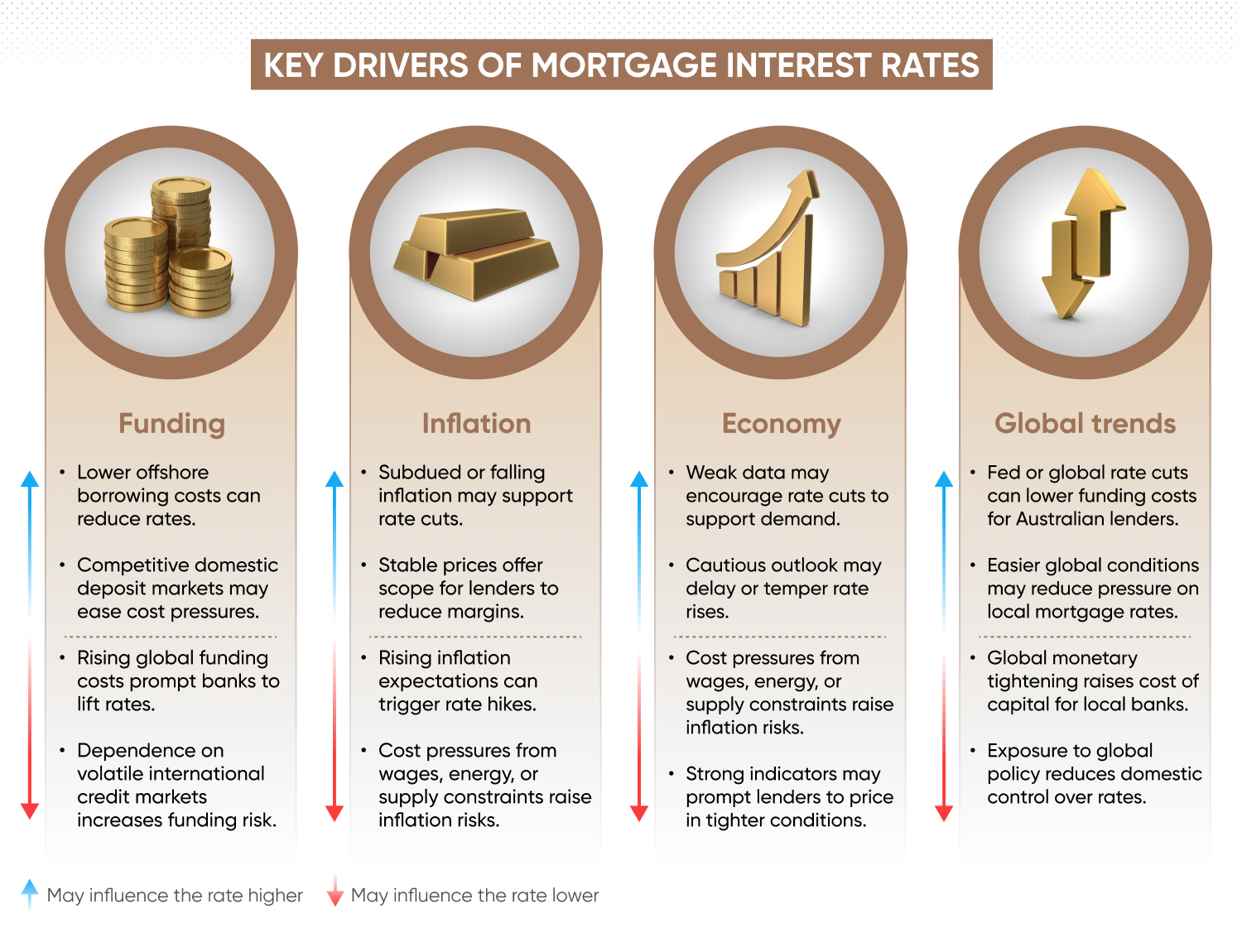
The Federal Reserve and Monetary Policy: The Orchestrator
At the heart of interest rate movements, including those for mortgages, lies the influence of the U.S. Federal Reserve. As the nation’s central bank, the Fed plays a pivotal role in shaping monetary policy, primarily through its efforts to manage inflation, maintain maximum employment, and ensure stable long-term interest rates. While the Fed does not directly set mortgage rates, its actions create a ripple effect that permeates the entire financial system.
The Federal Funds Rate’s Ripple Effect
The most direct tool the Federal Reserve employs is the setting of the target range for the federal funds rate. This is the interest rate at which commercial banks lend and borrow excess reserves from each other overnight. While the federal funds rate is a short-term rate, changes to it influence other short-term rates across the economy. More importantly, the market perceives changes in the federal funds rate as a signal of the Fed’s overall stance on monetary policy. When the Fed raises rates, it signals an intention to cool down an overheating economy and curb inflation, typically leading to higher yields on longer-term bonds, which mortgage rates closely track. Conversely, rate cuts are intended to stimulate economic growth, often resulting in lower bond yields and, consequently, lower mortgage rates. The market anticipates these moves, often pricing them in even before official announcements, creating a dynamic feedback loop.
Quantitative Easing and Tightening
Beyond the federal funds rate, the Federal Reserve has other powerful tools at its disposal, particularly in times of economic crisis or prolonged stagnation. Quantitative Easing (QE) involves the Fed purchasing large quantities of government bonds and mortgage-backed securities (MBS) from the open market. The goal of QE is to inject liquidity into the financial system, drive down long-term interest rates, and encourage borrowing and investment. By increasing demand for MBS, the Fed directly pushes down their yields, making mortgages cheaper. Conversely, Quantitative Tightening (QT), where the Fed reduces its bond holdings, has the opposite effect. By selling off or allowing its bonds to mature without reinvestment, the Fed reduces demand for these securities, which can lead to higher yields and, by extension, higher mortgage rates. These programs are often complex and their full impact takes time to unfold, but their influence on the mortgage market is undeniable.
Inflation Expectations
A significant, albeit indirect, driver influenced by the Fed’s stance is inflation expectations. Lenders, like all investors, are concerned about the purchasing power of the money they will be repaid in the future. If inflation is expected to rise, the fixed payments received on a mortgage will be worth less in real terms. To compensate for this anticipated loss in purchasing power, lenders will demand a higher interest rate on new loans. The Federal Reserve’s primary mandate is price stability, meaning keeping inflation in check. When the Fed signals a strong commitment to combating inflation, it can help anchor inflation expectations, potentially leading to lower long-term rates. However, if the market believes the Fed is behind the curve or ineffective in controlling inflation, long-term rates, including mortgages, are likely to climb as investors demand a higher premium for lending money over extended periods.
Economic Indicators and Market Sentiment: The Barometer
While the Federal Reserve sets the stage, the performance of the broader economy provides the immediate impetus for rate movements. Mortgage rates are highly sensitive to economic data releases, as these indicators offer insights into the health and direction of the economy, influencing market participants’ risk appetite and expectations.
Inflation Data
Inflation is arguably the most critical economic indicator for mortgage rates. Reports such as the Consumer Price Index (CPI) and the Producer Price Index (PPI) measure changes in the cost of goods and services. Sustained high inflation erodes the value of future loan repayments, prompting lenders to demand higher interest rates to compensate for the diminished purchasing power. Moreover, persistent inflation often forces the Federal Reserve to adopt a more aggressive stance, raising the federal funds rate, which then trickles down to affect mortgage rates. Conversely, low or falling inflation can provide the Fed with room to ease monetary policy, potentially leading to lower mortgage rates.
Employment Reports
Job market statistics, including the unemployment rate, non-farm payrolls, and wage growth, offer a robust snapshot of economic health. A strong job market, characterized by low unemployment and consistent job creation, signals a robust economy with confident consumers and businesses. This generally leads to increased demand for credit, including mortgages, and can put upward pressure on interest rates. High employment also suggests greater consumer spending and potentially inflationary pressures, further pushing rates up. Conversely, a weakening job market can signal an impending economic slowdown or recession, which typically leads to lower demand for credit and downward pressure on interest rates.
GDP Growth
Gross Domestic Product (GDP) measures the total value of goods and services produced in an economy. Robust GDP growth indicates a healthy and expanding economy, often accompanied by increased business activity, consumer spending, and demand for housing. In such an environment, lenders anticipate higher demand for loans and may increase rates. Conversely, sluggish or negative GDP growth signals economic contraction, leading to reduced demand for credit and downward pressure on rates. Essentially, strong economic performance implies greater competition for available capital, driving up its cost.
Consumer Confidence and Housing Market Data
Beyond these headline figures, broader market sentiment and specific housing market data also play a role. Consumer confidence surveys reflect households’ perceptions of their financial situation and the economy’s future. High confidence can translate into increased spending and homebuying, impacting demand and indirectly influencing rates. Similarly, housing market data, such as existing home sales, new home starts, and housing inventory, provide real-time insights into supply and demand dynamics within the housing sector. A booming housing market with high demand can tolerate higher rates, while a cooling market might see rates adjust downward to stimulate activity.
The Bond Market: The True Mechanism
While the Fed and economic data set the context, the actual day-to-day fluctuations in mortgage rates are most directly tied to the highly liquid and dynamic bond market, particularly the market for U.S. Treasury securities and Mortgage-Backed Securities (MBS).
The 10-Year Treasury Yield
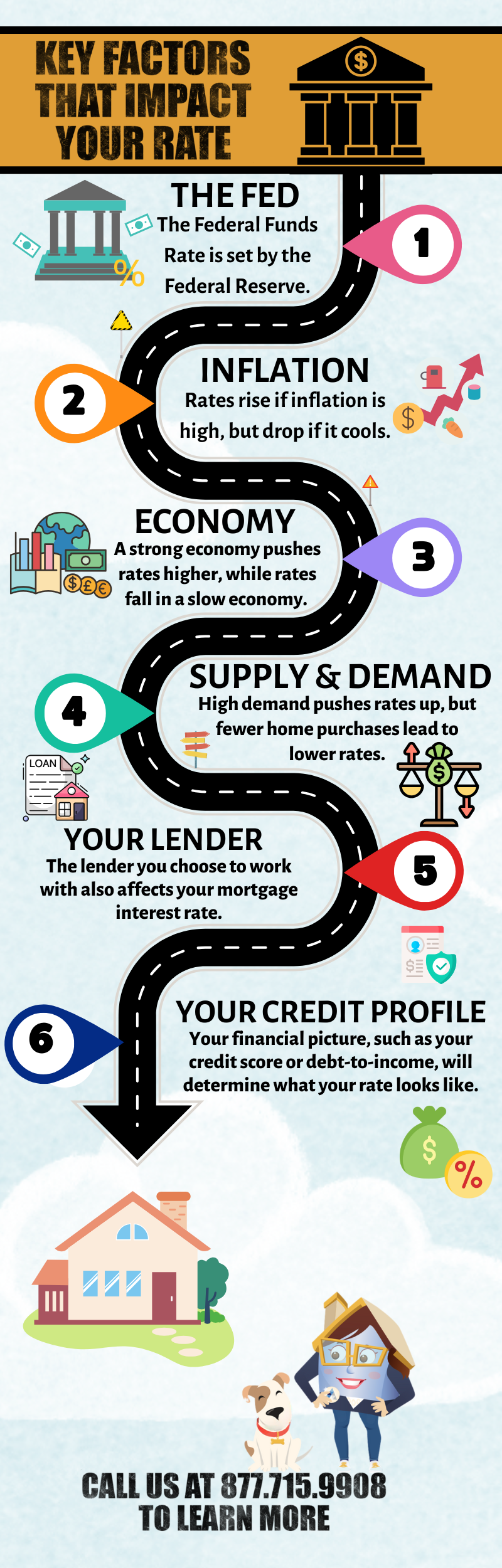
The yield on the 10-year U.S. Treasury note is often considered a benchmark for long-term interest rates and has a remarkably strong correlation with the 30-year fixed mortgage rate. This is because both instruments represent long-term debt, and investors frequently weigh their relative attractiveness. When the yield on the 10-year Treasury rises, it signals that investors are demanding a higher return for holding government debt over the long term. Mortgage lenders, who bundle mortgages into securities and sell them to investors, must offer a competitive yield to attract buyers, meaning mortgage rates will typically move in tandem with the 10-year Treasury. Factors influencing the 10-year Treasury yield include inflation expectations, the Fed’s monetary policy, and global demand for safe-haven assets.
Mortgage-Backed Securities (MBS)
Mortgage-Backed Securities (MBS) are investment vehicles that derive their value from pools of mortgages. Lenders originate mortgages, bundle them together, and then sell these bundles as securities to investors on the secondary market. The interest rate on a mortgage is ultimately determined by the yield that investors demand for MBS. When investors demand a higher yield on MBS, the rates on new mortgages must rise to make the securities attractive. Conversely, when investors are willing to accept lower yields, mortgage rates can fall. The supply and demand dynamics in the MBS market are critical. Factors like the volume of new mortgages being originated, the level of investor appetite for these securities, and the perceived risk of default within the mortgage pool all influence MBS yields.
Supply and Demand in the Bond Market
Like any other commodity, the price of bonds (and inversely, their yield) is determined by supply and demand. When there is high demand for U.S. bonds (e.g., from institutional investors, foreign governments seeking safe investments, or during times of global uncertainty), bond prices rise, and their yields fall. This translates to lower mortgage rates. Conversely, when the supply of bonds increases (e.g., due to increased government borrowing to fund deficits) or demand wanes, bond prices fall, and yields rise, pushing mortgage rates higher. Geopolitical events, shifts in global capital flows, and the fiscal health of the U.S. government can all significantly impact this delicate balance.
Lender-Specific Factors and Loan Characteristics: The Individual Touch
While macroeconomic forces set the general direction, individual borrowers and specific loan characteristics introduce variability into the rates offered by lenders. Not everyone qualifies for the lowest advertised rates, and slight differences in a loan’s structure can significantly alter its cost.
Borrower’s Creditworthiness
A borrower’s credit score (FICO score) is a primary determinant of the interest rate they are offered. A higher credit score signals a lower risk of default to lenders, allowing them to offer more favorable rates. Lenders assess a borrower’s credit history, payment habits, and outstanding debt to gauge their reliability. A strong credit profile (typically 740 and above) often qualifies a borrower for the best rates, while lower scores will result in higher rates to compensate the lender for the increased risk. Other factors, such as the debt-to-income (DTI) ratio, also play a crucial role; a high DTI indicates less disposable income to cover mortgage payments, potentially leading to a higher rate.
Loan-to-Value (LTV) Ratio
The Loan-to-Value (LTV) ratio compares the amount of the mortgage to the appraised value of the home. A larger down payment results in a lower LTV, signifying less risk for the lender. Borrowers with lower LTVs (e.g., making a 20% or greater down payment) often secure better interest rates because the lender has a smaller financial exposure and more equity protecting their investment in case of default. Conversely, a higher LTV (e.g., a small down payment) often necessitates private mortgage insurance (PMI) and can result in higher interest rates.
Loan Type and Term
The type and term of the mortgage loan also profoundly influence the rate.
-
Fixed-Rate vs. Adjustable-Rate Mortgages (ARMs): Fixed-rate mortgages offer a constant interest rate over the loan’s life, providing stability. ARMs, however, have initial fixed periods followed by periodic adjustments based on a market index. ARMs typically start with lower interest rates than fixed-rate mortgages because the borrower, not the lender, assumes more interest rate risk over time.
-
Loan Term: Shorter-term loans (e.g., 15-year fixed) generally carry lower interest rates than longer-term loans (e.g., 30-year fixed). This is because lenders are exposed to interest rate risk for a shorter period, and the overall principal repayment is faster.
-
Government-Backed vs. Conventional Loans: FHA, VA, and USDA loans are government-insured mortgages designed to help specific borrower groups. While they often have less stringent credit requirements or lower down payments, their rates can differ from conventional loans due to associated fees and insurance premiums.
Lender’s Overhead and Profit Margins
Each mortgage lender has its own operational costs, including staffing, technology, marketing, and regulatory compliance. These overhead expenses, along with the desired profit margin, are factored into the interest rates they offer. Highly efficient lenders with lower overhead or those operating with tighter profit margins might be able to offer slightly more competitive rates. The competitive landscape among lenders also plays a role; in a crowded market, lenders may lower rates to attract borrowers, while in a less competitive environment, rates might be higher.
Global Events and Geopolitical Factors: The Unpredictable Variable
While domestic economic fundamentals and monetary policy are primary drivers, global events and geopolitical shifts can introduce significant volatility and unpredictability into mortgage rates, often overriding or accelerating trends.
International Economic Stability
The economic health of major global economies, such as China, Europe, or Japan, can have ripple effects on U.S. interest rates. For instance, an economic downturn in a major trading partner could reduce global demand, potentially leading to lower inflation expectations and a “flight to safety” among investors seeking stable U.S. assets. This increased demand for U.S. Treasuries can drive down their yields and, consequently, mortgage rates. Conversely, strong global growth might lead to higher demand for capital worldwide, pushing up rates.

Geopolitical Uncertainty
Events like wars, trade disputes, political instability in critical regions, or global pandemics can create significant uncertainty in financial markets. During periods of heightened geopolitical tension, investors often seek the perceived safety of U.S. Treasury bonds. This increased demand for “safe-haven” assets drives up bond prices and pushes down their yields, which can temporarily lead to lower mortgage rates. However, prolonged instability can also disrupt supply chains, fuel inflation, or damage global economic growth, eventually putting upward pressure on rates. The precise impact often depends on the nature and duration of the crisis, making it one of the most challenging factors to predict.
In conclusion, mortgage rates are not static figures but rather a dynamic reflection of a highly interconnected global financial ecosystem. From the deliberate actions of the Federal Reserve to the ebbs and flows of economic indicators, the intricate dance of the bond market, and the individualized profile of each borrower, numerous forces converge to determine the cost of homeownership. Understanding these multifaceted drivers empowers individuals to navigate the housing market with greater confidence, make strategic financial decisions, and adapt to the ever-changing economic landscape. Staying informed about monetary policy signals, key economic data releases, and shifts in bond market sentiment is crucial for anyone looking to secure or refinance a mortgage, transforming what seems like a complex mystery into a navigable financial challenge.
aViewFromTheCave is a participant in the Amazon Services LLC Associates Program, an affiliate advertising program designed to provide a means for sites to earn advertising fees by advertising and linking to Amazon.com. Amazon, the Amazon logo, AmazonSupply, and the AmazonSupply logo are trademarks of Amazon.com, Inc. or its affiliates. As an Amazon Associate we earn affiliate commissions from qualifying purchases.