
For millions of service members, veterans, and eligible surviving spouses, the dream of homeownership is made tangible and more affordable through the Department of Veterans Affairs (VA) loan program. A cornerstone benefit designed to honor military service, VA loans offer distinct advantages over conventional mortgages, with their interest rates often being a primary draw. Understanding what VA loan rates are, how they are determined, and what factors influence them is crucial for anyone considering this powerful financial tool.
VA loan rates are the interest percentages applied to the principal amount borrowed for a VA-backed mortgage. These rates are not set by the VA itself, but rather by private lenders (banks, credit unions, mortgage companies) who participate in the program. The VA, however, guarantees a portion of these loans, which significantly reduces the risk for lenders. This guarantee is precisely what allows lenders to offer more favorable terms, including competitive rates, lower credit score requirements, and, most notably, the absence of private mortgage insurance (PMI). Navigating the landscape of VA loan rates requires a comprehensive understanding of market dynamics, lender specifics, and individual financial health.
Understanding VA Loan Rates: The Basics
The journey to securing a VA loan begins with a foundational understanding of how interest rates operate and the specific characteristics that define VA loan rates in particular. Unlike other loan types, the VA program has unique features that directly impact the rates veterans receive.
How VA Loan Rates Are Determined
While the VA provides the backing, the actual interest rate you receive is a product of several factors, primarily driven by the private lending market.
-
Overall Market Conditions: The broader economic environment plays the most significant role. Factors like the Federal Reserve’s monetary policy, inflation, bond market performance (particularly mortgage-backed securities), and the general supply and demand for credit all influence prevailing interest rates. When the economy is strong and inflation is a concern, rates tend to rise. Conversely, during economic slowdowns or periods of uncertainty, rates often fall.
-
Lender-Specific Pricing: Each lender has its own operational costs, risk assessment models, and profit margins. This means that while market rates provide a baseline, different lenders will offer slightly different rates for the same borrower on the same day. This emphasizes the importance of shopping around.
-
Borrower’s Creditworthiness: Your credit score is a critical indicator of your financial reliability. A higher credit score signals a lower risk to lenders, typically resulting in a lower interest rate. While the VA program is more forgiving with credit requirements than conventional loans, a stronger credit profile will always yield better terms.
-
Loan Term and Type: The length of your loan (e.g., 15-year vs. 30-year) and whether it’s a fixed-rate or adjustable-rate mortgage will also impact the rate. Shorter-term loans generally come with lower interest rates because the lender’s risk exposure is reduced.
-
Discount Points: Borrowers can sometimes “buy down” their interest rate by paying discount points upfront at closing. Each point typically costs 1% of the loan amount and reduces the interest rate by a certain fraction. This can be a strategic move if you plan to stay in the home for a long time.
Fixed-Rate vs. Adjustable-Rate VA Loans
Choosing between a fixed-rate and an adjustable-rate mortgage (ARM) is a fundamental decision that impacts your monthly payments for years to come.
-
Fixed-Rate VA Loans: The vast majority of VA loan borrowers opt for a fixed-rate mortgage. With this option, your interest rate remains constant for the entire duration of the loan, typically 15 or 30 years. This provides predictability and stability, as your principal and interest payment will never change. It’s an excellent choice for those who prefer consistent budgeting and are risk-averse to future rate increases.
-
Adjustable-Rate VA Loans (ARMs): VA ARMs typically feature an initial fixed-rate period (e.g., 3/1, 5/1, 7/1). During this period, the interest rate remains constant. After this initial period, the rate adjusts periodically (e.g., annually) based on a specified index plus a margin set by the lender. While ARMs can offer a lower initial interest rate than fixed-rate loans, they introduce the risk of significant payment increases if interest rates rise in the future. They might be suitable for borrowers who anticipate selling or refinancing before the fixed period ends or who are comfortable with potential payment fluctuations.
The Impact of Interest Rates on Your Monthly Payment
Even a seemingly small difference in interest rates can have a substantial impact on your monthly mortgage payment and the total cost of your loan over its lifetime. For instance, on a $300,000 30-year fixed-rate VA loan:
-
At 6.5% interest, your principal & interest payment would be approximately $1,896.
-
At 6.0% interest, your principal & interest payment would be approximately $1,799.
That $97 difference per month adds up to $34,920 over 30 years. This illustrates why securing the lowest possible rate is a primary goal for any borrower.
The Benefits of VA Loan Rates
The VA loan program stands out due to several unique advantages directly related to or influenced by its interest rates. These benefits are specifically designed to make homeownership more accessible and affordable for those who have served.
Competitive Interest Rates
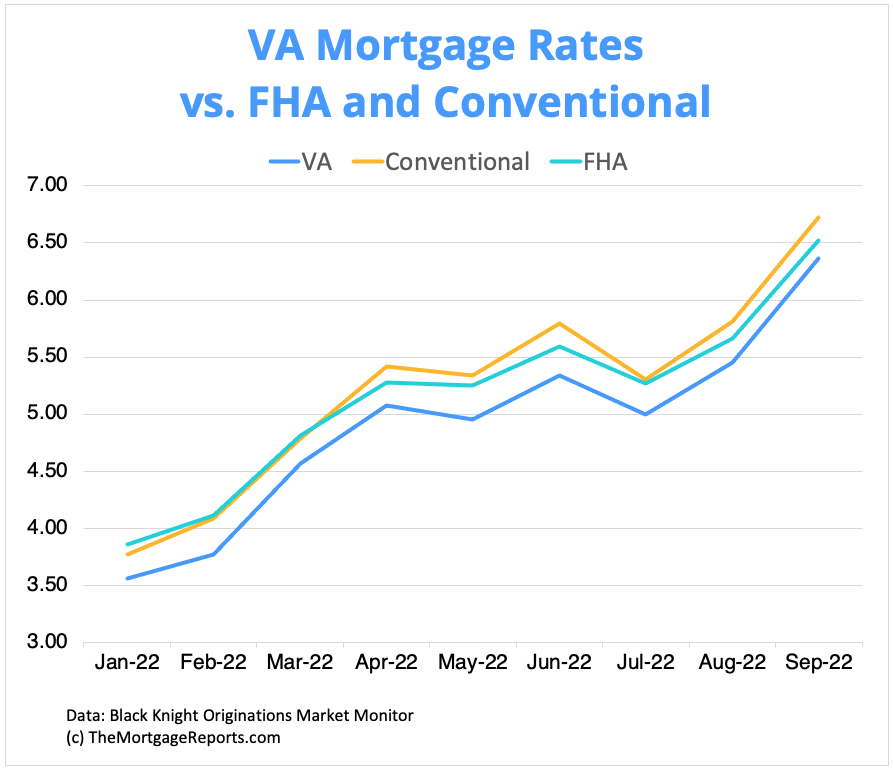
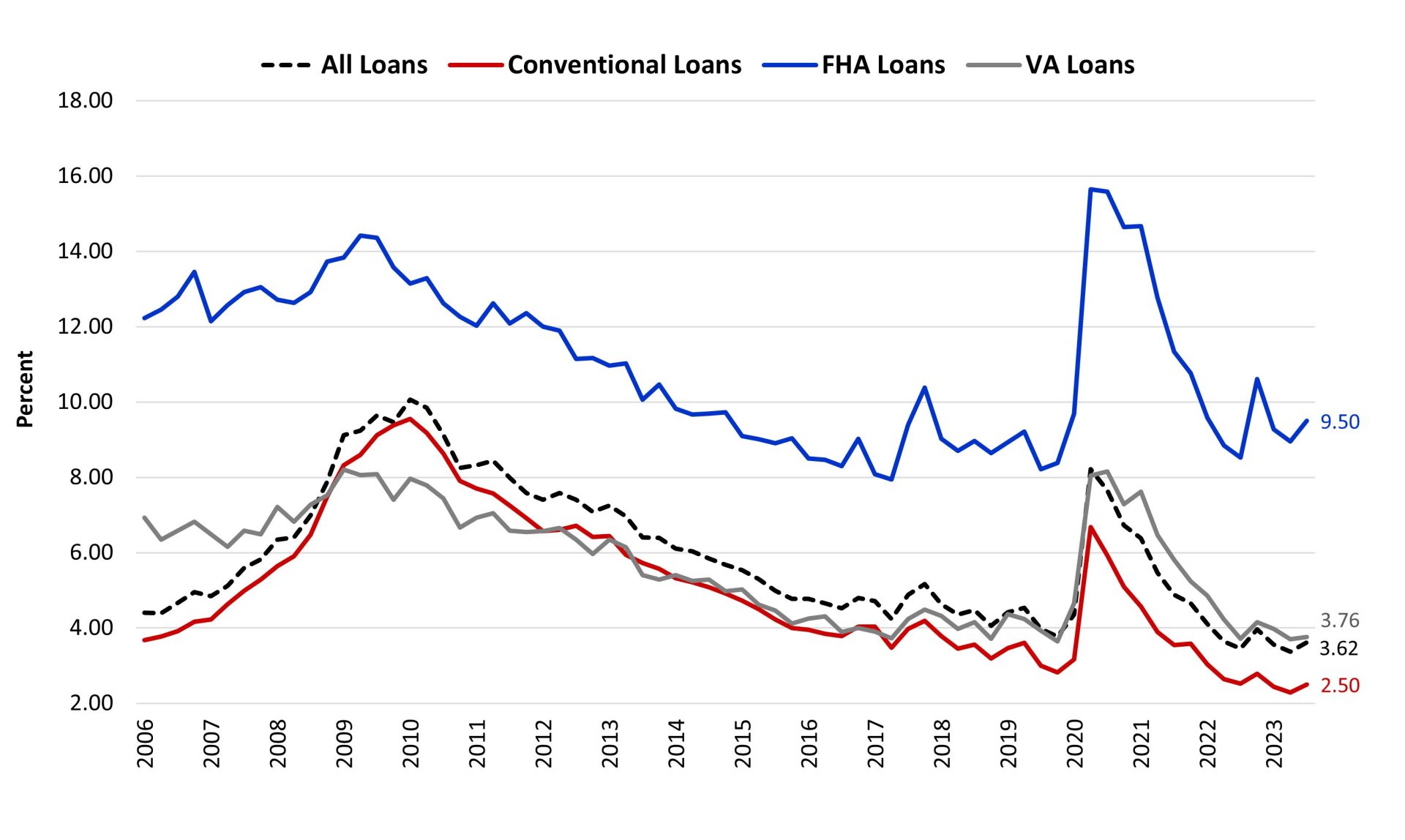
One of the most compelling aspects of VA loans is their consistently competitive interest rates. Because the VA guarantees a portion of each loan, the risk to lenders is significantly reduced compared to conventional loans. This lower risk translates into better rates for borrowers. Often, VA loan rates are lower than or comparable to conventional rates for borrowers with excellent credit, and they can be considerably lower for borrowers with average or good credit who might otherwise face higher rates on other loan products.
No Private Mortgage Insurance (PMI)
This is perhaps the biggest financial advantage of a VA loan beyond the rate itself. Unlike conventional loans where a down payment of less than 20% typically requires private mortgage insurance (PMI), VA loans never require PMI, regardless of the down payment amount (which can be 0%). PMI is an extra monthly fee designed to protect the lender if you default. Eliminating this cost can save borrowers hundreds of dollars per month, making the overall cost of homeownership much lower and freeing up funds for other expenses or savings.
Flexible Underwriting and Credit Requirements
While creditworthiness still plays a role in determining your specific rate, the VA program generally offers more flexible underwriting guidelines compared to conventional loans. This means that veterans who might have slightly lower credit scores or higher debt-to-income ratios than typically required by conventional lenders still have a strong chance of qualifying for a VA loan at a reasonable rate. This flexibility extends the opportunity of homeownership to a broader range of service members and veterans.
The VA Funding Fee (and Exemptions)
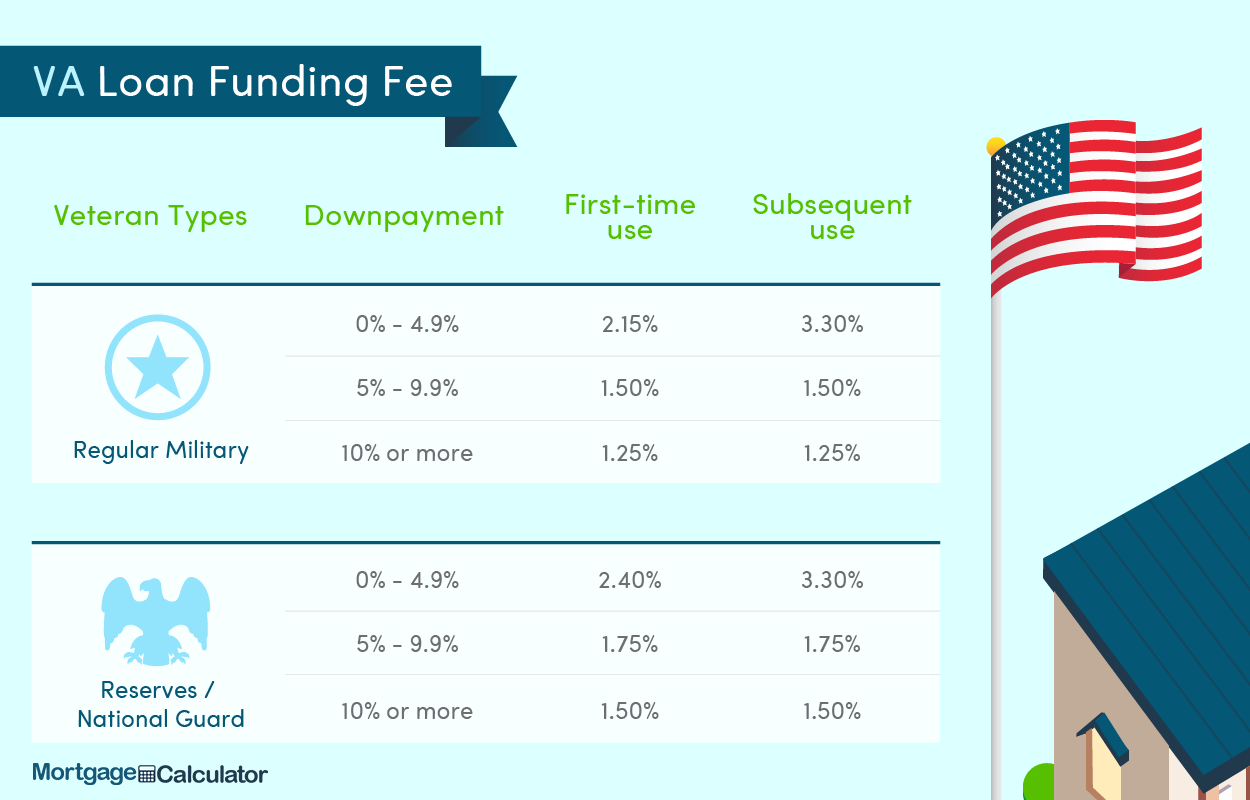
While VA loans avoid PMI, most do come with a one-time VA Funding Fee. This fee is a percentage of the loan amount and helps to offset the program’s cost to taxpayers, ensuring its continued availability. The amount of the funding fee varies based on the down payment amount, type of loan (purchase vs. refinance), and whether it’s the veteran’s first or subsequent use of the benefit. For example, a first-time user with a 0% down payment might pay a 2.15% funding fee, which can be financed into the loan.
However, a significant exemption exists: veterans receiving VA compensation for service-connected disabilities, as well as surviving spouses of veterans who died in service or from a service-connected disability, are typically exempt from paying the VA Funding Fee. This exemption provides another substantial cost saving for eligible individuals.
Navigating the VA Loan Rate Landscape
Securing the best possible VA loan rate requires more than just understanding the basics; it involves proactive steps and strategic decision-making.
Shopping Around for Lenders
As previously mentioned, the VA does not set rates; private lenders do. This means that rates can vary significantly from one lender to another. It is paramount to shop around and obtain quotes from multiple VA-approved lenders. Don’t just compare the interest rate; also look at closing costs, points, and the overall service experience. A seemingly small difference in rate or fees can save you thousands over the life of the loan. Use online comparison tools, but always follow up with direct conversations to get personalized quotes.
Improving Your Credit Score
Even with the VA’s flexible requirements, a higher credit score will almost always lead to a better interest rate. Before applying for a VA loan, take steps to improve your creditworthiness:
-
Pay Bills on Time: Payment history is the most critical factor in your credit score.
-
Reduce Existing Debt: Lowering your credit utilization ratio (how much credit you’re using versus how much you have available) can boost your score.
-
Avoid New Credit: Refrain from opening new credit accounts or taking on significant new debt in the months leading up to your loan application.
-
Check Your Credit Report: Obtain copies of your credit reports from all three major bureaus (Equifax, Experian, Transunion) and dispute any errors.
Understanding Loan Costs Beyond the Rate
The interest rate is a major component of your loan cost, but it’s not the only one. Closing costs can add several thousands of dollars to your upfront expenses. These include appraisal fees, title insurance, recording fees, and potentially discount points or origination fees. While the VA limits some fees lenders can charge, it’s essential to get a detailed Loan Estimate from each lender you consider, which outlines all associated costs. Understanding these can help you compare offers holistically.
The Role of Current Market Conditions
Interest rates are dynamic and can change daily, even hourly. Staying informed about current market trends can help you decide when to lock in a rate. If rates are trending downward, you might wait a bit, but if they are rising, locking in quickly might be beneficial. Your lender can provide insights into market conditions and advise on rate lock strategies. A rate lock guarantees your quoted interest rate for a specific period (e.g., 30, 45, or 60 days) while your loan processes.
Refinancing Options for VA Loans
VA loans don’t just help you buy a home; they also offer excellent refinancing opportunities for existing homeowners. These options can help veterans lower their interest rates, reduce monthly payments, or access home equity.
VA Streamline Refinance (IRRRL)
The Interest Rate Reduction Refinancing Loan (IRRRL), often called a “VA Streamline,” is a highly popular and efficient refinancing option for veterans with an existing VA loan. Its primary purpose is to lower the interest rate on the current loan or convert an adjustable-rate VA loan into a fixed-rate one. Key benefits include:
-
Reduced Documentation: Often requires less paperwork, no appraisal, and no credit underwriting.
-
No Income Verification: Lenders usually don’t need to verify income or employment.
-
Lower Funding Fee: The funding fee for an IRRRL is typically lower (0.50%) and can be waived for disabled veterans.
-
No Cash-Out: You cannot take cash out with an IRRRL; it’s solely for rate and term adjustments.
This makes it a straightforward way to take advantage of falling interest rates or achieve more payment stability.
VA Cash-Out Refinance
For veterans looking to tap into their home’s equity, the VA Cash-Out Refinance is an excellent option. This type of refinance allows you to replace your existing mortgage (VA or non-VA) with a new VA loan that is larger than your current balance, with the difference paid to you as cash. The funds can be used for various purposes, such as debt consolidation, home improvements, college tuition, or other major expenses.
-
Replaces Current Loan: Can be used to refinance a conventional or FHA loan into a VA loan.
-
Accesses Equity: Allows you to take out cash up to 100% of your home’s appraised value (though some lenders cap it at 90-95%).
-
Requires Appraisal and Underwriting: Unlike the IRRRL, a cash-out refinance involves a full appraisal and credit underwriting, similar to a purchase loan.
-
Standard Funding Fee: The VA funding fee will apply based on the standard schedule.
When to Consider Refinancing
The decision to refinance depends on several factors:
-
Lower Interest Rates: If current market rates are significantly lower than your existing VA loan rate, an IRRRL could save you a substantial amount over time.
-
Changing Loan Type: Converting an ARM to a fixed-rate loan for payment stability.
-
Accessing Equity: If you have a clear need for a large sum of cash and sufficient home equity.
-
Debt Consolidation: Using a cash-out refinance to consolidate higher-interest debts into your lower-interest mortgage.
Always perform a break-even analysis to determine if the savings generated by a lower rate outweigh the closing costs associated with the refinance.
Common Misconceptions and Expert Tips
Despite the program’s extensive benefits, several myths and misunderstandings persist about VA loans. Dispelling these and offering expert advice can help veterans make informed decisions.
Myth: VA Loans are Hard to Get
This is a common misconception. While there are specific eligibility requirements (Certificate of Eligibility), the actual process of applying for and securing a VA loan is often no more complex than other mortgage types, and in some aspects, it’s easier due to flexible underwriting. The key is to work with experienced lenders who specialize in VA loans.
Myth: Only First-Time Homebuyers Can Use VA Loans
False. The VA loan benefit is not a one-time use program. As long as you have your entitlement, you can use a VA loan multiple times throughout your life, provided you meet the occupancy and other eligibility requirements. You can even have more than one VA loan at a time in certain situations, especially if you move to a new duty station.
Expert Tip: Get Pre-Approved
Getting pre-approved for a VA loan is one of the most crucial steps in the home-buying process. Pre-approval means a lender has reviewed your financial information (credit, income, assets) and determined how much you can borrow.
-
Know Your Budget: Helps you understand your affordable price range.
-
Stronger Offers: Makes your offer more attractive to sellers, especially in competitive markets, as it shows you are a serious and qualified buyer.
-
Streamlined Process: Speeds up the closing process once you find a home.
Expert Tip: Work with a VA-Experienced Lender
While many lenders offer VA loans, working with one that specializes in them can make a significant difference. VA-experienced lenders understand the nuances of the program, including specific documentation, appraisal requirements, and the unique challenges and opportunities veterans face. They can provide accurate advice, streamline the process, and help you navigate potential hurdles more effectively than a general mortgage lender.
Conclusion
VA loan rates are a significant benefit for eligible service members, veterans, and surviving spouses, offering a pathway to affordable homeownership often characterized by lower interest rates, zero down payment options, and the absence of private mortgage insurance. While the VA guarantees these loans, the specific interest rates are determined by private lenders and influenced by broader market conditions, individual creditworthiness, and the chosen loan structure.
To secure the most favorable VA loan rate, it is essential to be proactive: shop around for multiple lender quotes, strive to improve your credit score, understand all associated costs beyond the interest rate, and stay informed about market trends. Furthermore, exploring VA refinancing options like the Streamline (IRRRL) or Cash-Out refinance can provide ongoing financial advantages throughout your homeownership journey. By dispelling common myths and following expert advice, veterans can fully leverage this invaluable benefit, making their homeownership dreams a reality with greater financial ease and stability.
aViewFromTheCave is a participant in the Amazon Services LLC Associates Program, an affiliate advertising program designed to provide a means for sites to earn advertising fees by advertising and linking to Amazon.com. Amazon, the Amazon logo, AmazonSupply, and the AmazonSupply logo are trademarks of Amazon.com, Inc. or its affiliates. As an Amazon Associate we earn affiliate commissions from qualifying purchases.