
The prime lending rate is a fundamental benchmark in the financial world, acting as a crucial indicator for countless loans and financial products across the globe. For anyone looking to borrow money, open a credit line, or simply understand the broader economic landscape, knowing “what is the current prime lending rate” is more than just a passing curiosity – it’s a vital piece of information that directly impacts their financial well-being. This rate influences everything from the interest on your credit card balance and car loan to the mortgage payments on your home and the cost of capital for businesses, large and small. It’s not a static number but rather a dynamic figure that reflects the health and direction of the economy, guided by the decisions of central banks and global market forces. Understanding its mechanics, its current standing, and its potential future trajectory is essential for making informed financial decisions in an ever-evolving economic climate.

Understanding the Prime Rate: A Core Concept in Finance
To truly grasp the significance of the prime lending rate, one must first understand its foundational elements, its relationship with central bank policies, and how it is ultimately determined. It serves as the lowest interest rate at which commercial banks will lend to their most creditworthy corporate customers, and by extension, it heavily influences rates offered to everyday consumers.
Definition and Origins of the Prime Rate
At its most basic level, the prime rate is an interest rate used by banks as a base for many variable-rate loans. It represents the lending rate offered to their most financially sound clients. Historically, it emerged as a mechanism for banks to price loans to their strongest corporate borrowers, those with minimal risk of default. This “prime” rate then became the foundation upon which other interest rates were built, with less creditworthy borrowers, or those taking on higher-risk loans, being charged the prime rate plus an additional spread. This tiered system allowed banks to manage risk effectively while still participating in the lending market. Today, while it retains its historical meaning, its practical application has broadened to include a wide array of consumer and business loans.
The Federal Funds Rate’s Influence
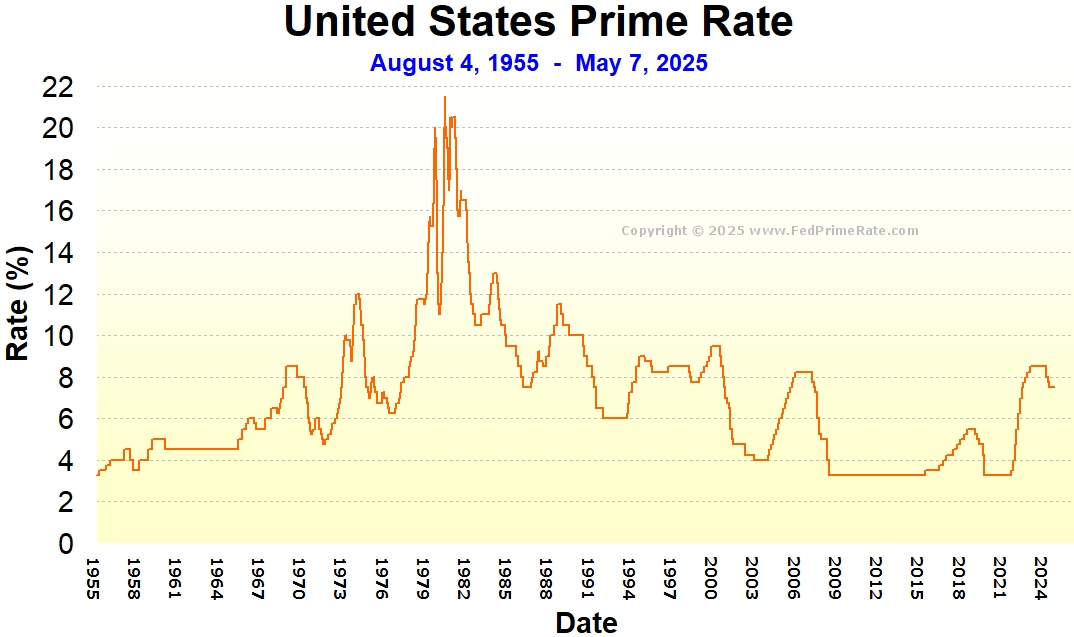
While commercial banks set their own prime rates, these decisions are not made in a vacuum. The most significant external factor influencing the prime rate, particularly in the United States, is the target federal funds rate set by the Federal Open Market Committee (FOMC) of the Federal Reserve. The federal funds rate is the interest rate at which commercial banks lend their excess reserves to other banks overnight. When the Fed raises or lowers this target rate, it sends a clear signal to the market about the desired direction of interest rates. Banks, in turn, adjust their prime rate in lockstep with the federal funds rate, typically adding a fixed spread (historically around 3% in the U.S.) to the upper bound of the federal funds rate target. This tight correlation means that changes in Fed policy almost immediately translate into changes in the prime rate, creating a direct link between monetary policy and the cost of borrowing for individuals and businesses. Other central banks globally operate similarly, using their respective policy rates to influence their domestic prime rates.
Who Sets the Prime Rate?
Unlike a single entity publishing the prime rate, each commercial bank ultimately determines its own prime rate. However, due to the intense competition among financial institutions and the overwhelming influence of the central bank’s policy rate, there is a strong consensus. In practice, the prime rate quoted by major banks in a given country tends to be identical. For instance, in the U.S., if the federal funds rate target is between 5.25% and 5.50%, the commonly published prime rate will be 8.50% (5.50% + 3%). This uniformity is critical because it provides a consistent benchmark across the financial system, allowing borrowers and lenders alike to compare rates and understand pricing mechanisms. Financial news outlets and publications typically report this consensus rate as “the prime rate,” simplifying what is, in reality, a decentralized but highly synchronized decision-making process.
How the Prime Rate Impacts Your Finances
The prime lending rate is not merely an abstract economic indicator; it has tangible and often significant effects on the personal and business finances of millions. Its movements can either ease financial burdens or tighten them, depending on whether you are a borrower, a saver, or a business owner.
Variable-Rate Loans: Mortgages, HELOCs, and Credit Cards
One of the most direct impacts of a fluctuating prime rate is on variable-rate loans. These are financial products where the interest rate can change over the life of the loan, often tied directly to the prime rate.
-
Adjustable-Rate Mortgages (ARMs): While many mortgages are fixed-rate, ARMs are designed to adjust periodically (e.g., every one, three, five, or seven years) based on a specified index, which can be directly or indirectly influenced by the prime rate. If the prime rate rises, the interest rate on an ARM can increase, leading to higher monthly mortgage payments. Conversely, a falling prime rate could reduce payments.
-
Home Equity Lines of Credit (HELOCs): HELOCs are almost universally tied to the prime rate. They function much like a credit card, allowing you to borrow against the equity in your home up to a certain limit. As the prime rate moves, the interest rate on your HELOC balance adjusts, directly affecting your minimum monthly payment and the total cost of borrowing. A rising prime rate can significantly increase the cost of tapping into your home equity.
-
Credit Cards: The vast majority of credit cards have variable interest rates. The Annual Percentage Rate (APR) on a credit card is typically expressed as the prime rate plus a margin. Therefore, when the prime rate increases, so does the interest rate on your outstanding credit card balances, making it more expensive to carry debt. For consumers with significant credit card debt, even a small increase in the prime rate can add hundreds of dollars annually to interest payments.
-
Personal Loans and Auto Loans: While many personal and auto loans are fixed-rate, some may feature variable rates linked to the prime rate, especially if they are revolving lines of credit or specific types of dealer financing.
Business Lending and Small Business Loans
For businesses, especially small and medium-sized enterprises (SMEs), the prime rate is a critical factor in determining the cost of capital.
-
Lines of Credit: Many business lines of credit are directly tied to the prime rate. Businesses use these lines to manage cash flow, purchase inventory, or cover operational expenses. A higher prime rate means a higher cost to access these funds, potentially squeezing profit margins or limiting growth opportunities.
-
Term Loans: While some business term loans are fixed, many are variable, indexing to the prime rate plus a specific spread determined by the business’s creditworthiness. An increase in the prime rate directly translates to higher interest expenses, impacting a company’s profitability and ability to invest in expansion, equipment, or hiring.
-
Working Capital: The overall cost of working capital for businesses, which includes financing inventory and accounts receivable, is heavily influenced by the prime rate. Higher borrowing costs can make it more challenging for businesses to maintain adequate working capital, potentially leading to liquidity issues.
-
Impact on Investment Decisions: When borrowing costs rise due to an increased prime rate, businesses may reconsider or postpone investment projects that no longer meet their return on investment (ROI) thresholds. This can slow down economic growth and innovation.
Savings Accounts and Deposit Rates (Indirect Impact)
While the prime rate is explicitly a lending rate, its movements do have an indirect, though often delayed, impact on deposit rates offered to savers. When the central bank raises its policy rate (which in turn raises the prime rate), banks generally benefit from higher interest margins on their loans. To attract deposits to fund these loans, or simply to remain competitive, banks may eventually increase the interest rates they offer on savings accounts, money market accounts, and certificates of deposit (CDs). However, this transmission mechanism is often slower and less direct than the impact on lending rates. Banks typically adjust lending rates quickly to protect their profits, but they may be slower to pass on benefits to depositors. Nevertheless, in a rising rate environment driven by central bank actions, savers generally see improved returns on their cash holdings over time, though not always at the same pace or magnitude as the increase in borrowing costs.
Factors Influencing Prime Rate Fluctuations
The prime lending rate is not a static figure but a dynamic reflection of broader economic forces and monetary policy decisions. Its fluctuations are primarily driven by a confluence of economic indicators and the actions of central banks.
Inflationary Pressures and Economic Growth
One of the primary drivers of central bank policy, and thus the prime rate, is the state of inflation. When inflation is high and persistent, meaning that the general level of prices for goods and services is rising too rapidly, central banks typically respond by raising their benchmark interest rates. The goal is to cool down an overheating economy by making borrowing more expensive, thereby reducing demand and bringing inflation back to target levels. Conversely, during periods of low inflation or deflationary pressures, central banks might lower rates to stimulate economic activity.
Similarly, the pace of economic growth plays a significant role. A robust economy with strong employment figures and healthy GDP growth might prompt a central bank to consider raising rates to prevent overheating and curb potential inflationary pressures. In contrast, a stagnating or contracting economy with rising unemployment might lead a central bank to cut rates to encourage borrowing, spending, and investment, thereby stimulating growth. The delicate balance between managing inflation and fostering sustainable economic growth is a constant challenge for policymakers, and their responses directly manifest in prime rate adjustments.
Central Bank Monetary Policy Decisions
As discussed, the most direct and impactful determinant of the prime rate is the monetary policy set by a country’s central bank (e.g., the Federal Reserve in the U.S., the European Central Bank, the Bank of England). These institutions have mandates to maintain price stability, maximize employment, and ensure financial stability. To achieve these goals, they utilize a range of tools, with the setting of their benchmark interest rate being the most prominent.
When the central bank’s policy committee meets, it assesses various economic data—inflation, employment, GDP growth, consumer spending, business investment—to decide whether to raise, lower, or hold its policy rate steady. These decisions are then communicated to the public, often with detailed explanations of the economic outlook. Market participants, including commercial banks, react almost immediately to these announcements, adjusting their prime rates accordingly. The forward guidance provided by central banks—signals about their likely future policy actions—also heavily influences market expectations and can pre-emptively shift prime rate expectations, even before an official rate change occurs.
Global Economic Conditions and Geopolitical Events
While domestic factors and central bank policies are paramount, the prime rate is also influenced by broader global economic conditions and significant geopolitical events.
-
Global Interest Rate Trends: If major global economies are raising or lowering their interest rates, it can create pressure for other central banks to follow suit to maintain currency stability and capital flows. For instance, if the U.S. Fed raises rates aggressively, it can put upward pressure on rates in other countries to prevent capital from flowing out of their economies in search of higher returns.
-
Commodity Prices: Fluctuations in global commodity prices, particularly oil, can have a significant impact on inflation. A surge in oil prices can fuel inflation globally, prompting central banks to raise rates to counteract it.
-
Geopolitical Instability: Major geopolitical events such as wars, trade disputes, or significant political upheavals can create uncertainty in financial markets, disrupt supply chains, and impact economic sentiment. Such events can influence central bank decisions as they weigh the risks to economic stability and inflation. For example, a sudden global crisis might lead central banks to cut rates to provide liquidity and support the economy, while prolonged instability might lead to higher rates if it fuels inflation through supply shocks.
-
Currency Exchange Rates: The value of a country’s currency relative to others can also play a role. Central banks sometimes adjust interest rates to manage currency fluctuations, which can have ripple effects on inflation and economic competitiveness.
These interconnected global dynamics mean that the prime rate is never solely a reflection of domestic conditions but also a response to the wider international economic and political landscape.
Navigating a Changing Interest Rate Environment
Understanding the current prime lending rate is only half the battle; knowing how to strategically navigate its movements is crucial for financial success. Whether rates are rising, falling, or holding steady, proactive financial planning can help individuals and businesses optimize their borrowing costs and investment returns.
Strategies for Borrowers: Refinancing and Fixed-Rate Options
For borrowers, a dynamic prime rate environment presents both challenges and opportunities.
-
Consider Refinancing: If the prime rate has fallen significantly since you took out a variable-rate loan (like a HELOC or an ARM that’s about to adjust), it might be an opportune time to refinance. Refinancing allows you to replace your existing loan with a new one, potentially at a lower interest rate, reducing your monthly payments and total interest paid over the loan’s life. Even for fixed-rate loans, if market rates drop substantially, refinancing can be beneficial.
-
Lock in Fixed Rates: In a rising rate environment, or if you anticipate rates will climb in the future, consider converting variable-rate debt into fixed-rate debt. This can be done by refinancing an ARM into a fixed-rate mortgage or consolidating credit card debt into a fixed-rate personal loan. While fixed rates might be slightly higher initially, they offer predictability and protection against future rate increases, making budgeting easier and eliminating the risk of escalating payments.
-
Accelerate Debt Repayment: Paying down high-interest, variable-rate debt (like credit card balances or HELOCs) quickly is always a sound strategy, but it becomes even more critical when the prime rate is rising. Reducing your principal balance minimizes the impact of higher interest rates and frees up cash flow.
-
Shop Around for Loans: Always compare offers from multiple lenders. Even if the prime rate is a benchmark, the margin lenders add on top can vary significantly based on your creditworthiness and the lender’s policies. A seemingly small difference in the margin can lead to substantial savings over the life of a loan.
Opportunities for Savers and Investors
While rising rates can be challenging for borrowers, they often present a silver lining for savers and certain types of investors.
-
Higher Returns on Deposits: When the prime rate, and by extension, the central bank’s policy rate, increases, banks eventually offer higher interest rates on savings accounts, money market accounts, and Certificates of Deposit (CDs). This means your idle cash can earn more without taking on significant risk. It’s important to shop around for the best rates, as some online banks and credit unions often offer more competitive yields than traditional brick-and-mortar institutions.
-
Attractive Bond Yields: A rising rate environment typically means new bond issues offer higher yields to attract investors. For those with a lower risk tolerance, investing in high-quality government or corporate bonds can become more appealing as their yields increase, providing a better return on capital compared to periods of low interest rates.
-
Reassessing Investment Portfolios: Investors should review their portfolios in a changing rate environment. Sectors that are highly sensitive to interest rates, such as real estate investment trusts (REITs) or utilities, might be more impacted than others. Conversely, financial institutions often benefit from higher interest rates due to wider lending margins.
-
Dollar-Cost Averaging: For long-term equity investors, sticking to a dollar-cost averaging strategy can be beneficial, regardless of rate movements. Continuously investing a fixed amount over time helps smooth out market fluctuations and capitalizes on both high and low periods.
Consulting Financial Professionals
Given the complexities of economic cycles and their impact on personal and business finances, consulting with a qualified financial advisor, mortgage broker, or business consultant is invaluable.
-
Personalized Advice: A financial professional can provide personalized advice based on your specific financial situation, goals, and risk tolerance. They can help you understand how changes in the prime rate affect your existing loans and investments, and recommend tailored strategies.
-
Complex Product Navigation: Products like ARMs, HELOCs, and specific business financing options can be complex. A professional can help you decipher terms, compare offers, and ensure you’re making the best choices for your financial health.
-
Long-Term Planning: Beyond immediate adjustments, financial advisors can assist with long-term financial planning, helping you build a robust financial strategy that accounts for various interest rate scenarios, market volatility, and your evolving life circumstances.
-
Stay Informed: Professionals often have access to more detailed market insights and can help you stay ahead of potential rate changes, allowing for proactive rather than reactive decision-making.
In conclusion, the prime lending rate is a cornerstone of the financial system, directly influencing the cost of borrowing for both consumers and businesses. Its movements, dictated primarily by central bank policies in response to inflation and economic growth, demand constant attention. By understanding its impact and adopting strategic financial planning, individuals and businesses can better navigate the ebb and flow of interest rates, safeguarding their financial health and seizing opportunities as they arise.
aViewFromTheCave is a participant in the Amazon Services LLC Associates Program, an affiliate advertising program designed to provide a means for sites to earn advertising fees by advertising and linking to Amazon.com. Amazon, the Amazon logo, AmazonSupply, and the AmazonSupply logo are trademarks of Amazon.com, Inc. or its affiliates. As an Amazon Associate we earn affiliate commissions from qualifying purchases.