
In the landscape of modern media, SiriusXM stands as a titan of hybrid broadcasting technology. It is a premier American broadcasting company that provides satellite radio and online radio services to millions of subscribers across North America. Born from the high-stakes merger of two rivals, Sirius Satellite Radio and XM Satellite Radio, the platform has evolved from a niche automotive accessory into a sophisticated digital ecosystem. Today, SiriusXM represents the intersection of aerospace engineering, proprietary software development, and high-fidelity audio streaming, offering a unique alternative to traditional terrestrial radio and data-dependent streaming services.
The Evolution of Digital Broadcasting Technology
At its technical core, SiriusXM is defined by its delivery mechanism. Unlike traditional AM/FM radio, which relies on terrestrial towers transmitting analog signals over limited geographical distances, SiriusXM utilizes a complex network of satellites and ground repeaters to provide a seamless, continent-wide digital signal.
Satellite Infrastructure: How It Works
The backbone of the SiriusXM experience is its fleet of high-powered satellites positioned in geostationary and highly elliptical orbits. These satellites operate within the S-band spectrum (2.3 GHz), a frequency range specifically allocated for Digital Audio Radio Service (DARS). By broadcasting from roughly 22,000 miles above the Earth, SiriusXM can cover the entire contiguous United States, as well as parts of Canada and coastal waters.
The engineering feat lies in signal redundancy. Because satellite signals require a direct line of sight, physical obstructions like skyscrapers, tunnels, or dense foliage can cause “shadowing.” To counter this, SiriusXM employs a sophisticated “Space-Ground” hybrid architecture. In major metropolitan areas, the company maintains a vast network of terrestrial repeaters. These ground-based stations receive the satellite signal and re-broadcast it locally, ensuring that a driver moving through a “canyon” of skyscrapers in Manhattan or Chicago experiences zero latency or signal dropout.
The Ground-to-Space Signal Chain
The journey of a single audio track on SiriusXM is a marvel of modern telecommunications. Content is curated and processed at primary uplink facilities—most notably the massive broadcast centers in New York City and Washington, D.C. Here, audio is compressed using proprietary codecs designed to maximize fidelity while minimizing bandwidth consumption. The digital data is then beamed to the satellite fleet, which acts as a mirror in the sky, reflecting the signal back down to millions of proprietary receivers simultaneously. This “one-to-many” architecture is incredibly efficient, as it does not suffer from the bandwidth congestion that often plagues cellular-based streaming during high-traffic periods.
Hardware vs. Software: The SiriusXM Ecosystem
While many consumers interact with SiriusXM through their smartphone apps, the service’s legacy and technical strength remain rooted in integrated hardware. The evolution of SiriusXM hardware reflects the broader trends in consumer electronics, moving from standalone gadgets to deeply integrated vehicular systems and cross-platform software.
Proprietary Receivers and In-Car Integration
For much of its history, the “tuner” was the primary way to access SiriusXM. These devices contain specialized chipsets capable of decrypting the S-band signal and processing the proprietary conditional access system (CAS) that manages subscriptions. In the early 2000s, these were “plug-and-play” units that sat on dashboards. Today, the technology is almost entirely integrated into the head units of modern vehicles.
Automotive manufacturers work closely with SiriusXM engineers to embed satellite modules directly into the car’s infotainment system. This integration allows for features like “TuneStart,” which automatically begins a song from the beginning when a user switches channels, and “SmartFavorites,” which caches content from multiple stations simultaneously. This is achieved through a combination of hardware buffers (internal flash memory) and intelligent software background processing.
The Transition to IP-Based Streaming
As 4G and 5G connectivity became ubiquitous, SiriusXM expanded its technological footprint into Internet Protocol (IP) delivery. The SiriusXM app and web player represent a departure from satellite hardware, utilizing Content Delivery Networks (CDNs) to stream data over the internet.
This transition has allowed the company to offer a more interactive experience than satellite delivery alone permits. While satellite broadcasting is linear (everyone hears the same thing at the same time), the IP-based software allows for on-demand listening, personalized stations powered by Pandora’s “Music Genome Project” algorithms, and high-definition audio bitrates that exceed the constraints of the S-band spectrum.
Key Tech Features and User Experience
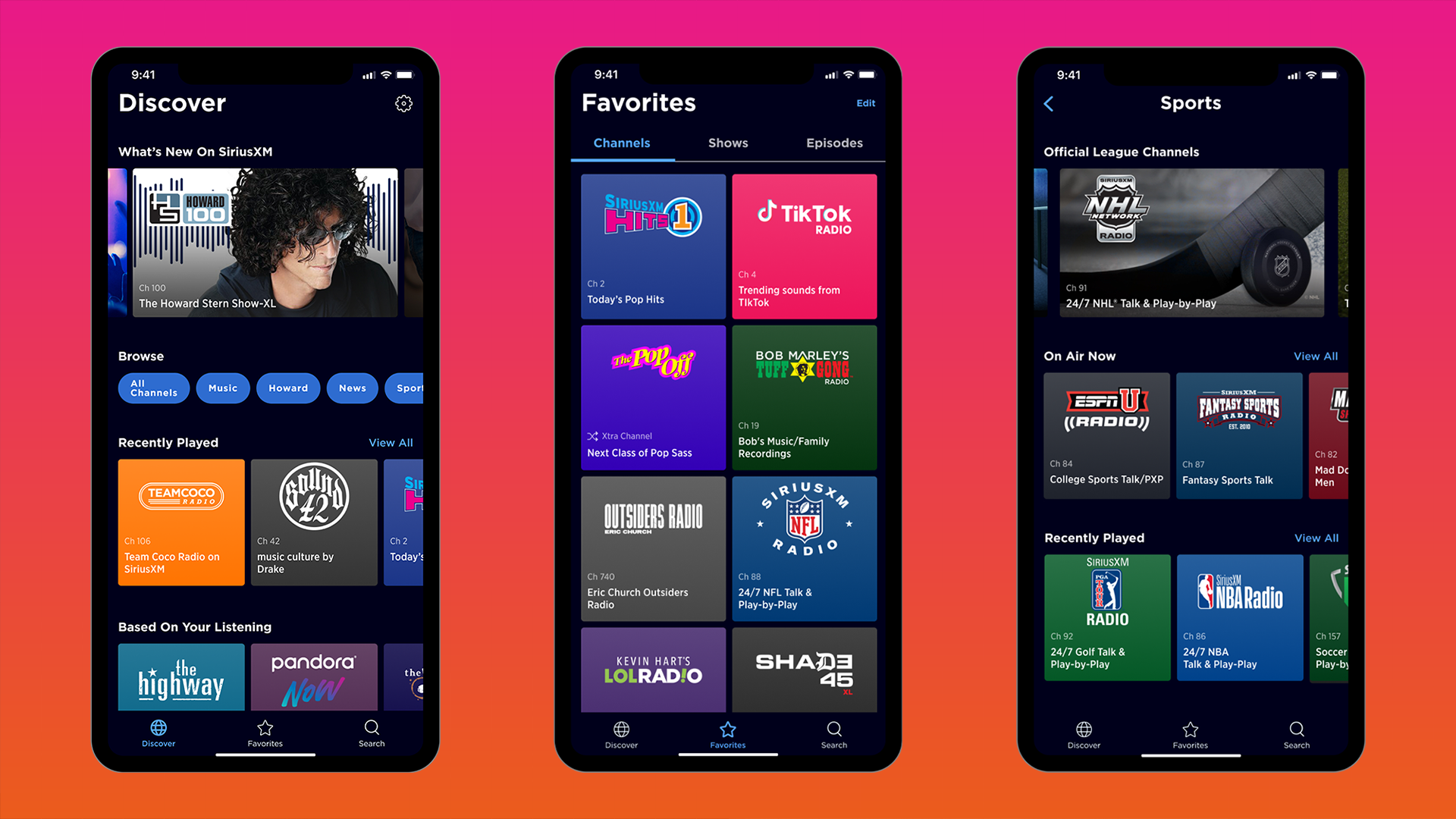
The modern SiriusXM interface is a study in digital curation and user-centric design. It bridges the gap between the “lean-back” experience of traditional radio and the “lean-forward” control of modern streaming apps.

Personalization and Algorithmic Discovery
Following SiriusXM’s acquisition of Pandora, the platform integrated sophisticated machine learning models into its software stack. For the user, this translates to a “For You” section that analyzes listening habits across both satellite and streaming platforms to suggest new channels, episodes, or artist-exclusive content.
The technology behind this involves complex data pipelines that track user engagement—skips, thumbs-up/down ratings, and session length—to refine a personalized content graph. Unlike purely algorithmic services, however, SiriusXM maintains a “human-in-the-loop” philosophy, where professional curators and DJs interact with the data to ensure the discovery process feels organic rather than purely mathematical.
The SiriusXM with 360L Platform
The pinnacle of the company’s current technology is the “360L” platform. This is a hybrid hardware-software solution found in newer vehicle models. 360L combines the reliability of satellite delivery with the interactivity of a cellular data connection.
If a user is driving in an area with a clear view of the sky, the system prioritizes the satellite signal to save on data costs and ensure stability. However, if the user wants to access on-demand content or personalized “Xtra” channels, the system seamlessly switches to the vehicle’s built-in LTE/5G modem. This “best of both worlds” approach ensures that the audio never stops, regardless of geographical or network constraints.
Security, Compression, and Audio Engineering
Maintaining a subscription-based broadcast service requires robust digital rights management (DRM) and highly efficient audio engineering to manage the limited bandwidth of satellite transponders.
Proprietary Audio Codecs
Satellite bandwidth is an extremely expensive and finite resource. To deliver hundreds of channels of music, talk, and sports, SiriusXM utilizes advanced perceptual audio coding. While the exact specifications are proprietary, the system uses a variable bit-rate (VBR) scheme that allocates more bandwidth to high-fidelity music channels while reducing the bit-rate for talk radio and news, where the human voice requires less data to remain intelligible. This intelligent multiplexing allows the service to maximize the utility of its allotted spectrum.
Signal Encryption and Subscription Management
Security is a critical component of the SiriusXM tech stack. Because the satellite signal is broadcast to an entire continent, the company must ensure that only active subscribers can decode it. This is handled through an “Over-the-Air” (OTA) activation and deactivation system.
Each receiver has a unique Radio ID. When a customer subscribes, a “refresh” signal is sent via satellite containing the authorization key for that specific ID. The receiver’s internal firmware processes this cryptographic key and “unlocks” the audio streams. Conversely, when a subscription expires, the system sends a deauthorization command. This complex management of millions of individual hardware nodes via a one-way broadcast medium is one of the most impressive aspects of the platform’s operational technology.
The Future of SiriusXM: Connected Cars and AI
As we look toward the future of digital media, SiriusXM is positioning itself at the center of the “connected cockpit.” The evolution of the platform is increasingly tied to the advancements in automotive technology and artificial intelligence.
Integration with Autonomous Vehicle Systems
As autonomous driving technology matures, the “driver” is becoming a “passenger,” leading to a projected surge in in-car media consumption. SiriusXM is developing next-generation interfaces that take advantage of larger dashboard screens and augmented reality (AR) displays. The goal is to transform the radio from an audio-only background service into a multi-sensory infotainment experience, incorporating real-time data overlays, video components, and interactive commerce.

AI-Driven Content Curation and Voice Control
Voice interface technology is another major frontier. By integrating with AI assistants like Alexa, Google Assistant, and proprietary automotive voice engines, SiriusXM is making its vast library of content more accessible. The tech focus here is on natural language processing (NLP) to allow users to make complex requests, such as “Play the interview with Howard Stern from three years ago” or “Find me a live sports broadcast featuring the Detroit Lions.”
In summary, SiriusXM is far more than just “radio.” It is a sophisticated technological platform that has successfully navigated the transition from analog-adjacent satellite broadcasting to a modern, AI-enhanced digital service. By leveraging a unique blend of aerospace infrastructure, proprietary hardware, and cutting-edge software, it continues to define the high-end audio experience for the modern, mobile world.#
aViewFromTheCave is a participant in the Amazon Services LLC Associates Program, an affiliate advertising program designed to provide a means for sites to earn advertising fees by advertising and linking to Amazon.com. Amazon, the Amazon logo, AmazonSupply, and the AmazonSupply logo are trademarks of Amazon.com, Inc. or its affiliates. As an Amazon Associate we earn affiliate commissions from qualifying purchases.