
Relocating with a beloved canine companion can be one of the most rewarding yet financially complex aspects of moving, especially when air travel is involved. The question of “how much to ship a dog on a plane” is far more intricate than a simple flat fee; it encompasses a spectrum of expenses ranging from direct airline charges to veterinary costs, specialized equipment, and potential ancillary services. For pet owners, understanding the financial landscape of pet air travel is paramount to effective budgeting and ensuring a smooth, stress-free journey for their furry family member. This guide delves deep into the monetary considerations, offering a clear roadmap for planning your pet’s flight from a financial perspective.

Understanding the Core Costs of Pet Air Travel
The primary financial outlay for shipping a dog on a plane typically revolves around a few fundamental categories. These are the non-negotiable expenses that form the backbone of your pet travel budget.
Airline Pet Fees: Carry-On vs. Cargo
The most immediate cost comes from the airline itself, which varies significantly based on whether your dog travels in the cabin or in the cargo hold.
-
Carry-On Pet Fees: For smaller dogs (typically under 20-25 lbs, including the carrier) that can fit under the seat in front of you, airlines charge a carry-on pet fee. This fee is usually a fixed amount per flight segment, often ranging from $95 to $150 for domestic flights and potentially higher for international routes. While seemingly straightforward, policies differ widely. Some airlines limit the number of pets per flight, necessitating early booking, and the carrier itself must meet specific dimensions.
-
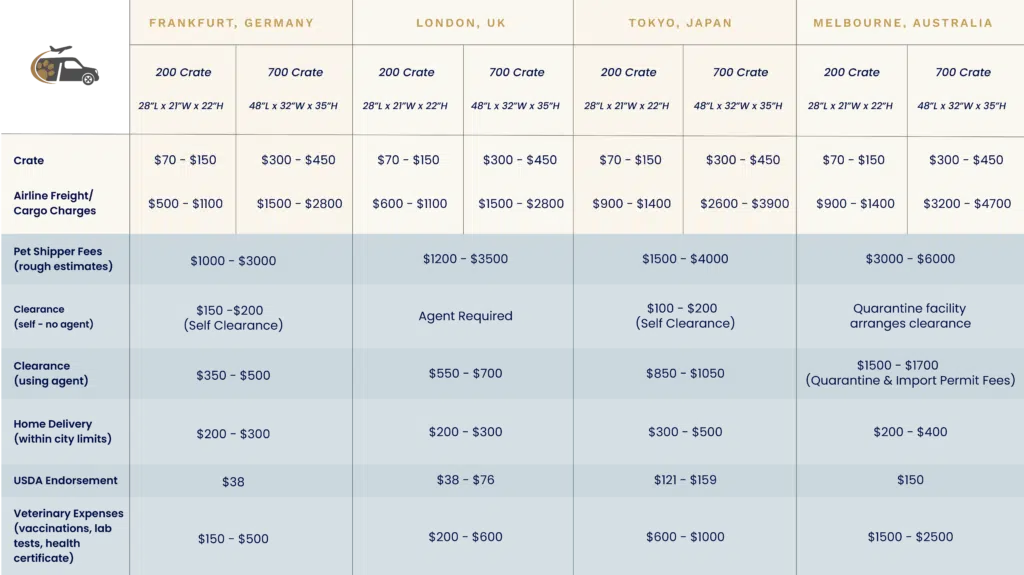
Cargo Pet Fees: Larger dogs, or those exceeding carry-on weight limits, must travel as checked baggage or through dedicated cargo services. This is where costs escalate considerably. Fees for cargo can range from $200 to over $1,000, depending on the airline, the dog’s size, and the distance of travel. International cargo shipments can easily exceed $2,000, particularly for larger breeds or complex routes. These fees often cover the space in a temperature-controlled, pressurized compartment, but do not necessarily include other vital components like a suitable crate or health checks.
Crate and Kennel Expenses: Safety as an Investment
A critical, often overlooked, expense is the cost of an airline-approved travel crate or kennel. This isn’t just a container; it’s a safety device designed to protect your pet during transit.
-
IATA Compliance: The International Air Transport Association (IATA) sets stringent guidelines for pet carriers, mandating specific dimensions, ventilation, materials, and labeling. A non-compliant crate means your pet won’t fly.
-
Cost Range: A high-quality, IATA-compliant crate can cost anywhere from $50 for a small carrier to $300-$500 for large, heavy-duty models suitable for giant breeds. Factors like material (plastic, wire, or custom-built), features (water bowls, absorbent bedding), and brand all influence the price. Investing in a durable, appropriately sized crate is essential, not just for compliance but for your pet’s comfort and safety, making it a sound financial decision.
Veterinary Health Certificates and Examinations: Mandatory Medical Costs
Before any flight, especially international ones, your dog will require a health examination and corresponding documentation. This is a non-negotiable financial commitment to ensure your pet is fit to fly and to comply with destination country regulations.
-
Pre-Flight Examination: A general health check-up to certify your pet is healthy enough for air travel can cost $50-$150.
-
Health Certificates: An official health certificate, signed by a licensed veterinarian, is mandatory. The cost for this document ranges from $75 to $250, depending on the vet’s rates and the complexity of the certificate required (e.g., specific tests for international travel).
-
Vaccinations and Parasite Treatments: Many destinations require up-to-date vaccinations (e.g., rabies) and specific parasite treatments, which add to the veterinary bill. These could collectively range from $100 to $300+.
-
Microchipping: If your pet isn’t already microchipped, it will likely be a requirement for international travel, incurring an additional $40-$70.
Factors Influencing Your Pet’s Airfare: A Deeper Dive into Variables
Beyond the basic costs, several dynamic factors can significantly impact the final price tag of shipping your dog. Understanding these variables allows for more accurate budgeting and potentially identifying cost-saving opportunities.
Pet Size and Weight: The Price of Proportions
This is arguably the most critical determinant of pet travel costs.
-
Weight Categories: Airlines often have tiered pricing based on the combined weight of the pet and its carrier. Heavier pets incur higher cargo fees due to the space and fuel considerations.
-
Breed Restrictions: Some airlines have breed-specific restrictions, particularly for brachycephalic (snub-nosed) breeds, which may not be permitted to fly cargo due to respiratory risks. This can severely limit options and potentially increase costs if specialized private transport becomes the only alternative.
Travel Route and Distance: Domestic vs. International Rates
The journey’s length and destination play a significant role in pricing.
-
Domestic Flights: Generally less expensive, with more direct flight options, which can reduce layover stress and associated costs.
-
International Flights: Involve considerably higher costs due to increased customs requirements, more complex logistics, longer flight times, and often more stringent veterinary protocols and documentation (e.g., USDA endorsements, import permits). A transatlantic flight, for instance, will be substantially more expensive than a cross-country domestic one.
Time of Year and Booking Flexibility: Seasonal Price Swings
Like human airfare, pet travel costs can fluctuate based on demand and seasonality.
-
Peak Seasons: Holidays, summer months, and certain popular travel periods can see higher demand for pet cargo space, potentially leading to increased prices or limited availability.
-
Temperature Embargoes: Many airlines impose temperature embargoes during extreme hot or cold weather to ensure pet safety, often restricting cargo travel. This can force pet owners to travel during shoulder seasons, which may be cheaper for the pet but potentially less convenient for the owner. Flexibility in travel dates can sometimes lead to significant savings.
Airline Choice and Class of Service: Premium vs. Standard Options
Different airlines have varying pricing structures, pet policies, and levels of service.
-
Budget vs. Full-Service Carriers: Budget airlines might offer lower base fares but could have less flexible or more restrictive pet policies, sometimes even refusing cargo pets altogether. Full-service carriers, while often more expensive, typically have more robust pet programs, experienced ground staff, and specialized facilities.
-
Dedicated Pet Transport Services: Opting for an IPATA-certified professional pet relocation service can be significantly more expensive (ranging from $1,500 to $5,000+ for international moves). However, this premium often buys peace of mind, handling all logistics, documentation, and coordination, saving owners immense time and stress.
Hidden Fees and Ancillary Expenses: Budgeting Beyond the Basics
While core costs are relatively straightforward, numerous secondary and often unexpected expenses can quickly inflate your total budget. A thorough financial plan must account for these potential extras.
Sedation and Comfort Costs: A Note on Pet Well-being (and its price)
While most veterinarians advise against sedating pets for air travel due to potential respiratory and cardiovascular issues at altitude, some owners might explore options for anxious pets. Any medications or calming supplements, even if non-sedative, will add to the vet bill. Consult your vet thoroughly, considering both your pet’s well-being and the financial implications of such decisions.
USDA Endorsement Fees: International Travel Specifics
For international travel originating in the U.S., the health certificate often requires endorsement by the USDA (U.S. Department of Agriculture) APHIS (Animal and Plant Health Inspection Service). This typically involves a fee per certificate, ranging from $38 for online submission to $170 for express, in-person service. This is a critical, legally mandated expense for many international destinations.

Pet Travel Agent Services: The Convenience Fee
As mentioned, professional pet relocation services can be a significant cost. Their fees cover their expertise in navigating complex regulations, booking flights, arranging veterinary appointments, handling customs, and often providing ground transport. While expensive, for complex international moves or for owners with limited time, this “convenience fee” can be a worthwhile investment to avoid costly mistakes or delays. Expect to pay anywhere from $1,000 to $5,000+ for their comprehensive services, depending on the scope.
Ground Transportation to and from Airports: Logistics and Their Cost
Don’t forget the ground legs of the journey.
-
Taxi/Ride-Share: Many standard taxis or ride-share services may not accommodate large pet crates. Specialized pet-friendly transport services or larger vehicles might be necessary, incurring higher fares.
-
Personal Vehicle Costs: If you drive, consider fuel, parking fees (especially for extended stays at the airport if dropping off cargo), and potential car rental if your own vehicle isn’t suitable. Airport parking can be surprisingly expensive, often $20-$40 per day.
Financial Planning and Smart Saving Strategies for Pet Relocation
Given the multitude of expenses, effective financial planning is crucial for shipping a dog on a plane without breaking the bank or encountering last-minute monetary hurdles.
Establishing a Dedicated Pet Travel Fund
The most effective strategy is to start saving early. Create a dedicated fund specifically for your pet’s relocation. Estimate the total potential costs by researching airline policies, veterinary requirements for your destination, and crate prices. Aim to have a buffer of 15-20% above your initial estimate to cover unforeseen expenses. Regular, small contributions over time can make a significant difference.
Researching and Comparing Airline Policies Early
Don’t just pick the cheapest human ticket. Research multiple airlines’ pet policies, fees, and restrictions before booking your own flight. Some airlines are far more pet-friendly and transparent about costs than others. Comparing policies side-by-side can reveal substantial differences in cost and service quality. Factors like temperature embargoes, specific crate requirements, and layover pet relief areas are all part of the “value” equation.
DIY vs. Professional Pet Transport Services: A Cost-Benefit Analysis
Decide whether to manage the process yourself or hire professionals.
-
DIY Approach: Can save thousands of dollars, but demands meticulous research, organization, and time. It’s viable for straightforward domestic moves with a single, cabin-approved pet.
-
Professional Services: While costly, they offer expertise, streamline complex international logistics, and manage documentation. For large dogs, multiple pets, or challenging international routes, the investment can prevent expensive errors, missed flights, or prolonged quarantine periods, which often incur far greater financial penalties and emotional distress. Weigh the monetary savings against the time, effort, and potential stress involved.
Exploring Pet Insurance Options for Travel Contingencies
While not directly covering travel fees, pet insurance can be a financial safety net for travel-related emergencies. Unexpected illnesses or injuries during transit could lead to hefty vet bills upon arrival. Review your existing pet insurance policy or consider short-term travel-specific pet insurance that covers emergency medical care during the move. This is a preventative financial measure against potential large, unplanned veterinary expenses.
Maximizing Value: Comparing Airlines and Services for Cost-Effectiveness
Smart comparison shopping and leveraging available resources can help optimize your budget without compromising your pet’s safety and comfort.
Domestic Airlines: A Cost Comparison Overview
For domestic travel, research major carriers like United, Delta, American, and Southwest (if applicable for cargo) for their pet policies.
-
United: Known for its PetSafe program for cargo, often highly rated but can be more expensive.
-
Delta: Generally considered pet-friendly, with clear policies for in-cabin and cargo.
-
American: Also offers cargo services and in-cabin options, with specific breed restrictions.
-
Southwest: Only allows small pets in the cabin; no cargo service for pets. This highlights the need to match your pet’s needs with airline offerings.
Create a spreadsheet comparing fees, crate requirements, and any additional services like preferred animal handling.
International Carriers: Navigating Global Pet Transport Costs
International travel opens up a wider array of airlines, each with distinct pet transport divisions and pricing.
-
Lufthansa Cargo, KLM Cargo, British Airways World Cargo, Qatar Airways Cargo: These airlines are often cited as top choices for international pet travel, known for their specialized animal handling facilities and experienced staff. However, their prices reflect this premium service.
-
Consolidators: Some cargo services act as consolidators, booking space on various airlines. While sometimes offering competitive rates, ensure they are reputable and transparent about their processes.
Focus not just on the lowest price, but on the airline’s reputation for animal welfare, direct flight availability, and experience with pet transport to your specific destination. The financial cost of a delayed or mishandled pet journey far outweighs saving a few hundred dollars on a cheaper carrier.
Leveraging Loyalty Programs and Credit Card Benefits
Explore whether your existing airline loyalty programs or credit cards offer any benefits that could reduce pet travel costs.
-
Airline Miles: While rarely directly applicable to pet fees, miles could be used to cover your own ticket, freeing up cash for pet expenses.
-
Credit Card Travel Credits: Some premium travel credit cards offer annual travel credits that might cover a portion of airline fees, though pet fees are sometimes excluded or require specific airline categories. Check terms and conditions carefully.
When to Splurge vs. When to Save: Prioritizing Pet Safety and Comfort
Ultimately, budgeting for pet air travel is a balance. While saving money is important, your pet’s safety and well-being should always be the top priority.
-
Splurge: Invest in a high-quality, IATA-compliant crate; prioritize direct flights to minimize stress; consider professional services for complex international moves; opt for airlines with strong pet safety records.
-
Save: Plan far in advance to avoid last-minute rush fees; be flexible with travel dates to avoid peak season pricing; handle documentation yourself if you have the time and confidence; compare veterinary costs for health certificates.
By meticulously planning and budgeting for each financial aspect, from initial airline fees to hidden logistical costs, you can ensure your canine companion experiences a safe, comfortable, and financially manageable journey to their new home.
aViewFromTheCave is a participant in the Amazon Services LLC Associates Program, an affiliate advertising program designed to provide a means for sites to earn advertising fees by advertising and linking to Amazon.com. Amazon, the Amazon logo, AmazonSupply, and the AmazonSupply logo are trademarks of Amazon.com, Inc. or its affiliates. As an Amazon Associate we earn affiliate commissions from qualifying purchases.