
In the evolving landscape of digital finance, the ability to fluidly move capital between blockchain-based assets and traditional banking institutions is a critical skill for any investor. For users of Crypto.com, one of the world’s most prominent cryptocurrency ecosystems, the “off-ramping” process—converting digital assets into fiat currency and moving them to a regulated bank account—is a fundamental component of liquidity management.
Whether you are realizing investment gains, rebalancing your portfolio, or simply needing to access your capital for real-world expenses, understanding the mechanics of these transfers is essential. This guide provides a detailed analysis of the financial procedures, security protocols, and regulatory considerations involved in transferring money from Crypto.com to your bank account.
Understanding the Fiat Gateway: Preparing Your Account for Withdrawal
Before a single cent can be moved to a traditional bank, an investor must establish a bridge between the decentralized world of crypto and the centralized world of legacy banking. Within the Crypto.com ecosystem, this bridge is known as the “Fiat Wallet.”
Setting Up Your Fiat Wallet
The Fiat Wallet acts as a holding pen for traditional currencies like USD, EUR, GBP, or AUD within the app. You cannot transfer cryptocurrency directly to a bank account; instead, you must first sell your digital assets for fiat currency, which is then stored in this wallet.
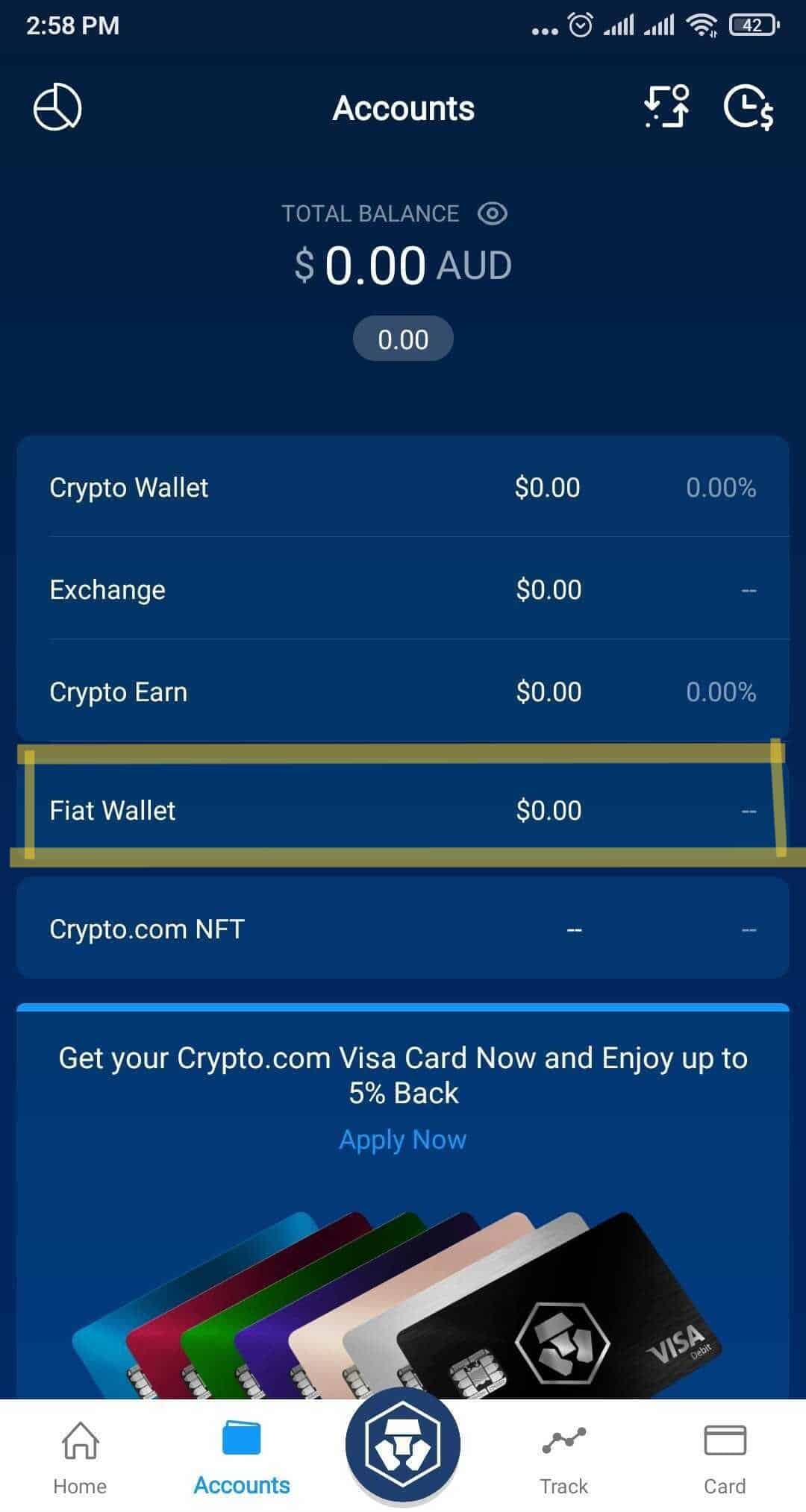
To activate this, you must navigate to the “Accounts” section and select “Fiat Wallet.” From there, you choose your preferred currency and complete any required setup steps. This often involves selecting the specific transfer network you intend to use, such as the Automated Clearing House (ACH) in the United States, the Single Euro Payments Area (SEPA) in Europe, or Faster Payments in the United Kingdom.
Verification and Compliance: The KYC Layer
Because Crypto.com operates within the regulated financial sector, all fiat transactions are subject to “Know Your Customer” (KYC) and Anti-Money Laundering (AML) regulations. To withdraw funds, your account must be fully verified. This involves providing government-issued identification and, in some jurisdictions, proof of residence.
From a financial security standpoint, these hurdles are beneficial. They ensure that the funds are being sent to a verified owner, reducing the risk of fraud or unauthorized capital flight. Furthermore, Crypto.com usually requires that you have previously deposited fiat currency from the bank account you intend to withdraw to. This “closes the loop,” confirming to the institution that the external bank account is legitimately owned by the same individual holding the Crypto.com account.
The Step-by-Step Mechanism of Off-Ramping Funds
The actual transfer process is a two-stage financial maneuver: first, the liquidation of the asset, and second, the external transfer of the proceeds.
Converting Cryptocurrency to Fiat Currency
The first step is the execution of a “Sell” order. Navigate to your crypto wallet, select the asset you wish to liquidate (such as Bitcoin or Ethereum), and tap “Sell.” Instead of swapping it for another cryptocurrency (like a stablecoin), you must select your “Fiat Wallet” as the destination.
At this stage, an astute investor must pay attention to the “spread.” The spread is the difference between the market price and the price at which the exchange is willing to buy your asset. In the mobile app environment, this spread can vary depending on market volatility and liquidity. Reviewing the final quote before confirming the transaction ensures you are aware of the exact amount of fiat currency that will land in your wallet.
Initiating the Transfer to Your Linked Bank Account
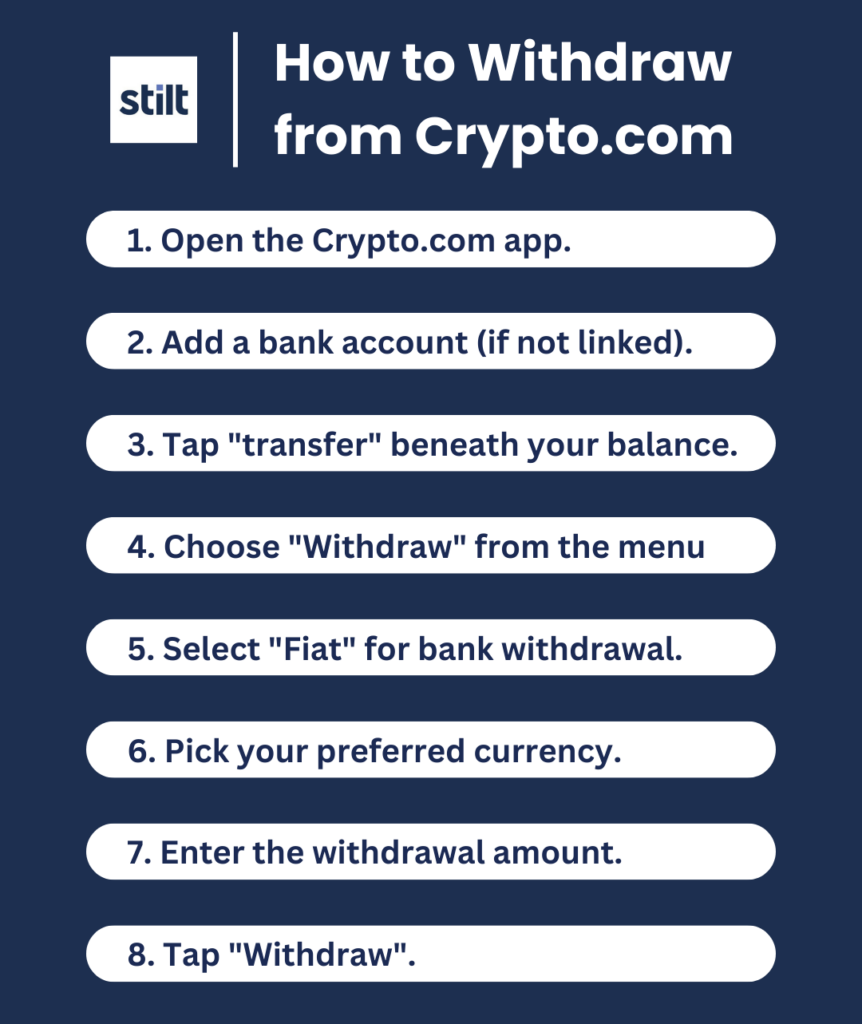
Once the fiat currency is sitting in your Fiat Wallet, you can initiate the withdrawal. By selecting “Transfer,” then “Withdraw,” and finally “Fiat,” you will be prompted to choose your currency and the linked bank account.
You will enter the amount you wish to withdraw, keeping in mind any minimum withdrawal limits imposed by the platform. After a final review of the transaction details, including the destination account and the estimated arrival time, you will confirm the transfer using your passcode and two-factor authentication (2FA). This multi-layered confirmation process is the primary defense against unauthorized transfers.
Optimizing the Costs: Fees, Limits, and Processing Times
From a personal finance perspective, minimizing the costs of moving money is just as important as the investment strategy itself. Every transfer involves a trade-off between speed and cost.
Navigating Withdrawal Fees and Minimums
Crypto.com’s fee structure for fiat withdrawals varies significantly by region and the specific network used. In many cases, standard ACH transfers in the US or SEPA transfers in the EU are processed with zero or nominal fees from the exchange’s side. However, your receiving bank may charge an “incoming wire” or “electronic transfer” fee.
It is also vital to be aware of withdrawal minimums. For instance, some currencies require a minimum withdrawal of $100 or €80. If your balance is below this threshold, you may need to consolidate assets or continue holding until your balance meets the requirement. Understanding these thresholds prevents the frustration of “trapped” small balances.
Managing Settlement Times and Liquidity
The “time-to-money” factor is a crucial element of financial planning. Unlike cryptocurrency transactions, which can settle in minutes, fiat bank transfers are subject to the operating hours of the traditional banking system.
-
ACH Transfers (US): Typically take 3 to 5 business days.
-
SEPA Transfers (EU): Can take 1 to 2 business days, though SEPA Instant may be faster if supported.
-
Faster Payments (UK): Often occur within the same day, sometimes within minutes.
-
Domestic Transfers (AU/CAN): Generally settle within 1 to 3 business days.
Investors should plan their withdrawals well in advance of when the capital is actually needed. Relying on a crypto-to-bank transfer for a next-day mortgage payment or a time-sensitive investment is risky due to potential banking delays or additional compliance reviews that can occasionally stall a transaction.
Security and Financial Best Practices for Moving Capital
Transferring large sums of money necessitates a high level of technical and procedural hygiene. Digital assets are “bearer assets,” meaning once they are gone, they are often unrecoverable. While fiat transfers to banks are more reversible than blockchain transactions, they are still targets for sophisticated actors.
Protecting Your Assets During the Transfer Process
The most vulnerable point in the transfer process is the user’s device and account access. Ensure that Two-Factor Authentication (2FA) is enabled via a dedicated app (like Google Authenticator or Authy) rather than via SMS, which is susceptible to SIM-swapping attacks.
Additionally, many platforms offer “Whitelisting” for withdrawal addresses. While this is primarily used for crypto-to-crypto transfers, the underlying principle of verifying destination accounts remains. Always double-check that the name on your bank account matches the name on your Crypto.com account exactly. Discrepancies in naming (e.g., “Jon Doe” vs. “Jonathan Doe”) can lead to the bank rejecting the transfer, resulting in returned-fund fees and significant delays.
Redundancy and Avoiding Errors in Bank Details
When setting up a new bank account for withdrawals, it is a prudent financial habit to perform a “test transfer.” By sending the minimum allowable amount first, you confirm that the plumbing of the transaction is working correctly. Once the small amount is successfully credited to your bank account, you can proceed with the remaining balance with much higher confidence. This practice mitigates the risk of a total loss or a long-term freeze of funds due to a typo in a routing or IBAN number.
The Broader Financial Context: Tax Implications and Reporting
Moving money to a bank account is often the moment when the “digital” becomes “real” in the eyes of tax authorities. It is a common misconception that taxes are only due when you “cash out” to a bank. In reality, the taxable event usually occurs the moment you sell your cryptocurrency for fiat within the app.
Realizing Gains and Capital Gains Tax
When you sell Bitcoin for USD in your Fiat Wallet, you have realized a gain or loss. In the United States, the IRS treats this as a capital gains event. You must calculate the difference between your “cost basis” (what you paid for the crypto) and the “fair market value” at the time of the sale.
Keeping meticulous records of these transactions is non-negotiable for sound financial management. Crypto.com provides transaction history exports, which can be imported into specialized tax software. Failing to account for these moves can lead to significant penalties and interest if the tax authorities identify unreported income.

Regulatory Reporting and Anti-Money Laundering (AML) Standards
Banks are legally required to monitor large incoming transfers. In many jurisdictions, any transfer exceeding $10,000 (or a local equivalent) triggers an automatic report to financial regulators (such as FinCEN in the US).
This does not mean the transfer is illegal, but it does mean your bank may occasionally ask for “Source of Funds” documentation. Being prepared to provide account statements from Crypto.com showing your original purchase and subsequent growth of the assets is essential. Professionalism in these interactions ensures that your bank continues to view your account as low-risk, preventing account closures or “de-banking” that some crypto investors have historically faced.
By treating the transfer process as a formal financial operation—complete with cost-benefit analysis, security protocols, and tax planning—investors can ensure that their transition from the digital economy to the traditional one is seamless and secure.
aViewFromTheCave is a participant in the Amazon Services LLC Associates Program, an affiliate advertising program designed to provide a means for sites to earn advertising fees by advertising and linking to Amazon.com. Amazon, the Amazon logo, AmazonSupply, and the AmazonSupply logo are trademarks of Amazon.com, Inc. or its affiliates. As an Amazon Associate we earn affiliate commissions from qualifying purchases.