
Bitcoin, the world’s first decentralized digital currency, has transitioned from an obscure concept to a mainstream investment asset, capturing the attention of individual investors, institutional giants, and even sovereign nations. Its meteoric rise in value and groundbreaking technology have positioned it as a revolutionary alternative to traditional financial systems. However, for those new to the cryptocurrency landscape, the process of acquiring Bitcoin can seem daunting, shrouded in technical jargon and perceived complexity.
This comprehensive guide is designed to demystify the process for beginners, offering a clear, step-by-step roadmap to making your first Bitcoin purchase. We will navigate the essential considerations, highlight the necessary tools, and outline best practices to ensure a secure and confident entry into the exciting world of digital assets. Our focus remains firmly on the financial implications, investment strategies, and prudent money management required for engaging with this nascent, yet powerful, financial frontier.

Understanding Bitcoin Before You Invest
Before diving into the mechanics of buying Bitcoin, it’s crucial to grasp what it represents and why so many are drawn to it as a financial instrument. A well-informed investor is a confident investor, especially in a market as dynamic as cryptocurrency.
What is Bitcoin?
At its core, Bitcoin is a digital currency, or cryptocurrency, that operates independently of any central bank or government. Created in 2009 by an anonymous entity known as Satoshi Nakamoto, it introduced the concept of a decentralized network where transactions are verified by cryptography and recorded on a public ledger called a blockchain. This decentralization means no single entity has control over Bitcoin’s supply or network, making it resistant to censorship and manipulation. From an investment perspective, Bitcoin functions as a digital asset with a finite supply – capped at 21 million coins – which proponents argue gives it a deflationary nature, similar to precious metals like gold. It can be used for payments, but its primary appeal for many lies in its potential as a store of value and a speculative investment.
Why Invest in Bitcoin?
Investors flock to Bitcoin for a variety of financial reasons. Firstly, its potential for capital appreciation is a significant draw; early investors have seen astronomical returns, though past performance is not indicative of future results. Many view Bitcoin as a hedge against inflation, arguing that its fixed supply protects purchasing power in an era of quantitative easing and fiat currency debasement. It also offers portfolio diversification, as its price movements often do not correlate directly with traditional assets like stocks and bonds. Furthermore, Bitcoin provides unparalleled accessibility to a global financial system, allowing individuals to transact and hold wealth without intermediaries, a significant advantage for those in regions with unstable banking sectors or restrictive financial regulations. For many, it represents a share in a revolutionary financial technology with the potential to reshape global commerce and wealth transfer.
Key Risks and Considerations
While the allure of Bitcoin is strong, it’s imperative for beginners to understand the inherent risks. The most significant is its extreme price volatility; Bitcoin’s value can fluctuate wildly over short periods, leading to substantial gains or losses. Regulatory uncertainty is another concern, as governments worldwide grapple with how to classify and oversee cryptocurrencies, which could impact their legality, taxation, and market liquidity. Security risks, such as exchange hacks or personal wallet compromises, also exist, underscoring the need for robust security practices. Lastly, Bitcoin is not backed by any government or physical asset, nor is it insured by traditional financial institutions like the FDIC. This means that if something goes wrong, there’s no central authority to compensate you for losses. Investors should only commit capital they can afford to lose and approach Bitcoin with a long-term perspective and a clear understanding of its speculative nature.
Setting Up for Your First Bitcoin Purchase
Embarking on your Bitcoin investment journey requires careful preparation. This initial setup phase is critical for ensuring a secure, efficient, and financially sound entry into the crypto market.
Defining Your Investment Goals and Budget
Before buying any asset, particularly a volatile one like Bitcoin, it’s essential to define your investment goals. Are you looking for short-term gains, or are you planning to hold for several years (HODL – Hold On for Dear Life, in crypto parlance) with a long-term appreciation strategy? Your goals will influence your approach. Equally important is establishing a clear budget. Never invest more than you can comfortably afford to lose. A common strategy, especially for beginners, is Dollar-Cost Averaging (DCA), where you invest a fixed amount of money at regular intervals, regardless of Bitcoin’s price. This strategy helps mitigate the impact of volatility and removes the emotional aspect of trying to “time the market.” Consider your personal financial situation, existing debts, and emergency savings before allocating funds to Bitcoin.
Choosing a Reputable Cryptocurrency Exchange
The cryptocurrency exchange is your primary gateway to buying Bitcoin. Selecting the right one is crucial for security, ease of use, and competitive fees. Look for exchanges that are well-established, have a strong track record of security, and are compliant with regulatory standards in your jurisdiction. Key factors to consider include:
-
Reputation and Security: Research user reviews, security audits, and whether the exchange has insurance policies for digital assets. Look for robust security features like two-factor authentication (2FA).
-
Fees: Understand the trading fees, deposit fees, withdrawal fees, and spread. These can significantly impact your overall returns.
-
Payment Methods: Ensure the exchange supports your preferred payment methods (e.g., bank transfer, debit/credit card, PayPal) and be aware of any associated fees or limits.
-
User Interface: For beginners, a simple, intuitive interface can make a big difference.
-
Customer Support: Accessible and responsive customer support is invaluable if you encounter issues.
-
Liquidity: High liquidity ensures you can buy and sell Bitcoin quickly at fair market prices.
Popular beginner-friendly exchanges often include Coinbase, Binance, Kraken, and Gemini, each with its own pros and cons regarding fees, features, and geographical availability.
Securing Your Digital Wallet
Once you purchase Bitcoin, you’ll need a place to store it. This is where digital wallets come into play. A wallet is essentially software or hardware that stores your cryptographic keys, which are necessary to access and manage your Bitcoin. Understanding wallet types is paramount for securing your financial asset:
-
Exchange Wallets (Custodial): When you buy Bitcoin on an exchange, it’s typically held in an exchange-controlled wallet. This is convenient, but it means you don’t fully control your private keys, making you vulnerable if the exchange is hacked or goes bankrupt. “Not your keys, not your crypto” is a common adage, highlighting this risk.
-
Software Wallets (Non-Custodial): These are applications you download to your computer or smartphone. They give you full control over your private keys. Examples include Electrum, Exodus, and MetaMask (for certain cryptocurrencies, though less common for direct Bitcoin storage compared to dedicated Bitcoin wallets). They offer a good balance of security and accessibility.
-
Hardware Wallets (Cold Storage): These are physical devices, resembling a USB drive, that store your private keys offline. They are considered the most secure option for long-term storage of significant amounts of Bitcoin, as they are impervious to online hacks. Ledger and Trezor are leading brands. While slightly more complex for beginners to set up, the enhanced security for substantial investments is invaluable.
For beginners, starting with an exchange wallet is common for small initial purchases. However, as your investment grows, transferring your Bitcoin to a non-custodial software or, ideally, a hardware wallet, is highly recommended for greater security and control over your financial assets.
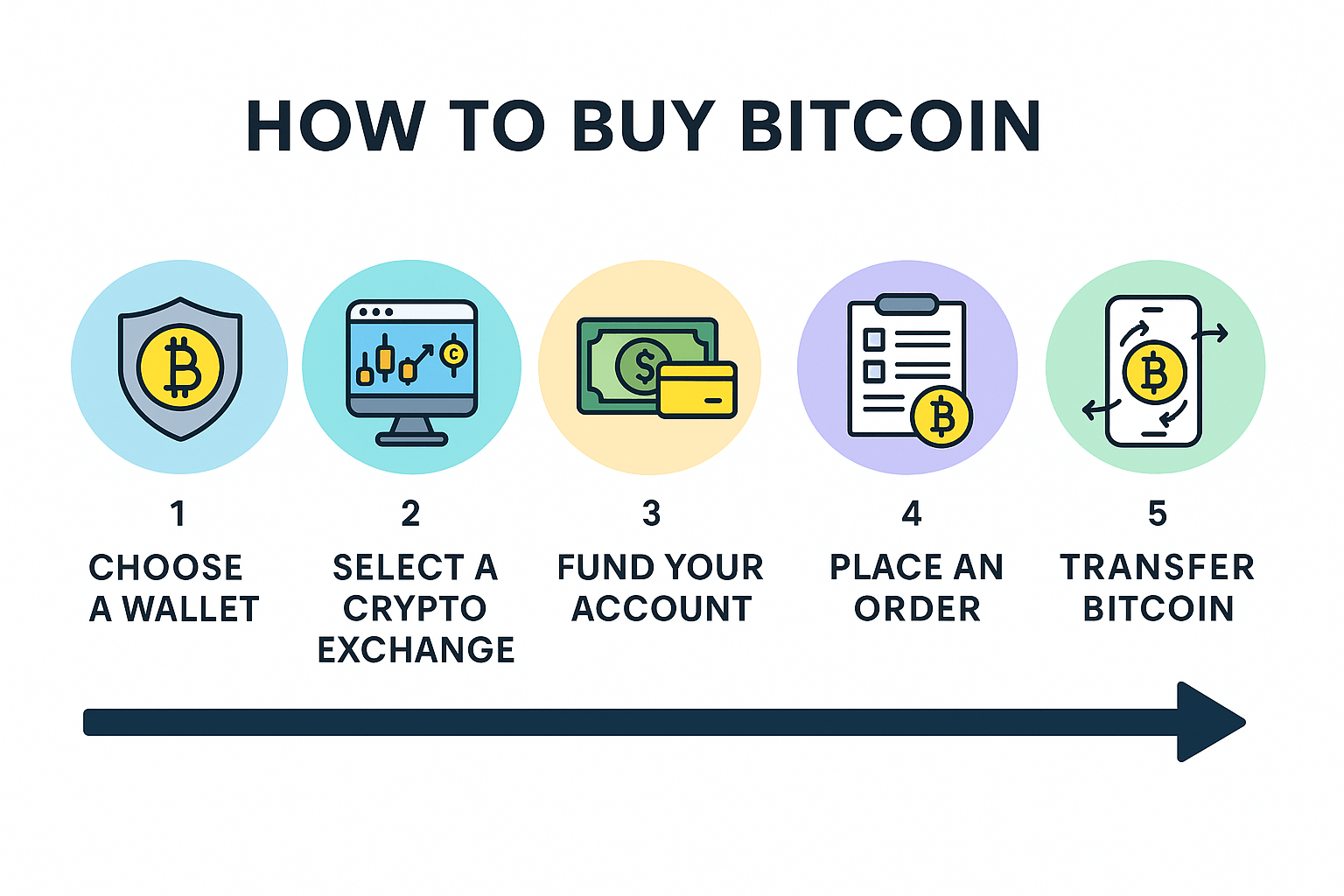
The Step-by-Step Process of Buying Bitcoin
With your groundwork laid, you’re ready to execute your first Bitcoin purchase. This section breaks down the practical steps involved.
Account Creation and Verification (KYC)
Your journey begins by creating an account on your chosen cryptocurrency exchange. This typically involves providing your email address and setting a strong password. Following this, you will invariably need to complete a Know Your Customer (KYC) process. This is a mandatory regulatory requirement for most legitimate exchanges, designed to prevent money laundering and terrorist financing. KYC usually involves:
-
Providing personal details: Full name, date of birth, address, and sometimes your occupation.
-
Identity verification: Uploading a government-issued ID (e.g., passport, driver’s license).
-
Proof of address: Submitting a utility bill or bank statement.
-
Facial verification: Often, a selfie or a live video verification is required to confirm you are indeed the person in the ID.
This process can take anywhere from a few minutes to several days, depending on the exchange and the volume of applications. It’s a critical step that ensures the legitimacy of your financial transactions and complies with global financial regulations.
Funding Your Account
Once your account is verified, you’ll need to deposit funds to buy Bitcoin. Exchanges offer various payment methods, each with its own fees and processing times:
-
Bank Transfer (ACH/SEPA): Often the cheapest option with low fees, but can take several business days for funds to clear and become available for trading.
-
Debit/Credit Card: Funds are typically available instantly, but this convenience comes at a higher cost, with transaction fees often ranging from 2-4% or more. Some banks may also charge additional fees or decline crypto-related transactions.
-
Wire Transfer: Faster than regular bank transfers, especially for larger amounts, but usually carries higher fees.
-
Peer-to-Peer (P2P) Trading: Some platforms allow you to buy directly from other individuals using a variety of payment methods, but this requires more vigilance to avoid scams.
Always review the fee schedule and processing times for each method on your chosen exchange before initiating a deposit. Remember to transfer only the amount you intend to invest, plus any associated fees.
Placing Your Buy Order
With funds in your account, you’re ready to buy Bitcoin. Exchanges offer different ways to place an order:
-
Market Order: This is the simplest option for beginners. You instruct the exchange to buy Bitcoin immediately at the best available market price. It guarantees execution but doesn’t guarantee a specific price, which can be an issue in volatile markets.
-
Limit Order: This allows you to set a specific price at which you want to buy Bitcoin. Your order will only be executed if the market price reaches your specified limit price. This gives you more control over the entry price but means your order might not be filled if the price doesn’t drop to your target.
For your first purchase, a small market order is often the easiest way to get started. Navigate to the “Buy” section, select Bitcoin, enter the amount of fiat currency (e.g., USD, EUR) you wish to spend, or the amount of Bitcoin you wish to acquire, and confirm your order. The exchange will then convert your fiat currency into Bitcoin and credit it to your exchange wallet.
Withdrawing Bitcoin to Your Private Wallet (Optional but Recommended)
After purchasing Bitcoin, it will reside in your exchange’s custodial wallet. For enhanced security and full control over your financial asset, it’s highly recommended to withdraw your Bitcoin to a personal, non-custodial wallet (software or hardware). This process involves:
-
Generating a Receive Address: In your personal wallet, find the “Receive” or “Deposit” option to generate a unique Bitcoin address. This is where your Bitcoin will be sent.
-
Initiating Withdrawal on the Exchange: Go to the “Withdraw” section on your exchange, select Bitcoin, and paste your personal wallet’s receive address. Double-check the address meticulously, as an incorrect address can result in permanent loss of funds.
-
Specifying Amount and Confirming: Enter the amount of Bitcoin you wish to withdraw. Be aware of withdrawal fees, which are typically small network transaction fees (miner fees) paid to process your transaction on the blockchain.
-
Confirming Transaction: The exchange will likely require a 2FA code and email confirmation for security.
The transaction may take a few minutes to an hour or more to confirm on the Bitcoin blockchain, depending on network congestion. Once confirmed, your Bitcoin is safely in your control.
Managing Your Bitcoin Investment
Buying Bitcoin is just the first step. Effective management of your investment is crucial for protecting your assets and achieving your financial objectives.
Understanding Bitcoin Price Movements and Volatility
Bitcoin’s price is influenced by a multitude of factors, including market sentiment, regulatory news, macroeconomic conditions, technological developments, and adoption rates. Its inherent volatility means significant price swings are common. For beginners, it’s vital to avoid making emotional decisions based on short-term price fluctuations. Instead, focus on your long-term investment strategy. Regularly monitoring reliable financial news sources and market analysis can help you understand broader trends, but resist the urge to constantly check prices, which can lead to panic selling or FOMO (Fear Of Missing Out) buying. Implement a strategy like DCA to mitigate volatility risk and cultivate a disciplined approach to your investment.
Best Practices for Security
Security is paramount in the cryptocurrency space. Unlike traditional banks, there’s often no “undo” button for crypto transactions, and lost or stolen funds are typically unrecoverable.
-
Enable Two-Factor Authentication (2FA): Always activate 2FA on your exchange account and any software wallets. Use an authenticator app (like Google Authenticator or Authy) rather than SMS-based 2FA, which is less secure.
-
Strong, Unique Passwords: Use complex, unique passwords for all your crypto accounts, ideally generated by a password manager. Never reuse passwords.
-
Beware of Phishing Scams: Always double-check URLs, email senders, and avoid clicking suspicious links. Legitimate exchanges will never ask for your private keys or seed phrase.
-
Cold Storage for Large Holdings: For any substantial amount of Bitcoin, transfer it to a hardware wallet. This offline storage method provides the highest level of security against online threats.
-
Secure Your Seed Phrase: When setting up a non-custodial wallet, you’ll be given a “seed phrase” (a series of 12-24 words). This is the master key to your funds. Write it down physically (do not store it digitally), make multiple copies, and store them in separate, secure, and private locations (e.g., a fireproof safe, safety deposit box). If you lose this phrase, you lose access to your Bitcoin forever.
-
Regular Software Updates: Keep your wallet software and operating system updated to patch any security vulnerabilities.
Tax Implications of Bitcoin
A critical, yet often overlooked, aspect of Bitcoin investment is taxation. In many jurisdictions, cryptocurrencies are treated as property for tax purposes, meaning capital gains (profits from selling at a higher price than you bought) are taxable events. Other taxable events can include:
-
Selling Bitcoin for fiat currency.
-
Trading Bitcoin for other cryptocurrencies.
-
Using Bitcoin to buy goods or services.
-
Receiving Bitcoin as income.
It is crucial to keep meticulous records of all your Bitcoin transactions, including purchase dates, acquisition costs, sale dates, and sale proceeds. Failure to report crypto gains can lead to severe penalties. Given the complexity, it is highly recommended to consult with a tax professional who specializes in cryptocurrency taxation in your region. They can provide tailored advice and ensure you remain compliant with local financial regulations.
Beyond Your First Purchase: Growth and Continued Learning
Your initial Bitcoin purchase marks the beginning of a fascinating financial journey. To maximize your potential and navigate the evolving crypto landscape, continuous learning and strategic thinking are essential.
Diversification within Crypto
While Bitcoin is the market leader, the cryptocurrency ecosystem is vast and constantly expanding. Once you’re comfortable with Bitcoin, you might consider diversifying your portfolio with other digital assets, often referred to as “altcoins” (alternative coins). These could include Ethereum (ETH), which powers a vast decentralized finance (DeFi) ecosystem, or other projects with strong fundamentals and innovative use cases. Diversification helps spread risk and can expose you to different growth opportunities within the crypto market. However, research each asset thoroughly and understand its underlying technology and purpose before investing. Avoid chasing speculative “meme coins” unless you fully understand the extreme risks involved.
Staying Informed
The cryptocurrency market moves quickly, with new technologies, regulations, and market trends emerging constantly. To stay ahead, cultivate habits of continuous learning:
-
Follow Reputable News Sources: Read established crypto news outlets, financial publications, and analyses from respected economists and crypto experts.
-
Engage with Communities: Participate in online forums, Reddit communities, and social media discussions (with caution, verifying information independently).
-
Understand Macroeconomic Trends: Bitcoin’s performance is increasingly tied to global macroeconomic factors. Understanding inflation, interest rates, and geopolitical events can provide context for market movements.
-
Study Blockchain Fundamentals: A basic understanding of how blockchain technology works can deepen your appreciation for Bitcoin’s value proposition and help you evaluate other projects.
Continuous education is your most powerful tool in managing your Bitcoin investment and making informed financial decisions in the long run.
Conclusion
Buying Bitcoin for the first time can feel like a monumental step, but by breaking down the process into manageable stages, it becomes an accessible endeavor for any beginner. This guide has equipped you with the knowledge to understand what Bitcoin is, why it might fit into your investment portfolio, how to choose a secure platform, and the step-by-step process of making your purchase. More importantly, we’ve emphasized the critical aspects of financial discipline, robust security practices, and understanding your tax obligations – elements that are crucial for any responsible investor entering the digital asset space.
Remember that investing in Bitcoin, like any financial asset, carries risks, particularly due to its volatility. Approach your investment with a clear strategy, a budget you’re comfortable with, and a commitment to ongoing education. The world of digital finance is rapidly evolving, and by taking these initial steps thoughtfully, you are positioning yourself to participate in one of the most exciting financial innovations of our time. Welcome to the future of money.
aViewFromTheCave is a participant in the Amazon Services LLC Associates Program, an affiliate advertising program designed to provide a means for sites to earn advertising fees by advertising and linking to Amazon.com. Amazon, the Amazon logo, AmazonSupply, and the AmazonSupply logo are trademarks of Amazon.com, Inc. or its affiliates. As an Amazon Associate we earn affiliate commissions from qualifying purchases.