
In an age where seamless digital transactions and rapid delivery have become the norm, encountering a “cannot ship to this address” message on Amazon can be an incredibly frustrating experience. For many, Amazon represents the epitome of modern convenience, a vast marketplace capable of delivering almost anything to almost anywhere. Yet, when their sophisticated system falters, it often points to a complex interplay of technical factors rather than a simple oversight. Understanding why Amazon might decline to ship to a specific location requires a deep dive into the intricate technological infrastructure that underpins global e-commerce logistics. This isn’t merely a customer service query; it’s a peek into the algorithms, geospatial data, fulfillment networks, and carrier integrations that dictate the flow of billions of parcels worldwide.

The Complex Technical Backend of E-commerce Shipping
Amazon’s ability to promise swift delivery to millions relies on a colossal, interconnected technological system. From the moment an item is listed to when it arrives at your door, a cascade of data processes, algorithms, and automated decisions determines its journey. When a shipping block occurs, it’s often a technical flag raised within this intricate system.
Geospatial Data and Address Validation Algorithms
At the heart of any e-commerce shipping operation is accurate location data. Amazon, like other major logistics players, invests heavily in sophisticated geospatial technology. This involves:
-
Geocoding and Reverse Geocoding: Converting a street address into precise latitude and longitude coordinates and vice versa. This ensures that the physical location on a map matches the textual address.
-
Address Validation APIs: Amazon integrates with various third-party and proprietary APIs (Application Programming Interfaces) that cross-reference submitted addresses against vast databases (e.g., national postal services, mapping providers). These algorithms check for correctness, completeness (e.g., missing apartment numbers), and adherence to standard formatting. If an address is new construction, incorrectly entered, or non-standard, these systems might flag it as invalid.
-
Serviceability Grids: Beyond mere validation, Amazon’s systems operate with detailed serviceability grids. These are digital maps segmented by carrier service areas, delivery zones, and even internal Amazon last-mile capabilities. When you enter an address, algorithms rapidly determine if it falls within a defined, active delivery zone for the selected items and shipping options. An address lying just outside a carrier’s defined zone, or in an area deemed too remote or high-risk by internal algorithms, will result in a shipping restriction.
-
Dynamic Routing Optimization: Once an address is validated, algorithms kick in to optimize the delivery route. This involves complex computations considering traffic, road networks, delivery windows, and existing routes. If an address creates an unfeasible or highly inefficient route based on current operational parameters, the system might reject it.
The continuous processing of this geospatial data, often updated in real-time, is a fundamental technical prerequisite for any successful shipment. A minor discrepancy or an outdated database entry can cascade into a shipping refusal.
Integrated Logistics Networks and Carrier Limitations
Amazon doesn’t operate in a vacuum. Its shipping capabilities are a hybrid of its own vast logistics network (Amazon Logistics, AMZL) and partnerships with traditional carriers like UPS, FedEx, DHL, and national postal services. The technical integration between these entities is incredibly complex.
-
API Handshakes and Data Exchange: When you place an order, Amazon’s system communicates with various carrier APIs to check for service availability, pricing, and specific shipping rules. These “handshakes” exchange data about package dimensions, weight, origin, destination, and desired speed. If a carrier’s API responds with an inability to service the address or an item, Amazon’s system relays this back to the user.
-
Operational Zone Definitions: Each carrier maintains its own detailed technical definitions of its operational zones. These can differ significantly. A rural address might be serviceable by USPS but not by FedEx Express due to infrastructure or volume considerations. Amazon’s system must dynamically query and respect these varied zone definitions across all potential carriers for a given order.
-
Last-Mile Capability Overlaps: In urban and suburban areas, Amazon Logistics often handles the “last mile.” However, in more remote regions, traditional carriers might take over. The decision of which network to use is often made programmatically based on cost, speed, and existing route density. If Amazon’s internal algorithms determine that neither AMZL nor a partner carrier can cost-effectively or efficiently complete the last mile to your address for a specific item, it will be blocked.
-
Package Size and Weight Restrictions: Different carriers have technical limitations on the size and weight of packages they can handle. An item that exceeds these parameters for all available carriers in your region will be undeliverable. This isn’t just a physical limitation; it’s encoded into the carrier’s API specifications and Amazon’s fulfillment algorithms.
The seamless, yet complex, orchestration of these diverse logistics networks through sophisticated technical integrations is crucial for Amazon’s global reach. A failure at any point in this chain can prevent a shipment.
Inventory Management and Fulfillment Center Logic
Less obvious but equally critical are Amazon’s internal inventory management and fulfillment center (FC) logistics systems. These are vast, highly automated, and driven by sophisticated algorithms.
-
Distributed Inventory Strategy: Amazon strategically distributes inventory across hundreds of fulfillment centers globally. When you place an order, algorithms calculate the optimal FC from which to ship based on item availability, proximity to your address, shipping speed choice, and even the “co-location” of multiple items in your cart to minimize separate shipments.
-
Item Location and Routing Rules: Not all items are stored in all FCs. Some specialized or oversized items might only be available in a few, strategically located warehouses. If your address is outside the economic or operational shipping range of those specific FCs holding the item, it might be deemed unshippable.
-
Dynamic Inventory Allocation: Inventory levels are constantly fluctuating. While an item might be listed as available, the real-time allocation system might find that the specific quantity you’re requesting, or the particular SKU, isn’t available in an FC that can efficiently ship to your location. This is a technical decision made by the inventory management software.
-
Hazardous Material (HazMat) Segregation: Items flagged as HazMat (e.g., aerosols, certain batteries) have stringent storage, handling, and shipping regulations. They are often stored in specific FC sections and can only be shipped via certain, compliant methods or carriers. If your address cannot be serviced by a compliant carrier for a HazMat item, it will be blocked. This is a technical rule embedded within the shipping workflow.
The interplay of where an item is physically located, the rules governing its movement, and the algorithms calculating the most efficient path to your door are foundational technical elements that can lead to shipping restrictions.
Common Technical Glitches and Data Discrepancies
Beyond the overarching systems, specific technical glitches and data issues are frequently responsible for shipping problems. These are often small data-level inconsistencies that disrupt the larger automated process.
Invalid or Unrecognized Address Formats
-
Non-Standard Address Entry: Amazon’s validation systems expect addresses to conform to specific postal standards. Using abbreviations, unusual punctuation, or incorrect order of information can confuse the parsing algorithms, even if a human can understand it. For instance, “123 Main St Apt B” is standard; “Main St #B 123” might be flagged.
-
New Constructions or Rural Addresses: Newly built homes or businesses may not yet be updated in the various geospatial databases Amazon and its carriers use. Similarly, some rural addresses (e.g., those without specific street numbers, relying on descriptive directions) can be difficult for automated systems to geocode accurately.
-
P.O. Boxes and Parcel Lockers: While Amazon does ship to P.O. boxes for some items, many carriers (especially for larger or private shipments) cannot deliver to them. Amazon’s system differentiates based on item type and carrier capability. For instance, Amazon often uses its own Amazon Locker or Hub network, which are distinct technical systems designed for secure pickup, often for situations where home delivery is difficult.
Geographic Restrictions and Delivery Area Definitions
-
Carrier Blackout Zones: Carriers occasionally designate certain areas as “blackout zones” due to high crime rates, remote locations, or logistical difficulties. Amazon’s systems automatically inherit these technical restrictions.
-
International Shipping Complexities: For international orders, the technical hurdles multiply. Customs regulations, import duties, specific item prohibitions by country (often encoded as technical flags in Amazon’s product database), and carrier service limitations all contribute. An item available domestically might be technically non-exportable due to these complexities.
-
Remote or High-Cost Areas: Algorithms factor in the cost and feasibility of delivery. If an address is exceptionally remote, requiring special routing or incurring disproportionately high last-mile costs, the system might reject the shipment or offer only very expensive, slow options, effectively making it “unshippable” by standard means.

Item-Specific Shipping Restrictions
-
Hazardous Materials (HazMat): As mentioned, HazMat items have strict shipping rules. This includes aerosols, certain batteries, flammable liquids, and some cosmetics. The system will technically block shipment if the destination address cannot be serviced by a HazMat-compliant carrier or if state/local regulations prohibit its entry.
-
Oversized/Overweight Items: Very large or heavy items often require specialized freight shipping, which is not available to all addresses or for standard Amazon Prime shipping. The system flags these items based on their stored dimensions and weight data.
-
Regulatory & Legal Prohibitions: Certain products might be legally restricted from sale or shipment to specific states or regions (e.g., some supplements, certain types of firearms accessories, specific tech products that don’t meet local certification). These are hard-coded rules within Amazon’s product and shipping databases.
-
Seller-Specific Rules: For third-party sellers, they might set their own technical shipping rules, excluding certain regions or offering limited shipping options, which Amazon’s platform must enforce.
Payment Processing and Account Security Protocols
While not directly about shipping, technical issues related to payment or account security can prevent the shipping process from ever initiating.
-
Address Mismatch for Payment: If the shipping address doesn’t match the billing address on file with your credit card, fraud detection algorithms might flag the transaction and block the order, thereby preventing shipment.
-
Fraud Detection Algorithms: Amazon employs sophisticated AI and machine learning algorithms to detect fraudulent activity. Unusual shipping patterns, rapid changes in address, or addresses associated with known fraudulent activities can trigger these algorithms, leading to a temporary or permanent shipping block.
-
Account Verification Issues: Sometimes, a general issue with your Amazon account’s verification status might temporarily restrict all transactions, including shipping.
These technical barriers, often unseen by the user, are the silent guardians of Amazon’s intricate logistics, ensuring compliance, security, and operational efficiency.
Decoding Amazon’s System Responses and Troubleshooting Tech Issues
When faced with a “cannot ship” message, understanding the technical implications of the system’s feedback can guide your troubleshooting.
Interpreting Error Messages
-
“Cannot ship to this address”: This is a general message often indicating a primary technical issue with address validation, carrier serviceability, or geographic restrictions. It implies the core delivery mechanism cannot reach your location for the selected item.
-
“Item not available at this address”: This typically points to an inventory management issue. The specific item might not be available in a fulfillment center that can ship to your location, or it might be subject to a localized restriction (e.g., HazMat rules for your region).
-
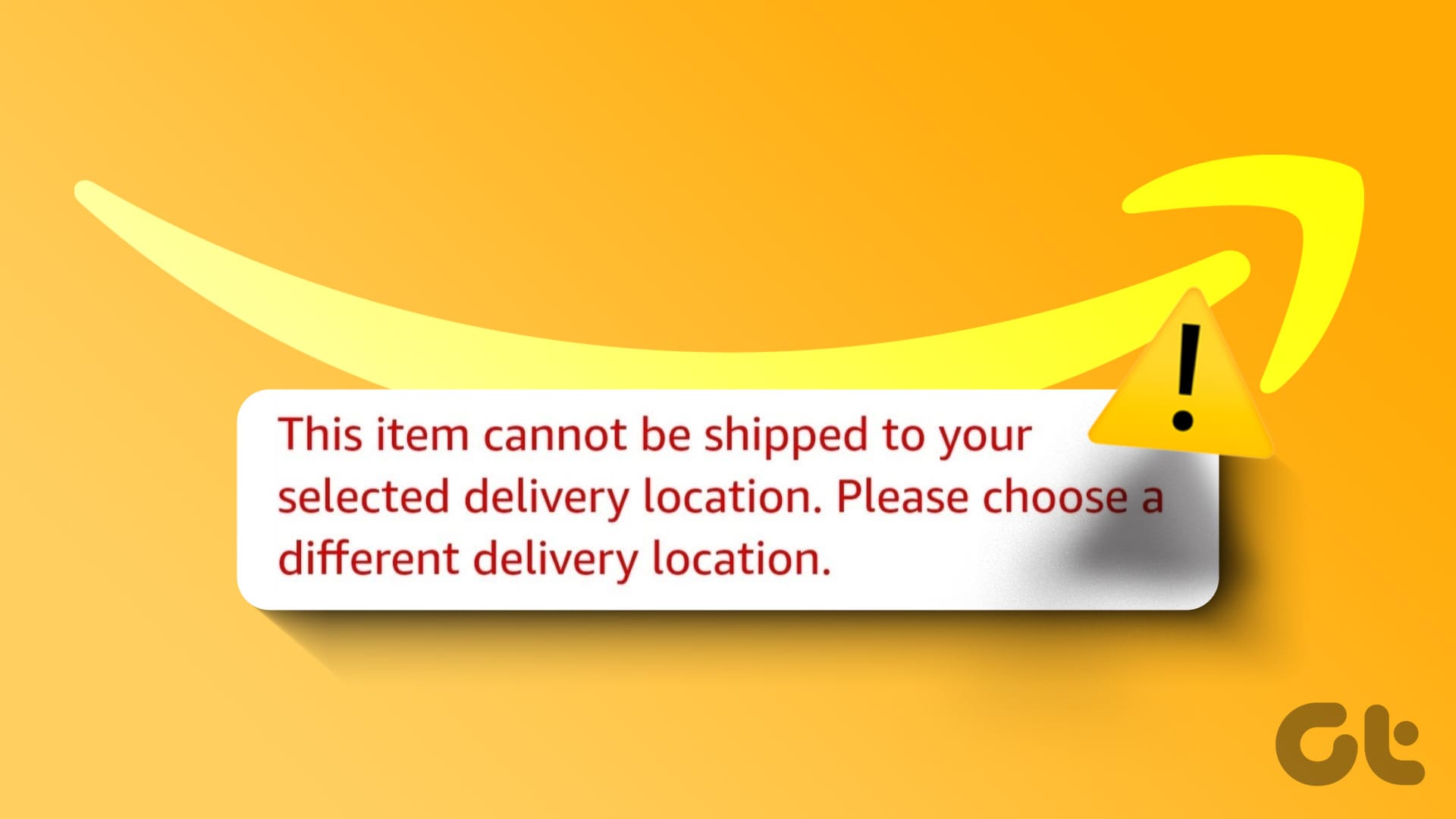
“This item cannot be shipped to your selected delivery location. Please choose a different delivery location”: This is a more direct prompt, often indicating an item-specific restriction (size, HazMat, legal) or a hard geographic block where no carrier can deliver that particular product to you.
Utilizing Amazon’s Address Book and Account Settings
-
Standardizing Your Address: Ensure your address in Amazon’s address book is entered in a standard, recognized format, matching what postal services use. Using the “Verify Address” feature can leverage Amazon’s internal validation algorithms to suggest corrections.
-
Checking Default Settings: Review your default shipping address and ensure it’s correct. Multiple addresses can sometimes lead to confusion, especially if an outdated or incorrect one is accidentally selected.
-
Updating Payment Information: Verify that your billing address for your payment method matches what’s on file with your bank, especially if you’re experiencing payment-related shipping blocks.
Bypassing Technical Blocks (When Possible)
-
Re-formatting the Address: Try minor variations. For example, use “Street” instead of “St,” “Apartment” instead of “Apt.” Sometimes, these small changes can help the validation algorithms process it correctly.
-
Checking for Nearby Alternatives: If direct delivery isn’t possible, explore Amazon Lockers, Hubs, or a friend/family member’s address nearby. These are alternative delivery points integrated into Amazon’s system, designed to bypass last-mile delivery challenges.
-
Splitting Orders: If your cart contains multiple items, and one is restricted, try ordering items separately. The restricted item might have specific constraints (e.g., HazMat, oversized) that don’t apply to the others.
-
Contacting Customer Support: If you’ve exhausted technical self-help, contacting Amazon customer support can sometimes provide more specific insights. They might be able to manually override certain system flags or offer alternative solutions by interacting with the underlying logistics systems.
The Future of E-commerce Delivery Tech: AI, Drones, and Autonomous Logistics
The challenges of reaching every address efficiently are constantly being addressed by advancements in delivery technology. The future promises even more sophisticated solutions, further intertwining technology with logistics.
Advancements in Geospatial AI and Predictive Logistics
-
Enhanced Address Validation: AI and machine learning are continually improving address validation, allowing systems to interpret even non-standard addresses, predict corrections, and integrate new geographic data faster. This reduces the number of addresses flagged incorrectly.
-
Predictive Delivery Models: AI-powered predictive analytics can anticipate potential delivery issues (e.g., traffic, weather, road closures) and dynamically reroute packages or adjust delivery estimates before they become problems. This could eventually lead to more proactive communication about delivery constraints.
-
Hyper-Local Mapping: Drones and autonomous vehicles are generating highly detailed, hyper-local maps that will enable precision delivery even to addresses previously deemed inaccessible or difficult.
Emerging Delivery Methods and Their Technical Requirements
-
Drone Delivery (Prime Air): Amazon’s Prime Air drone program is a prime example of cutting-edge delivery tech. It requires extremely precise geospatial mapping, obstacle avoidance AI, air traffic control integration (technical protocols for communication with airspace authorities), and advanced battery management systems. Its operational zones are currently highly restricted due to regulatory and technical complexity, but they represent a future solution for certain types of deliveries.
-
Autonomous Vehicles: Self-driving delivery vehicles, whether ground-based robots or larger vans, also demand robust AI for navigation, safety protocols, and interaction with human infrastructure. Their deployment will expand delivery capabilities, particularly for the “middle mile” and specific last-mile segments.
-
Network Optimization: The introduction of these new delivery methods necessitates even more complex algorithms to decide when and where to deploy drones, robots, or traditional vans, optimizing for speed, cost, and environmental impact.
Personalizing the Last Mile with IoT and Smart Homes
-
Smart Lock Integration: Integration with smart home devices (e.g., smart locks, garage door openers) allows for secure in-home or in-garage delivery, bypassing some traditional delivery obstacles and reducing package theft. This requires secure API integration between Amazon’s delivery systems and various smart home platforms.
-
IoT-Enabled Delivery Boxes: Specialized, connected delivery boxes can securely receive packages and communicate their status, providing a secure alternative for areas prone to package theft or where direct door delivery is challenging.
-
Real-time Delivery Updates: The proliferation of IoT devices and 5G networks will enable even more granular, real-time tracking and communication during the last mile, making the delivery process more transparent and responsive to dynamic conditions.
Ultimately, “why won’t Amazon ship to my address?” is a question rooted deeply in the complex, constantly evolving technological landscape of modern e-commerce. It highlights the intricate dance between geospatial data, carrier networks, inventory systems, and cutting-edge delivery innovations. While frustrating in the moment, each such instance is a reminder of the massive technical effort required to bring the world’s products to our doorsteps.
aViewFromTheCave is a participant in the Amazon Services LLC Associates Program, an affiliate advertising program designed to provide a means for sites to earn advertising fees by advertising and linking to Amazon.com. Amazon, the Amazon logo, AmazonSupply, and the AmazonSupply logo are trademarks of Amazon.com, Inc. or its affiliates. As an Amazon Associate we earn affiliate commissions from qualifying purchases.