
The simple act of “watching a movie” has evolved dramatically from the era of communal cinema halls and physical media. Today, it’s a sophisticated interplay of technology, connectivity, and personal preference, offering an unprecedented array of choices for consumers. From the palm of your hand to a dedicated home theater, the digital revolution has transformed how we access, experience, and engage with film. This guide delves into the technological backbone that enables modern movie watching, exploring the platforms, devices, and innovations shaping our cinematic journey.
The Digital Revolution: Streaming Services and Platforms
The advent of high-speed internet fundamentally reshaped the entertainment industry, paving the way for on-demand digital content. Streaming services have become the primary gateway for millions to access films, offering unparalleled convenience and vast libraries.

Subscription Video-on-Demand (SVOD): The Dominant Model
Subscription Video-on-Demand (SVOD) services have revolutionized the way we consume movies, offering unlimited access to extensive libraries for a recurring monthly or annual fee. Pioneers like Netflix set the standard, demonstrating the immense appetite for on-demand content. Their vast collection of licensed films, coupled with significant investment in original movies, quickly established them as a household name. Users could watch what they wanted, when they wanted, free from the constraints of broadcast schedules.
The success of Netflix spurred a proliferation of competitors, each vying for a share of subscriber attention and content rights. Disney+, for example, leveraged its iconic intellectual property, offering a treasure trove of Disney, Pixar, Marvel, Star Wars, and National Geographic content. This model of brand-specific SVOD platforms, like Max (housing Warner Bros., HBO, DC content) and Paramount+ (featuring Paramount Pictures, CBS, MTV), has become a significant trend, often leading consumers to subscribe to multiple services to access their desired films.
Amazon Prime Video offers a unique hybrid, bundled with a Prime membership, providing both a substantial SVOD library and transactional options. Hulu, often lauded for its strong television content, also maintains a growing film catalog, particularly in the US. The appeal of SVOD lies in its simplicity and perceived value – a single fee unlocks a world of entertainment, making it incredibly attractive for casual viewers and cinephiles alike. The user experience is typically highly refined, featuring personalized recommendations driven by sophisticated AI algorithms, user profiles, watchlists, and seamless playback across various devices.
Transactional Video-on-Demand (TVOD) and Ad-Supported Video-on-Demand (AVOD)
While SVOD dominates, other digital models cater to different viewing habits and financial preferences. Transactional Video-on-Demand (TVOD) services allow users to purchase or rent individual movies, often offering new releases shortly after their theatrical run, or even simultaneously in some cases (Premium Video-on-Demand). Platforms like Apple TV (iTunes Store), Google Play Movies & TV, Amazon Video (rentals/purchases), and Vudu are prime examples. TVOD offers flexibility for those who prefer to pay only for specific content or wish to own digital copies without committing to a monthly subscription. This model often provides the earliest access to the latest blockbusters and allows for ownership, meaning the film remains in your digital library indefinitely.
On the other end of the spectrum are Ad-Supported Video-on-Demand (AVOD) services, which offer a wealth of content for free, supported by advertisements. Platforms such as Pluto TV, Tubi, The Roku Channel, and Freevee (Amazon) have carved out a significant niche by providing thousands of movies and TV shows without requiring a subscription fee. While viewers must contend with commercial breaks, the cost-free access to a diverse library of films – often including older classics, cult favorites, and B-movies – makes AVOD an attractive option, particularly for budget-conscious consumers or those looking for casual browsing. These platforms have demonstrated that a substantial segment of the audience is willing to trade some commercial interruptions for free entertainment.
Aggregators and Content Discovery
With the fragmented landscape of streaming services, finding where a specific movie is available can be a challenge. This is where content aggregators come in. Services like JustWatch, Reelgood, and Movies Anywhere act as universal search engines, allowing users to input a movie title and discover which SVOD, TVOD, or AVOD platforms host it. They often provide direct links to the content, indicate rental or purchase prices, and can even track new releases across your subscribed services. Movies Anywhere is particularly notable for allowing users to sync their purchased digital movies from various retailers (like Apple TV, Amazon, Google Play, Vudu) into a single, centralized library, making owned content more accessible regardless of the original point of purchase. These tools are indispensable for navigating the complex web of digital distribution and maximizing the value of your subscriptions.
Your Cinematic Command Center: Devices for Movie Watching
The device you choose to watch a movie on significantly impacts the viewing experience. Technological advancements have brought forth a diverse range of options, each with its own advantages in terms of screen size, portability, audio quality, and overall immersion.
Smart TVs and Dedicated Streaming Devices
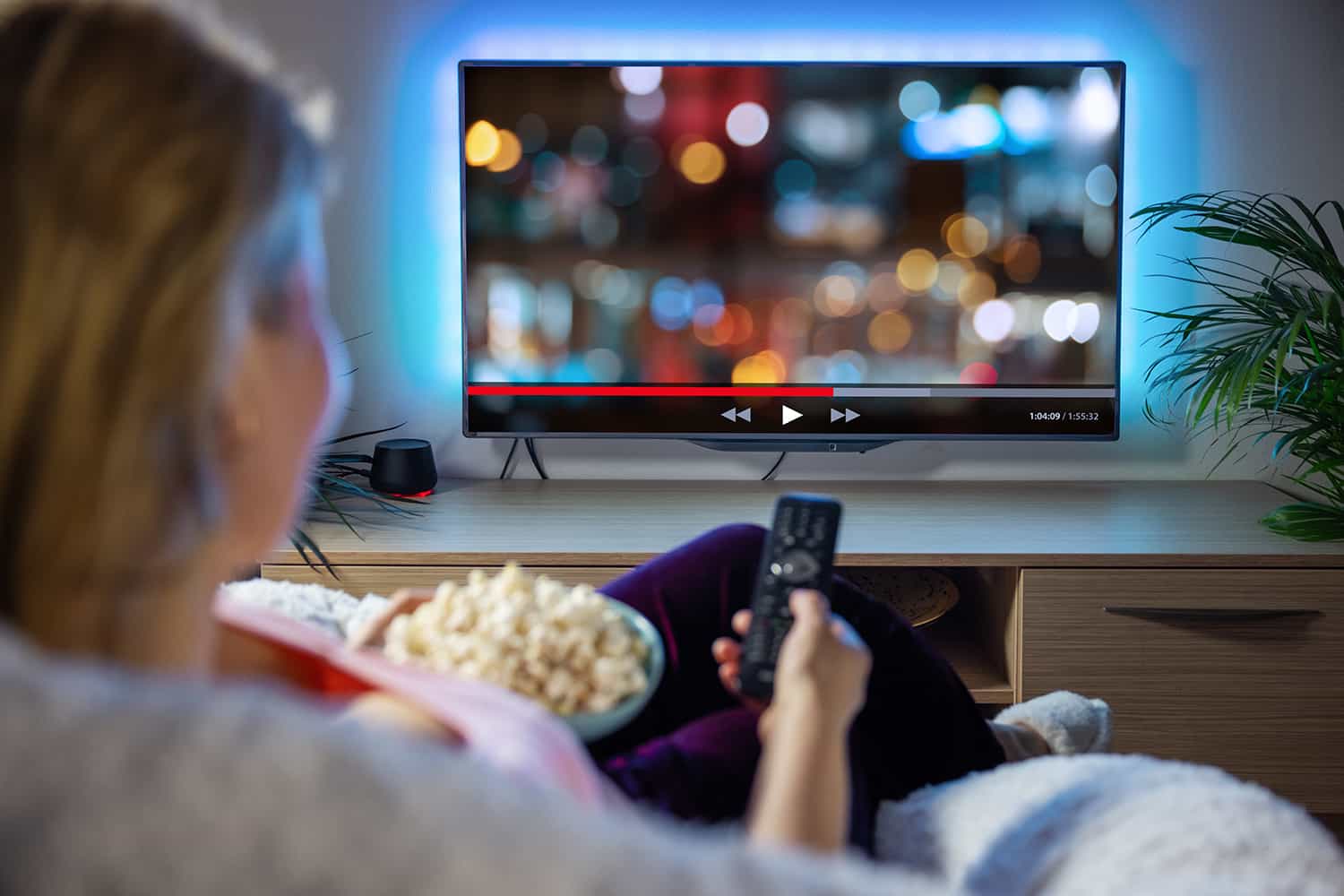
The Smart TV has become the centerpiece of most modern living rooms. These internet-connected televisions come with built-in operating systems (like Google TV, webOS, Tizen) that integrate streaming apps directly, eliminating the need for external devices for basic viewing. Smart TVs offer convenience, a large display, and often support for advanced visual and audio formats like 4K, HDR, and Dolby Atmos.
For those with older non-smart TVs, or who prefer a more streamlined interface, dedicated streaming devices are essential. These compact gadgets plug into an HDMI port and provide access to a vast ecosystem of apps. Roku devices are celebrated for their user-friendly interface and extensive app support. Amazon Fire TV Sticks integrate seamlessly with the Alexa ecosystem and offer robust features. Apple TV devices are premium options, excelling in integration with Apple’s services and offering powerful hardware for smooth performance and high-quality playback. Google Chromecast offers a unique “casting” experience, allowing users to initiate playback from a mobile device and cast it to the TV, acting more as a receiver than a standalone interface. These devices often boast superior processors and more frequent software updates than some integrated smart TV platforms, leading to a snappier and more reliable experience.
Personal Devices: Laptops, Tablets, and Smartphones
The ubiquity of laptops, tablets, and smartphones has made movie watching an incredibly portable and personal experience. While the screen sizes are smaller, the convenience of watching content anywhere with an internet connection (or downloaded for offline viewing) is unmatched. Mobile apps for all major streaming services are highly optimized for these devices, offering touch controls, picture-in-picture modes, and often data-saving options. Tablets strike a balance between portability and screen size, making them excellent for personal viewing on a plane or in bed. Laptops offer a larger display than tablets and often better audio output, making them suitable for casual desktop viewing or when traveling. While not offering the grandeur of a large TV, these personal devices ensure that entertainment is always within reach.
Home Theater PCs (HTPCs) and Gaming Consoles
For advanced users and those seeking maximum flexibility, a Home Theater PC (HTPC) can serve as a powerful media hub. An HTPC is a computer optimized for media playback, often running software like Kodi, and can handle a wide range of file formats, high-resolution content, and sophisticated audio setups. They offer unparalleled customization, acting as a central server for local media libraries, streaming, and even gaming. However, they require more technical expertise to set up and maintain.
Gaming consoles like the PlayStation (PS5, PS4) and Xbox (Series X/S, One) have also evolved into formidable media consumption devices. Beyond gaming, they support all major streaming apps, Blu-ray/4K Blu-ray playback, and often integrate well with existing home theater systems, providing a versatile entertainment solution for many households. Their powerful processors make them ideal for handling high-bandwidth 4K HDR content.
Projectors: The Immersive Big Screen Experience
For the ultimate cinematic immersion at home, a projector can transform a wall into a massive screen. Modern home cinema projectors offer stunning clarity, with many supporting 4K resolution and HDR. While traditional projectors require dedicated space and darkness, advancements in short-throw and ultra-short-throw projectors allow for large images from very close to the screen, making them more suitable for smaller rooms. The experience of watching a movie on a 100-inch (or larger) screen is unparalleled, closely mimicking a true cinema experience. Setting up a projector involves considerations like screen type, ambient light control, and audio integration, but for many enthusiasts, the visual grandeur is well worth the effort.
Enhancing the Experience: Audio-Visual Technology and Connectivity
Beyond the device itself, several underlying technologies work in concert to deliver a truly engaging movie-watching experience. High-quality visuals and immersive audio are paramount, and they rely heavily on robust internet connectivity.
Display Technologies: Resolution, HDR, and OLED
The visual fidelity of a movie is largely determined by the display technology. Resolution dictates the sharpness and detail of the image. While 1080p (Full HD) was once the standard, 4K Ultra HD (3840×2160 pixels) is now prevalent, offering four times the pixel count of 1080p, resulting in incredibly detailed and lifelike images. Emerging 8K displays (7680×4320 pixels) promise even greater detail, though native 8K content is still scarce.
High Dynamic Range (HDR) is arguably more impactful than resolution for perceived image quality. HDR expands the range of colors and contrast, making bright areas brighter and dark areas darker, with more detail visible in both extremes. Common HDR formats include HDR10, Dolby Vision, and HLG (Hybrid Log-Gamma). Dolby Vision, in particular, uses dynamic metadata to optimize HDR performance scene by scene, often resulting in a more refined image.
The panel technology itself also plays a crucial role. OLED (Organic Light-Emitting Diode) displays are celebrated for their perfect blacks, infinite contrast, and wide viewing angles because each pixel can emit its own light and be individually turned off. This results in stunning picture quality. QLED (Quantum-dot Light-Emitting Diode), primarily used by Samsung, is a variation of LED LCD technology that uses quantum dots to enhance color and brightness. While not achieving OLED’s perfect blacks, QLEDs can reach very high brightness levels, which is beneficial for HDR content. Standard LED LCD screens remain common, offering good performance at various price points, though they rely on backlighting, which can sometimes lead to less uniform blacks and contrast compared to OLED.
Audio Systems: From Soundbars to Surround Sound
Good audio is crucial for immersion, often elevating a movie from simply “watched” to “experienced.” While basic TV speakers have improved, they are often insufficient for a truly cinematic soundscape.
Soundbars are an excellent upgrade, offering a significant improvement over TV speakers in a compact form factor. Many soundbars feature virtual surround sound or even upward-firing speakers for Dolby Atmos or DTS:X object-based audio, creating a more three-dimensional sound experience without needing multiple speakers around the room.
For a more traditional home theater setup, surround sound systems provide distinct audio channels through multiple speakers. A 2.1 system adds a subwoofer for enhanced bass to two front speakers. A 5.1 system adds a center channel (for dialogue clarity) and two rear surround speakers, creating a truly enveloping sound field. 7.1 systems further enhance this with two additional side surround speakers. Advanced systems now incorporate overhead or up-firing speakers for Dolby Atmos and DTS:X, which position sounds as objects in a 3D space, creating incredibly realistic effects (e.g., rain falling from above, a helicopter flying overhead). These systems, when properly calibrated, can transform your living room into a concert hall or a battlefield, making every explosion, whisper, and musical score resonate powerfully.
Internet Connectivity: The Backbone of Digital Cinema
None of the above would be possible without a robust internet connection. Fast and stable broadband is the indispensable backbone of modern movie watching. Streaming 4K HDR content, especially with high-quality audio, requires significant bandwidth. While 10-25 Mbps might suffice for a single 1080p stream, a minimum of 25-50 Mbps is generally recommended for reliable 4K streaming, particularly if multiple devices are active on the network simultaneously. For households with many users or advanced setups, 100 Mbps or higher is ideal.
Fiber optic and cable internet typically offer the speeds and stability required. 5G home internet is also emerging as a viable high-speed option in some areas. Beyond raw speed, network stability is critical; frequent dropouts or buffering can ruin the experience. A strong Wi-Fi signal is essential for wireless devices, and for critical connections like a primary streaming device or gaming console, an Ethernet cable provides the most reliable and fastest connection, bypassing potential Wi-Fi interference. Quality of Service (QoS) settings on your router can also prioritize streaming traffic, ensuring a smoother experience even during peak network usage.
The Future of Movie Watching: Innovation on the Horizon
The landscape of movie watching is continuously evolving, driven by technological advancements that promise even more immersive and personalized experiences.
Virtual Reality (VR) and Augmented Reality (AR)
While still in their nascent stages for mainstream movie consumption, Virtual Reality (VR) and Augmented Reality (AR) hold significant potential. VR headsets can transport viewers into virtual cinemas, offering a simulated big-screen experience in any environment, or even allowing them to watch movies with friends in a virtual space. Platforms like Oculus TV or Bigscreen VR already offer these experiences. The future could see truly immersive cinematic content designed specifically for VR, where viewers are “inside” the film. AR could superimpose cinematic elements onto the real world, creating interactive or personalized viewing experiences that blend digital content with physical surroundings.
Interactive Storytelling and Personalized Content
The rise of digital platforms has opened doors for interactive storytelling. Netflix’s experiments with choose-your-own-adventure films like “Bandersnatch” are just the beginning. Future movies might allow viewers to influence plot points, explore different character perspectives, or even change endings. AI-driven personalization will go beyond simple recommendations, potentially adapting aspects of a film based on a viewer’s preferences, mood, or past viewing habits, creating truly unique and personalized cinematic journeys.
Advanced Codecs and Bandwidth Optimization
The ongoing quest for higher quality at lower bandwidth will continue. New video and audio codecs are constantly being developed to deliver superior picture and sound while minimizing data consumption. Technologies like AV1 and HEVC (H.265) are already more efficient than older standards like H.264, allowing for high-resolution streaming with less buffering. Further advancements will likely enable even more stunning visuals and immersive audio over increasingly diverse internet connections, including in more remote areas or on mobile networks.
Troubleshooting and Best Practices for a Seamless Viewing Experience
Even with the best technology, occasional hiccups can occur. Adopting some best practices can significantly enhance your movie-watching experience and preempt common issues.
Optimizing Your Network
A slow or unstable internet connection is the most common culprit for streaming issues.
-
Speed Test: Regularly check your internet speed using online tools (e.g., Speedtest.net) to ensure you’re getting the bandwidth you pay for.
-
Router Placement: Place your Wi-Fi router in a central location, away from obstructions and other electronics that might cause interference.
-
Ethernet Connection: For your primary streaming device, connect it directly to your router with an Ethernet cable to ensure maximum speed and stability.
-
Router Updates: Keep your router’s firmware updated to benefit from performance improvements and security patches.
-
QoS (Quality of Service): If your router supports it, enable QoS and prioritize streaming traffic.
Device Maintenance
Keeping your devices in good shape ensures optimal performance.
-
Software Updates: Always install the latest software and app updates for your Smart TV, streaming devices, and mobile apps. Updates often include performance enhancements and bug fixes.
-
Clear Cache: Periodically clear the cache for your streaming apps. Cached data can sometimes become corrupted and lead to playback issues.
-
Restart Devices: A simple restart of your streaming device or TV can often resolve minor glitches and refresh its memory.
Digital Security and Privacy
As more of our entertainment moves online, digital security is paramount.
-
Strong Passwords: Use unique, strong passwords for all your streaming accounts and enable two-factor authentication (2FA) if available.
-
VPN Usage: Consider using a Virtual Private Network (VPN) for privacy, especially on public Wi-Fi networks. While VPNs can sometimes cause streaming issues due to added latency, they offer an extra layer of security.
-
Understand Data Usage: Be mindful of your internet data caps, especially if you have a limited plan, as 4K streaming consumes a lot of data.
Accessibility Features
Modern technology also enhances accessibility for all viewers.
-
Closed Captions and Subtitles: Most streaming services offer closed captions (CC) or subtitles in multiple languages, beneficial for hearing-impaired viewers or those watching foreign films.
-
Audio Descriptions: Some content provides audio descriptions for visually impaired viewers, narrating key visual elements.
-
Multiple Language Tracks: Many films offer alternative language audio tracks, catering to a global audience.

Conclusion
The journey of “how to watch a movie” has become an exciting exploration of technological innovation. From the vast libraries of streaming services to the advanced capabilities of Smart TVs, dedicated devices, and immersive audio-visual systems, technology has democratized cinematic access and elevated the home viewing experience to unprecedented heights. Understanding the interplay of these components — from high-resolution displays and sophisticated audio systems to the fundamental role of robust internet connectivity — empowers consumers to tailor their entertainment setup to their specific needs and preferences. As technology continues its relentless march forward, the future promises even more personalized, interactive, and breathtaking ways to experience the magic of cinema, right from the comfort of our homes, or wherever our devices may take us.
aViewFromTheCave is a participant in the Amazon Services LLC Associates Program, an affiliate advertising program designed to provide a means for sites to earn advertising fees by advertising and linking to Amazon.com. Amazon, the Amazon logo, AmazonSupply, and the AmazonSupply logo are trademarks of Amazon.com, Inc. or its affiliates. As an Amazon Associate we earn affiliate commissions from qualifying purchases.