
The modern consumer landscape is defined by the convergence of technology and retail, aimed at streamlining the household budget. When Amazon acquired Whole Foods Market, it signaled a monumental shift in how high-quality, organic groceries are priced and accessed. For the financially savvy shopper, the integration of Amazon Prime benefits into the Whole Foods ecosystem represents more than just a convenience; it is a sophisticated tool for personal finance management. By understanding the mechanics of these discounts, you can transform a premium shopping experience into a disciplined strategy for reducing monthly expenditures.

Grocery costs are consistently one of the top three expenses for the average household. In an era of fluctuating inflation and rising food prices, leveraging every available percentage of a discount is essential for maintaining a healthy bottom line. This guide explores the financial intricacies of the Amazon Prime-Whole Foods partnership, detailing how to activate your benefits, stack rewards, and maximize the return on your subscription investment.
Maximizing Your Grocery Budget with Amazon Prime and Whole Foods
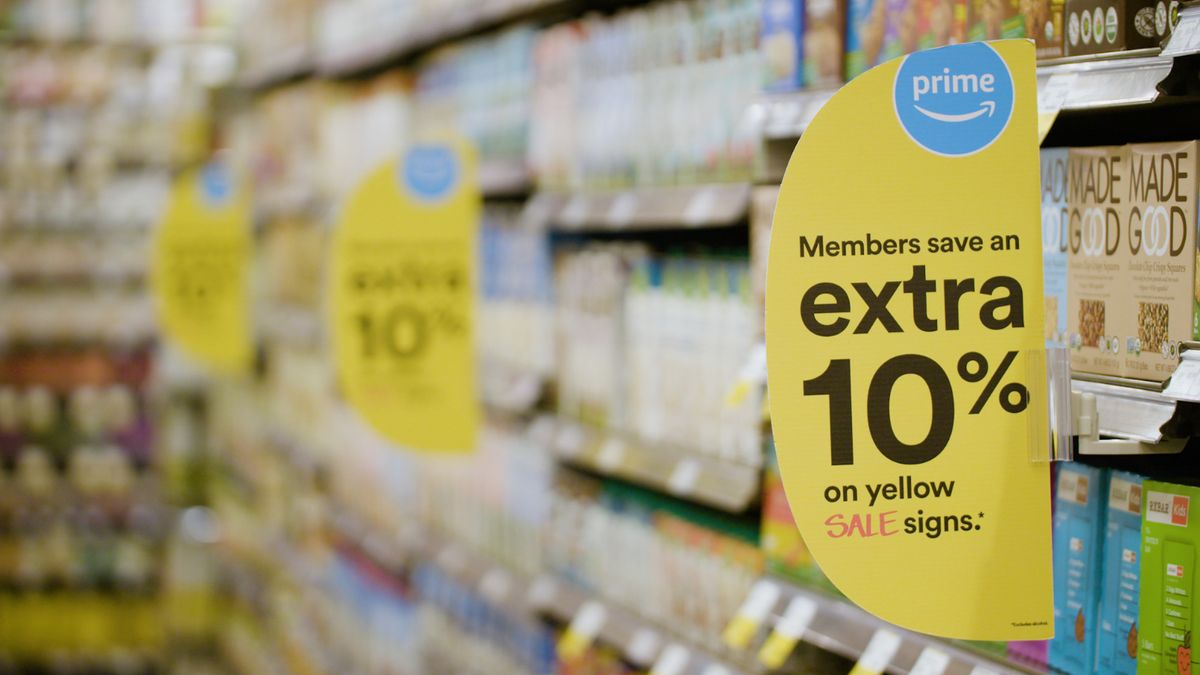
To the uninitiated, Whole Foods Market carries the legacy of being a high-cost retailer. However, through the lens of a Prime member, the financial math shifts significantly. The primary value proposition lies in two distinct discount structures: an additional 10% off items already on sale (marked with yellow signs) and exclusive Prime Member Deals (marked with blue signs) that offer deeper price cuts on specific seasonal or high-demand products.
The Cost-Benefit Analysis of Prime Membership
Before diving into the discounts, it is vital to evaluate the annual cost of an Amazon Prime membership—currently $139—against your grocery habits. From a personal finance perspective, this membership fee must be amortized across the various services you use. If you are a regular shopper at Whole Foods, the math often justifies itself quickly. For instance, if you spend $200 a week on groceries, and the Prime discounts save you a conservative 5% to 7% overall (through sales and the 10% kicker), you could save between $500 and $700 annually on groceries alone. This more than covers the membership fee, effectively making the rest of Prime’s services—such as shipping and streaming—subsidized or “free.”
Strategic Grocery Shopping as a Wealth-Building Tool
Saving money on groceries is a form of guaranteed, tax-free return. Every dollar saved at the checkout is a dollar that can be redirected toward a high-yield savings account, an IRA, or debt repayment. By targeting the Prime-specific discounts at Whole Foods, you are practicing a form of “strategic consumption.” This involves planning your meal cycles around the blue and yellow tag cycles, which typically rotate weekly. When you align your kitchen needs with these deep discounts, you are essentially reducing your cost of living without sacrificing the quality of your nutrition.
Step-by-Step Guide: How to Activate and Access Prime Discounts
The financial benefits of Prime at Whole Foods are not automatically applied simply by walking into the store. You must engage with the digital interface to ensure your membership is recognized at the point of sale. This integration is the bridge between your digital subscription and your physical wallet.
Linking Your Accounts for Seamless Savings
The first step is ensuring your Amazon account is properly configured. If you are a Prime member, you must have the Whole Foods Market app installed on your smartphone or have your mobile phone number linked to your Amazon account. For many, the simplest method is to use the Whole Foods app. Once logged in with your Amazon credentials, the app generates a personalized QR code. Scanning this code at the register is the “key” that unlocks the discount layer of the transaction.
Alternatively, for those who prefer not to use an app during their shopping trip, you can link your mobile phone number to your Amazon account. At checkout, you can simply input your phone number into the credit card terminal. This is a crucial redundancy for those looking to save time while ensuring they never miss a discount opportunity.
Using the Whole Foods Market App vs. In-Store QR Codes
From a technical and financial efficiency standpoint, the Whole Foods app is the superior tool. Beyond providing the QR code, the app allows you to browse the weekly sales at your specific local store before you even leave your house. This allows for proactive budgeting. By viewing the “Prime Member Deals” section in the app, you can build a shopping list comprised primarily of discounted items, ensuring that your trip to the store is focused on high-value acquisitions rather than impulse buys.
Advanced Saving Strategies: Stacking Discounts and Rewards

While the 10% discount on sale items is the headline feature, the truly savvy shopper looks for ways to “stack” benefits. This is where the intersection of personal finance and retail strategy becomes most lucrative.
Leveraging the Amazon Prime Rewards Visa Signature Card
The most powerful tool in the Whole Foods shopper’s arsenal is the Amazon Prime Rewards Visa Signature Card. For Prime members, this card offers a flat 5% back on all purchases made at Whole Foods Market and Amazon.com. When you combine this with the 10% discount on sale items, the savings become compounding.
Consider this scenario: You purchase a bag of organic coffee that is normally $15.00 but is on sale for $12.00. As a Prime member, you receive an additional 10% off that sale price, bringing it down to $10.80. If you pay with your Prime Visa, you receive 5% back on that $10.80, which is an additional $0.54 in rewards. Your final effective price is $10.26—a nearly 32% total reduction from the original price. Over a year of grocery shopping, this 5% “kickback” can result in hundreds of dollars in statement credits or Amazon points.
Strategic Meal Planning Around Yellow and Blue Signs
In-store signage is your roadmap to financial efficiency.
-
Yellow Signs: These indicate standard sales. Prime members get an additional 10% off the listed sale price. This is often where the best value for staples like olive oil, frozen vegetables, and pantry goods is found.
-
Blue Signs: These are exclusive Prime Member Deals. These are often aggressive discounts—sometimes up to 40% or 50% off—on specific high-quality proteins or seasonal produce.
A disciplined shopper will look at the blue signs first to determine their “protein of the week” and then build their meal plan around those specific items. This reverse-engineering of the grocery list is a hallmark of successful personal budgeting.
The Financial Impact of Digital Integration on Modern Households
Understanding how to get the Amazon Prime discount at Whole Foods is a microcosm of a larger financial trend: the optimization of the “subscription ecosystem.” As more services move to a subscription model, the consumer’s job is to ensure they are extracting maximum utility from every dollar spent on those subscriptions.
Calculating ROI on Your Subscription Ecosystem
In the world of business finance, Return on Investment (ROI) is everything. You should view your Amazon Prime membership through the same lens. If you only use Prime for shipping, your ROI might be low. However, if you use it to lower your grocery bill at Whole Foods, watch movies on Prime Video, and listen to music, the “cost per use” of that $139 fee drops to pennies.
To track this, many financial experts recommend a quarterly audit. Look at your Whole Foods receipts; at the bottom, there is usually a line item that shows “Prime Member Savings.” Total these up over three months. If your savings exceed $35 for the quarter, you have officially made the membership pay for itself through groceries alone.
Potential Pitfalls: Avoiding the “Upsell Trap”
While the discounts are real, the primary goal of any retailer is to increase the average transaction value. For the consumer, the risk is that the lure of a “Prime Deal” might entice you to buy premium items you wouldn’t otherwise purchase. From a wealth-building perspective, a discount is only a saving if it is applied to something you were already planning to buy or if it replaces a more expensive alternative.
To maintain financial discipline, it is helpful to compare the discounted Whole Foods price with the “house brand” prices at other grocers. Often, the Whole Foods 365 brand combined with a Prime discount will beat the prices of mid-tier supermarkets, but not always. Use the technology in your pocket to do quick price comparisons to ensure that the “discount” is truly providing the best market value.
Conclusion: The Long-Term Wealth Impact
The ability to secure discounts at Whole Foods via Amazon Prime is a reflection of the digital age’s influence on personal finance. It requires a small amount of initial setup—linking accounts and downloading an app—but the long-term financial dividends are substantial. By mastering the art of the “stack”—combining Prime discounts, exclusive member deals, and the 5% cash back from the Prime Visa—you turn a necessary weekly expense into an optimized financial operation.
In the pursuit of financial independence, it is often said that one should “watch the pennies and the dollars will take care of themselves.” Utilizing the Amazon Prime discount at Whole Foods is the modern equivalent of that philosophy. It is a systematic way to reduce the cost of high-quality goods, ensuring that your health and your bank account can thrive simultaneously. As you move forward, treat your grocery app not just as a shopping tool, but as a financial dashboard designed to preserve your capital while fueling your life.
aViewFromTheCave is a participant in the Amazon Services LLC Associates Program, an affiliate advertising program designed to provide a means for sites to earn advertising fees by advertising and linking to Amazon.com. Amazon, the Amazon logo, AmazonSupply, and the AmazonSupply logo are trademarks of Amazon.com, Inc. or its affiliates. As an Amazon Associate we earn affiliate commissions from qualifying purchases.