
In the landscape of modern procurement, the transition from traditional vendor relationships to digital marketplaces has become a necessity for maintaining competitive margins. For many organizations, the question is no longer whether to use a digital procurement platform, but rather how to optimize the costs associated with it. At the center of this conversation is the Amazon Business account. While the entry-level accessibility of the platform is a major draw, understanding the total cost of ownership—and the potential financial returns—requires a deep dive into its subscription tiers, hidden savings mechanisms, and the logistical efficiencies it provides to a company’s bottom line.
Understanding the Base Cost: Free vs. Paid Tiers
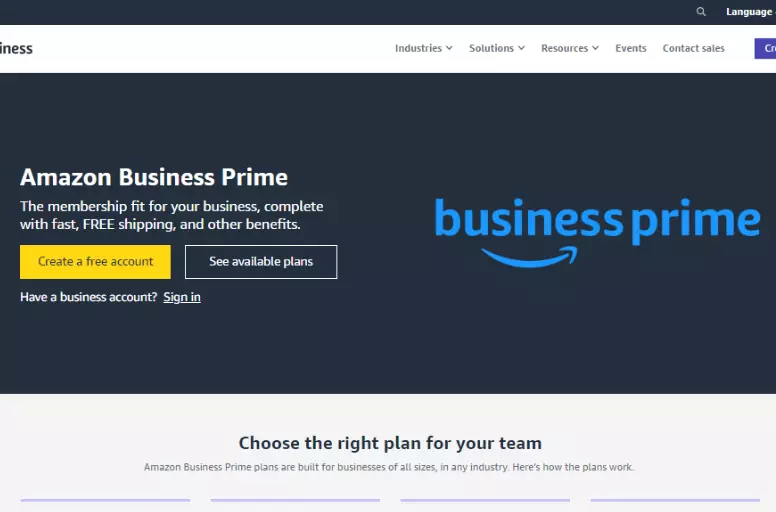
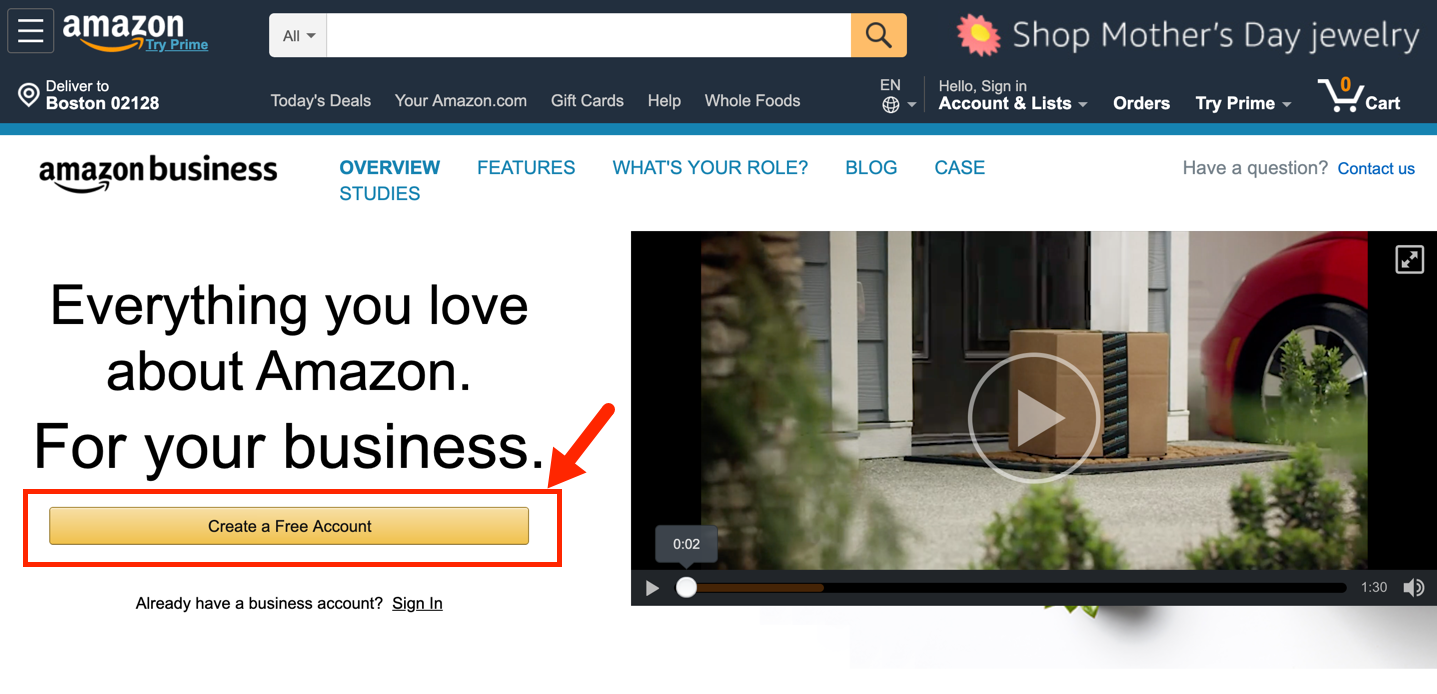
The most immediate answer to “how much is an Amazon Business account” is often surprising to financial controllers: the foundational account itself is free. Unlike many enterprise-grade procurement software solutions that require heavy upfront licensing fees or per-user seat costs, Amazon Business allows any verified entity to register without an initial investment.
The No-Cost Entry: Basic Amazon Business Account
The free version of Amazon Business is designed for organizations that need multi-user functionality and business-only pricing but do not necessarily require the expedited logistics of Prime. For $0 per year, a business gains access to:
-
Multi-user accounts: The ability to add multiple team members under a single corporate umbrella.
-
Business-only pricing: Discounts on millions of products that are not available to standard consumer accounts.
-
Quantity discounts: Tiered pricing for bulk purchases, which can significantly lower the Cost of Goods Sold (COGS).
-
Purchasing analytics: Basic visibility into what the organization is buying, which is a prerequisite for any serious financial audit.
Business Prime: The Real Investment Tiers
While the base account is free, most businesses find that the true value—and the associated costs—lie in Business Prime. Business Prime is not a single product but a scalable subscription model designed to grow alongside a company’s headcount and procurement volume. As of the current fiscal period, the tiers are structured as follows:
-
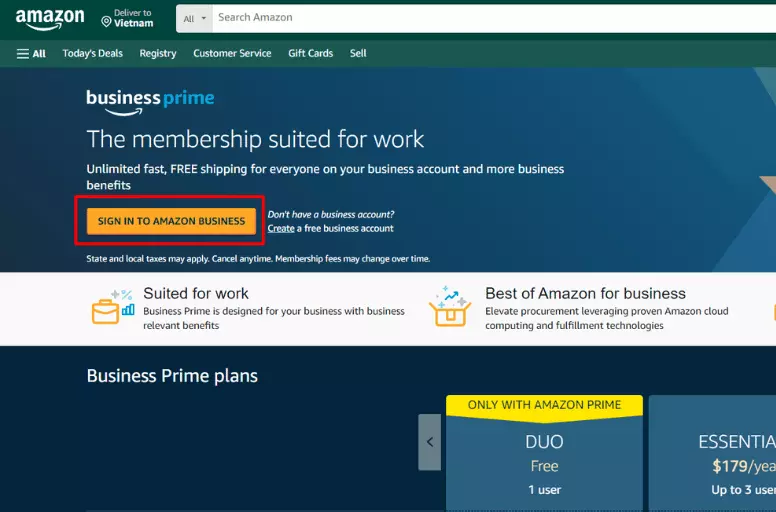
Duo ($69/year): This tier is specifically designed for sole proprietors who already have a personal Amazon Prime account. It links the personal benefits to a single-user business account, providing a low-cost bridge for freelancers and consultants.
-
Essential ($179/year): Aimed at small teams, this tier covers up to three users. It introduces more robust features like Spend Visibility and Guided Buying, which are critical for maintaining budget discipline.
-
Small ($499/year): This tier supports up to 10 users. It is often the “sweet spot” for growing startups and mid-sized departments that require tighter controls over decentralized spending.
-
Medium ($1,299/year): Supporting up to 100 users, this tier is built for mid-to-large enterprises. The cost per user drops significantly at this level, making it a cost-effective choice for regional offices or large-scale operations.
-
Enterprise ($10,099/year): For organizations with over 100 users, the Enterprise tier provides unlimited user seats. This is a strategic investment for multinational corporations that need to centralize procurement across thousands of employees.
Analyzing the Financial ROI of Business Prime Features
To a Chief Financial Officer (CFO) or a Procurement Manager, the annual fee for Business Prime is an operating expense (OPEX) that must be justified by a clear Return on Investment (ROI). The cost is not merely for “fast shipping”; it is for a suite of financial tools that reduce “maverick spending” and improve capital efficiency.
Spend Visibility and Budgetary Control
One of the most significant indirect costs in any business is unmanaged spending. When employees buy supplies from various sources without oversight, the organization loses the ability to negotiate volume discounts and track budgets in real-time. The Spend Visibility tool, available in the Essential tier and above, provides cloud-based data visualization of spending patterns. By identifying where money is leaking—such as frequent small-batch orders instead of bulk purchases—finance teams can reclaim between 5% and 15% of their annual procurement budget.
Guided Buying and Policy Compliance
The cost of an Amazon Business account is often offset by the savings generated through “Guided Buying.” This feature allows administrators to tag certain products as “preferred” or “restricted.” From a financial perspective, this ensures that employees are directed toward products that offer the best value or comply with corporate sustainability goals. By restricting high-cost or non-compliant items, the platform acts as a digital gatekeeper, reducing the administrative burden on the accounts payable department.
Tax-Exempt Purchasing
For non-profits, educational institutions, and government agencies, the Amazon Tax Exemption Program (ATEP) is a critical financial feature. While this is available on the free account, the integration within the business structure allows for seamless application of tax-exempt status across all authorized users. For organizations operating in high-sales-tax jurisdictions, the savings from ATEP can easily exceed the annual cost of a Business Prime Small or Medium subscription within the first few quarters.
Indirect Cost Savings: Streamlining the Supply Chain
Beyond the subscription fees, the financial impact of an Amazon Business account is felt in the reduction of “soft costs”—those intangible expenses related to time, labor, and process inefficiency.
Bulk Pricing and Business-Only Discounts
Amazon Business provides access to “Business-Only Pricing” on over five million products. These are prices negotiated directly with suppliers for the B2B market. Additionally, the “Quantity Discount” feature allows businesses to see price breaks for buying in volume. In a traditional procurement model, securing these discounts would require manual negotiations and contract management. The automated nature of these discounts on Amazon reduces the labor cost associated with procurement.
Shipping Consolidation and Logistics Management
Shipping costs are a major variable in business finance. Business Prime tiers offer “Amazon Day” delivery, which allows businesses to consolidate multiple orders into a single delivery day. This not only reduces the carbon footprint but also streamlines the receiving process at the loading dock. For a warehouse or office manager, reducing the number of deliveries from twenty a week to two can save dozens of labor hours per month—labor that can be reallocated to revenue-generating activities.
Integrating Amazon Business into Corporate Financial Systems
For large-scale enterprises, the “cost” of a new tool is often measured by how much it costs to integrate with existing systems. Amazon Business is designed to fit into the modern “fintech” stack, reducing the friction between purchasing and accounting.
Punchout Integration with ERPs
Enterprise-level accounts support “Punchout” integration with major Enterprise Resource Planning (ERP) and e-procurement systems like SAP Ariba, Coupa, and Oracle Netsuite. This allows users to shop on Amazon Business while the actual purchase order and approval workflow happen within the company’s existing financial software. This integration eliminates the need for manual data entry, which is a common source of costly accounting errors.
Reconciliation and Accounting Automation
The manual reconciliation of credit card statements is a tedious and expensive process for accounting departments. Amazon Business provides line-item detail for every transaction, which can be exported directly into accounting software like QuickBooks or Xero. By automating the reconciliation process, businesses can reduce the time spent on “month-end close” activities, effectively lowering the administrative overhead of the finance team.
Strategic Decision-Making: Is the Investment Right for Your Business?
When evaluating the cost of an Amazon Business account, the decision should be framed as a “Make vs. Buy” analysis. Is it more cost-effective to maintain dozens of individual vendor relationships, or to consolidate those purchases through a single platform with a known annual fee?
Calculating Your Break-Even Point
To determine which tier is appropriate, a business should calculate its “break-even point” based on shipping costs and labor time. If a small team spends $2,000 a year on shipping fees for office and operational supplies, the $179 Essential tier pays for itself in less than two months. If a larger corporation is losing $50,000 a year to unmonitored maverick spending, the $10,099 Enterprise tier becomes a high-yielding investment by providing the controls necessary to stop that leakage.
The Working Capital Advantage: Pay by Invoice
One of the most powerful financial tools offered to business accounts is “Pay by Invoice.” This feature allows eligible businesses to make purchases and receive an invoice with 30-day payment terms (and up to 45 or 60 days for higher Business Prime tiers). In the world of corporate finance, this is an interest-free extension of working capital. By delaying the cash outflow for 30 days while receiving the goods immediately, a business can improve its cash conversion cycle, providing more liquidity for other strategic investments.
Ultimately, the cost of an Amazon Business account is a scalable variable that ranges from zero to five figures. However, when viewed through the lens of business finance, the subscription fee is rarely a standalone cost. Instead, it is a lever used to reduce procurement friction, enhance spend visibility, and optimize the allocation of corporate capital. For most organizations, the question isn’t just about the price of the account, but about the cost of the inefficiencies that the account is designed to eliminate.
aViewFromTheCave is a participant in the Amazon Services LLC Associates Program, an affiliate advertising program designed to provide a means for sites to earn advertising fees by advertising and linking to Amazon.com. Amazon, the Amazon logo, AmazonSupply, and the AmazonSupply logo are trademarks of Amazon.com, Inc. or its affiliates. As an Amazon Associate we earn affiliate commissions from qualifying purchases.