
In an era defined by ubiquitous connectivity and an insatiable appetite for digital content, streaming services have transcended mere entertainment to become fundamental components of our technological lives. Among the pantheon of platforms, Amazon Prime Video stands out, not just for its vast library of films and series, but for the sophisticated technology underpinning its entire ecosystem. For the savvy consumer, understanding “what to stream on Prime” extends beyond just content recommendations; it involves appreciating the technological innovations that enable a seamless, high-quality viewing experience and how to leverage them. This deep dive explores the technical facets of Amazon Prime Video, offering insights into its infrastructure, features, and the future trends shaping its digital landscape.
Understanding the Amazon Prime Video Ecosystem
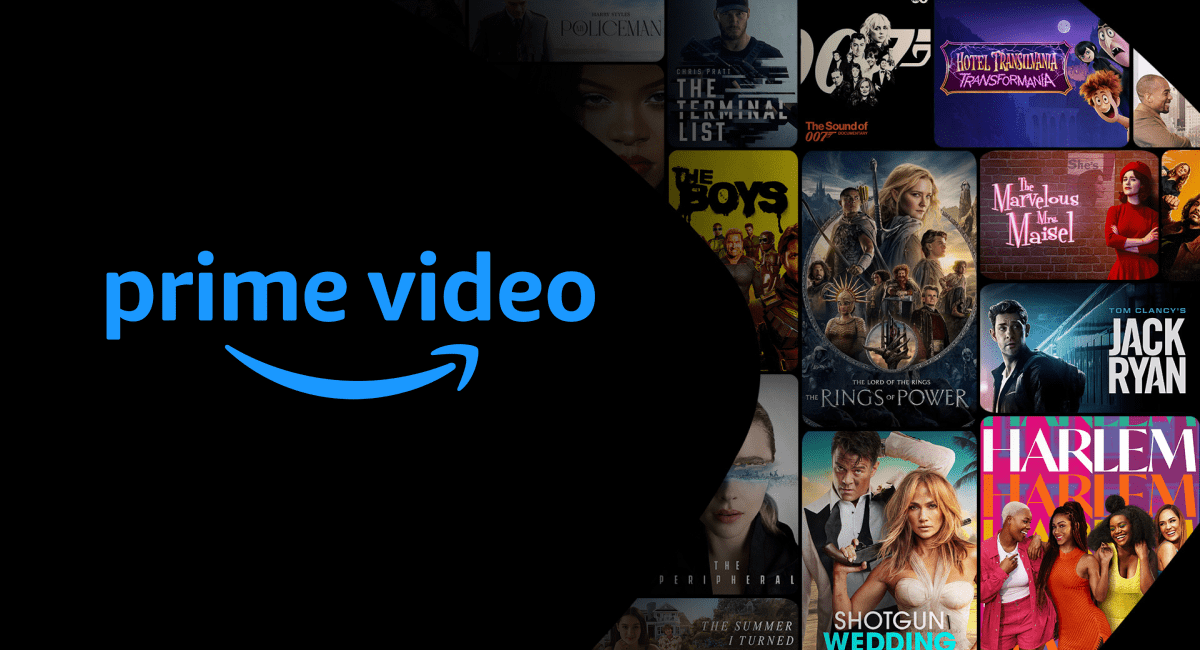
At its core, Amazon Prime Video is a marvel of distributed computing and media technology. It’s a global service that delivers petabytes of video data daily to millions of users across diverse devices and network conditions. This seemingly simple act of pressing “play” masks a complex orchestration of servers, algorithms, and encoding processes designed for optimal performance.
The Technology Behind Seamless Streaming
The backbone of Prime Video’s operation lies in its robust content delivery network (CDN), powered largely by Amazon Web Services (AWS). When you initiate a stream, the video file isn’t served from a single, distant server. Instead, it’s pulled from the nearest available server node in Amazon’s global network, minimizing latency and maximizing bandwidth efficiency. This geographical distribution is crucial for reducing buffering and ensuring consistent quality, regardless of your location.
Furthermore, Prime Video employs adaptive bitrate streaming (ABS) protocols. This sophisticated technology dynamically adjusts the video quality based on your internet connection’s real-time speed and stability. If your connection degrades, the stream automatically scales down to a lower resolution (e.g., from 4K to 1080p or even 720p) to prevent buffering, and then scales back up when conditions improve. This constant, imperceptible adjustment is why you rarely experience abrupt interruptions, even on fluctuating Wi-Fi networks. Video encoding also plays a critical role, utilizing advanced codecs like H.264 (AVC) and H.265 (HEVC) to compress large video files into smaller, more manageable streams without significant loss of visual fidelity. This balance between compression and quality is a continuous area of technological refinement.
Device Compatibility and User Experience
Prime Video’s reach is vast, extending across an impressive array of devices, each presenting unique technological challenges and opportunities for user experience design. From smart TVs (Samsung, LG, Sony, etc.) and dedicated streaming sticks (Amazon Fire TV, Roku, Apple TV) to gaming consoles (PlayStation, Xbox), mobile devices (iOS, Android), and web browsers, the platform strives for ubiquitous accessibility.
Developing for such a diverse ecosystem requires meticulous attention to cross-platform compatibility and optimization. Each device has its own hardware capabilities, operating system nuances, and input methods. Prime Video’s engineers must ensure that the user interface is intuitive and responsive, whether navigated by a remote control, a touchscreen, or a mouse. This involves designing responsive layouts, optimizing app performance for varying processing power and memory, and ensuring consistent feature sets across different platforms, all while maintaining a cohesive brand identity and user flow. The goal is a uniform, high-quality experience, regardless of the consumer’s chosen device.
Content Curation Algorithms and Discovery Tools
In a library swelling with thousands of titles, the challenge for Prime Video is not just to house content, but to help users find what they want to stream. This is where advanced data science and machine learning algorithms come into play. Prime Video employs sophisticated recommendation engines that analyze a multitude of data points: your viewing history, ratings, watchlists, search queries, demographic information, and even the viewing patterns of users with similar profiles.
These algorithms don’t just suggest titles you’ve already seen; they delve into content metadata (genres, actors, directors, themes, release dates) to uncover connections and predict what you might enjoy next. Beyond pure recommendations, Prime Video offers robust discovery tools such as curated carousels, topical categories, and intuitive search functionality with filtering options. Features like “Customers Also Watched” and “Because You Watched…” leverage collaborative filtering to broaden your horizons, turning the vast digital library from an overwhelming maze into a personalized exploration.
Beyond the Basics: Advanced Streaming Features
While the core act of streaming is fundamental, Prime Video distinguishes itself through a suite of advanced features designed to enhance engagement, convenience, and immersion. These aren’t mere add-ons; they are integrated technological solutions that redefine how we interact with digital content.
Offline Viewing and Data Management
The ability to download titles for offline viewing is a crucial feature, especially for users with limited or unreliable internet access, or those looking to conserve mobile data. Technologically, this involves securely encrypting and storing a local copy of the video file on your device. The challenge lies in managing digital rights management (DRM) to prevent unauthorized distribution while ensuring a smooth playback experience without an internet connection.
Prime Video intelligently handles storage and quality options for downloads, allowing users to select different resolutions to balance storage space with visual quality. This feature is particularly useful for travelers or daily commuters, providing entertainment continuity even in areas without Wi-Fi or cellular service, demonstrating a pragmatic application of technology to solve real-world connectivity challenges.
X-Ray: Bridging Content and Information
Perhaps one of Prime Video’s most innovative and underrated features is X-Ray, powered by IMDb (which is also an Amazon company). As you watch a movie or show, X-Ray provides instant, contextual information about the scene currently playing. With a single tap or click, you can identify actors on screen, the song playing, trivia about the production, cast biographies, and even goofs.
Technologically, X-Ray operates by synchronizing a detailed metadata timeline with the video playback. It uses precise timestamp markers to trigger information overlays, seamlessly integrating a second-screen experience directly into the primary viewing window. This real-time, on-demand information delivery enriches the viewing experience, satisfying curiosity without interrupting the narrative flow, and showcases a clever fusion of database technology with streaming media.
4K HDR and Spatial Audio: Elevating the Viewing Experience
The pursuit of cinematic quality at home drives continuous innovation in video and audio technology. Prime Video has been at the forefront of adopting and delivering high dynamic range (HDR) and spatial audio formats. HDR (including standards like HDR10+ and Dolby Vision) dramatically expands the range of colors and contrast, revealing more detail in both the brightest highlights and darkest shadows, creating a more lifelike and immersive image.
Similarly, spatial audio technologies like Dolby Atmos move beyond traditional surround sound by adding a height dimension, allowing sounds to be precisely placed anywhere in a three-dimensional space, including overhead. This creates an incredibly immersive auditory experience, making viewers feel more deeply embedded in the scene. Delivering these advanced formats requires significant technological infrastructure, from content mastering and encoding to ensuring compatibility with a wide range of devices (e.g., HDR-compatible TVs, soundbars, and receivers) and optimizing bandwidth for these data-intensive streams. The result is a premium viewing experience that rivals commercial cinemas.
Optimizing Your Prime Video Experience
Beyond merely consuming content, there are several technological configurations and user habits that can significantly enhance your Prime Video experience, transforming passive viewing into an actively managed entertainment hub.
Bandwidth Considerations and Adaptive Streaming
While adaptive bitrate streaming largely handles network fluctuations automatically, understanding its implications empowers users. For optimal 4K HDR streaming, a stable internet connection of at least 15-25 Mbps is generally recommended. If multiple devices are streaming simultaneously or engaging in other bandwidth-heavy activities (online gaming, large downloads), even a fast connection can be strained.
Users can optimize by ensuring their Wi-Fi router is modern and properly positioned, reducing network congestion by limiting other internet usage during streaming, or even using an Ethernet cable for a more stable connection on static devices like smart TVs. Prime Video also offers quality settings within its apps, allowing users to manually adjust the streaming resolution to conserve data or improve stability if their network is consistently challenged, providing a degree of control over the adaptive streaming process.
Customizing Parental Controls and Profiles
For households with diverse viewers, robust technological features for personalization and control are essential. Prime Video allows the creation of multiple user profiles, each with its own watch history, recommendations, and settings. This ensures that the algorithm delivers relevant suggestions to each individual, preventing, for example, children’s animated shows from dominating an adult’s recommendations.
Crucially, Prime Video offers comprehensive parental controls. Parents can set age restrictions for content (based on ratings like G, PG, R, etc.), require a PIN for purchases, or even restrict access to specific profiles. This technology provides peace of mind, allowing adults to curate a safe and appropriate viewing environment for younger family members, leveraging digital safeguards to manage content access effectively.
Leveraging Voice Commands and Smart Integrations
The convergence of streaming platforms with smart home technology has opened new avenues for interaction. Amazon Prime Video seamlessly integrates with Amazon’s Alexa-enabled devices, allowing for hands-free control. Users can issue voice commands to their Echo speakers or Fire TV devices to search for titles, play, pause, fast-forward, or rewind content. “Alexa, play [show name] on Prime Video,” or “Alexa, show me action movies” are common commands that leverage sophisticated natural language processing and voice recognition technology.
Furthermore, Prime Video can be integrated into broader smart home routines, allowing users to, for example, dim the lights and start a movie with a single command. This level of smart integration exemplifies how streaming technology is becoming embedded into a larger connected ecosystem, enhancing convenience and creating a more immersive, voice-controlled entertainment experience.
The Future of Streaming on Prime: Innovations and Trends
The technological evolution of streaming is relentless. Amazon Prime Video, backed by Amazon’s vast resources and expertise in cloud computing and AI, is poised to lead several emerging trends that will redefine “what to stream” and “how we stream.”
AI-Powered Personalization and Recommendations
While current recommendation engines are advanced, the future promises even deeper, more nuanced personalization powered by artificial intelligence. Expect AI to move beyond collaborative filtering to predictive analytics that can anticipate your preferences even before you consciously know them. This might involve analyzing micro-interactions (how long you hover over a title, your reaction to trailers), emotional responses inferred from viewing habits, and even external contextual data.
AI could create truly dynamic homepages that adapt in real-time, surfacing content based on the time of day, your mood, or even local events. The goal is to create an experience so tailored that content discovery becomes an almost effortless, magical process, making the vast library feel infinitely curated just for you.
Interactive Content and Experiential Viewing
The linear narrative has dominated television for decades, but technology is enabling new forms of interactive storytelling. Prime Video has already experimented with “choose your own adventure” style content, particularly in children’s programming and some niche adult series (e.g., “Mister Rogers’ Neighborhood,” “The Grand Tour presents: Seamen”). This trend is likely to expand, allowing viewers to make decisions that influence the plot, explore different character perspectives, or even participate in the narrative directly.
Beyond choice-based narratives, expect more experiential viewing. This could include augmented reality (AR) overlays that bring elements of the show into your living room via a smartphone, or second-screen experiences that provide enhanced data and insights beyond X-Ray, blurring the lines between watching and participating, and transforming passive consumption into active engagement.

The Evolving Landscape of Content Acquisition and Distribution
The technology of streaming also impacts the business side of content: acquisition, production, and distribution. With vast amounts of user data, Prime Video can leverage AI to identify emerging content trends, greenlight projects with higher predicted success rates, and optimize production budgets. This data-driven approach to content strategy can lead to more targeted and potentially higher-quality original programming that resonates deeply with its subscriber base.
Furthermore, innovations in cloud-based post-production and distribution pipelines, again largely powered by AWS, will continue to accelerate the delivery of new content globally. This means faster turnaround times from production to screen, the ability to distribute content in more languages and formats efficiently, and a more dynamic, responsive content library that can adapt quickly to viewer demands and global events. The interplay of technological innovation and creative content strategy will define the next decade of streaming on Prime Video.
In conclusion, “what to stream on Prime” is a question with a technologically rich answer. It encompasses not just the diverse array of films and shows, but the intricate web of adaptive streaming, AI-driven recommendations, immersive audio-visual standards, and user-centric features that collectively elevate the digital entertainment experience. Understanding these technological underpinnings allows users to not only make informed choices about what to watch but also to optimize how they watch, ensuring they extract the maximum value and enjoyment from one of the leading streaming platforms today.
aViewFromTheCave is a participant in the Amazon Services LLC Associates Program, an affiliate advertising program designed to provide a means for sites to earn advertising fees by advertising and linking to Amazon.com. Amazon, the Amazon logo, AmazonSupply, and the AmazonSupply logo are trademarks of Amazon.com, Inc. or its affiliates. As an Amazon Associate we earn affiliate commissions from qualifying purchases.