
In the rapidly evolving landscape of digital entertainment, “what’s on Amazon streaming” has become a question that extends far beyond a simple list of movie titles or original series. For the technology enthusiast and the digital strategist, the answer lies in a complex intersection of cloud infrastructure, artificial intelligence, and sophisticated hardware integration. Amazon Prime Video is no longer just a content repository; it is a showcase for the capabilities of Amazon Web Services (AWS) and a testing ground for the future of interactive media. Understanding the tech stack behind the platform reveals how a global retail giant transformed into a titan of digital distribution.
The Software Engine: UI/UX and Algorithmic Discovery
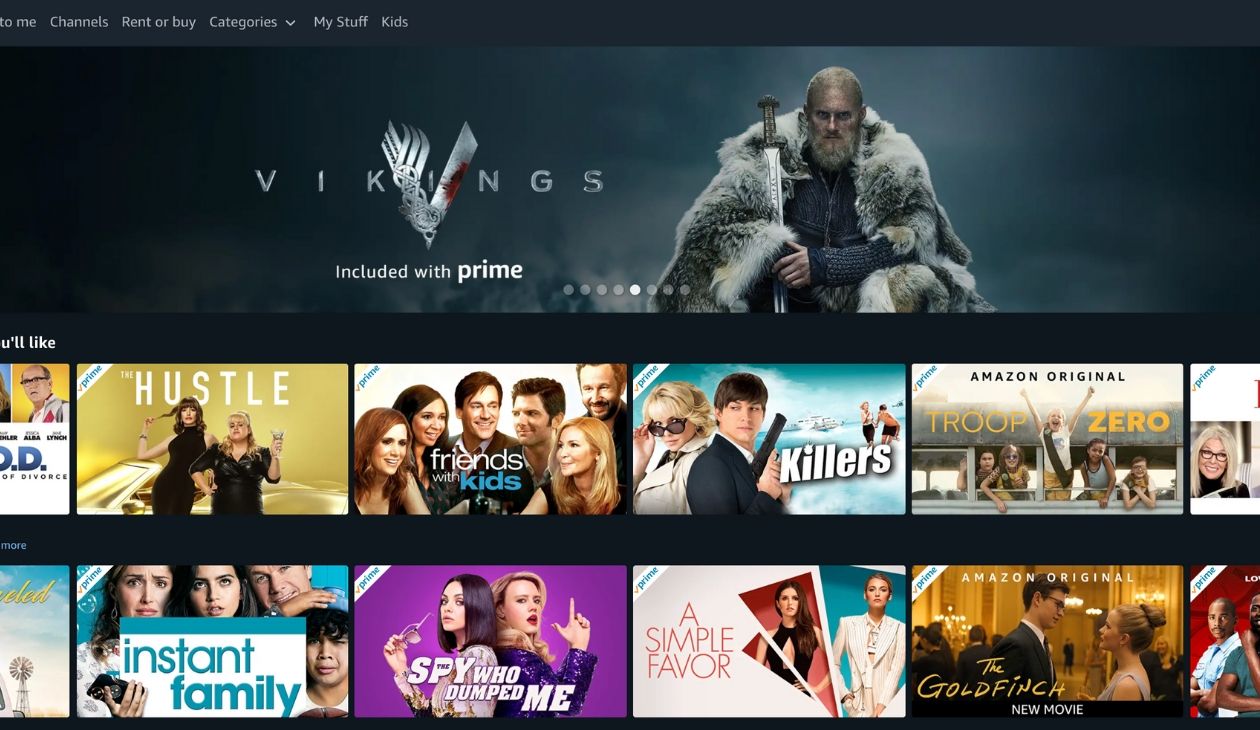
At the heart of the Amazon streaming experience is a sophisticated software layer designed to manage millions of concurrent users across thousands of different device types. The “what’s on” aspect of the platform is governed by a highly personalized discovery engine. Unlike traditional broadcast television, where scheduling is linear, Amazon’s streaming interface uses machine learning models to curate a unique digital storefront for every individual user.
Personalized Recommendation Engines
The recommendation system relies on a multi-layered neural network that analyzes petabytes of data. This includes viewing history, search queries, and even the “hover time” a user spends on a specific thumbnail. By leveraging AWS SageMaker, Amazon can iterate on these models in real-time. The goal is to reduce “choice paralysis,” a common technological hurdle in the streaming era. The algorithms are designed to balance “exploitation” (showing users what they already like) with “exploration” (introducing new genres to expand the user’s profile).
Cross-Platform Optimization
One of the most significant technical challenges for Amazon is maintaining a consistent user experience (UX) across a fragmented ecosystem. From low-power Android sticks to high-end 8K smart TVs and mobile devices, the software must be agile. Amazon utilizes a web-based UI framework that allows for rapid updates without requiring a full firmware overhaul on the host device. This “thin client” approach ensures that new features, like the “Continue Watching” sync or updated navigation menus, roll out globally with minimal latency.
The Infrastructure: Leveraging AWS for Global Scalability
When users ask what’s on Amazon streaming, they are tapping into one of the most robust cloud infrastructures on the planet. Prime Video is arguably the most prominent “internal” customer of Amazon Web Services. The transition from a DVD-by-mail service to a global streaming powerhouse necessitated a complete architectural shift toward microservices and serverless computing.
Content Delivery Networks (CDNs) and Edge Computing
To deliver 4K Ultra HD content without buffering, Amazon utilizes its global network of Edge locations. Through Amazon CloudFront, content is cached closer to the end-user. This reduces the physical distance data must travel, significantly lowering latency. When a high-profile series like The Lord of the Rings: The Rings of Power premieres, the infrastructure must handle a massive surge in traffic. AWS Auto Scaling automatically provisions additional compute resources to handle these spikes, ensuring that the “what’s on” remains accessible regardless of the global load.
Adaptive Bitrate Streaming (ABR)
The technical backbone of the viewing experience is Adaptive Bitrate Streaming. Amazon’s video encoding pipeline creates dozens of versions of a single file at various bitrates and resolutions. During playback, the Prime Video app constantly monitors the user’s internet speed and device performance. If the bandwidth drops, the player seamlessly switches to a lower-bitrate stream to prevent a “spinning wheel” interruption. This process involves complex HEVC (High Efficiency Video Coding) and AVC (Advanced Video Coding) protocols that compress data without sacrificing visual fidelity.
Innovative Features: The X-Ray Tech and Metadata Integration
What distinguishes Amazon’s streaming technology from its competitors is its deep integration with IMDb (Internet Movie Database), an Amazon subsidiary. This feature, known as X-Ray, represents a pinnacle of metadata synchronization.
Real-Time Metadata Syncing
X-Ray is not merely a static overlay; it is a dynamic, time-synced database. Using frame-by-frame analysis, the software identifies actors, music tracks, and even trivia. This requires a sophisticated “event-driven” architecture where the video stream is paired with a secondary data stream. When a user pauses the video, the app fetches the relevant metadata for that exact millisecond of footage.

Computer Vision and Face Detection
The creation of X-Ray data has evolved from manual entry to automated computer vision. Amazon uses Rekognition, an AWS AI service, to scan thousands of hours of content. The AI can identify recurring faces and link them to actor profiles automatically. This technology also powers the “Skip Intro” and “Skip Recap” features, which rely on the AI’s ability to recognize structural patterns in television episodes, such as the exact moment a title card appears or fades.
The Hardware Synergy: Fire TV and the Smart Home Ecosystem
To understand what’s on Amazon streaming, one must also look at the hardware that delivers it. Amazon has created a closed-loop ecosystem by developing its own line of Fire TV devices. This vertical integration allows for a level of software-hardware optimization that third-party apps cannot match.
Voice Integration via Alexa
The integration of Alexa Voice Remote technology has changed the way users interact with the streaming catalog. The natural language processing (NLP) capabilities of Alexa allow for complex queries like “find action movies from the 90s.” The tech stack behind this involves converting voice to text, querying the Prime Video database via an API, and returning a visual interface—all in under a second. This “voice-first” navigation is a key component of Amazon’s strategy to simplify the digital living room.
Smart Home and Multi-Device Connectivity
Prime Video is designed to function as a node within the broader Internet of Things (IoT). For instance, users can view their Ring doorbell feed directly on their television while a movie is playing. This is made possible through the “Picture-in-Picture” (PiP) capability of the Fire TV OS and the shared communication protocols between Amazon devices. The “what’s on” becomes a multi-functional dashboard that blends entertainment with home security and management.
Live Sports and the Future of Low-Latency Streaming
The inclusion of live sports, such as Thursday Night Football, has pushed Amazon’s streaming technology to its limits. Live broadcasting presents a different set of challenges compared to Video on Demand (VOD).
Reducing the “Spoiler Gap”
In live sports streaming, the biggest technical hurdle is latency—the delay between the action on the field and the image on the screen. Traditional streaming can have a lag of 30 to 60 seconds, leading to “spoilers” from social media or mobile notifications. Amazon has invested heavily in low-latency HLS (HTTP Live Streaming) and DASH (Dynamic Adaptive Streaming over HTTP) protocols. By shortening the “segments” of video data sent to the player, Amazon has successfully reduced latency to levels that rival traditional cable and satellite broadcasts.
Interactive Statistical Overlays
During live events, Amazon utilizes “Next Gen Stats” powered by AWS. Sensors on the players and the ball generate data in real-time, which is then processed in the cloud and pushed to the viewer as an interactive overlay. This turns the streaming experience into a data-rich environment where tech-savvy fans can track player speed, catch probability, and passing lanes. It represents a shift from passive viewing to an interactive tech experience.
Digital Security and Content Protection
Finally, the technology of Amazon streaming must address the critical issue of Digital Rights Management (DRM) and cybersecurity. Protecting premium content from piracy while ensuring a smooth user experience is a delicate balancing act.
Multi-DRM Support
Amazon employs a multi-DRM strategy, utilizing systems like Google Widevine, Apple FairPlay, and Microsoft PlayReady. This ensures that the content remains encrypted until the moment it is decoded by the secure hardware of the user’s device. The authentication process happens in the background through secure API calls to Amazon’s identity management servers, ensuring that only active Prime members or authorized renters can access the “what’s on” catalog.
Anti-Fraud and Account Security
Beyond content protection, Amazon uses AI to detect fraudulent account activity. By analyzing login patterns, IP addresses, and device signatures, the system can identify compromised accounts or unauthorized sharing. This layer of digital security is essential for maintaining the integrity of the platform and protecting the financial data of millions of subscribers.
In conclusion, “what’s on Amazon streaming” is a multifaceted digital ecosystem built on the pillars of AWS infrastructure, AI-driven personalization, and hardware-software synergy. From the invisible algorithms that suggest your next favorite show to the global network of servers delivering 4K video at the speed of light, Prime Video is a testament to the power of modern technology in redefining the entertainment landscape. As Amazon continues to innovate with low-latency live sports and AI-enhanced metadata, the platform will remain at the forefront of the digital revolution.
aViewFromTheCave is a participant in the Amazon Services LLC Associates Program, an affiliate advertising program designed to provide a means for sites to earn advertising fees by advertising and linking to Amazon.com. Amazon, the Amazon logo, AmazonSupply, and the AmazonSupply logo are trademarks of Amazon.com, Inc. or its affiliates. As an Amazon Associate we earn affiliate commissions from qualifying purchases.