
In an increasingly subscription-driven world, Amazon Prime stands as one of the most pervasive and influential services. What began primarily as a fast shipping program has blossomed into a comprehensive ecosystem of digital entertainment, exclusive deals, and consumer conveniences. For millions globally, it’s an indispensable part of their daily lives. However, the fundamental question for many, especially those new to the service or those re-evaluating their household budgets, remains: “How much is Amazon Prime annually?” Beyond the simple numerical answer, understanding the financial commitment and evaluating its true value within one’s personal finance strategy is crucial. This article delves into the monetary aspects of an Amazon Prime membership, exploring its current costs, dissecting its value proposition, and providing insights for financially savvy consumers.
The Core Annual Cost of Amazon Prime: Breaking Down the Numbers
At its heart, an Amazon Prime membership represents a direct financial outlay, typically paid annually, though monthly options exist. Understanding the precise figures is the first step in assessing its impact on your personal budget.
Standard Annual Membership Fee
As of late 2023 and into 2024, the standard annual cost for an Amazon Prime membership in the United States is $139. This one-time yearly payment covers all the benefits associated with the Prime service for a full 12-month period. For many users, this upfront cost is more palatable than a recurring monthly charge, offering a slight discount compared to the cumulative monthly total. It’s important to note that Amazon has adjusted its pricing historically, and these figures are subject to change in the future, typically in response to increasing operational costs or expansions of service offerings. Consumers should always verify the latest pricing directly on Amazon’s official website.
Monthly vs. Annual Savings
While the annual fee of $139 is a significant lump sum, Amazon also offers a monthly payment option. The standard monthly cost for Amazon Prime is $14.99. This provides greater flexibility, allowing members to cancel at any time without committing to a full year. However, opting for the monthly payment plan accumulates to a higher total over 12 months.
Let’s do the math:
-
Monthly cost for 12 months: $14.99 * 12 = $179.88
-
Annual cost: $139
By choosing the annual subscription, members save approximately $40.88 per year compared to paying monthly. This financial incentive often sways users towards the annual commitment, provided they intend to use the service consistently throughout the year. For individuals who anticipate only needing Prime for specific periods, such as holiday shopping or a summer of streaming, the monthly option might still be more cost-effective despite the higher cumulative price.
Student and Qualifying Government Assistance Discounts
Amazon recognizes that not all users have the same financial capacity, and it offers discounted Prime memberships for specific eligible groups, making the service more accessible. These discounts significantly reduce the financial burden, aligning with principles of equitable access to digital services.
-
Prime Student: Eligible college students can subscribe to Amazon Prime for a reduced rate. This program typically offers a free six-month trial, followed by a discounted annual fee of $69 per year or a monthly rate of $7.49. This represents a substantial saving of $70 compared to the standard annual fee, or over 50% off the standard monthly rate. Eligibility usually requires a valid .edu email address or other proof of student enrollment.
-
Qualifying Government Assistance: Individuals receiving certain government benefits, such as SNAP EBT or Medicaid, are also eligible for a discounted Prime membership. This rate is typically $6.99 per month. While this option is offered monthly rather than annually, it still presents a significant saving compared to the standard $14.99 monthly fee, making Prime more affordable for low-income households. Proof of eligibility is required for these programs.
These discounted tiers underscore Amazon’s strategic approach to expanding its subscriber base while addressing affordability concerns for specific demographics, thereby broadening its financial reach and market penetration.
Beyond the Subscription: Hidden Costs and Value
The explicit annual fee is just one piece of the financial puzzle. A comprehensive financial assessment of Amazon Prime requires looking beyond the subscription cost to understand both the potential for hidden expenses and the inherent value derived from its multifaceted benefits.
The Psychology of Prime Spending: Is it Worth It?
The “worth” of Prime extends beyond a simple cost-benefit analysis of its features. It taps into consumer psychology, influencing spending habits and perceived value. The most significant psychological aspect is the “free shipping” effect. Once paid for, members often feel compelled to maximize this benefit, leading to more frequent, smaller purchases that they might otherwise consolidate or forgo entirely. This can inadvertently increase overall spending, effectively becoming a ‘hidden cost’ if it leads to buying items that wouldn’t have been purchased otherwise.
Furthermore, Prime creates a sense of exclusivity and convenience. The instant gratification of fast delivery, coupled with access to streaming content and exclusive deals, can lead to a perception that the membership “pays for itself” through avoided shipping fees or entertainment costs. However, a critical financial evaluation requires tracking actual spending and comparing it to a hypothetical scenario without Prime. Are you really saving money, or just spending more efficiently within the Amazon ecosystem? For many, the intangible value of convenience and time saved is a significant factor that’s hard to quantify financially but heavily influences perceived worth.
Ancillary Purchases and ‘Prime-Only’ Deals
While Prime offers access to exclusive deals, these can sometimes act as a double-edged sword for personal finance. ‘Prime Day’ and other Prime-exclusive sales events are designed to encourage spending. While genuine savings can be found, the allure of a “deal” can lead to impulse purchases of non-essential items. This means that while the discount is real, the expenditure itself might be an unnecessary drain on financial resources.
Additionally, Prime often nudges members towards Amazon’s own brands and services. While these can be competitive, they might not always be the absolute cheapest or highest quality option available outside the Amazon ecosystem. A financially disciplined approach involves cross-referencing prices and product reviews, even for Prime-eligible items, to ensure you’re making the best purchasing decision, rather than simply defaulting to Amazon due to the convenience of Prime. The “hidden cost” here is the potential for opportunity cost – missing out on better deals elsewhere because of the psychological pull of Prime’s integrated experience.
The Opportunity Cost of Not Using Prime’s Full Value

The comprehensive nature of Prime’s offerings means that its true financial value is unlocked only when a member utilizes a significant portion of its benefits. For someone who primarily subscribes for free two-day shipping but rarely streams Prime Video, uses Prime Music, or leverages Prime Reading, the annual fee might be an inefficient allocation of funds.
Consider the opportunity cost: if you’re paying $139 per year but only using one or two features, that money could potentially be better spent elsewhere. Could you get a cheaper streaming service that better suits your needs? Could you consolidate your purchases to meet free shipping thresholds on other platforms without a subscription? Or could that $139 be invested, used to pay down debt, or contribute to a savings goal? Understanding the full suite of Prime benefits (which include Prime Video, Amazon Music Prime, Prime Reading, unlimited photo storage, Amazon Fresh delivery, Rx savings, and more) and honestly assessing your usage patterns is vital for a sound financial decision. If you’re not fully leveraging these benefits, you might be incurring an opportunity cost by tying up funds in an underutilized subscription.
Maximizing Your Prime Investment: Getting the Most Financial Value
Once you’ve committed to an Amazon Prime membership, the goal shifts from just understanding the cost to actively ensuring you extract maximum financial value from your investment. This involves strategic utilization of its features to genuinely save money and improve your financial standing.
Utilizing All Prime Benefits to Save Money
To make your $139 (or discounted) annual fee truly worthwhile, explore and integrate all available Prime benefits into your lifestyle.
-
Shipping Savings: This is the flagship benefit. Calculate how much you would have spent on shipping fees if you weren’t a Prime member. For frequent online shoppers, this can quickly offset the annual fee. Also, consider “Same-Day” or “One-Day” delivery options for urgent needs, preventing impulse trips to brick-and-mortar stores.
-
Prime Video and Music: Evaluate if these services replace standalone subscriptions like Netflix, Spotify, or Apple Music. If so, factor in the savings from canceling those separate subscriptions. Prime Video often includes movies and TV shows that would otherwise require rental or purchase.
-
Prime Reading/First Reads: For avid readers, access to a rotating selection of free ebooks and a free monthly Kindle book can significantly reduce your book budget.
-
Amazon Photos: Unlimited full-resolution photo storage can save you money on cloud storage subscriptions like Google One or iCloud.
-
Amazon Fresh/Whole Foods Market: If you regularly use these grocery services, Prime offers free delivery on eligible orders (above a certain threshold), saving on delivery fees.
-
Prime Gaming: For gamers, free games and in-game content can represent tangible savings on entertainment.
-
Prime Prescription Savings: Check if Prime Rx offers better deals on your medications than your current pharmacy or insurance plan.
By consciously integrating these services, Prime can act as a bundle that delivers multi-faceted savings, consolidating various expenditures under one annual fee.
Is Amazon Prime Still a Good Financial Decision for You?
Periodically re-evaluating your Prime membership is a healthy financial practice. This isn’t a one-time decision but an ongoing assessment based on changing needs and financial circumstances. Ask yourself:
-
What percentage of my online shopping is done on Amazon? If it’s minimal, the shipping benefit might not be enough.
-
Am I actively using the streaming, music, or reading benefits? If you have other preferred services, Prime’s offerings might be redundant.
-
Has my financial situation changed? If budget constraints are tighter, even $139 might be better allocated elsewhere.
-
Am I making impulse purchases because of Prime? Be honest about whether Prime encourages unnecessary spending.
Consider running a brief audit: for a month, track every Prime benefit you use and roughly estimate its standalone cost or value. If the cumulative estimated value significantly outweighs the $14.99 monthly equivalent, your Prime investment is likely sound. If not, it might be time to reconsider.
Alternative Cost-Saving Strategies Without Prime
For those who conclude that Prime’s annual fee doesn’t align with their financial goals or usage patterns, several alternative strategies can help save money on online shopping and entertainment without the subscription:
-
Consolidate Orders: Most retailers offer free shipping once an order reaches a certain dollar threshold. Plan your purchases to hit these minimums.
-
Utilize Free Trials Strategically: Many services, including Amazon itself, offer free trials. Use them when you genuinely need the service for a short period (e.g., during major sales events or for a specific show).
-
Public Library Resources: Libraries offer a wealth of free resources, including books, audiobooks, movies, and sometimes even streaming services, that can replace Prime Reading and Prime Video for many.
-
Compare Prices Across Retailers: Don’t limit yourself to Amazon. Use price comparison tools to find the best deals across various online stores. Many major retailers now offer competitive shipping speeds, even without a subscription.
-
Shared Households: If permissible by Amazon’s terms, sharing an account within a household can split the cost among multiple users, effectively reducing the individual financial burden. (Note: Amazon Household allows sharing some, but not all, Prime benefits).
By adopting these financially savvy habits, individuals can enjoy many conveniences of online shopping and digital entertainment without committing to the annual Amazon Prime investment, ensuring their money works harder for them.
Future Outlook: Potential Price Changes and Their Financial Impact
The cost of Amazon Prime has not remained static since its inception, and it is highly probable that future adjustments will occur. Understanding the historical context and anticipating potential changes is crucial for long-term financial planning.
Historical Price Adjustments and Consumer Reaction
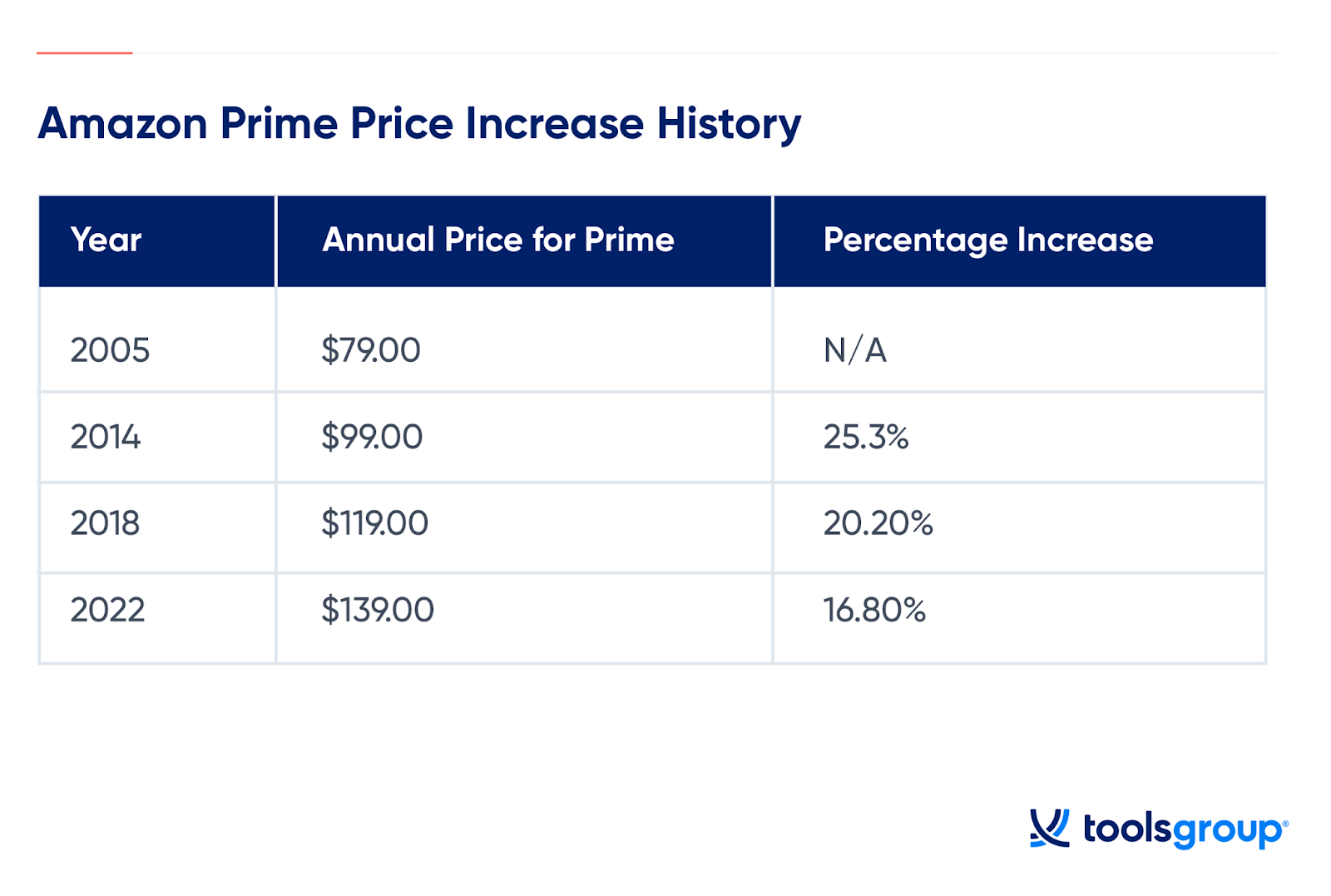
Amazon launched Prime in 2005 at an annual fee of $79. Over nearly two decades, the price has seen several increases, notably to $99 in 2014, $119 in 2018, and most recently to $139 in 2022. Each price hike has been accompanied by an expansion of Prime’s benefits, from the initial focus on shipping to the addition of video, music, reading, and other services.
Consumer reaction to these increases has been mixed. While some members express frustration, many ultimately absorb the cost, viewing the expanded benefits as sufficiently valuable. The “stickiness” of Prime, driven by convenience and habit, often outweighs the friction of a price adjustment. However, each increase does lead a subset of subscribers to re-evaluate their membership, prompting them to either cancel or explore the aforementioned alternative strategies. From a financial perspective, these price changes directly impact household budgets, necessitating periodic reassessments of the service’s value against its rising cost.

Anticipating Future Financial Commitments
For budget-conscious consumers, it’s prudent to anticipate that the annual fee for Amazon Prime will likely continue to trend upwards over time. Factors driving potential future increases include:
-
Inflation and Operating Costs: The rising cost of fuel, labor, packaging, and logistics directly impacts Amazon’s ability to offer fast, free shipping.
-
Expansion of Benefits: As Amazon invests in new content for Prime Video, new features for Prime Music, or entirely new services, these additions will eventually be reflected in the subscription price.
-
Market Position: Amazon’s dominant position in e-commerce and its extensive ecosystem allow it a degree of pricing power.
Savvy financial planning should account for potential small increases in recurring subscription costs. Instead of being blindsided, consider factoring in a small buffer for such services in your annual budget. This proactive approach ensures that a future price adjustment for Amazon Prime doesn’t disrupt your financial equilibrium, allowing you to either absorb the change seamlessly or make a deliberate decision to cancel and reallocate your funds based on a clear financial strategy.
Ultimately, the question of “how much is Amazon Prime annually” extends far beyond its current dollar figure. It encapsulates a broader financial discussion about consumer spending habits, value perception, budgeting, and the ongoing assessment of digital investments in a rapidly evolving economic landscape.
aViewFromTheCave is a participant in the Amazon Services LLC Associates Program, an affiliate advertising program designed to provide a means for sites to earn advertising fees by advertising and linking to Amazon.com. Amazon, the Amazon logo, AmazonSupply, and the AmazonSupply logo are trademarks of Amazon.com, Inc. or its affiliates. As an Amazon Associate we earn affiliate commissions from qualifying purchases.