
In the vast and dynamic financial landscape of the United States, the question “Which is the best bank?” is less about finding a singular, universally superior institution and more about identifying the optimal financial partner for your unique needs and goals. The concept of “best” is inherently subjective, sculpted by individual financial habits, priorities, and life stages. From the sprawling national chains with their ubiquitous branches to the agile, online-only challengers and community-focused credit unions, each type of institution offers distinct advantages and trade-offs. This comprehensive guide aims to demystify the banking selection process, empowering you to navigate the options and pinpoint the bank that truly aligns with your financial aspirations in the USA.
Defining “Best”: It’s Not One-Size-Fits-All
Before diving into specific institutions, it’s crucial to understand that the “best” bank is a personal designation. What works for a tech-savvy minimalist who rarely uses cash might be completely unsuitable for a small business owner who relies on in-person deposits and dedicated financial advisors.
Understanding Your Banking Needs
Your first step should be an honest assessment of your financial life. Are you primarily looking for a place to manage daily transactions, or are you focused on maximizing savings and investment growth?
-
For Personal Banking: Consider how often you use ATMs, whether you prefer digital banking, your typical transaction volume, and your saving habits. Are you a student, a young professional, a family planner, or nearing retirement? Each stage often demands different features, from student-friendly accounts to robust investment platforms.
-
For Business Finance: Small business owners, freelancers, and entrepreneurs have a distinct set of requirements, including business checking accounts, merchant services, payroll solutions, and access to business loans or lines of credit.
-
For Specific Goals: If you’re saving for a down payment, planning a major purchase, or building an emergency fund, your focus might shift towards high-yield savings accounts or certificates of deposit (CDs).
Key Metrics for Evaluation
Once you understand your needs, you can begin to evaluate banks based on a set of objective criteria:
-
Fees: This includes monthly maintenance fees, ATM fees, overdraft fees, wire transfer fees, and foreign transaction fees.
-
Interest Rates: How much interest can you earn on your savings, checking, money market, or CD accounts?
-
Accessibility: Do they have convenient branch locations or an extensive ATM network? How robust is their online and mobile banking platform?
-
Customer Service: How responsive and helpful are their support channels (phone, chat, email, in-person)?
-
Digital Tools: What features does their mobile app offer (mobile check deposit, bill pay, budgeting tools, Zelle integration, card controls)?
-
Security: Are they FDIC insured? What security measures do they employ for online and mobile banking?
Navigating the Diverse Banking Landscape
The US banking sector is incredibly diverse, offering a range of institutions each with its own model and target audience. Understanding these differences is key to making an informed choice.
Traditional Brick-and-Mortar Banks
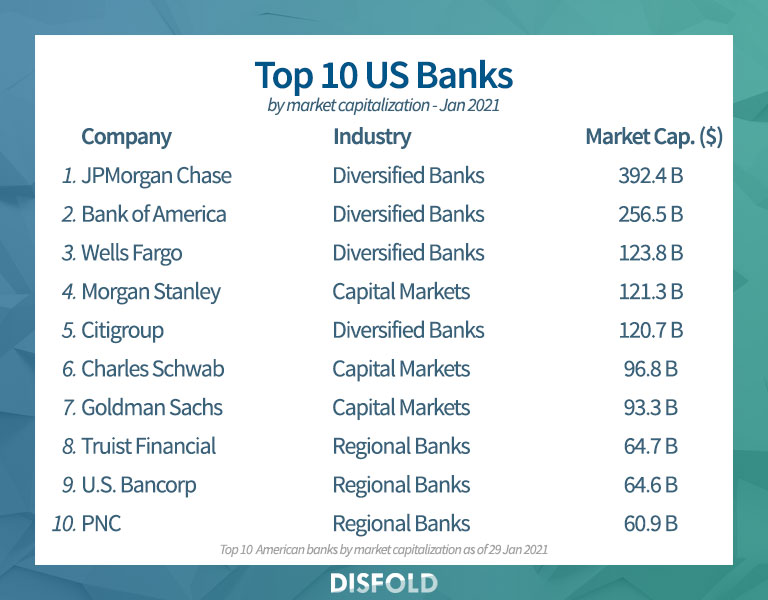
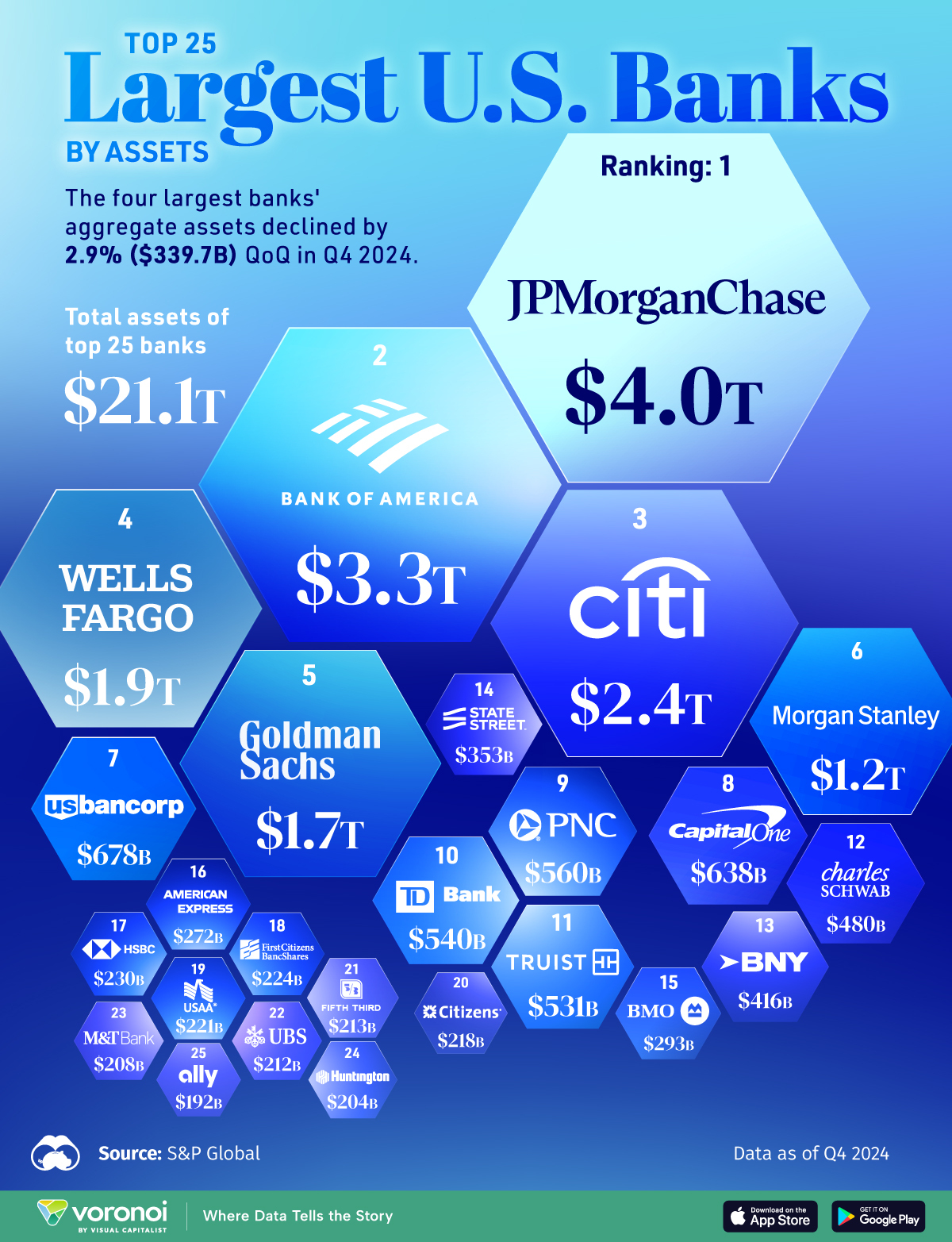
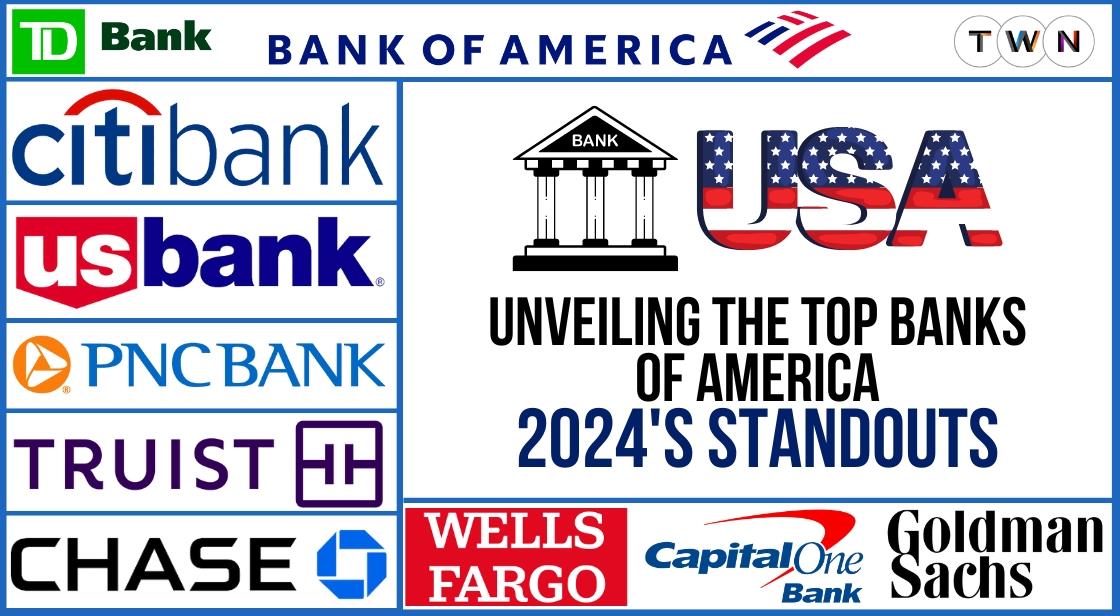
These are the household names with physical branches in most towns and cities. Think JPMorgan Chase, Bank of America, Wells Fargo, and Citibank.
-
Pros: Widespread physical presence for in-person transactions and personalized advice; often offer a full suite of financial products from checking and savings to mortgages, loans, and investment services; robust ATM networks.
-
Cons: Often charge higher fees for various services; typically offer lower interest rates on savings accounts compared to online competitors; may have more bureaucratic processes.
-
Best For: Individuals who prefer in-person banking, require frequent access to tellers, handle cash regularly, or desire a comprehensive relationship with a single financial institution for all their needs.
Online-Only Banks
These institutions operate exclusively digitally, without physical branches. Examples include Ally Bank, Discover Bank, Chime, and Capital One 360.
-
Pros: Lower operating costs allow them to offer higher interest rates on savings and checking accounts and fewer fees; unparalleled convenience for digital-first users; innovative mobile apps and online platforms.
-
Cons: No physical branches for in-person assistance or cash deposits (though many offer workarounds like depositing cash at partner ATMs or retailers); reliance on technology means internet access is essential.
-
Best For: Tech-savvy individuals comfortable managing their finances digitally, those seeking high-yield savings, and people who rarely need to visit a physical bank branch.
Credit Unions
Credit unions are member-owned, non-profit financial cooperatives. They exist to serve their members, rather than generate profits for shareholders.
-
Pros: Often offer lower fees, better interest rates on savings, and more competitive loan rates (mortgages, auto loans, personal loans); known for excellent, personalized customer service; strong community focus. All federally insured credit unions are backed by the NCUA (National Credit Union Administration) up to $250,000 per depositor.
-
Cons: Membership requirements (often tied to geography, employer, or association); typically have fewer branches and smaller ATM networks than national banks; may have less sophisticated digital tools compared to leading online banks.
-
Best For: Individuals who value a community-centric approach, personalized service, and prioritize lower fees and better rates, and who meet the membership criteria.
Critical Factors for Comparison and Selection
Once you’ve narrowed down the type of bank, it’s time to dive into the specifics of what each offers.
Fee Structures and Interest Rates
This is often the most tangible difference between banks.
-
Checking Accounts: Look for accounts with no monthly maintenance fees, or easily waivable fees (e.g., direct deposit minimum, minimum balance). Scrutinize ATM fees (especially out-of-network), overdraft fees, and foreign transaction fees if you travel. Some banks, particularly online-only ones, offer interest-bearing checking accounts, which can be a nice bonus.
-
Savings Accounts: The Annual Percentage Yield (APY) is crucial here. Even a seemingly small difference in APY can amount to significant earnings over time, especially with larger balances. Compare minimum balance requirements to earn interest and avoid fees.
-
Certificates of Deposit (CDs): For funds you won’t need for a set period, CDs offer guaranteed interest rates, often higher than standard savings accounts. Compare terms (e.g., 6 months, 1 year, 5 years) and their corresponding APYs.
-
Loan Products: If you anticipate needing a mortgage, auto loan, or personal loan, compare interest rates, origination fees, and repayment terms offered by different institutions.
Accessibility and Convenience
How easily can you access your money and manage your accounts?
-
Branch Network: If you prefer in-person services, a bank with branches conveniently located near your home or work is important.
-
ATM Network: Ensure the bank offers a wide network of fee-free ATMs. Many online banks partner with large networks (e.g., Allpoint, MoneyPass) to provide this.
-
Online and Mobile Banking: A modern, intuitive, and secure mobile app is almost a necessity today. Look for features like mobile check deposit, online bill pay, peer-to-peer payments (Zelle), account alerts, budgeting tools, and the ability to freeze/unfreeze cards.
-
Customer Service: Evaluate the availability of customer support – 24/7 phone support, live chat, secure messaging, or dedicated account managers. Read reviews about their responsiveness and helpfulness.
Digital Banking Tools and Security
In an increasingly digital world, a bank’s technological capabilities are paramount.
-
User Experience (UX): A well-designed, easy-to-navigate website and mobile app can make managing your finances a breeze.
-
Integration: Does the bank integrate with personal finance apps like Mint or YNAB?
-
Security Measures: Beyond FDIC (or NCUA for credit unions) insurance, which protects your deposits up to $250,000, assess features like two-factor authentication, biometric logins, real-time fraud alerts, and strong encryption protocols. Understand their policies on liability for unauthorized transactions.
Tailoring the “Best” Bank to Your Financial Goals
Let’s look at how different banks might be “best” for various financial archetypes.
For Everyday Banking and Convenience
If your primary need is a reliable place for direct deposits, bill pay, and everyday spending, prioritize:
-
Low or No Fees: Seek out checking accounts with no monthly fees or easily waivable ones.
-
Excellent Mobile App: For on-the-go management, mobile check deposits, and peer-to-peer payments.
-
Extensive ATM Network: For easy cash access without incurring fees.
-
Examples: Online banks like Ally Bank or Discover Bank often excel here due to low fees and strong digital platforms. Credit unions can also be excellent choices for their low-cost accounts. Traditional banks may offer basic checking accounts with fee waivers for direct deposit or maintaining a minimum balance.
For Savers and Investors
If maximizing your savings growth and potentially integrating investment accounts is key, focus on:
-
High-Yield Savings Accounts (HYSAs): Look for the highest APY available, often found at online banks.
-
Competitive CD Rates: For funds you can lock away for a period.
-
Integrated Investment Platforms: Some banks offer brokerage services or partner with investment firms, allowing you to manage banking and investing in one place.
-
Examples: Online banks like Ally Invest (brokerage arm of Ally Bank) or Discover Bank (CDs, savings) are strong contenders. Some traditional banks have robust investment divisions (e.g., Chase Private Client, Merrill Lynch through Bank of America) but may require higher minimum balances.
For Small Businesses and Entrepreneurs
Business banking has unique requirements beyond personal accounts.
-
Business Checking Accounts: Look for accounts with sufficient transaction limits, low fees, and options for cash deposits.
-
Merchant Services: If you accept credit card payments, assess the bank’s merchant services offerings and fees.
-
Business Lending: Access to lines of credit, term loans, or SBA loans can be critical for growth.
-
Payroll Services: Integration with payroll solutions can streamline operations.
-
Examples: Larger traditional banks (Chase, Bank of America, Wells Fargo) often have extensive small business departments. Credit unions can also be very supportive of local businesses. Online-only options specifically for businesses (e.g., Bluevine, Mercury for startups) are emerging.
For Students and Young Adults
First-time bankers and students need accounts that are easy to manage and cost-effective.
-
Fee-Free Accounts: Accounts with no monthly fees, no minimum balance requirements, and free ATM access.
-
Strong Mobile Banking: Essential for a digitally native generation.
-
Financial Literacy Resources: Some banks offer tools or content to help manage money responsibly.
-
Examples: Many banks offer specific student checking accounts. Online banks are excellent for their low fees, and some credit unions have youth-focused programs.
Making Your Informed Decision
The journey to finding the “best” bank culminates in careful consideration and proactive research.
Research and Compare
Don’t settle for the first option. Use online comparison websites (e.g., NerdWallet, Bankrate, Credit Karma) to compare features, fees, and rates side-by-side. Read user reviews to get a sense of real-world experiences with customer service and digital platforms.
Consider a Test Drive
Some banks or credit unions might offer low-commitment accounts or allow you to experience their digital interface before fully committing. If you’re unsure, you might even consider splitting your banking for a period—using one bank for checking and another for high-yield savings—to see which best fits your lifestyle.
Don’t Be Afraid to Switch
Your financial needs will evolve over time. What was “best” for you as a student might not be ideal as a homeowner, or vice versa. Review your banking relationship annually. If your current bank no longer serves your needs efficiently or cost-effectively, research alternatives and don’t hesitate to make a switch. The process of changing banks has become much simpler with digital tools.
In conclusion, “Which is the best bank in USA?” is a deeply personal question without a universal answer. By diligently assessing your individual financial needs, understanding the diverse banking landscape, comparing critical factors like fees, rates, and digital tools, and tailoring your choice to your specific financial goals, you can confidently select a financial partner that empowers your journey towards financial success and security in the United States.
aViewFromTheCave is a participant in the Amazon Services LLC Associates Program, an affiliate advertising program designed to provide a means for sites to earn advertising fees by advertising and linking to Amazon.com. Amazon, the Amazon logo, AmazonSupply, and the AmazonSupply logo are trademarks of Amazon.com, Inc. or its affiliates. As an Amazon Associate we earn affiliate commissions from qualifying purchases.