
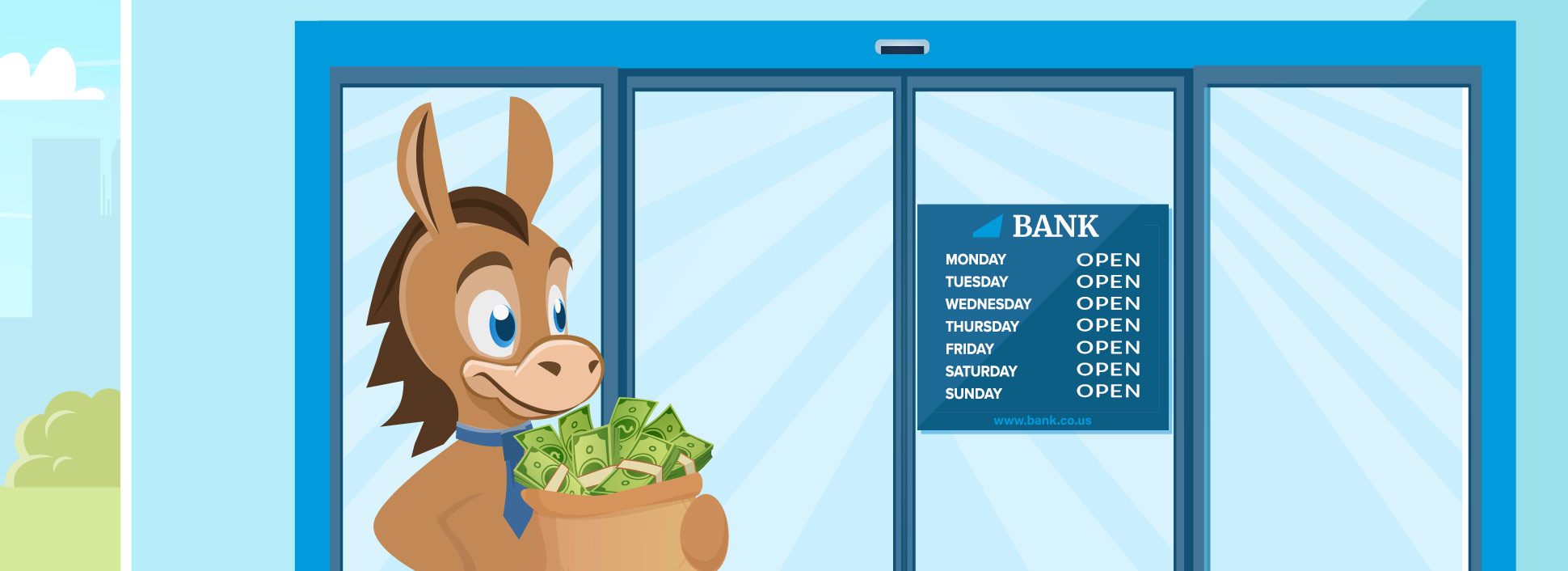
In an increasingly 24/7 world, where e-commerce never sleeps, and our personal and professional lives often spill into the weekend, the traditional Monday-to-Friday banking model can feel anachronistic. The question “what banks are open Sunday?” reflects a growing need for financial accessibility that extends beyond conventional business hours. While the image of bustling bank branches on a Sunday morning remains largely a rarity, the landscape of banking has evolved dramatically, offering a plethora of digital alternatives and strategic approaches to manage your finances, even when physical doors are closed. This article delves into the realities of weekend banking, exploring the limited physical options, the vast potential of digital tools, and practical strategies for ensuring your financial needs are met every day of the week.

The Evolving Landscape of Weekend Banking Access
The concept of a five-day banking week is deeply ingrained in financial history, rooted in operational logistics, staff availability, and the rhythms of a society that traditionally observed Sundays as a day of rest. However, the demands of the modern economy and changing consumer behaviors have challenged this model, prompting a re-evaluation of how financial services are delivered.
Traditional Branch Hours vs. Modern Demands
Historically, banks closed on Sundays for several practical reasons: reduced customer traffic, the cost of staffing, and alignment with general retail closures. Financial transactions often involved manual processing, making weekend operations less efficient. However, today’s consumer operates in a different paradigm. The rise of the gig economy means income streams and payment needs don’t adhere to a 9-to-5 schedule. E-commerce platforms facilitate purchases around the clock, creating immediate payment obligations. Urgent financial matters – a forgotten bill, an unexpected large expense, or a last-minute transfer – can arise at any moment, irrespective of the calendar. This mismatch between traditional banking hours and modern lifestyle demands has spurred innovation and a re-thinking of “open hours.”
The Rise of Digital-First Banking
The most significant shift in banking accessibility has been the meteoric rise of digital-first banking. Online banks, mobile banking apps, and sophisticated web platforms have fundamentally transformed how we interact with our money. These digital channels provide an “always-on” service, effectively making your bank “open” 24 hours a day, seven days a week, regardless of whether a physical branch is operational. This paradigm shift means that for most routine and even many urgent transactions, the question of a physical Sunday opening becomes secondary to the robust capabilities available at your fingertips. From paying bills to transferring funds, depositing checks, or monitoring account activity, digital tools have largely negated the necessity for a brick-and-mortar presence for the majority of customer needs on a Sunday.
Unearthing Weekend Banking Solutions
While the general rule of thumb is that traditional bank branches are closed on Sundays, it’s not an absolute universal truth. Moreover, the definition of “banking” itself has broadened significantly beyond the confines of a physical lobby. Understanding the full spectrum of available options is key to seamless weekend financial management.
Banks with Limited Sunday Branch Hours
Identifying specific banks that are physically open on Sunday requires careful investigation, as these are typically exceptions rather than the norm.
-
In-Store Branches: Some major banks operate smaller branches or service kiosks within large supermarkets or retail chains. These in-store locations sometimes adhere to the host store’s extended hours, which can include Sundays. Their services might be limited compared to a full-service branch, often focusing on basic transactions like deposits, withdrawals, and account inquiries.
-
Specific Urban or High-Traffic Locations: In very densely populated urban centers or areas with unique economic activity (e.g., tourist hubs), a handful of larger bank branches might maintain limited Sunday hours to cater to specific demographics or business needs. These are rare and usually highly publicized by the individual bank.
-
Credit Unions and Community Banks: While less common for national chains, some smaller credit unions or community banks, particularly those deeply embedded in specific local communities, might offer Sunday hours based on local demand or special events. This is highly localized and requires direct inquiry.
It is crucial to emphasize that finding an open physical branch on a Sunday is an anomaly. Always verify hours directly with the specific bank branch using their website or a phone call before making a trip. Relying on an assumption could lead to frustration and wasted time.
The Power of Online and Mobile Banking
For the vast majority of Sunday banking needs, online and mobile banking platforms are the undisputed champions. These digital tools provide an unparalleled level of convenience and functionality:
-
Account Monitoring and Management: Check balances, review transaction history, and categorize spending in real-time.
-
Funds Transfers: Move money between your own accounts, or send funds to external accounts and other individuals using services like Zelle, PayPal, or Venmo. While transfers to external banks might not clear until the next business day, the transaction itself can be initiated immediately.
-
Bill Payments: Schedule one-time or recurring bill payments, ensuring you don’t miss a due date even if it falls on a Sunday.
-
Mobile Check Deposit: Use your smartphone camera to deposit checks directly into your account, avoiding a trip to the ATM or branch. Funds availability will still follow standard processing times, but the deposit itself is made instantly.
-
Credit Card and Loan Management: Make payments, view statements, and manage settings for credit cards, mortgages, and other loans.
These digital services mean that for almost any non-cash related financial task, your bank is indeed “open” on Sunday, ready to facilitate your transactions and provide information.
ATM Networks and Their Capabilities
Automated Teller Machines (ATMs) remain a vital component of weekend banking infrastructure, especially for cash-related transactions.
-
Cash Withdrawals: The primary function of an ATM, available 24/7. Access cash from your accounts as needed.
-
Cash and Check Deposits: Most modern ATMs allow both cash and check deposits. While deposits made on Sunday will typically be processed on the next business day, the ability to make the deposit instantly is invaluable.
-
Balance Inquiries and Transfers: Basic account information and transfers between linked accounts are often available.
It’s important to use ATMs associated with your bank’s network to avoid fees, or find ATMs that are part of a surcharge-free network your bank participates in.

Strategic Tips for Managing Your Finances on a Sunday
Given the limited physical options, proactive planning and smart utilization of digital tools are paramount for effective Sunday financial management.
Plan Ahead for Critical Transactions
The best defense is a good offense. If you anticipate needing cash, making a significant transfer, or depositing a crucial check before Monday, plan to execute these actions on Friday or Saturday.
-
Cash Needs: Withdraw enough cash for weekend expenses beforehand.
-
Urgent Transfers: Initiate large transfers or payments that might have longer processing times earlier in the week.
-
Check Deposits: Deposit important checks via mobile app or ATM on Friday or Saturday to potentially expedite processing, even if funds aren’t immediately available.
This proactive approach minimizes the likelihood of facing a financial impasse on Sunday.
Leverage Digital Tools for Urgent Needs
For unexpected financial demands that arise on Sunday, digital banking is your strongest ally.
-
Peer-to-Peer Payments: For immediate transfers to friends, family, or even some small businesses, apps like Zelle, Venmo, or PayPal can facilitate instant money movement, often bypassing traditional bank processing times for funds between users of the same platform.
-
Mobile Check Deposit: If you receive an unexpected check, use your bank’s mobile app to deposit it immediately. While it won’t clear until the next business day, you’ve at least initiated the process.
-
Online Bill Pay: If you realize a bill is due, utilize your bank’s online bill pay feature to schedule the payment. Most systems allow you to postdate payments or set up immediate electronic transfers.
Familiarize yourself with your bank’s mobile app and online portal before an urgent need arises. Understanding its features and capabilities will save time and stress.
Know Your Bank’s Specific Policies
Not all banks are created equal, and even within the same bank, policies can vary by product or service.
-
Funds Availability: Understand your bank’s policy for when deposited funds (especially from checks) become available. Deposits made on a Sunday will typically be treated as if they were made on the next business day (Monday).
-
Cut-off Times: Be aware of daily cut-off times for transactions, particularly for transfers and bill payments. Initiating a transaction after a certain hour, even digitally, may push its processing to the next business day.
-
Holiday Schedules: Banking holidays often coincide with extended weekend closures. Always check the bank’s website for specific holiday hours and announcements.
A quick visit to your bank’s official website or a call to their customer service line can provide clarity on these crucial details.
The Future of Banking: Beyond Traditional Hours
The trend toward greater accessibility and convenience in banking is irreversible. As technology continues to advance, the distinction between “open” and “closed” hours for financial services will increasingly blur.
Hybrid Models and Customer-Centricity
Many financial institutions are adopting hybrid models that combine the best of both worlds. This might involve:
-
Digital-First Approach: Encouraging customers to use online and mobile platforms for most transactions.
-
Targeted Physical Presence: Maintaining a smaller network of physical branches in key locations, potentially with more flexible hours or specialized services (e.g., wealth management, loan applications).
-
Interactive Teller Machines (ITMs): Advanced ATMs that allow customers to connect via video with a live teller for more complex transactions, effectively extending “branch” services beyond traditional hours.
This evolution is driven by a deep understanding of customer needs, aiming to provide convenient, efficient, and personalized services whenever and wherever they are required.
Emerging Technologies and Their Impact
Further innovations are set to enhance 24/7 banking even more:
-
AI Chatbots and Virtual Assistants: Sophisticated AI-driven tools are becoming increasingly capable of handling complex customer inquiries, processing routine requests, and providing instant support, effectively acting as a digital branch available at all times.
-
Open Banking and API Integrations: The ability for different financial services to connect and share data (with customer consent) can create more seamless, integrated experiences, making financial management even more fluid across platforms.
-
Blockchain and Instant Payments: While still evolving, technologies like blockchain could pave the way for true instant settlement of transactions, eradicating the concept of “business days” for fund availability.
These advancements promise a future where the question “what banks are open Sunday?” becomes increasingly irrelevant, as financial services are fundamentally accessible on demand, every day of the week.
In conclusion, while the search for a physically open bank branch on a Sunday might yield limited results, the modern banking ecosystem is robustly “open” through its digital channels. By embracing online and mobile banking, leveraging ATM networks, and adopting a proactive approach to financial planning, individuals can navigate their banking needs with unparalleled flexibility and convenience, ensuring their finances are managed effectively regardless of the day of the week. The future of banking isn’t just about extended hours; it’s about boundless accessibility.
aViewFromTheCave is a participant in the Amazon Services LLC Associates Program, an affiliate advertising program designed to provide a means for sites to earn advertising fees by advertising and linking to Amazon.com. Amazon, the Amazon logo, AmazonSupply, and the AmazonSupply logo are trademarks of Amazon.com, Inc. or its affiliates. As an Amazon Associate we earn affiliate commissions from qualifying purchases.