
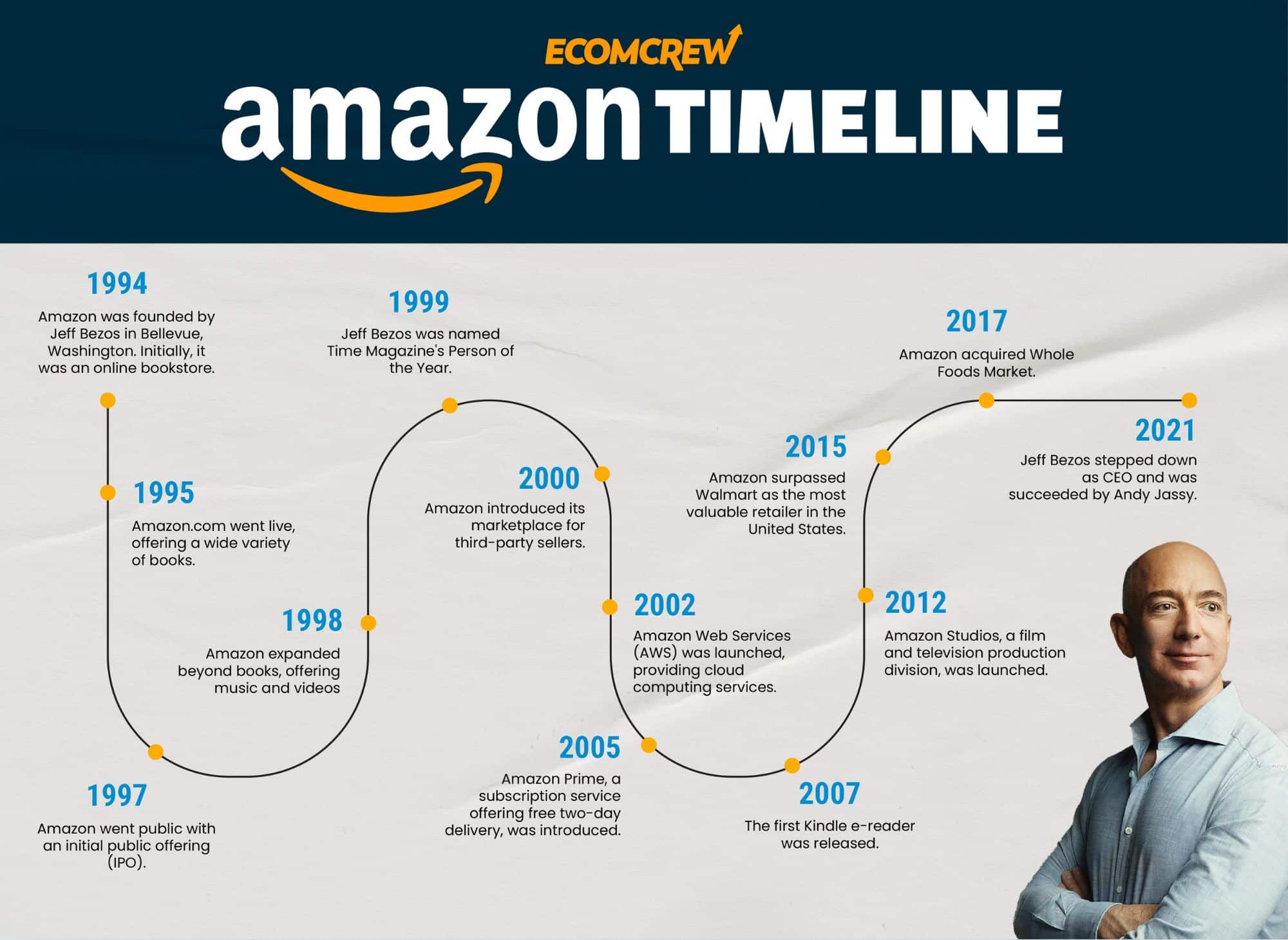
The story of Amazon’s establishment is more than just a date on a calendar; it is the foundational narrative of one of the world’s most recognizable and influential brands. Born from a visionary insight into the burgeoning internet’s potential, Amazon’s origins in 1994 and its subsequent launch in 1995 laid the groundwork for a corporate identity that would redefine retail, logistics, and digital services. Understanding “when Amazon established” is to understand the inception of a brand strategy rooted in customer obsession, relentless innovation, and a long-term vision that transcended its humble beginnings as an online bookstore. This exploration delves into how Amazon’s early days shaped its enduring brand pillars, corporate identity, and marketing approach, serving as a critical case study in brand evolution.

The Visionary Spark: From Books to the World’s Store
The initial spark for Amazon ignited in the mind of its founder, Jeff Bezos, amidst the nascent internet boom of the early 1990s. This period was characterized by a palpable sense of unknown potential, a digital frontier waiting to be explored and commercialized. Bezos, then a senior vice president at D.E. Shaw & Co., recognized the internet’s explosive growth rate and its unprecedented capacity to connect buyers and sellers globally. His radical decision to leave a high-paying Wall Street job for an unproven venture in Seattle speaks volumes about his conviction in this digital paradigm shift – a conviction that would become a core tenet of Amazon’s brand ethos: calculated risk and future-forward thinking.
Jeff Bezos’s Epiphany: The Internet’s Untapped Potential
Bezos famously compiled a list of twenty product categories he believed could be sold online, carefully considering factors like demand, price point, and ease of shipping. Books emerged as the standout choice. They were a standardized commodity, easily cataloged, didn’t require customers to physically inspect them before purchase, and offered an almost limitless inventory capacity that brick-and-mortar stores could never match. This strategic choice was not merely about selling books; it was about demonstrating the power of online commerce, establishing a proof of concept that would inform Amazon’s entire brand trajectory. The vision was never just about books; it was about building a “store for everything” – a grand ambition that needed a practical, relatable entry point. This early strategic thinking underscored the scalable nature of Amazon’s brand from day one, implicitly promising more than just what was immediately on offer.
Choosing the Name: From Cadabra to Amazon
The selection of the company’s name and subsequent branding was a meticulous process, reflecting Bezos’s foresight into creating a memorable and symbolically rich corporate identity. Initially, Bezos considered names like “Cadabra” (as in abracadabra) and “Relentless.com.” While “Cadabra” aimed for magic, it was reportedly misheard as “cadaver.” “Relentless.com” conveyed tenacity, but perhaps lacked the broader appeal needed for a universal brand. Ultimately, Bezos settled on “Amazon.com” in 1995, a name inspired by the Amazon River, the largest river in the world. This choice was deliberate and highly symbolic. It invoked vastness, scale, and an immense flow, perfectly aligning with Bezos’s vision of creating the world’s largest online store, offering an unparalleled selection. The name itself became a brand statement, hinting at boundless possibilities and an expansive future, a promise embedded directly into its corporate identity. The accompanying early logo, often featuring a river-like curve, subtly reinforced this imagery, anchoring the brand in a narrative of natural grandeur and infinite discovery.
Forging the Initial Identity: The Bookstore of the Internet
Amazon’s early operational strategy was intrinsically linked to its brand identity. From its very inception, the company wasn’t just selling products; it was selling an experience, a new way of shopping, and a promise of unparalleled convenience. The physical manifestation of this burgeoning brand was far from glamorous, but its underlying principles were revolutionary, establishing the customer-centric ethos that would become synonymous with the Amazon name.
The Garage Startup: Humble Beginnings, Grand Ambitions
Amazon’s operational launch on July 16, 1995, began in Bezos’s garage in Bellevue, Washington. This humble setting, reminiscent of other iconic tech startups, became a powerful part of Amazon’s origin story, adding an element of scrappy determination to its corporate identity. The initial setup was rudimentary: a few desks, basic computers, and a small team processing orders. Despite the lack of physical grandeur, the ambition was anything but humble. The brand promise extended beyond mere transactions; it was about pioneering a new retail paradigm. This stark contrast between humble origins and lofty goals ingrained a sense of pioneering spirit and relentless drive into Amazon’s nascent brand, signaling to early adopters and investors that this was a company built on substance and vision, not just superficial polish.
Customer Obsession: A Foundational Brand Pillar
From day one, Amazon’s brand strategy was predicated on an unwavering commitment to the customer. Bezos famously left an empty chair in meetings, representing “the most important person in the room”: the customer. This wasn’t just a quirky anecdote; it was a deeply embedded principle that guided every decision, from website design to logistics. Early features like customer reviews, 1-Click ordering, and personalized recommendations were revolutionary at the time, designed to remove friction from the online shopping experience and build trust. This relentless focus on customer satisfaction cultivated a unique brand identity centered on reliability, convenience, and a deep understanding of consumer needs. It was a marketing strategy built not on flashy advertising (initially), but on delivering a superior, user-friendly experience that would organically foster loyalty and word-of-mouth growth. This “customer-first” approach became Amazon’s brand differentiator, setting it apart from traditional retailers and even other emerging online ventures.
Early Branding and Website Design Evolution
The initial branding of Amazon was deliberately straightforward and functional. The early Amazon.com website, while rudimentary by today’s standards, was designed for ease of navigation and a clear presentation of its vast book catalog. The famous “A to Z” arrow in the logo, introduced later, visually represented Amazon’s goal to offer everything from A to Z, with the arrow also subtly forming a smile, symbolizing customer satisfaction. This simple yet profound design captured the essence of Amazon’s brand promise: comprehensive selection and a positive experience. The evolution of Amazon’s visual identity, though incremental, always served to reinforce its core brand attributes – accessibility, vastness, and customer delight. Early marketing efforts were largely digital, leveraging the internet’s interconnectedness to spread awareness and cultivate a nascent online community around its bookstore. The design wasn’t just aesthetic; it was an integral part of the user experience, making online shopping feel intuitive and trustworthy at a time when skepticism towards e-commerce was prevalent.
Navigating Early Challenges and Building Trust
Establishing an online retail brand in the mid-1990s was fraught with significant challenges. The internet was still a novel concept for many, and the idea of sending credit card information over digital networks evoked widespread apprehension. Amazon’s early brand-building efforts, therefore, were as much about educating the market and assuaging fears as they were about offering products. The company’s ability to overcome these initial hurdles speaks volumes about its foundational brand strategy centered on transparency, security, and consistent delivery of its promise.
Educating the Market: The Concept of Online Shopping
One of Amazon’s primary tasks in its formative years was to demystify online shopping. For most consumers, purchasing goods without physically seeing or touching them, and without interacting with a human salesperson, was an alien concept. Amazon’s brand communications and website design worked to bridge this trust gap. Detailed product descriptions, customer reviews, and a clear, secure checkout process were not just features; they were brand assurances. They communicated reliability and transparency, directly addressing consumer anxieties about quality, authenticity, and transaction security. Amazon effectively educated its early adopters, demonstrating the convenience and efficiency of e-commerce, thereby establishing itself as a trustworthy pioneer in a nascent industry. This was a critical step in cultivating a new consumer behavior and solidifying Amazon’s brand as the default for online purchases.

Securing Funding and Investor Confidence
The establishment of Amazon was not just a technological feat but also a financial one, requiring significant capital to scale its operations. Convincing investors to back an unproven online bookstore, especially when the internet bubble was still inflating, required more than just a good business plan; it required selling a compelling brand vision. Bezos’s ability to articulate the long-term potential of Amazon – its future beyond books, its scalability, and its customer-centric model – was instrumental in securing early funding. Investors weren’t just buying into a company; they were buying into a brand that promised to reshape commerce. The brand strategy extended to investor relations, positioning Amazon as a forward-thinking, disruptive force with a clear, albeit ambitious, roadmap for growth. This strategic narrative helped Amazon navigate the volatile financial landscape of the dot-com era, bolstering its corporate identity as a resilient and visionary enterprise.
The Brand Promise: Reliability and Selection
At its core, Amazon’s early brand promise revolved around two critical pillars: unparalleled selection and unwavering reliability. By offering millions of titles, far more than any physical bookstore, Amazon immediately established itself as the ultimate destination for book lovers. This vast selection was a powerful brand differentiator. Equally important was the reliability of its service – accurate order fulfillment, timely delivery, and responsive customer support. In an era of nascent logistics for e-commerce, Amazon’s commitment to delivering on these promises built profound trust. Every successful order, every timely delivery, reinforced Amazon’s brand as a dependable and efficient online retailer. This consistent execution of its brand promise was a cornerstone of its early marketing strategy, generating positive word-of-mouth and fostering a loyal customer base, essential for long-term brand building.
Establishing a Culture of Innovation and Expansion
Amazon’s establishment was never meant to be a static event. From its very beginning, the company harbored an inherent drive for innovation and a strategic blueprint for expansion, qualities that quickly became embedded in its corporate identity. This forward-looking mindset allowed Amazon to transcend its initial classification as an online bookstore, shaping it into the multi-faceted global brand it is today. The culture fostered in its early days, characterized by a willingness to experiment and a long-term perspective, laid the groundwork for its subsequent diversification and enduring market dominance.
Beyond Books: Strategic Diversification as a Brand Strategy
While books were the strategic entry point, Bezos’s initial vision always encompassed a broader “everything store.” The expansion into music, videos, and eventually electronics, toys, and apparel was a deliberate brand strategy to demonstrate the versatility and scalability of the online retail model. Each new product category added to Amazon’s brand equity, reinforcing its identity as the go-to destination for practically any consumer need. This diversification was carefully managed, leveraging the existing customer trust built through books. It wasn’t just about selling more products; it was about expanding the scope of the Amazon brand promise – from “the world’s largest bookstore” to “the world’s most customer-centric company offering everything.” This strategic shift broadened Amazon’s market appeal and solidified its position as a retail innovator rather than just a specialized vendor.
The Long-Term Vision: A Brand for Everything
Amazon’s establishment was underpinned by a distinctive long-term vision, often characterized by Bezos’s “Day 1” philosophy. This mantra emphasized maintaining the urgency, innovative spirit, and customer focus of a startup, regardless of the company’s size or age. This philosophy became a critical component of Amazon’s corporate identity, fostering a culture where experimentation, even if it led to failure, was encouraged as a path to learning and growth. This brand characteristic allowed Amazon to make investments that might not pay off for years, such as its early foray into cloud computing (AWS), which eventually became a dominant force in its own right. The brand wasn’t just about the present offering; it was about the continuous pursuit of future possibilities, solidifying its identity as a perpetual innovator and disruptor.
Scalability and the Brand’s Future Blueprint
The design of Amazon’s initial infrastructure, both technological and logistical, was built with scalability in mind. This foresight wasn’t merely operational; it was a fundamental aspect of its brand blueprint. From the database architecture to the supply chain management, everything was engineered to handle exponential growth, signaling to customers and competitors alike that Amazon was built for the long haul. This inherent scalability meant that as the company expanded its product offerings and geographic reach, its brand promise of convenience and selection could be maintained, even enhanced. It demonstrated Amazon’s capability to grow without compromising its core values, reinforcing trust and solidifying its corporate identity as a robust and future-proof enterprise. This strategic foresight has allowed the Amazon brand to adapt and thrive across multiple industries, a testament to the robust foundation laid during its establishment.
The Enduring Legacy of Amazon’s Establishment
The act of “when Amazon established” set in motion a profound transformation of the global commerce landscape, leaving an indelible mark on how brands are built, perceived, and scaled. Its founding principles, developed in a garage in the mid-90s, have evolved into a sophisticated global brand strategy that continues to influence consumer behavior and industry standards. The legacy of Amazon’s establishment is evident not only in its market capitalization but in its pervasive influence on consumer expectations and the very definition of modern convenience.
Redefining Retail and Consumer Expectations
Amazon’s early establishment profoundly redefined consumer expectations for retail. Before Amazon, selection was limited by physical store space, and convenience was often measured by proximity. Amazon shattered these limitations, offering a virtually endless catalog and the ability to shop from anywhere, at any time. This shift wasn’t just about convenience; it was about empowerment, giving consumers unprecedented control and choice. The company’s relentless pursuit of faster shipping, competitive pricing, and a seamless shopping experience elevated the bar for all retailers, forcing competitors to adapt or risk obsolescence. Amazon’s brand became synonymous with immediate gratification and boundless options, fundamentally reshaping the consumer relationship with commerce globally.
A Blueprint for Modern Brand Building
The story of Amazon’s establishment serves as a compelling case study for modern brand building. It illustrates the power of a clear vision, customer-centricity, and a long-term strategic outlook. Amazon didn’t just sell books; it sold a revolutionary concept, building trust and loyalty through consistent delivery of its brand promise. Its early brand development, characterized by strategic naming, intuitive website design, and a focus on reliability, laid a robust foundation for future expansion. The journey from a garage startup to a global powerhouse underscores that a strong brand is not merely a logo or a marketing campaign but a comprehensive identity built on core values, strategic execution, and an unwavering focus on the consumer experience.
The “Day 1” Philosophy as a Brand Mantra
Perhaps the most enduring legacy of Amazon’s establishment is the “Day 1” philosophy, which has evolved into a powerful internal and external brand mantra. It’s a constant reminder to operate with the agility, hunger, and customer obsession of a startup, preventing complacency and fostering continuous innovation. This philosophy has enabled Amazon to not only maintain its relevance but to continually disrupt various industries, from cloud computing with AWS to artificial intelligence with Alexa. The “Day 1” mindset ensures that the brand, despite its immense size, retains the spirit of its establishment: a pioneering, experimental, and relentlessly customer-focused entity always striving to invent on behalf of its customers. This commitment to its founding principles ensures that Amazon’s brand continues to evolve, innovate, and lead, making its establishment not just a historical event, but a living, breathing blueprint for its future.
aViewFromTheCave is a participant in the Amazon Services LLC Associates Program, an affiliate advertising program designed to provide a means for sites to earn advertising fees by advertising and linking to Amazon.com. Amazon, the Amazon logo, AmazonSupply, and the AmazonSupply logo are trademarks of Amazon.com, Inc. or its affiliates. As an Amazon Associate we earn affiliate commissions from qualifying purchases.