
Investing in the stock market can be a powerful way to grow wealth over time, and few companies capture the imagination of investors quite like Apple Inc. (NASDAQ: AAPL). From its humble beginnings in a garage to becoming one of the most valuable companies globally, Apple has consistently demonstrated an ability to innovate, captivate consumers, and deliver substantial returns to shareholders. For many, the question isn’t whether to invest in Apple, but how to do it intelligently and strategically.
This comprehensive guide will demystify the process of investing in Apple, exploring various avenues for acquiring its stock, crucial considerations for potential investors, and strategies for integrating AAPL into a diversified portfolio. Whether you’re a seasoned investor or taking your first steps into the market, understanding the nuances of investing in a blue-chip company like Apple is essential for making informed decisions.
1. Why Consider Investing in Apple? Understanding its Investment Appeal
Before diving into the mechanics of purchasing Apple stock, it’s vital to understand what makes Apple a compelling investment prospect for millions globally. Its robust market position, financial strength, and consistent innovation are key pillars of its investment appeal.
Apple’s Enduring Market Dominance and Innovation
Apple’s brand is synonymous with premium quality, intuitive design, and cutting-edge technology. The company’s ecosystem, encompassing hardware like the iPhone, iPad, Mac, and Apple Watch, software like iOS and macOS, and services such as the App Store, Apple Music, and iCloud, creates a powerful lock-in effect for its customers. This strong brand loyalty translates into recurring revenue streams and a resilient customer base, even in challenging economic times. Historically, Apple has shown a remarkable ability to not just introduce new products, but to define entire categories, from personal computers to smartphones and smartwatches, cementing its role as an innovation leader. This continuous drive for new product cycles and incremental improvements ensures a steady stream of consumer interest and sales.
Financial Health and Shareholder Returns
From a purely financial perspective, Apple consistently demonstrates impressive performance. The company boasts enormous cash reserves, robust profit margins, and a proven track record of returning capital to shareholders through dividends and share buybacks. These actions not only enhance shareholder value directly but also signal confidence from management in the company’s future prospects. Analyzing Apple’s quarterly and annual financial reports often reveals strong revenue growth, particularly in its services segment, which analysts frequently highlight as a key driver for future expansion. Its consistent profitability and efficient management of capital make it an attractive option for both growth-oriented and value-conscious investors.
Diversification Across Products and Services
While often viewed solely through the lens of its hardware products, Apple’s strategic pivot towards services has significantly diversified its revenue streams. The services segment, which includes revenue from the App Store, Apple Music, Apple Pay, iCloud, and advertising, now constitutes a substantial portion of the company’s overall revenue. This diversification provides a buffer against potential slowdowns in hardware sales, offering a more stable and predictable revenue stream. Furthermore, the global reach of Apple’s products and services means its business is not overly reliant on any single geographic market, contributing to its overall resilience as an investment.
2. Direct Routes to Purchasing Apple Stock
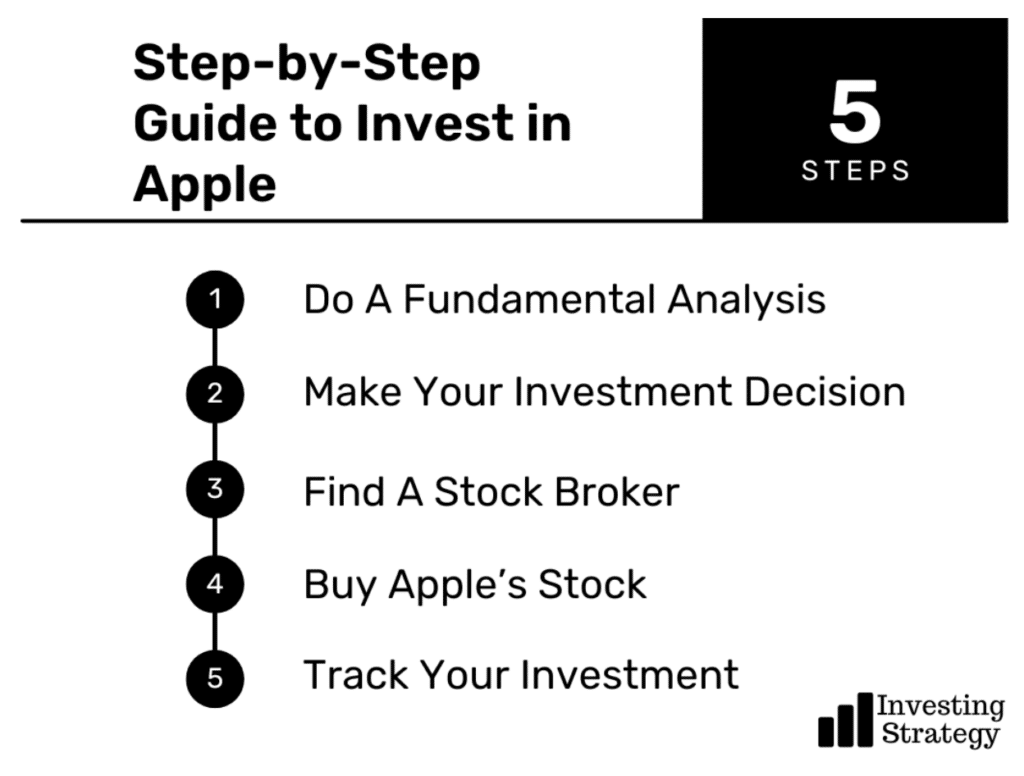
The most straightforward way to invest in Apple is to buy its stock directly. This involves setting up a brokerage account and placing an order for shares of AAPL.
Choosing the Right Brokerage Account
To purchase shares of Apple, you will need a brokerage account. Numerous online brokerage firms cater to individual investors, offering varying fee structures, research tools, and customer support. Popular options include Fidelity, Charles Schwab, E*TRADE, Vanguard, and Robinhood, among many others. When selecting a broker, consider factors such as:
-
Fees and Commissions: Many brokers now offer commission-free trading for stocks and ETFs, which can significantly reduce your transaction costs.
-
Minimum Deposit: Some brokers require a minimum initial deposit, though many have no minimum.
-
Research Tools and Resources: Access to analyst reports, financial news, and educational content can be invaluable, especially for new investors.
-
Platform Usability: A user-friendly interface for both desktop and mobile apps is crucial for a smooth trading experience.
-
Customer Service: Responsive and knowledgeable customer support can be a lifesaver when you encounter issues.
Once you’ve chosen a broker, you’ll go through an application process, link your bank account, and fund your new investment account.
Types of Stock Orders: Market vs. Limit
When you’re ready to buy Apple stock (ticker symbol: AAPL), you’ll typically have a choice between different types of orders:
-
Market Order: This is the simplest type of order. You instruct your broker to buy Apple stock immediately at the best available price in the market. While ensuring quick execution, the final price you pay might be slightly different from the price you saw a moment ago, especially in volatile markets. This difference is known as “slippage.”
-
Limit Order: A limit order allows you to specify the maximum price you are willing to pay per share. For example, if Apple is trading at $170, you might place a limit order to buy at $168. Your order will only be executed if the stock’s price falls to $168 or lower. This gives you more control over the purchase price but there’s no guarantee the order will be filled if the stock never reaches your specified limit.
For long-term investors, a market order is often sufficient, but limit orders can be useful for larger trades or during periods of high volatility.
Understanding Fractional Shares
Historically, buying a stock meant you had to purchase whole shares. With Apple’s share price often in the hundreds of dollars, this could be a barrier for investors with smaller budgets. However, many modern brokerage firms now offer the option to buy fractional shares. This means you can invest a specific dollar amount (e.g., $100) into Apple, even if that amount only buys a fraction of a single share. Fractional shares democratize investing, allowing individuals to invest in high-priced stocks with smaller capital amounts and to fully participate in dollar-cost averaging strategies (which we will discuss later).
3. Alternative Investment Vehicles with Apple Exposure
Directly owning Apple stock is not the only way to gain exposure to the company. Several other investment vehicles offer indirect ways to benefit from Apple’s performance, often with added diversification.
Exchange-Traded Funds (ETFs) and Mutual Funds
For investors who prefer a diversified approach rather than owning individual stocks, ETFs and mutual funds are excellent options. Many technology-focused ETFs or large-cap growth mutual funds will have Apple as one of their top holdings due to its market capitalization.
-
ETFs (Exchange-Traded Funds): These are baskets of securities (like stocks, bonds, or commodities) that trade on exchanges just like individual stocks. You can buy and sell ETF shares throughout the day. Investing in an ETF that tracks an index like the NASDAQ 100 or the S&P 500 will give you significant exposure to Apple, as AAPL is a major component of these indices. Technology-specific ETFs, such as the Technology Select Sector SPDR Fund (XLK), also have Apple as a substantial holding.
-
Mutual Funds: Similar to ETFs, mutual funds pool money from multiple investors to invest in a diversified portfolio of securities, managed by a professional fund manager. Unlike ETFs, mutual funds are typically bought and sold at the end of the trading day based on their Net Asset Value (NAV). Many large-cap growth or technology mutual funds will also feature Apple prominently in their portfolios.
Both ETFs and mutual funds offer instant diversification, reducing the risk associated with investing in a single company, though you will still be exposed to market risk.
Options Trading on Apple Stock
Options trading offers a more advanced and speculative way to invest in Apple. An option is a contract that gives the buyer the right, but not the obligation, to buy or sell an underlying asset (like Apple stock) at a specified price (the strike price) on or before a certain date (the expiration date).
-
Call Options: Give you the right to buy Apple stock at the strike price. Investors buy calls if they believe Apple’s stock price will rise significantly.
-
Put Options: Give you the right to sell Apple stock at the strike price. Investors buy puts if they believe Apple’s stock price will fall.
Options are highly leveraged instruments, meaning a small price movement in Apple stock can lead to a large percentage gain or loss in the option’s value. Due to their complexity and significant risk, options trading is generally recommended for experienced investors who thoroughly understand the strategies involved and the potential for rapid capital loss. Most retail brokerage accounts require approval for options trading due to the inherent risks.
Dividend Reinvestment Plans (DRIPs)
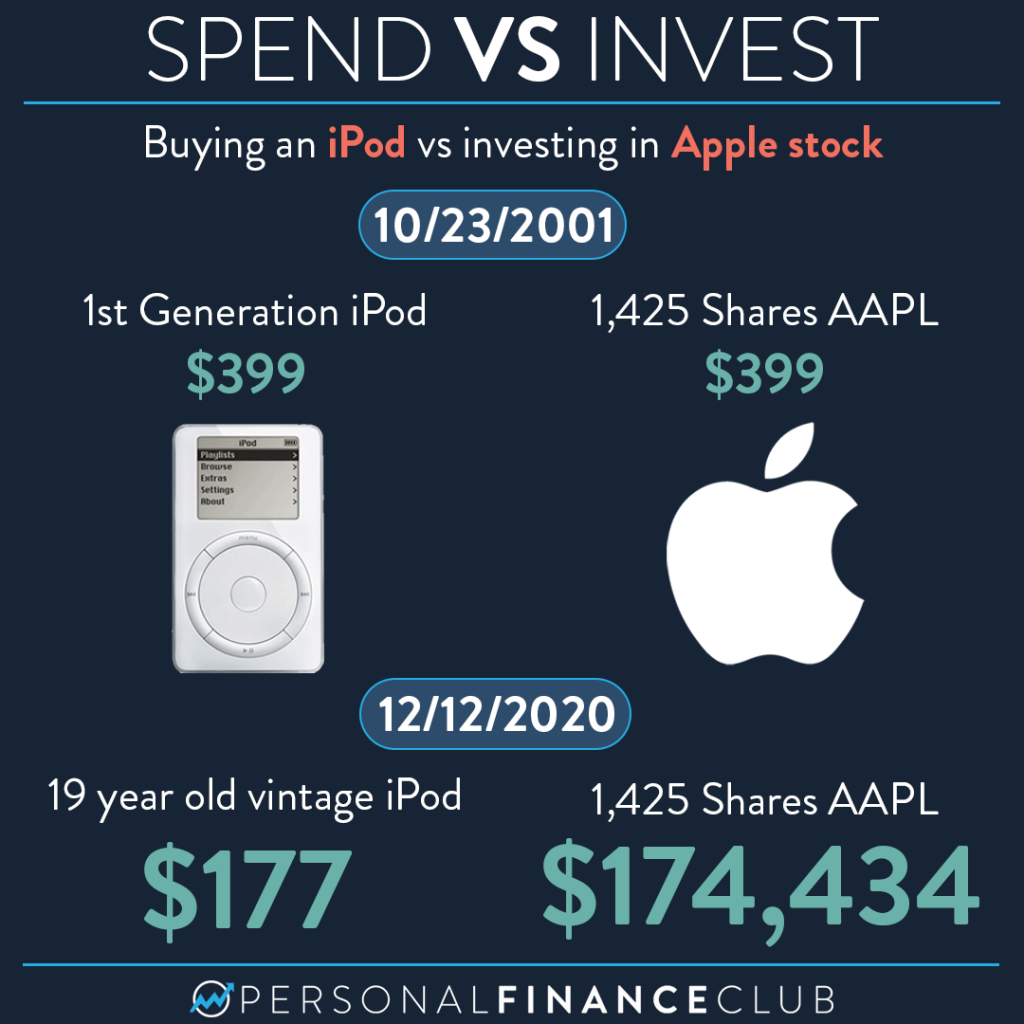
Apple pays a quarterly dividend to its shareholders. For long-term investors, participating in a Dividend Reinvestment Plan (DRIP) can be an effective strategy. A DRIP allows you to automatically reinvest your cash dividends back into buying more shares or fractional shares of Apple stock, often without incurring additional brokerage fees. This compound interest effect can significantly accelerate your wealth accumulation over time, as your dividends buy more shares, which then generate more dividends, and so on. Many brokerage firms offer this feature as an option within your account settings.
4. Essential Due Diligence and Risk Management
Investing in any company, even one as robust as Apple, comes with inherent risks. Prudent investors conduct thorough due diligence and employ risk management strategies.
Analyzing Apple’s Financial Reports (AAPL)
Before making any investment, it is crucial to review Apple’s financial statements. These are publicly available on Apple’s investor relations website and through the SEC’s EDGAR database. Key reports to examine include:
-
10-K (Annual Report): Provides a comprehensive overview of the company’s business and financial condition over the past year.
-
10-Q (Quarterly Report): Offers updated financial information between annual reports.
-
Earnings Call Transcripts: These provide insights into management’s perspective on past performance, future outlook, and key strategic initiatives.
Pay close attention to metrics such as revenue growth, net income, profit margins, cash flow from operations, debt levels, and shareholder equity. Understanding these numbers will give you a clearer picture of Apple’s financial health and trajectory. Don’t just look at the numbers in isolation; compare them to previous quarters/years and to industry peers.
Market Volatility and Sector-Specific Risks
While Apple is a strong company, its stock price is not immune to broader market volatility or sector-specific challenges. Economic downturns, geopolitical events, interest rate changes, or a general sell-off in the technology sector can all impact Apple’s stock performance regardless of the company’s fundamentals.
Specific risks to Apple include:
-
Supply Chain Disruptions: Reliance on global manufacturing and components can make Apple vulnerable to supply chain issues.
-
Intense Competition: The consumer electronics and services markets are highly competitive, requiring continuous innovation to maintain market share.
-
Regulatory Scrutiny: Apple, being a dominant player, faces increasing antitrust and privacy regulatory pressures worldwide.
-
Innovation Cycle: The market consistently expects groundbreaking innovation from Apple; failure to deliver can impact investor sentiment.
Understanding these risks helps set realistic expectations for potential returns and volatility.
The Importance of Diversification Beyond Apple
While Apple may be a fantastic company, putting all your investment capital into a single stock, no matter how strong, is a high-risk strategy. Diversification is the cornerstone of sound investment management. It involves spreading your investments across various assets, industries, and geographies to reduce overall portfolio risk.
Even if Apple performs exceptionally well, an unforeseen event impacting the company or the technology sector could significantly harm an undiversified portfolio. By combining Apple stock with investments in other strong companies, different sectors (e.g., healthcare, financials, consumer staples), bonds, and perhaps real estate, you can mitigate the impact of any single investment underperforming. A well-diversified portfolio aims to achieve your financial goals while minimizing exposure to unnecessary risk.
5. Building a Long-Term Apple Investment Strategy
Investing in Apple should ideally be part of a well-thought-out long-term strategy rather than a short-term speculative trade. Adopting disciplined approaches can help optimize your returns.
Dollar-Cost Averaging for Consistent Growth
One of the most effective strategies for long-term investors is dollar-cost averaging (DCA). This involves investing a fixed amount of money at regular intervals (e.g., $100 every month) regardless of the stock price.
-
When Apple’s stock price is high, your fixed dollar amount buys fewer shares.
-
When Apple’s stock price is low, your fixed dollar amount buys more shares.
Over time, DCA helps to average out your purchase price, reducing the risk of buying all your shares at an unfavorable peak. This strategy removes emotion from investing, encourages consistent saving, and can lead to a lower average cost per share over the long run, even amidst market fluctuations.
Monitoring Your Investment and Rebalancing
Investing is not a “set it and forget it” activity, especially when it comes to individual stocks. While a long-term perspective is crucial, it’s wise to periodically monitor Apple’s performance and review your overall portfolio.
-
Stay Informed: Keep an eye on Apple’s quarterly earnings reports, product launches, competitive landscape, and any significant news that could impact the company.
-
Rebalance Periodically: As your investments grow or shrink, their proportions within your portfolio will change. Rebalancing involves adjusting your portfolio back to your target asset allocation. For instance, if Apple’s share of your portfolio has grown significantly due to strong performance, you might trim some of your Apple holdings to invest in other areas that have become underweighted, thereby maintaining your desired level of diversification and risk. This is typically done once or twice a year.
Tax Implications of Investing in Stocks
Understanding the tax implications of stock investments is vital for maximizing your net returns.
-
Capital Gains Tax: When you sell Apple stock for a profit, you’ll incur capital gains tax. If you hold the stock for less than a year, it’s taxed as a short-term capital gain (at your ordinary income tax rate). If held for more than a year, it’s a long-term capital gain, typically taxed at lower preferential rates.
-
Dividend Tax: Dividends received from Apple are generally taxed as ordinary income or at qualified dividend rates, depending on how long you’ve held the stock and your income bracket.
-
Tax-Advantaged Accounts: Consider investing in Apple through tax-advantaged accounts like an IRA (Individual Retirement Account) or a 401(k) (if your plan offers access to individual stocks or relevant funds). These accounts offer tax benefits (e.g., tax-deferred growth or tax-free withdrawals in retirement) that can significantly boost your long-term returns compared to a taxable brokerage account.
Consulting with a financial advisor or tax professional is always recommended to understand how these rules apply to your specific situation and to optimize your investment strategy for tax efficiency.
Investing in Apple offers a compelling opportunity for those looking to participate in the growth of one of the world’s most innovative and financially robust companies. By understanding the various investment avenues, conducting thorough due diligence, and adopting a disciplined, long-term approach to portfolio management, you can strategically integrate Apple into your investment plan and work towards achieving your financial aspirations. Remember that all investments carry risk, and past performance is not indicative of future results. Always invest according to your personal financial goals, risk tolerance, and time horizon.
aViewFromTheCave is a participant in the Amazon Services LLC Associates Program, an affiliate advertising program designed to provide a means for sites to earn advertising fees by advertising and linking to Amazon.com. Amazon, the Amazon logo, AmazonSupply, and the AmazonSupply logo are trademarks of Amazon.com, Inc. or its affiliates. As an Amazon Associate we earn affiliate commissions from qualifying purchases.